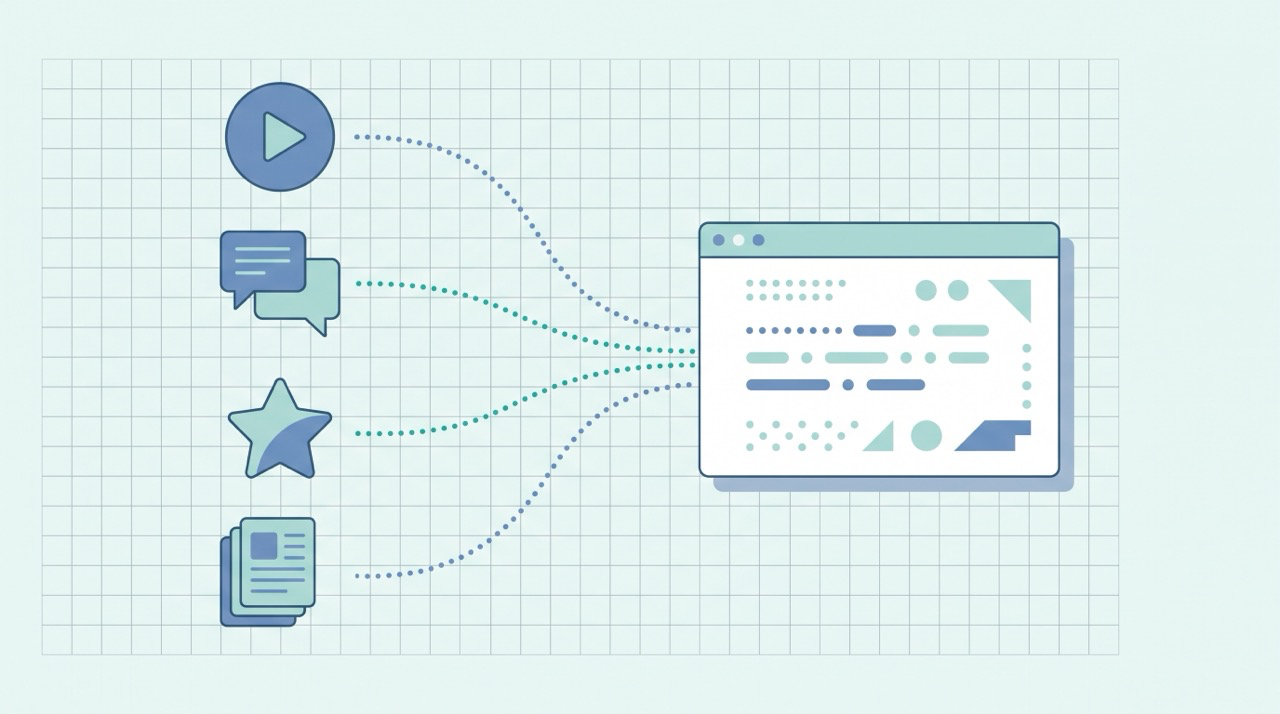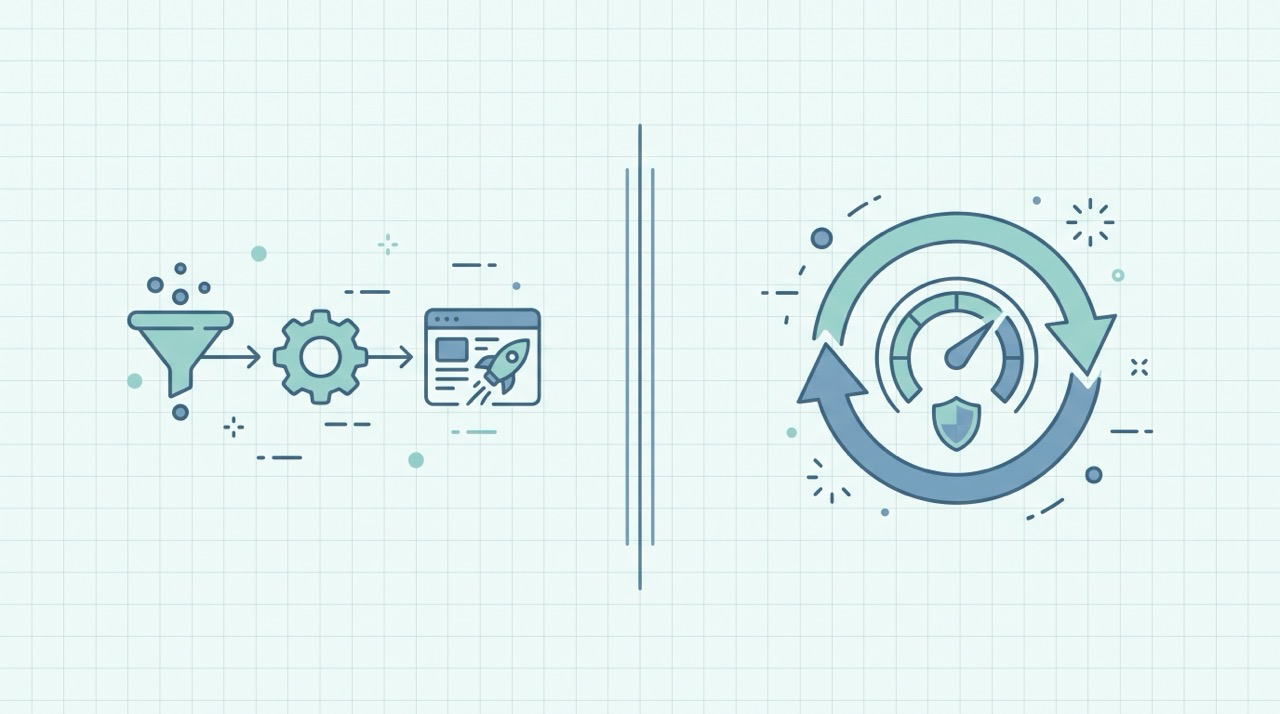

AI engines cite the pages they can lift a clean, self-contained answer from. If a model has to untangle a wall of text to find your point, it moves on to a page that states the answer plainly — so the highest-leverage GEO work is structuring each page so the answer is easy to extract. This isn't about tricking a model; it's the same clarity that helps a human skimmer, applied deliberately.
This guide walks through the concrete structure that makes content quotable — answer-first paragraphs, question-shaped headings, self-contained sections, and extractable formatting — and why each one matters to how a large language model reads a page. It's a hands-on companion to our overview of what generative engine optimization (GEO) is: once you understand why AI answers matter, this is how you write to earn a spot in them.
Why structure decides whether you get cited
When ChatGPT, Perplexity, or Google's AI Overviews answer a question, they don't quote whole articles. They pull passages — a sentence, a short paragraph, a list, a stat — and stitch them into an answer with a citation back to the source. Two things follow from that.
First, retrieval works on chunks, not pages. Systems that ground answers in web content typically split a page into smaller segments and rank those segments for relevance. A section that reads as a complete thought on its own is easy to retrieve and quote; a paragraph that only makes sense after three paragraphs of setup is not.
Second, the research backs this up. The Princeton and Georgia Tech study that coined the term "Generative Engine Optimization" (Aggarwal et al., 2023) tested content changes against real generative-engine responses and found that presentation-level edits — adding relevant statistics, quotations, and citations, and writing more clearly — could boost a source's visibility in AI answers by up to 40%. Notably, keyword stuffing was one of the least effective tactics. The lesson is that AI engines reward content that is clear, specific, and easy to lift, not content that games keywords.
None of this contradicts classic SEO. Google is explicit that there's no separate AI checklist: its Search Central guidance on AI features states, "You don't need to create new machine readable files, AI text files, or markup to appear in these features." The structure below is just people-first writing made rigorous — the same work that already earns featured snippets and AI Overviews.
Lead with the answer, then explain
The single most important habit: state the answer in the first sentence or two of a section, then elaborate. Journalists call it the inverted pyramid. For AI citations it's decisive, because the model is looking for the shortest passage that fully answers the query.
Compare these openings to "How long should a meta description be?":
- Buries it: "There's a lot of debate about meta descriptions, and Google has changed how it displays them over the years, which makes this a nuanced topic…"
- Leads with it: "A meta description should be 150–160 characters. Google truncates longer ones in search results, so keep the key message in the first 155."
The second version is a ready-made quote. The first forces the model to read on and guess where the answer is — so it usually picks a competitor who just said it. Do this at the top of the whole page too: a one- or two-sentence direct answer right under the H1, before any preamble.
Write headings that match real questions
Your H2s and H3s are the map a model uses to find the right section. Make each heading a specific, descriptive phrase or an actual question a person would type or ask — not a clever label.
- Weak: "The Basics", "Going Deeper", "A Note on Timing"
- Strong: "How often should you update a blog post?", "What is a good bounce rate?", "Schema types that support rich results"
Google's own helpful-content guidance asks whether "the main heading or page title provide a descriptive, helpful summary of the content" — the same test applies to every subheading. Question-shaped headings also map directly onto how people phrase prompts, which raises the odds your section is retrieved for that query. This is core on-page SEO doing double duty for AI search.
Make every section self-contained
Because retrieval pulls sections out of context, each one has to stand on its own. Two rules:
- Restate the subject instead of leaning on pronouns. A section that opens with "It's usually caused by three things…" is useless out of context. "Slow page speed is usually caused by three things…" survives being lifted.
- Avoid backward references. "As we saw above" and "using the method from the previous section" break the moment a model quotes the section alone. Re-name the concept in a few words instead.
Think of each H2 section as a mini-article that could be quoted with zero surrounding text and still make complete sense.
Use formatting a model can extract cleanly
Structure isn't only prose. The shape of the content on the page is a signal in itself:
- Numbered lists for sequential steps or ranked items. Models reproduce steps almost verbatim, and "how to" queries overwhelmingly surface list content.
- Bulleted lists for options, criteria, or non-sequential points — far easier to lift than the same items buried in a paragraph.
- Tables for anything comparative (plans, specs, before/after). A clean comparison table is one of the most citable formats there is.
- Short paragraphs — two to four sentences. Dense blocks hide the quotable sentence; whitespace exposes it.
- Bold key terms and definitions so the core claim of a section is visually and structurally obvious.
The goal is that a reader — human or machine — can find the answer by skimming, without reading every word.
Be specific: names, numbers, dates, and sources
Vague content rarely gets cited because it adds nothing a model couldn't already generate. Specificity is what makes a passage worth quoting and attributing:
- Use real numbers and units ("cut load time from 4.2s to 1.1s"), not "much faster."
- Name things — tools, standards, versions, people — instead of "some platforms."
- Date time-sensitive claims and keep them current; AI answers lean toward content that looks fresh and unambiguous.
- Cite your sources inline. Linking to authoritative references is itself one of the presentation tactics the GEO study found effective, and it signals the expertise and trustworthiness that our research on how AI decides which brands to recommend found matters most.
Add structure machines read directly
On top of clean prose, give machines an explicit map:
- Semantic HTML — real
<h1>–<h3>tags, lists, and tables rather than styled<div>s — so the page's structure is unambiguous to a parser. - Schema markup, especially FAQ, HowTo, and Article types, which restate your content as structured data. It won't force a citation, but it removes ambiguity about what each block of content is.
A caveat worth stating plainly: you can't mark your way to being quoted. Google's featured snippets documentation answers the "how do I mark my content as a snippet?" question with a blunt "You can't. Google systems determine whether a page would make a good featured snippet." The same holds for AI answers — structure makes your content eligible and easy to lift; it doesn't override quality or relevance.
A quick structuring checklist
Before you publish, run each page through this:
- Does a direct, self-contained answer appear in the first two sentences under the H1?
- Is every H2/H3 a specific phrase or question someone would actually search?
- Can each section be quoted alone — no orphan pronouns, no "as mentioned above"?
- Are steps, comparisons, and options in lists or tables, not buried in prose?
- Are the key claims specific — real numbers, names, dates — and sourced?
- Is the page built on semantic HTML with schema where it fits?
The same discipline pays off across every engine — see how to get your brand mentioned in ChatGPT and how to get cited in Perplexity for engine-specific angles that build on this foundation.
Frequently asked questions
How do I structure content to get cited by AI?
Lead each section with a direct, self-contained answer, write headings as specific questions people actually ask, keep sections quotable on their own (no orphan pronouns or backward references), and use lists, tables, and short paragraphs so a model can lift a clean passage. Then back claims with specific numbers and sources.
Does formatting really affect whether AI engines quote my content?
Yes. Because AI engines retrieve and quote passages rather than whole pages, easy-to-extract formatting — lists, tables, short paragraphs, and answer-first openings — makes a measurable difference. A 2023 study found presentation edits like adding statistics, quotations, and citations could raise a source's visibility in generative answers by up to 40%.
Should I add schema markup to get cited in AI answers?
Schema markup helps by removing ambiguity about what your content is (an FAQ, a how-to, an article), but it doesn't force a citation. Google says you can't mark a page to become a featured snippet or AI answer — structure makes your content eligible and easy to lift, while quality and relevance still decide.
Is optimizing for AI citations different from normal SEO?
Mostly no. Google states there are no special files or markup needed for AI features, and the same clear, well-structured, people-first content that earns featured snippets also earns AI citations. Structuring for AI citations is classic on-page SEO applied with extra rigor around extractability.
What's the single most important change to make?
Lead with the answer. Put a direct, complete answer in the first sentence or two of every section instead of building up to it. That one habit turns a paragraph into a ready-made quote and is the fastest way to become more citable.
The bottom line
Getting cited by AI isn't a trick or a hidden file — it's the payoff for structuring content so the answer is impossible to miss. Lead with the answer, shape headings like real questions, keep every section self-contained, format for easy extraction, and be specific enough to be worth quoting. Do that and you're writing for humans and machines at the same time, because they're looking for the same thing: the clearest answer on the page.
Structuring every page this way at scale — and tracking where AI already mentions you — is exactly what QuickCreator is built for. Try it free and turn your content into the version AI engines want to cite. To know if it's working, start by measuring your share of voice in AI search.