
We ran 10 real buyer questions — "best AI writing tools," "alternatives to Jasper," "AI tools for solopreneurs on a budget" — through Google AI Overviews and Gemini, US market, July 2026. Out of 19 answers analyzed, QuickCreator was mentioned zero times. Not once. The brands that did appear — Jasper, Surfer, Copy.ai, Frase — all got there the same way: through third-party sources talking about them, not through anything on their own blogs. This post is the full data, the channel map behind it, and what it actually means for where your GEO budget goes.
We publish this knowing it doesn't flatter us. But measuring this honestly is the entire point of tracking whether AI mentions your brand — and the finding is too useful to keep private.
The audit setup
We pulled 10 questions from our 100-question SaaS buyer set — the ones mapping to our own category (AI writing, AI SEO, content platforms), spanning four buyer intents: category discovery ("best X"), alternatives, how-to tasks, and segment/budget fits. Each question went to two channels: Google AI Overviews (via SerpAPI) and Gemini (via the Gemini API with Google Search grounding). One question returned no AIO answer, leaving 19 answers to analyze.
Scope notes, so you can calibrate: this is a 10-question snapshot of one market on one date, not a universal law. ChatGPT and Perplexity aren't in this round (our API tokens for those channels were down), and Gemini-via-API approximates rather than equals the consumer Gemini app. We also verified separately that our own site is indexed — the absence of mentions isn't a crawl problem.
Who shows up: the mention table
Every brand mentioned across the 19 answers, counted per channel:
| Brand | Google AIO (9 answers) | Gemini (10 answers) |
|---|---|---|
| Jasper | 4 | 9 |
| ChatGPT (itself) | 3 | 10 |
| Surfer SEO | 4 | 8 |
| Copy.ai | 4 | 6 |
| Grammarly | 0 | 6 |
| Frase | 2 | 5 |
| Semrush | 2 | 4 |
| Writesonic | 2 | 4 |
| Scalenut | 1 | 3 |
| Rytr | 1 | 3 |
| Clearscope | 2 | 2 |
| MarketMuse | 0 | 3 |
| Anyword | 0 | 1 |
| QuickCreator | 0 | 0 |
Two things stand out. First, the incumbents repeat: Jasper, Surfer, and Copy.ai appear across discovery, alternatives, and budget questions alike — AI engines reach for the same shortlist regardless of angle. Second, the long tail is thin but real: NeuronWriter and Anyword surface in exactly the niche questions ("cheaper than Surfer," "alternatives to Jasper") where their positioning fits. The door isn't locked; it's just heavy.
The channel map: where the citations actually come from
This is the part that changed how we think about our own content strategy. We tracked which domains the engines grounded their answers in.
Google AI Overviews cited, in frequency order: YouTube (12 citations), Reddit (5), eesel.ai (5), then a long tail of niche SEO blogs (onelittleweb, behindrankings, rankability), G2, Quora, Medium, TechRadar, and vendor sites like Salesforce, Zapier, and Copy.ai.
Gemini grounded against: G2 (6), eesel.ai (5), Semrush's blog (4), Zapier's blog (4), Reddit (4), Capterra (3), HubSpot's blog (3), and again a tail of niche SEO sites.
Group those by type and the channel structure of AI answers snaps into focus:
- Review platforms — G2, Capterra, Trustpilot. The single most direct feed of "which tools exist and how they're rated."
- UGC — YouTube and Reddit dominate AIO citations; Quora and Medium trail. Real people comparing tools in public.
- Established niche blogs — eesel.ai, onelittleweb, rankability: small affiliate/SEO sites, years old, publishing the exact "best X tools" listicles everyone else does — but with the domain history to be trusted.
- Incumbent vendors' own content — Semrush, Zapier, HubSpot get cited, but they're the exception that proves the rule: a decade of authority buys a vendor-owned channel. Everyone younger rents credibility from channels 1–3.
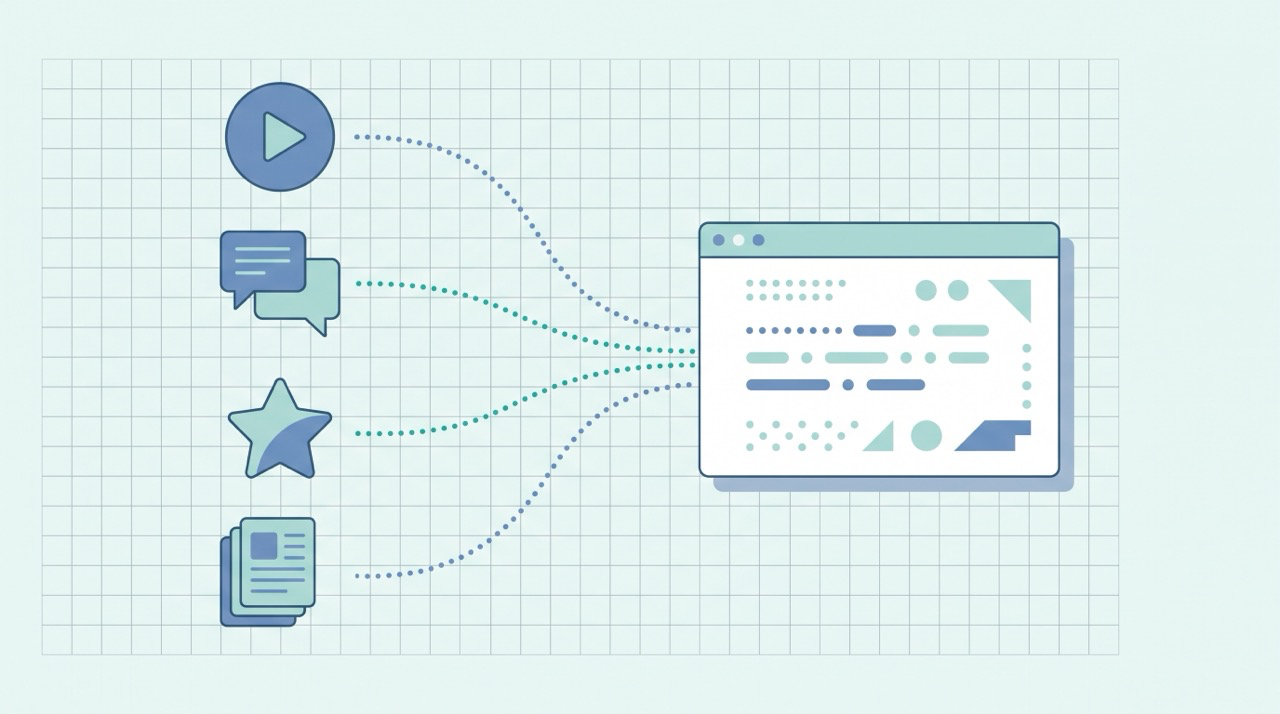
Notice what's missing: brand blogs like ours. Our own listicles — we publish a whole series of tool comparisons and alternatives posts — appeared in none of the 19 answers. Not because they're badly built (they're indexed, structured, and schema-tagged), but because a two-month-old domain has no third-party corroboration for an engine to lean on. This matches the mechanism we described in how AI engines chunk and retrieve content: engines cite what's retrievable and corroborated. It also matches our larger study of how AI decides which brands to recommend — recommendations flow through the sources engines already trust.
The uncomfortable pattern
Strip it down and the pattern is one sentence: AI engines don't take your word for it — they take everyone else's. The Princeton/Georgia Tech GEO study showed presentation edits lift visibility up to 40%, and that's real — but it operates after an engine considers you a candidate. Getting into the candidate set in the first place is a corroboration game: reviews, UGC threads, niche-blog listicles, and — for the lucky few — your own authoritative domain. Google's own description of how Search works (crawl, index, serve) is the plumbing underneath, but the selection layer above it runs on reputation accumulated off your site.
In our case the gap is measurable: QuickCreator has a Trustpilot page with a thin handful of reviews, no meaningful G2/Capterra presence yet, and roughly zero YouTube or Reddit footprint. Our competitors' mention counts in the table above track almost exactly their footprint in those channels.
What this means for your GEO budget
Ordered by leverage, from the data:
- Review platforms first. G2, Capterra, Trustpilot — claim them, fill them, and earn reviews systematically. These are the closest thing to a direct feed into AI answers that exists.
- Be present where the threads happen. Reddit and YouTube aren't optional extras; they're AIO's top two citation sources in our sample. Answer questions, publish real comparisons, show the product.
- Earn the niche-blog layer. The eesel.ai-class sites accept outreach, reviews, and guest data. Getting covered by the listicles engines already cite beats publishing your own eleventh listicle.
- Keep building your own content — as the long game. Owned content compounds into authority that eventually becomes channel 4. It's what we're doing with this blog and its topic clusters, and the structure work in our AI-citation formatting guide still matters — it's what converts citations into mentions once you're in the candidate set.
- Measure monthly. A 10-question audit takes an afternoon. Run it on a schedule and track mention share — your AI share of voice — instead of vibes.
The limits of this audit
Ten questions, two channels, one market, one date. AIO returned nothing for one question; Gemini's API grounding isn't byte-identical to the consumer app; and mention counts this small wobble. Treat the numbers as directional, not precise. What doesn't wobble is the pattern across them — zero owned-blog citations and a third-party-dominated channel map, consistent with the external research and with our own larger studies.
Frequently asked questions
Does this mean company blogs are useless for GEO?
No — it means they're the long game, not the shortcut. Owned content builds the authority that eventually gets cited directly, and it's the material that converts rankings into citations once third-party channels put you in the candidate set. The mistake is expecting a young blog to be the citation source today.
Which review site matters most for AI citations?
In our sample, G2 and Capterra showed up most in Gemini's grounding, while AIO leaned harder on YouTube and Reddit. Cover all three fronts, but if you start with one, start where your buyers already compare tools — for SaaS, that's usually G2.
How do I check whether AI engines mention my brand?
Ask the engines your buyers' actual questions, log who gets mentioned and which sources get cited, and repeat on a schedule. The full method is in how to check if AI mentions your brand.
The bottom line
We measured 19 AI answers to real buyer questions and found our own brand in none of them — while Jasper, Surfer, and Copy.ai rode third-party channels into answer after answer. The citation channels aren't mysterious: review platforms, UGC, established niche blogs, and — for the few who've earned it — your own domain. Budget accordingly.
Measuring that channel presence and turning it into content built to be cited is exactly what QuickCreator is for. Try it free — and if you run this audit on your own brand, we'd genuinely like to hear what you find.