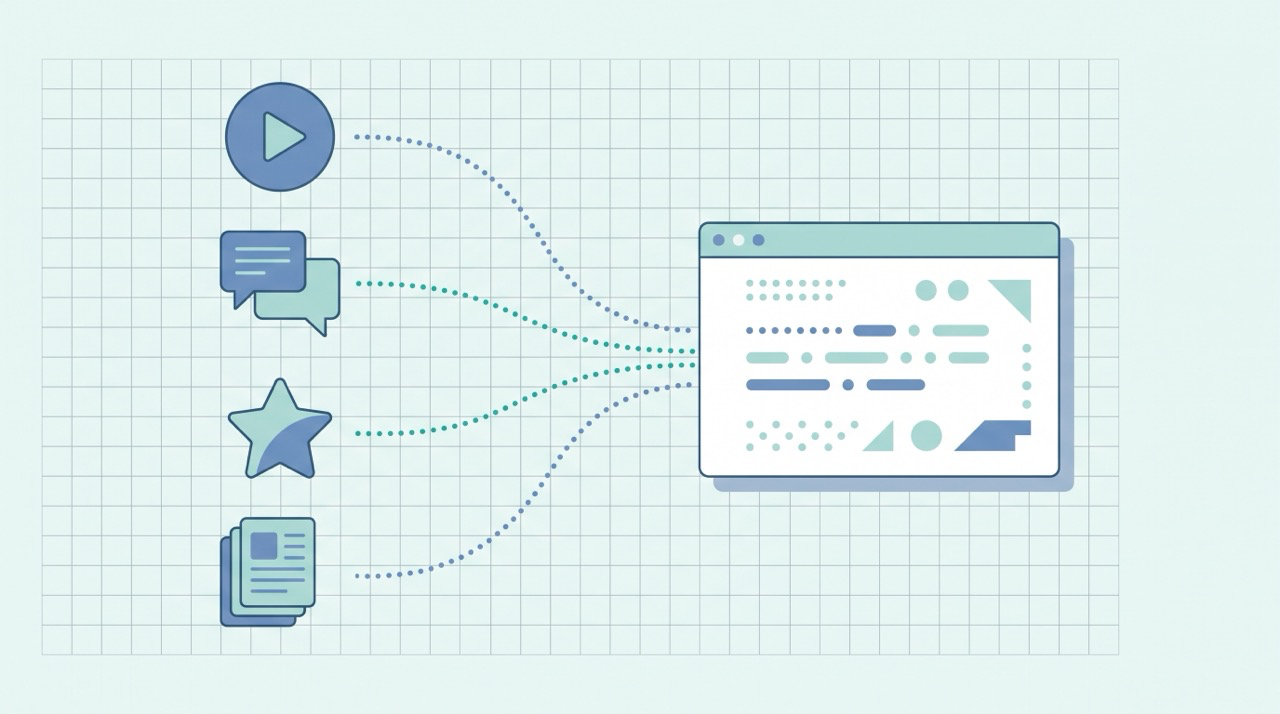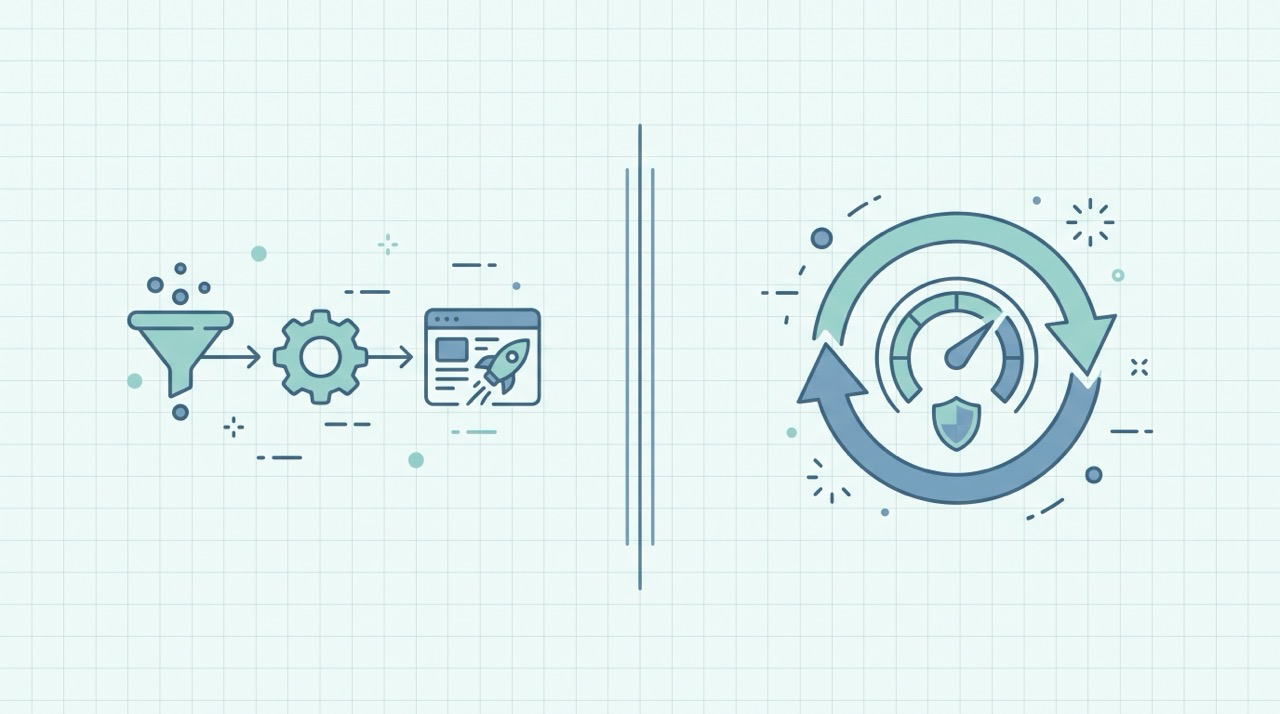
Generative Engine Optimization (GEO) is the practice of getting your business mentioned, quoted, and cited inside the answers that AI engines — ChatGPT, Perplexity, Google's AI Overviews, and Gemini — generate for their users. Where traditional SEO works to rank your page in a list of links, GEO works to make your brand part of the AI's written answer itself.
The term comes from a 2023 research paper, "GEO: Generative Engine Optimization," from researchers at Princeton and other universities — the first study to measure what actually makes content more likely to be cited by AI systems. Since then, as AI answers have moved from novelty to everyday habit, GEO has gone from academic idea to something every small business now has to think about.
This guide explains GEO in plain English — no jargon wall — and shows how a small team or a solo founder can start, beginning with the things that cost nothing.
Why GEO matters now (and why small teams should care)
For twenty years, "getting found" online meant one thing: ranking on Google's list of blue links. That still matters. But a second surface has appeared, and it's growing fast.
When someone asks a question today, they increasingly get a written answer instead of a list of links:
- Google AI Overviews — the AI summary now shown at the top of a large share of Google searches, often answering the question before any link.
- ChatGPT, Perplexity, and Gemini — millions of people now start research by asking an AI assistant directly.
These are the "generative engines" GEO is named after. And here's the catch for a small business: when the AI writes the answer, the user often never scrolls to the links at all. If your business isn't named inside that answer, you're invisible to that person — no matter how well your page is technically optimized.
This is why GEO matters now, and why it matters more for small teams, not less. A big brand gets mentioned by AI engines anyway, because it's everywhere. A small business has to earn that mention deliberately. The good news, which we'll get to, is that the work is more achievable than it sounds.
GEO, SEO, AEO, AI SEO: a plain-English decoder
Before going further, let's clear the biggest source of confusion. The industry has invented a wall of acronyms that all overlap, and nobody explains them simply. Here's the plain-English version:
| Term | What it actually means | Is it different from GEO? |
|---|---|---|
| SEO (Search Engine Optimization) | Getting your pages to rank in traditional search results (the blue links). | Yes — SEO wins the click; GEO wins the mention. |
| GEO (Generative Engine Optimization) | Getting cited inside AI-generated answers (ChatGPT, AI Overviews, etc.). | This is the one we're explaining. |
| AEO (Answer Engine Optimization) | Getting picked as the direct answer — featured snippets, voice assistants, and AI answers. | Mostly overlaps with GEO. Treat them as near-synonyms; AEO is a bit broader (includes older "answer boxes"). |
| AI SEO / LLMO / GSO | Newer labels people use for the same idea: optimizing for AI/LLM-driven search. | No real difference — different writers, same goal. |
The takeaway: don't get lost in the acronyms. GEO, AEO, and "AI SEO" are pointing at the same shift — being present in AI-generated answers. We'll use GEO throughout, but if you see the others, they're describing the same job.
GEO vs SEO: what's actually different
GEO and SEO are not rivals. They're two halves of being findable, and they share most of the same foundation. But their goals differ in ways worth understanding:
| SEO | GEO | |
|---|---|---|
| Goal | Rank in the list of links | Get cited inside the AI's answer |
| The win | A click to your site | Being named as a source |
| Where it shows | Google/Bing results page | ChatGPT, Perplexity, AI Overviews, Gemini |
| Rewards | Relevance, authority, backlinks | Clear structure, quotable facts, entity clarity, trust |
| You measure | Rankings, organic clicks, impressions | Mentions/citations in AI answers, referral traffic from AI tools |
Notice the "rewards" row. The inputs overlap heavily: clear, trustworthy, well-structured content on a crawlable site helps you win both. That overlap is exactly why a small team can realistically do GEO without doubling its workload — a point we cover in depth in our guide to SEO and GEO for solopreneurs.
How generative engines decide what to cite
You can't optimize for AI answers without understanding, at least roughly, how they're built. Most generative engines don't invent answers from thin air — they retrieve real content from the web and summarize it (a process often called retrieval-augmented generation, or RAG). So the question becomes: what makes them retrieve and cite your content over someone else's?
Based on the original GEO research and how these systems work in practice, a few things consistently help:
Be crawlable and indexed. AI engines read much of the same web that search engines index. If traditional search can't see you, AI usually can't either. Google's own guidance on AI features confirms there are no special tricks — the same SEO fundamentals (crawlable, helpful, quality content) are what qualify you.
Answer clearly and early. AI engines lift clean, self-contained answers. A direct, quotable sentence near the top of a page is far more citable than the same point buried in paragraph nine.
Add quotable facts, stats, and sources. The GEO study found that adding citations, statistics, and quotations measurably increased how often content was cited. Concrete beats vague. Compare these two sentences:
- Vague (rarely cited): "Email marketing is a great way to grow your business."
- Quotable (citable): "Email marketing returns an average of $36 for every $1 spent, according to industry benchmarks — making it one of the highest-ROI channels for small businesses."
The second gives an AI engine a self-contained, attributable fact it can lift straight into an answer. That's the difference between being read and being cited.
Be structured. Clear headings, lists, and tables make your content parseable for machines as well as scannable for humans.
Be an explicit entity with authority. Spell out who you are and what you're an expert in. Use structured data (schema markup) so machines understand your pages, and build the kind of trust Google describes as E-E-A-T — Experience, Expertise, Authoritativeness, and Trust.
Earn mentions elsewhere. When other credible sites — and even communities like Reddit — mention your brand, AI engines grow more confident citing you.
None of these are exotic. They're good content practices, pointed at a new destination.
Do small businesses and solopreneurs actually need GEO?
Honest answer: yes, but you don't need to panic or hire anyone.
Here's the reasoning. Your potential customers are already using AI to research purchases in your category. When they ask "what's the best [your category] for [their situation]," an AI engine names a handful of options. If you're never in that list, you're losing those customers silently — you'll never even see the lost visit in your analytics.
You don't need an enterprise budget to be in that answer. What you need is to be clearly present, useful, and trustworthy on the open web — which is something a focused small business can do better than a bloated competitor, because you can be genuinely specific about your niche. GEO rewards clarity and authority on a specific topic, and focus is a small team's natural advantage.
One honest caveat: if you haven't done the basics of SEO yet — a crawlable site, real content, pages that actually answer questions — start there first. GEO stands on that foundation; there's no point chasing AI citations for a site the engines can't read in the first place.
So the realistic stance for a small business or solopreneur is not "go all-in on GEO tooling." It's "do the foundational work that earns AI citations, starting with the free moves." That's the ladder below.
How to do GEO without a team: a zero-budget-first ladder
Most GEO advice points you at expensive enterprise platforms. You don't need them to start. Here's a three-tier ladder — do Tier 1 fully before spending a cent.
Tier 1 — Zero budget (do these first)
- Publish clear, specific answers to real questions your customers ask. One focused question per page, with a direct answer in the first paragraph. This is the single biggest GEO lever and it's free.
- Lead every important page with a quotable, self-contained summary. If an AI engine could lift one sentence to answer the query, make sure that sentence exists near the top.
- Structure content for machines: descriptive headings phrased as real questions, plus lists and tables where they fit.
- Be explicit about who you are and what you're expert in — an honest About page, author bylines, credentials. This builds the entity clarity AI engines rely on.
- Keep your site crawlable. If you've planned your content well — see our guide to building an SEO content plan for a small team — you're already most of the way there, because GEO and SEO share this groundwork. (New to the basics? Start with our beginner's guide to blog SEO.)
Tier 2 — Low budget / low effort
- Add schema markup to your articles, business info, and FAQs so machines parse your pages correctly.
- Earn a few quality mentions and links — a guest post, a directory, a podcast, a helpful Reddit answer. A handful of credible mentions raises the confidence AI engines have in citing you.
- Add facts, stats, and named sources to your cornerstone content, since citable detail measurably improves how often you're quoted.
Tier 3 — Advanced (once the basics are working)
- Track your AI visibility systematically (see the next section) and double down on the topics where you're already getting cited.
- Tailor for specific engines — for example, strengthening your presence in the communities and sources a given AI tool tends to pull from.
Work top-down. A solopreneur who does Tier 1 well will out-GEO a competitor who bought a tool but skipped the fundamentals.
How to measure GEO (without enterprise tools)
You can't improve what you can't see — but you also don't need a paid platform to start. Here's a free, ten-minute monthly check.
1. Run the manual prompt test. Open ChatGPT, Perplexity, and Google's AI Overview, and type the exact questions a customer would ask. Try prompts like:
- "What are the best [your category] for [your audience]?"
- "Compare the top tools for [the job your product does]."
- "Who offers [your service] for [specific situation]?"
See whether your brand gets named, quoted, or linked. Repeat the same prompts monthly — that consistency is your GEO scoreboard.
2. Keep a minimal citation tracking table. A simple spreadsheet is enough:
| Date | Prompt tested | Engine | Mentioned? | Cited/linked? | Notes |
|---|---|---|---|---|---|
| 2026-06-01 | best [category] for [audience] | Perplexity | No | No | competitor X named |
| 2026-07-01 | best [category] for [audience] | Perplexity | Yes | Yes | after publishing pillar |
3. Watch for AI referral traffic. In your analytics, look for referrals from chatgpt.com, perplexity.ai, and similar — when those appear, you're being cited and clicked. Pair this with Google Search Console to keep an eye on the SEO side at the same time.
That's it. No enterprise contract required to know whether GEO is working for you.
Will GEO replace SEO?
No. This is the most common fear, and the answer is reassuring: GEO doesn't replace SEO — it sits on top of it.
AI engines read the same web that search engines index, and they lean on the same signals of clarity and authority. Strong SEO is what makes you eligible to be cited; GEO is the extra layer that makes you quotable once you're there. Abandon SEO and you knock out the foundation GEO stands on. The realistic 2026 stance for any small business is to do both from one connected content effort — which, because they share so much groundwork, is far less work than it sounds. We break down exactly how to balance the two as a one-person operation in our guide to SEO and GEO for solopreneurs.
Frequently asked questions about GEO
What's the difference between GEO and AEO? Very little. GEO (Generative Engine Optimization) focuses on AI-generated answers; AEO (Answer Engine Optimization) is slightly broader and includes older "answer" formats like featured snippets and voice. In practice, the work overlaps almost entirely — optimize for one and you're largely optimizing for the other.
How long does GEO take to work? It varies. Because AI engines re-crawl and re-generate frequently, you can sometimes see a new mention within weeks of publishing something genuinely useful and well-structured. But AI outputs are volatile, so treat early wins as signals, not guarantees, and judge progress over months, not days.
What tools do I need for GEO? To start: none beyond a browser and a spreadsheet. The manual prompt test above is the most honest measurement there is. Paid AI-visibility tracking tools become useful later, once your fundamentals are solid and you want to monitor at scale.
Does GEO only matter for big brands? No — arguably it matters more for small ones. Big brands get cited by default because they're everywhere. A small business has to earn the mention, but it also has the advantage of being able to own a specific, well-defined niche, which is exactly what AI engines reward.
The bottom line
Generative Engine Optimization is not a new department or a new budget line. It's the same goal SEO always had — be the trusted, clear, useful source — pointed at a new place people now look for answers: the AI's reply itself.
For a small team, the path is refreshingly practical. Be clearly present and genuinely useful on the open web, answer real questions directly, structure your content so both people and machines can use it, and measure with a free monthly prompt test. Do that consistently and you'll start showing up in the answers your customers are already reading — without an enterprise tool or a dedicated team.
Doing all of that consistently is the hard part for a business of one, which is exactly the problem QuickCreator is built to solve: it runs the full content workflow — finding the questions worth answering, researching, drafting in your brand voice, optimizing the structure that feeds both search and AI engines, and publishing — as one connected system, so the groundwork GEO and SEO both depend on actually gets done.
Try QuickCreator free and turn one content workflow into visibility across search and AI — without hiring a team.