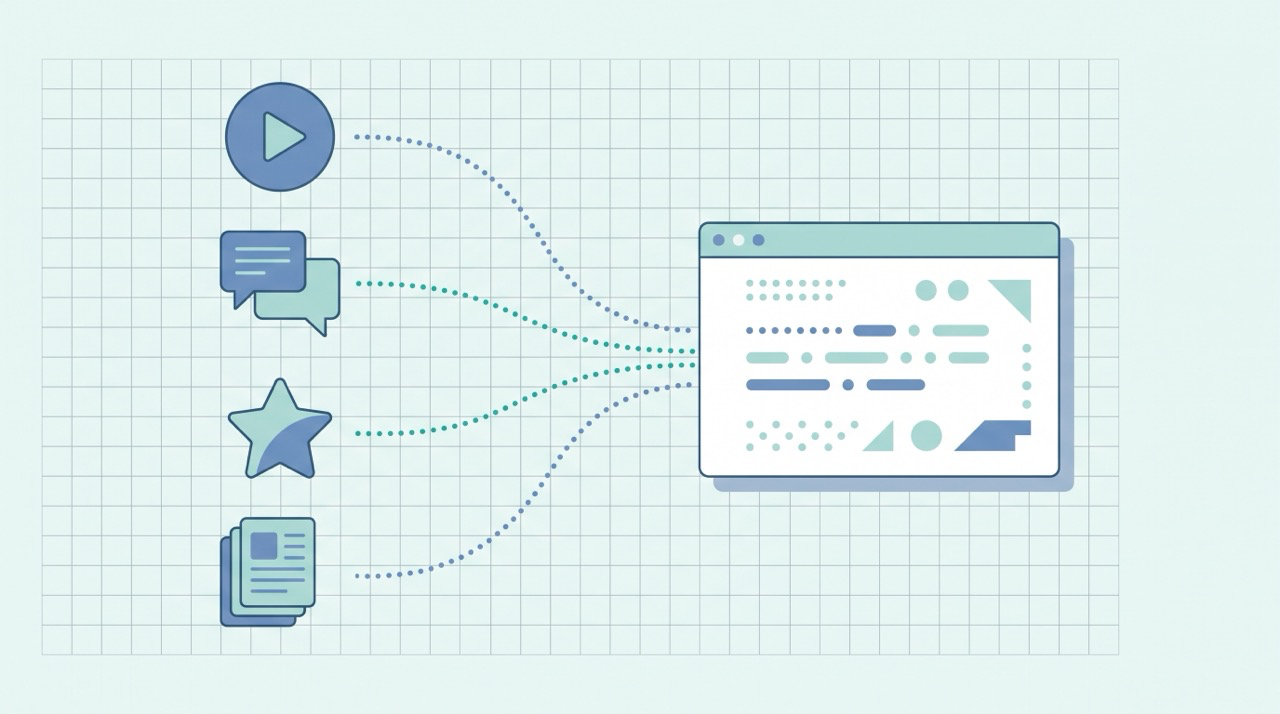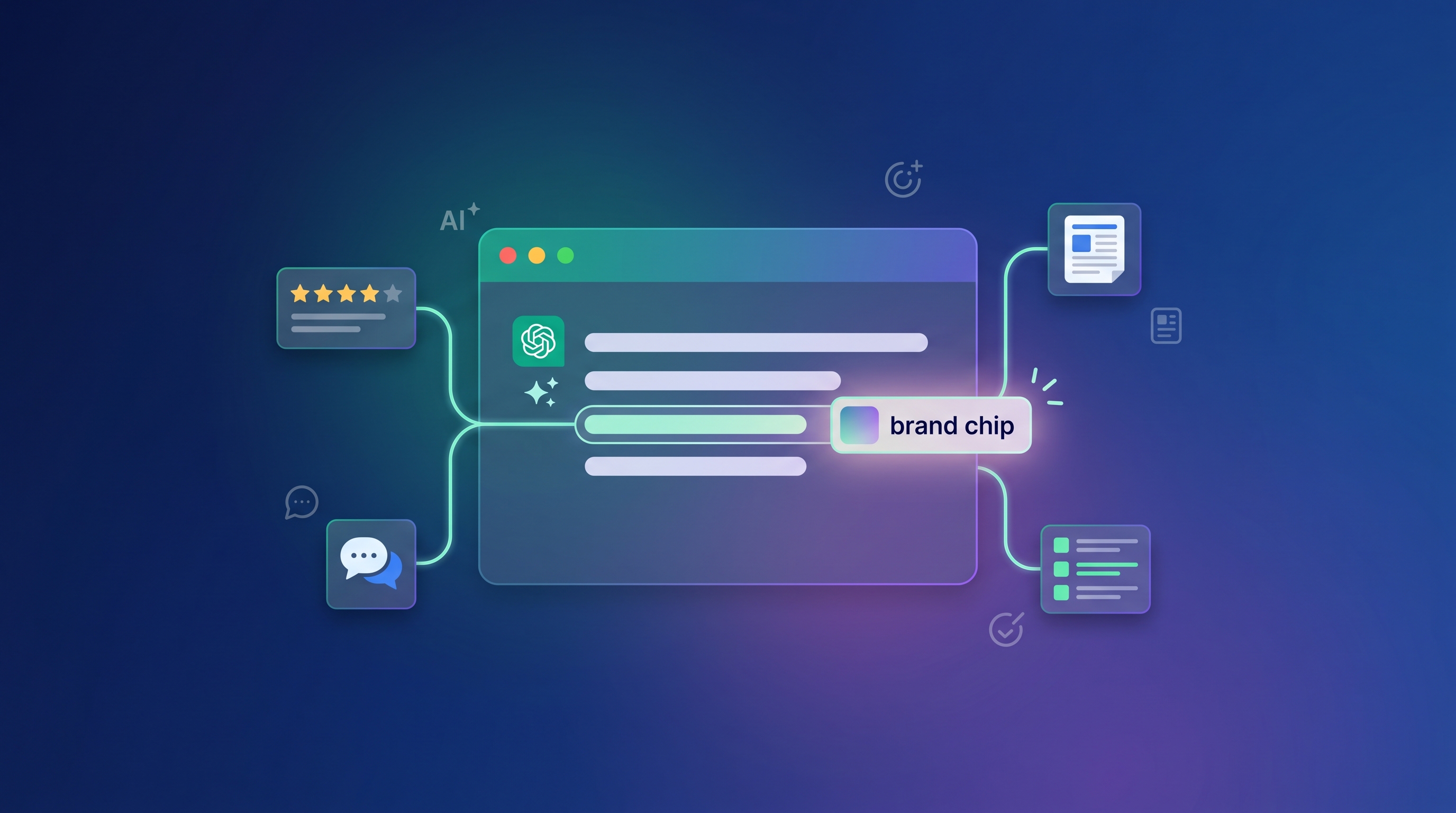
To get your brand mentioned in ChatGPT, you need to be clearly and consistently described as a strong option across the web — in helpful content on your own site, in third-party reviews and roundups, and in communities ChatGPT reads. ChatGPT doesn't name brands because they paid; it names the brands its sources collectively present as credible answers. You can't buy your way in, but you can earn your way in — and a small business can start for free.
When someone asks ChatGPT "what's the best [your category]?", it answers with specific brand names — and if yours isn't one of them, you're losing customers who never even saw your site. This guide explains how ChatGPT decides who to mention, what sources it actually pulls from, and a zero-budget checklist to start showing up. It's the ChatGPT-specific companion to our explainer on what generative engine optimization (GEO) is.
How does ChatGPT decide which brands to mention?
ChatGPT draws on two things, and the difference matters for how you optimize:
- Training data — the large snapshot of the web the model learned from. This is where general, long-standing brand associations live ("which solar inverters are reliable"). You influence it slowly, by being widely and consistently described as a good option over time.
- Real-time retrieval — when ChatGPT searches the live web to answer (its search mode, sometimes branded SearchGPT), it pulls current pages and cites them. This is where fresh, well-structured content can get you named quickly.
In both cases, the underlying logic is the same: ChatGPT reflects the consensus of its sources, not your marketing claims. It's reading what other people say about you — reviews, roundups, forum threads, news — and synthesizing a recommendation. Your job is to make that collective picture clear, consistent, and favorable.
A quick example of how that consensus forms: imagine two competing tools. One has a dozen detailed third-party reviews, appears in three "best of" roundups, and gets mentioned helpfully in a relevant subreddit. The other has a slick website and nothing else. Ask ChatGPT for a recommendation and the first tool gets named — not because it's objectively better, but because the web agrees it's a credible option, and ChatGPT is summarizing that agreement.
Google's own guidance on AI features makes the same point for AI search generally: there's no special trick or program to join — the fundamentals that make you a trusted, findable source are what qualify you.
Can you pay to get your brand into ChatGPT?
No — and it's worth saying plainly, because a lot of confusion (and a few scams) exist here. There is no "submit your business to ChatGPT" form, no paid placement inside the answer, no API to inject your brand into recommendations. OpenAI has experimented with ads and shopping features separately, but the organic recommendation you're trying to win is earned, not bought.
That's actually good news for a small business: you're not outbid by competitors with bigger ad budgets. You're competing on how clearly and credibly you show up across the web — a game where focus and genuine usefulness beat spend.
What sources does ChatGPT actually cite?
Here's where most advice waves its hands and says "be on authoritative sites." We can be more specific, because we measured it.
In our own audit of how AI recommends brands — 50 buyer questions run across ChatGPT, Gemini, Perplexity, and Google AI Overviews in five markets, about 200 answers in total — ChatGPT had a distinct "citation fingerprint." When it cited sources, it leaned on niche, specialist industry blogs and a few credible news and data outlets (in that industry, sites like pv-magazine and Reuters). It was not the same mix the other platforms favored — Google's AI Overviews leaned on YouTube and LinkedIn; Perplexity leaned on trade publications and reference sites.
Here's roughly how the platforms differed in our audit:
| AI engine | Tends to cite |
|---|---|
| ChatGPT | Niche specialist industry blogs + credible news/data outlets (e.g., Reuters, trade magazines) |
| Google AI Overviews | YouTube and LinkedIn + industry association sites |
| Perplexity | Trade publications, LinkedIn, and reference/wiki-style sites |
| Gemini | Regional and specialist blogs |
The lesson generalizes even though your specific domains will differ: each AI engine has its own preferred sources, and ChatGPT tends to trust the specialist publications and credible news of your niche. So getting mentioned in ChatGPT is less about being on the single most famous site, and more about being present and well-regarded across the specialist sources that cover your industry. Spreading the same effort evenly across every platform is wasted — you target the source profile that ChatGPT actually reads.
The zero-budget checklist to get mentioned in ChatGPT
You don't need a PR agency or an ad budget to start. Do these in order:
- Publish clear, specific answers to the exact questions buyers ask. One question per page, with a direct, quotable answer near the top. This is the single biggest lever, and it's free — ChatGPT's search mode lifts clean, self-contained answers. A short, self-contained "answer capsule" — roughly 40–80 words that fully answer the question on their own, right under a question-style heading — is the most liftable unit of content there is. Write one wherever you answer a real buyer question, instead of burying the point three paragraphs down.
- Be unmistakably clear about who you are and what you do. A real About page, named authors, consistent business name and description everywhere (your "NAP" — name, address, phone — should match across your site, Google Business Profile, and directories).
- Earn third-party mentions and reviews. Get listed and reviewed on the sites your industry trusts — review platforms (G2, Trustpilot, Yelp, industry-specific directories) and roundup articles. ChatGPT reads these to decide who's credible.
- Get covered by the specialist publications of your niche. A guest post, an expert quote, a mention in a trade blog's roundup. As our audit showed, these specialist sources are exactly what ChatGPT cites.
- Add structured data. Mark up your business and content with schema so machines parse who you are correctly.
- Show real expertise and trust. Named authors, credentials, genuine experience — the E-E-A-T signals that make both Google and AI engines more confident citing you.
Every step is free, and none requires code. They compound: the more consistently you're described as a strong option across these sources, the more likely ChatGPT is to name you.
This week, for free, you can knock out a real head start:
- Claim and fully fill out your Google Business Profile, with a consistent name and description.
- Add
FAQPageorArticleschema to one important page (a free SEO plugin does it in a few clicks). - Write one genuine, helpful answer in a subreddit or forum where your buyers actually hang out — no pitch, just useful.
- Get listed on one industry directory or review site your niche trusts.
- Turn your best page's opening into a 40–80 word answer capsule that answers the query on its own.
Five small actions, zero budget, one afternoon — and every one of them feeds the consensus ChatGPT reads.
Reddit and ChatGPT: the UGC play most guides skip
One source deserves its own section: Reddit. In 2024, OpenAI struck a data partnership with Reddit that brings Reddit content into ChatGPT. Combined with the fact that real buyers constantly ask AI for "honest, non-marketing" opinions, this makes community discussion a genuine GEO channel.
The play is not to spam Reddit with your brand — that backfires fast and violates community norms. It's to be genuinely present and helpful where your customers already discuss your category: answer real questions in relevant subreddits, let satisfied customers mention you organically, and make sure that when your brand does come up, the context is accurate and positive. A handful of authentic, well-regarded mentions in the right communities is worth more than any amount of self-promotion.
Do you need to rank on Google first?
It helps a lot, but it isn't the whole story. ChatGPT's live search reads much of the same web that Google indexes, so pages that already rank well are easier for it to find, read, and cite — strong traditional SEO, and the topical authority that comes from covering your niche thoroughly, is a foundation, not a distraction. If your site is invisible to Google, it's usually invisible to ChatGPT's search too.
But ChatGPT also weighs signals Google rankings don't fully capture — the consensus across reviews, roundups, forums, and news about whether you're a credible option. A brand can rank modestly on Google yet get mentioned often by ChatGPT because the wider web consistently describes it well, or rank well yet rarely get named because nobody outside its own site vouches for it. So do the SEO basics — they're the floor — but don't stop there. The off-site reputation work in the checklist above is what tips ChatGPT from "could find you" to "names you."
What not to do (and how long it takes)
A few traps waste effort or actively hurt:
- Don't try to "prompt-inject" or game the model. Stuffing hidden text or fake claims doesn't survive, and ChatGPT's sources are the web's consensus, not your page's hidden instructions.
- Don't rely on self-claims. "We're the best" on your own site means little; ChatGPT weighs what others say about you.
- Don't spread thin across every platform identically. Each engine reads different sources — target ChatGPT's.
- Don't expect overnight results. Training-data influence is slow (months), and even real-time retrieval rewards consistency. Treat this as compounding work, judged over months, not days.
How do you know if it's working?
Check, don't guess. Ask ChatGPT the exact questions your customers would, and see whether you're named. Repeat monthly and track the trend. Our companion guide on how to check if AI mentions your brand walks through a free, ten-minute monthly test across ChatGPT, Perplexity, and Google's AI Overviews — including how to catch AI-driven traffic that hides in your analytics.
It's also worth optimizing for the other engines in parallel, since the work overlaps: see our guide on how to get cited in Google AI Overviews for the Google-specific side.
Frequently asked questions
Can I submit my business to ChatGPT to be included? No. There's no submission form or paid placement for organic recommendations. You earn mentions by being clearly and credibly present across the web — your own helpful content, third-party reviews, and the specialist sources ChatGPT reads.
Does ChatGPT use real-time data or only training data? Both. Its base answers draw on training data (a past snapshot of the web), while its search mode retrieves and cites live pages. Fresh, well-structured content can get you cited in search mode relatively quickly; training-data associations build more slowly.
Do Reddit and reviews really matter for ChatGPT? Yes. OpenAI's data partnership brings Reddit into ChatGPT, and review sites are part of the third-party consensus it reads. Being authentically well-regarded in those places makes ChatGPT more confident naming you.
How long until ChatGPT mentions my brand? It varies. Real-time citations can appear within weeks of publishing strong content; broader, training-data-level recognition takes months of consistent presence. Judge progress over months.
The bottom line
Getting your brand mentioned in ChatGPT isn't about a secret setting or an ad spend — it's about being the option the web consistently presents as credible. Publish clear answers, earn third-party mentions and reviews, show up in the specialist sources of your niche and the communities your buyers trust, and prove real expertise. Then check monthly and keep going.
Doing all of that consistently — across content, reviews, and outreach, on the sources that actually matter — is the hard part for a small team. That's what QuickCreator is built for: it runs the whole content workflow, from finding the questions buyers ask to drafting and optimizing the clear, citable content that earns AI mentions, as one connected system.
Try QuickCreator free and start earning the ChatGPT mentions your competitors are already getting.