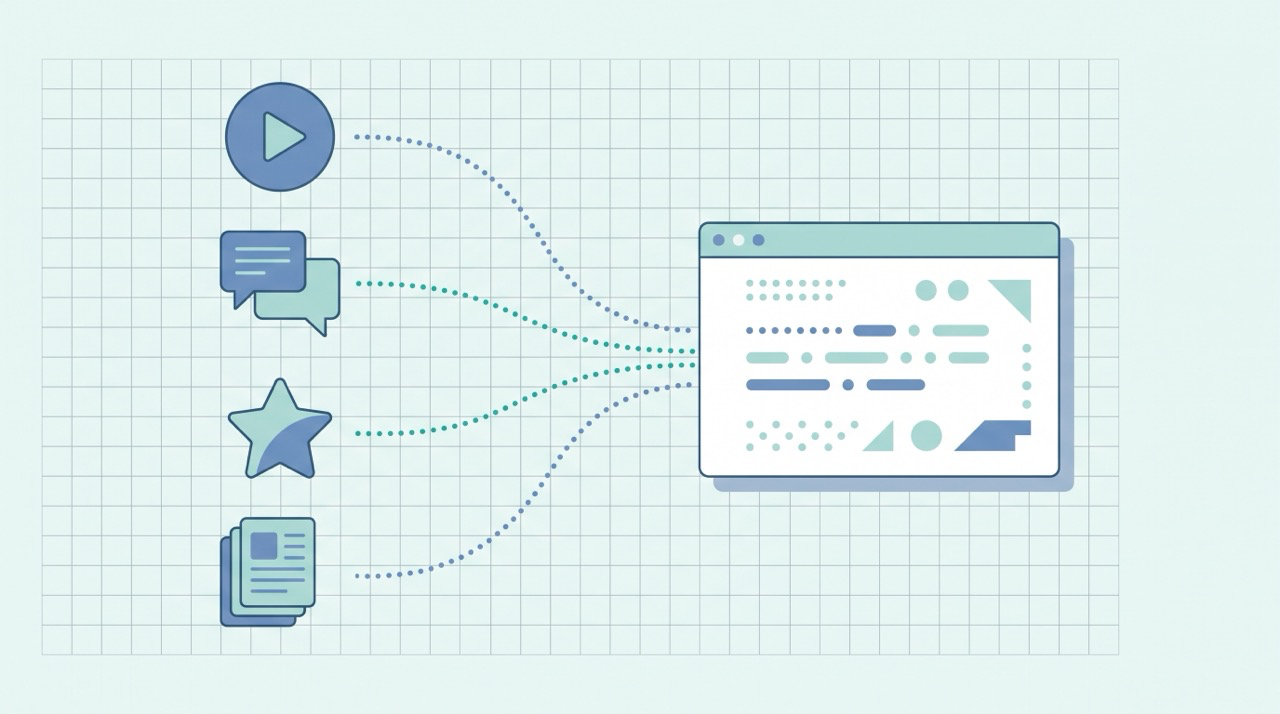
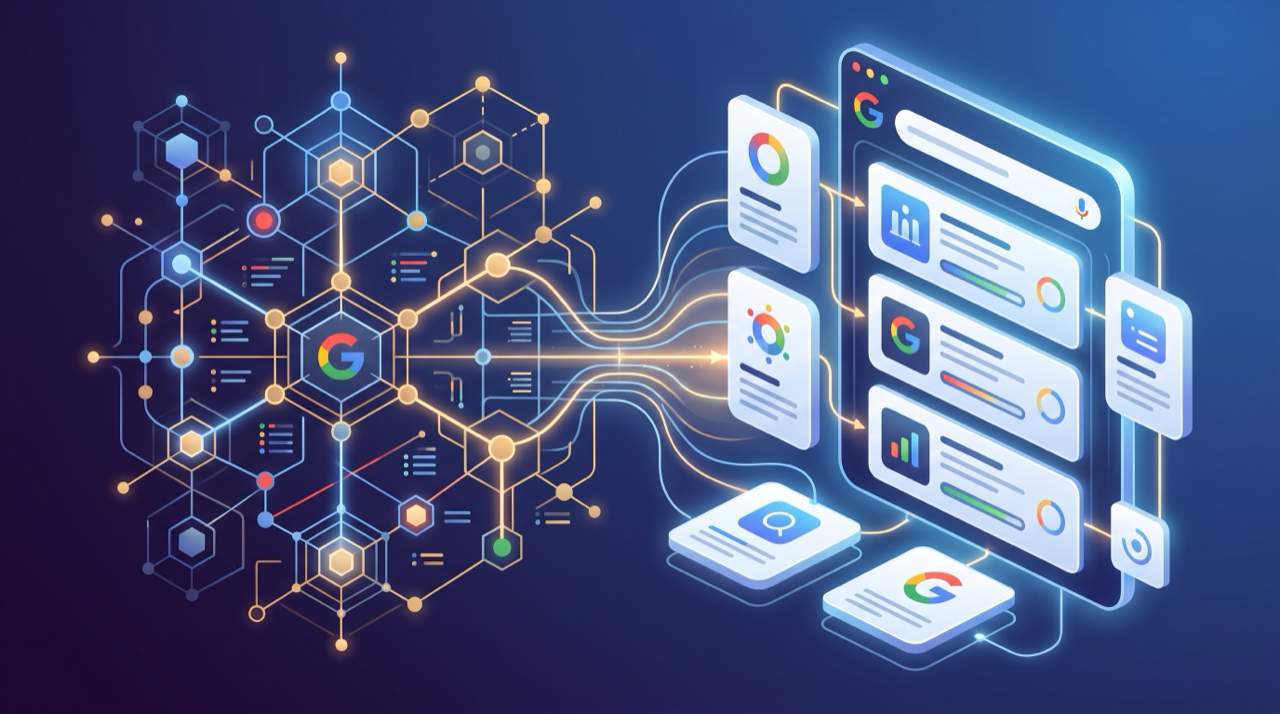
To get your brand mentioned in Gemini, win at Google first — then add the trust signals AI rewards. Gemini is Google's AI, and it leans on Google's index, the Knowledge Graph, your Google Business Profile, and live "grounding" searches to decide who to name. That makes strong, well-structured, crawlable content and a clean Google presence the core of getting mentioned — more so than on any other AI engine. For a small business already doing the SEO basics, that's a head start, not a fresh battle.
When someone asks Gemini "what's the best [your category]?", it answers with specific brand names — and if yours isn't one of them, you're invisible to buyers who never click through to a search results page at all. This guide explains how Gemini decides who to mention, how it differs from Google's AI Overviews, what sources it actually pulls from, and a zero-budget checklist to start showing up. It's the Gemini-specific companion to our explainer on what generative engine optimization (GEO) is.
How does Gemini decide which brands to mention?
Gemini draws on three things, and knowing the mix tells you where to put your effort:
- Training data — the snapshot of the web the model learned from. This is where broad, long-standing brand associations live, and you influence it slowly by being widely and consistently described as a strong option.
- Grounding with Google Search — for many questions, Gemini runs a live Google search, pulls current pages, and cites them with linked sources. Google's own grounding documentation describes this as connecting the model to "real-time web content" with inline source citations. This is the fast lane: fresh, well-structured pages that already rank can get you named quickly.
- The Google knowledge layer — the Knowledge Graph, Google Business Profile, and structured data Google already holds about your business. Because Gemini is Google's own model, this entity layer feeds it directly.
The thread tying these together: Gemini reflects what Google already understands and trusts about you. Unlike ChatGPT, which assembles a more scattered web consensus, Gemini sits on top of the world's most-developed search index and entity graph. So the single highest-leverage move is making sure Google understands clearly who you are, what you do, and that you're a credible option — because Gemini inherits that understanding.
Gemini vs Google AI Overviews: are they the same thing?
Not quite, and the difference is worth thirty seconds. Google AI Overviews are the AI summaries that appear at the top of a normal Google search results page. Gemini is the standalone assistant (the Gemini app, and Gemini built into Workspace, Android, and Chrome). Both are powered by Google's Gemini models, and both draw on Google Search — so the work to win one largely wins the other.
The practical upshot: optimizing for Gemini and for AI Overviews is the same root effort, pointed at two surfaces. We cover the search-results surface in depth in our guide on how to get cited in Google AI Overviews; this guide focuses on the assistant, but you should treat them as one project. Notably, Google's guidance on AI features is blunt that there's no special markup or program to opt in — "there are no additional requirements to appear in AI Overviews or AI Mode" — just the standard work of being indexable and genuinely helpful.
What sources does Gemini actually cite?
Most advice stops at "build authority." We can be more specific, because we measured it.
In our own audit of how AI recommends brands — 50 buyer questions run across ChatGPT, Gemini, Perplexity, and Google AI Overviews in five markets, about 200 answers in total — Gemini had its own distinct citation fingerprint. It skewed toward regional and specialist niche blogs that most marketers have never heard of, rather than only the biggest household-name domains. In one industry, its top cited sources were small country-specific specialist sites, not the global trade giants.
Here's roughly how the platforms differed in our audit:
| AI engine | Tends to cite |
|---|---|
| Gemini | Regional and specialist niche blogs, plus Google's own knowledge layer |
| Google AI Overviews | YouTube and LinkedIn + industry association sites |
| ChatGPT | Niche specialist industry blogs + credible news/data outlets |
| Perplexity | Trade publications, LinkedIn, and reference/wiki-style sites |
Your specific domains will differ by industry, but the shape holds: Gemini rewards being present in the specialist and regional sources that cover your exact niche and market — not just the few famous sites everyone chases. For a smaller or regional business, that's encouraging: a strong presence in the specialist blogs and local publications of your space can get you named even against bigger competitors. Spreading the same effort thinly across every platform is wasted — you target the source profile each engine actually reads.
The zero-budget checklist to get mentioned in Gemini
No ad budget or agency required. Do these roughly in order of impact:
- Nail your Google Business Profile and entity basics. Because Gemini leans on Google's knowledge layer, a complete, accurate Google Business Profile — consistent name, category, description, and matching details across the web (your "NAP": name, address, phone) — is foundational. This is the most Gemini-specific lever, and it's free.
- Lead with a clear, quotable answer. Put a direct answer to the question in the first few sentences, under a heading that matches how people ask it. A self-contained 40–80 word "answer capsule" is the most liftable unit of content there is — Gemini's grounding lifts clean answers, so don't bury the point three paragraphs down.
- Do the Google SEO fundamentals well. Crawlable, indexable, fast pages that genuinely answer the query. Gemini grounds on Google's index, so if you're invisible to Google Search, you're invisible to Gemini's live retrieval. Strong traditional SEO is the floor here, not a separate task.
- Add structured data. Mark up your business, articles, and FAQs with schema so Google parses who you are and what each page says correctly — feeding the entity layer Gemini reads.
- Earn presence in your niche's specialist and regional sources. A guest post, an expert quote, or an accurate listing in the specialist blogs, local publications, and industry directories of your market — exactly the kind of sources our audit saw Gemini cite.
- Show real expertise and trust. Named authors, credentials, and genuine experience — the E-E-A-T signals Google describes, which make both Search and Gemini more confident naming you.
This week, for free, you can knock out a real head start: fully complete your Google Business Profile, add FAQPage or Article schema to one important page, turn that page's opening into a tight 40–80 word answer capsule, and pitch one guest post or listing to a specialist or regional publication in your niche. Four small moves, zero budget, all aligned with how Gemini actually picks brands.
The Google-ecosystem play most guides skip
Because Gemini is woven through Google's products, a few channels punch above their weight here:
- YouTube. It's Google's, and Google's AI surfaces lean on it heavily. A handful of genuinely useful videos — a demo, an explainer, an honest comparison — gives Gemini and AI Overviews more Google-owned material to draw from.
- The Knowledge Graph. Getting recognized as a distinct entity (via consistent structured data, an accurate Google Business Profile, Wikipedia/Wikidata where you legitimately qualify, and consistent mentions) helps Gemini understand you as a real, specific brand rather than a string of words.
- Google Business Profile reviews. Real, well-managed reviews feed Google's picture of whether you're a credible, well-regarded option in your category.
None of this is pay-to-play — it's the patient work of making Google understand and trust you, which Gemini then inherits.
Does traditional Google SEO still matter for Gemini?
More than for any other AI engine — it's the foundation. Gemini grounds its answers on Google Search, so the same things that make you findable and credible to Google (crawlability, relevance, helpful content, authority, a clean entity profile) are exactly what make you retrievable and citable to Gemini. There's no separate "Gemini trick" that bypasses being a strong Google result; the smarter framing is that good SEO now has a second payoff — being named in an answer, not just ranked in a list. Do the fundamentals well and you're optimizing for both at once.
What not to do
A few traps waste effort or actively hurt:
- Don't try to game or "prompt-inject" the model. Hidden text and fake claims don't survive, and Gemini is reading Google's view of you, not your page's hidden instructions.
- Don't rely on self-claims. "We're the best" on your own site means little; Gemini weighs what the wider web — and Google's entity data — say about you.
- Don't neglect your Google Business Profile. On Gemini specifically, an incomplete or inconsistent Google presence is a direct handicap.
- Don't spread thin across every platform identically. Each engine reads different sources — target Gemini's Google-centric, specialist-and-regional profile.
- Don't expect overnight results. Grounding can surface a strong fresh page within weeks, but entity-level and training-data recognition build over months. Judge progress over months, not days.
How do you know if it's working?
Check, don't guess. Ask Gemini the exact questions your customers would, and see whether you're named — and because Gemini grounds with Google Search, note which sources it links. Repeat monthly and track the trend. Our companion guide on how to check if AI mentions your brand walks through a free, ten-minute monthly test across Gemini, ChatGPT, Perplexity, and Google's AI Overviews — including how to catch AI-driven traffic that hides in your analytics.
Because the underlying work overlaps, it's worth optimizing for the other engines in parallel — see our guides on how to get your brand mentioned in ChatGPT and how to get cited in Perplexity.
Frequently asked questions
Can I submit my business to Gemini to be included?
No. There's no submission form or paid placement for organic recommendations. You earn mentions by being a strong, crawlable Google result with a clean, consistent Google presence — a complete Business Profile, accurate structured data, and genuine third-party coverage in your niche.
Is optimizing for Gemini the same as optimizing for Google AI Overviews?
Largely yes. Both are powered by Google's Gemini models and both draw on Google Search, so the same root work — strong SEO, clear answers, a clean entity profile — wins both. AI Overviews appear in search results; the Gemini app is a standalone assistant, but you should treat them as one project.
Does Gemini use real-time data or only training data?
Both. Its base answers draw on training data, while its grounding feature runs live Google searches and cites current pages. Fresh, well-structured content that already ranks can get you named relatively quickly through grounding; broad training-data recognition builds more slowly.
Why does my Google Business Profile matter for Gemini?
Because Gemini is Google's own model, it leans on Google's knowledge layer — the Knowledge Graph and your Business Profile — to understand who you are. A complete, consistent profile is one of the most direct, Gemini-specific levers a small business has.
How long until Gemini mentions my brand?
It varies. A genuinely strong, fresh page that already ranks can start appearing in grounded answers within weeks; entity-level and training-data recognition takes months of consistent presence. Judge progress over months with a regular monthly check.
The bottom line
Getting your brand mentioned in Gemini isn't a separate trick from being a strong Google presence — it's the same work, aimed at being named in an answer instead of just ranked in a list. Get your Google Business Profile and entity basics right, publish clear and well-structured content that already wins at Google, add structured data, and earn a presence in the specialist and regional sources of your niche. Then check monthly and keep going.
Doing all of that consistently — content, structure, entity signals, and outreach, on the sources that actually matter — is the hard part for a small team. That's what QuickCreator is built for: it runs the whole content workflow, from finding the questions buyers ask to drafting and optimizing the clear, citable content that earns AI mentions, as one connected system.
Try QuickCreator free and start earning the Gemini mentions your competitors are already getting.