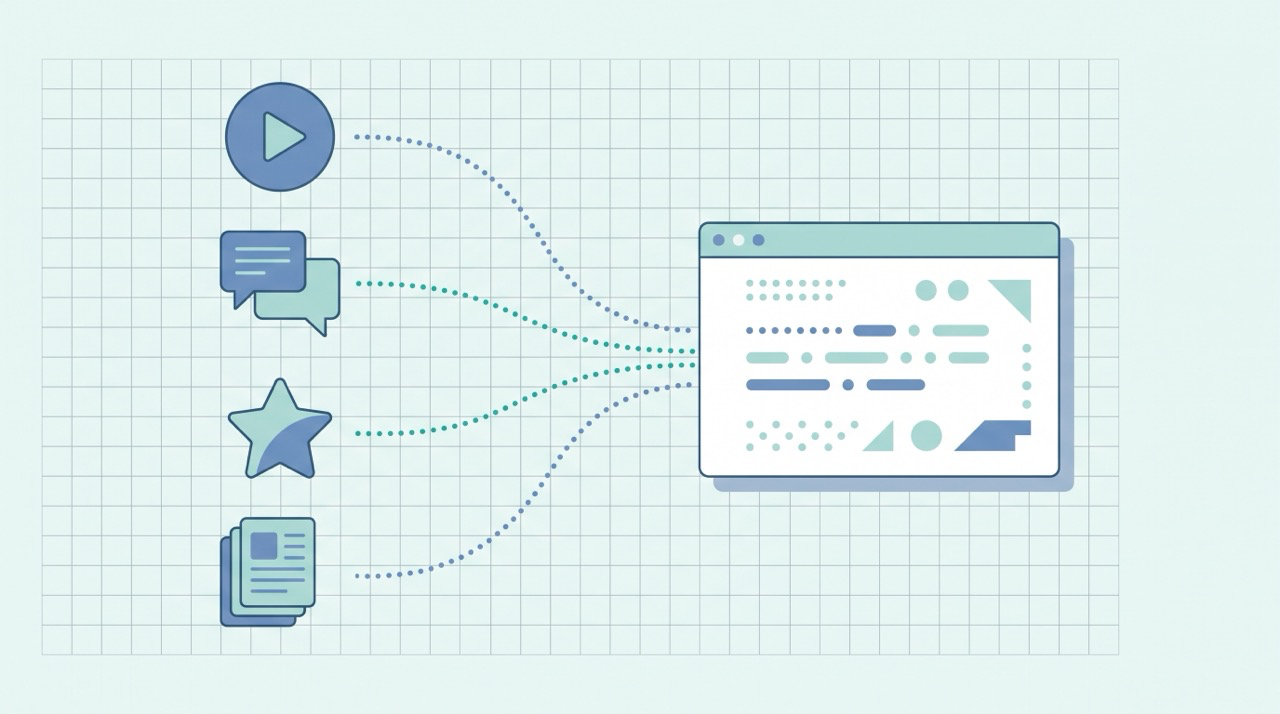
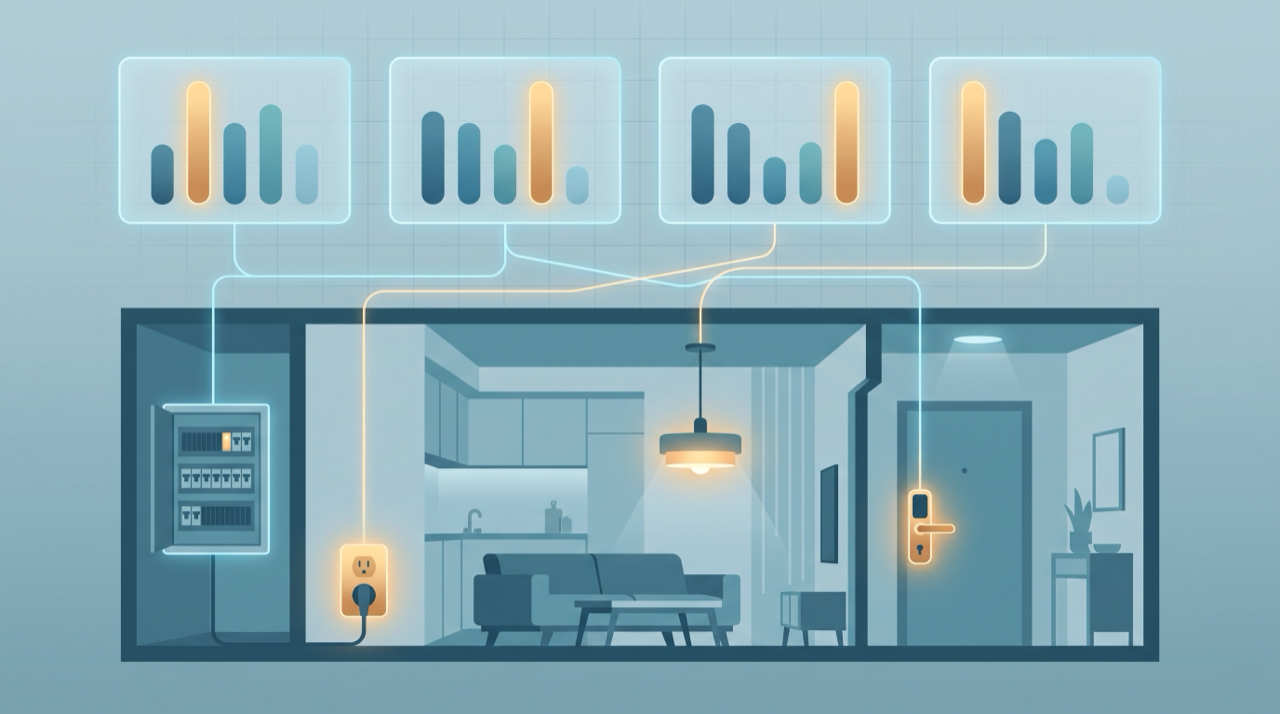
Ask AI which smart-home brand to buy in Europe and there is no single answer — there are four. Aqara leads AI's overall "share of voice," but it only leads because ChatGPT loves it: on Perplexity, the top of the list belongs to century-old electrical incumbents like Schneider Electric, Siemens and ABB. And when the question narrows to a country, the winner changes again — Vimar in Italy, Legrand in Spain, Hager in Germany. We know because we audited roughly 100 AI answers across ChatGPT, Gemini, Google AI Overviews and Perplexity, covering 25 real buyer questions about European smart-home electrical products. This report shows which brands AI recommends, the three different ways the leaderboard splinters, and which sources each engine reads to decide.
This is a smart-home companion to our broader study on how AI decides which brands to recommend, and a sibling to our solar brands GEO report, 3D printer brands GEO report and home energy brands GEO report — same method, applied to smart plugs, switches, lighting, locks and panels.
Key findings at a glance
- No brand owns the category. Aqara tops the overall leaderboard with 91 mentions, but that lead is thin and lopsided: TP-Link Kasa (72), Signify/Philips Hue (67) and Schneider Electric (66) are all within striking distance. Compare that to home energy, where EcoFlow's 180 mentions beat the #2 and #3 brands combined.
- The engines disagree about who even belongs at the top. Aqara pulls 45 mentions on ChatGPT but only 15 on Perplexity, where Schneider Electric (23) and Siemens (19) lead instead. ChatGPT reads the smart-home enthusiast web; Perplexity reads the electrical-trade and B2B web. They return different industries.
- Product sub-categories have their own, much clearer winners. Where the umbrella category is a muddle, individual shelves are near-consensus: TP-Link Kasa won "best smart plug" on all four engines, Nuki won "best smart lock" on all four, Signify won smart lighting on all four.
- Country questions flip the board a fifth time. Most-trusted in Italy returned Vimar and Bticino; in Spain, Legrand on all four engines; in Germany, three engines gave three different answers (Signify, Hager, ABB).
- The top of the funnel is brand-free. Seven of our 25 questions — the how-to and certification ones — surfaced almost no brands at all on any engine. AI only starts naming names once the buyer starts comparing.
- Mentioned isn't recommended isn't liked. Aqara led mentions and recommendations, but the warmest-framed brands were Sonoff (+73% net positive), ABB (+69%) and Siemens (+65%) — none of them near the top on volume.
How we ran the audit
We asked 25 brand-free buyer questions — the kind real European buyers, renovators and installers type, with no company named — to ChatGPT, Gemini, Google AI Overviews and Perplexity. The questions spanned the smart-home electrical stack (smart plugs, wall switches, smart lighting, smart locks, curtain motors, power strips, ceiling fans and circuit breakers) and the whole funnel, from broad awareness ("what certifications are required to sell power strips in Germany?") to country-specific face-offs ("who is the most-trusted wall-switch brand in Spain in 2026?"). That's roughly 100 AI answers, each parsed for which brands were mentioned, which were explicitly recommended, which domains were cited and the sentiment around each brand. AI answers are non-deterministic, so treat the figures as a snapshot of patterns, not a fixed ranking.
The AI share-of-voice leaderboard
Counting every brand mention across all ~100 answers, the smart-home leaderboard is unusually flat at the top:
| Rank | Brand | Total mentions | Platforms covering |
|---|---|---|---|
| 1 | Aqara | 91 | 4 / 4 |
| 2 | TP-Link Kasa | 72 | 4 / 4 |
| 3 | Signify (Philips Hue) | 67 | 4 / 4 |
| 4 | Schneider Electric | 66 | 4 / 4 |
| 5 | Siemens | 34 | 4 / 4 |
Below the top five the field stays dense rather than trailing off: ABB (33), Hager (30), Legrand (29), Nuki (28), Tuya (23), SwitchBot (22), Bticino (19), then Meross, Somfy, Sonoff, Vimar, Belkin, Yale and Xiaomi clustered between 12 and 15. Eighteen brands were mentioned by all four engines — a much broader consensus set than we found in any previous industry audit, and a sign that AI treats "smart home" as a crowded field with no default answer.
For a challenger brand, that flatness is the good news: nobody has the lock here that EcoFlow has on portable power.
The category is really two industries wearing one name
The single most striking pattern in this audit is that the four engines aren't ranking the same market.
ChatGPT answers as a smart-home enthusiast. Its top brands are Aqara (45), Signify (36) and TP-Link Kasa (28) — the ecosystem-and-app crowd. Perplexity answers as an electrician. Its top brands are Schneider Electric (23), Siemens (19) and Signify (18), with Aqara down at 15 and Legrand and ABB in the mix — the switchgear-and-panel crowd. Gemini and Google AI Overviews sit between the two, with TP-Link Kasa and Aqara leading but Schneider and Hager never far behind.
That gap isn't a rounding error; it's a different answer to "who makes good smart-home electrical products." A brand that has won the enthusiast conversation can be effectively invisible on Perplexity, and a legacy electrical manufacturer can lead there while barely registering with ChatGPT.
The reason shows up in the citations, and we'll get to it below — but the strategic read is immediate: decide which of the two industries you're competing in, because the engines already have.
Sub-categories have clear winners, even though the category doesn't
Zoom in from "smart home" to an actual shelf and the fog lifts. Several product questions produced near-unanimous answers across all four engines:
- Smart Wi-Fi plugs → TP-Link Kasa, top-mentioned on all four engines, usually via the Tapo P110. The clearest consensus in the entire audit.
- Smart locks → Nuki, top-mentioned on all four engines for European residential doors, with Yale the recurring runner-up.
- Smart lighting → Signify (Philips Hue), top-mentioned on all four engines for European residential installs, and by a wide margin on ChatGPT (18 mentions on that question alone).
- Matter and Zigbee plugs → Aqara, top on all four engines — a different winner than the plain Wi-Fi plug question, decided purely by the protocol named in the prompt.
And several splintered completely:
- Curtain motors gave four answers on four engines: Somfy (ChatGPT), Aqara (Gemini and Perplexity), SwitchBot (Google AI Overviews).
- Residential circuit breakers gave three: ABB (ChatGPT), Schneider Electric (Gemini and Google AI Overviews), Siemens (Perplexity).
- Wall switches split between Schneider Electric (ChatGPT, Perplexity) and Bticino (Gemini, Google AI Overviews).
This mirrors what we found in 3D printing: the umbrella category contains several different AI leaderboards, and the one you have to win is the one you sell into. "Best smart home brand" is not a question you can win. "Best Matter-compatible smart plug for European homes" is.
The answer changes at the border
Country-level "most-trusted" questions produced a fifth version of the leaderboard, and the national incumbents took over:
- Italy → Vimar (ChatGPT), Bticino (Gemini, Google AI Overviews), Legrand (Perplexity). None of these are top-five brands overall.
- Spain → Legrand, on all four engines. The most decisive country answer in the audit.
- Germany → three engines, three answers: Signify (ChatGPT), Hager (Gemini), ABB (Perplexity).
- United Kingdom → Signify (ChatGPT), TP-Link Kasa (Gemini), Anker Eufy (Google AI Overviews).
- EU-wide circuit breakers → Schneider Electric on three engines, Siemens on Gemini.
Hager and Vimar barely appear in the overall standings but own their home markets in AI's telling. If you sell into Europe, "European AI visibility" isn't one number — it's at least five.
The whole top of the funnel is brand-free
Something we hadn't seen this cleanly in previous audits: our seven awareness-stage questions — about EU market sizing, importing with CE certification, Cyber Resilience Act-era compliance obligations, MOQs and lead times, OEM versus ODM sourcing, and the safety risks of cheap power strips — returned almost no brand mentions at all, on any engine. A stray Legrand or Xiaomi in a market-growth answer was the extent of it.
AI answers those questions with standards bodies, regulators, market-research firms and trade explainers. It only starts naming brands once the buyer moves to comparison ("which is the best…") and it names them heavily at that point.
Two implications, and they point in opposite directions:
- Don't expect brand mentions from educational content. If your GEO goal is to be recommended, awareness-stage articles won't get you there directly — the engines strip brands out of those answers.
- But that's exactly where the citations are. Those brand-free answers still cite sources. Being the trade explainer AI quotes on EU compliance won't get you named as "the best," but it builds the authority footprint the engines draw on when they do start naming names.
Where AI looks for smart-home answers (the part you can act on)
Each engine builds its answer from a different source diet, and here the diets explain the disagreement almost perfectly:
- ChatGPT reads the consumer tech press and Reddit. Its most-cited domains were reddit.com (9 citations), theverge.com (4) and t3.com (3), plus EU regulatory sources for the compliance questions. That diet produces an Aqara-and-Hue worldview.
- Google AI Overviews reads Google, Reddit and YouTube. google.com (37), reddit.com (23) and youtube.com (21) dwarfed everything else, with amazon.co.uk (5) and homey.app behind them. AI Overviews is largely re-serving its own index plus community and video content.
- Gemini reads niche blogs and market research. mordorintelligence.com (7), seller.alibaba.com (6), plus specialist sites like zigbeeguru.com (5), londonlocks.com (5) and smarthomesetup.co.uk (4). Small, topic-dedicated sites punch far above their weight here.
- Perplexity reads B2B marketplaces and LinkedIn. youtube.com (18), made-in-china.com (11), linkedin.com (9) and alibaba.com (9) led — which is precisely why Perplexity's brand list looks like a trade directory rather than a gadget review.
The practical read: if you want ChatGPT and Google AI Overviews, you need Reddit, YouTube and consumer-tech coverage. If you want Gemini, the win is on small specialist blogs — a far cheaper target than national media. If you want Perplexity, you need the B2B channels most consumer smart-home brands ignore entirely.
Mentioned, recommended, and liked are three different battles
Getting mentioned is not the same as getting recommended, and neither is the same as being described positively.
- Aqara converted its volume. Across the 37 explicit "best pick" recommendations we parsed from ChatGPT, Aqara led with 7 wins, ahead of Schneider Electric (5), Signify (5) and Nuki (4). On Gemini it led again with 4 of 14. Volume leader and recommendation leader lined up.
- But the best-liked brands were mid-table. By our sentiment lexicon, the most positively framed brands were Sonoff (+73% net positive), ABB (+69%), Siemens (+65%), and Yale and Somfy (both +64%). Aqara, the mention leader, landed at +49% — the lowest of any top-four brand. It is talked about the most and praised the least, proportionally.
- Perplexity rarely recommends outright. We parsed only 4 explicit "best pick" statements from Perplexity versus 37 from ChatGPT. It mentions brands inside cited source titles rather than crowning a winner in its own voice — so a per-platform "winner" there rests on a much thinner sample.
What smart-home brands should do about it
- Measure where you stand, per shelf and per country. Run brand-free buyer questions ("best Matter smart plug for European homes," "most-trusted wall-switch brand in Spain") through ChatGPT, Perplexity and Google's AI Overviews and see whether you're named. Our free monthly AI-visibility check walks you through it, and our explainer on AI share of voice defines the metric this report measures.
- Pick your industry. The enthusiast leaderboard (ChatGPT, Gemini) and the electrical-trade leaderboard (Perplexity) are different competitions with different sources. Trying to win both at once with one content program is how brands end up mid-table on all four engines.
- Compete at the sub-category, not the umbrella. Nobody wins "best smart home brand." TP-Link won plugs, Nuki won locks, Signify won lighting — each by owning a specific, answerable question.
- Target the right sources per engine. Reddit, YouTube and tech press for ChatGPT and Google AI Overviews; small specialist blogs for Gemini; B2B marketplaces and LinkedIn for Perplexity.
- Publish clear, citable content. Structured, well-sourced pages with real authorship and the trust signals Google describes as E-E-A-T are what AI lifts into answers. There's no separate trick beyond the fundamentals.
This is the kind of intelligence QuickCreator produces as a GEO Industry Report — and it's built to do the follow-on work too, from finding the questions buyers ask to drafting the citable content that earns those mentions. If GEO is new to you, start with our explainer on what generative engine optimization is.
Frequently asked questions
Which smart-home brand does AI recommend most?
Across our audit of ~100 AI answers, Aqara led overall with 91 mentions, followed by TP-Link Kasa (72), Signify/Philips Hue (67) and Schneider Electric (66). But that lead is narrow and platform-dependent: Aqara leads because of ChatGPT (45 mentions there versus 15 on Perplexity). There is no brand that leads across plugs, switches, lighting, locks and panels at once, and no brand that leads on all four engines.
Do ChatGPT, Gemini and Perplexity recommend different smart-home brands?
Yes — more sharply than in any other category we've audited. ChatGPT's top brands are smart-home natives (Aqara, Signify, TP-Link Kasa); Perplexity's are legacy electrical manufacturers (Schneider Electric, Siemens, ABB). Gemini and Google AI Overviews fall between them. The engines are effectively ranking two different industries under the same category name, so there is no single "AI answer" to optimize for.
Why do AI engines disagree about smart-home brands?
Because they cite different sources. ChatGPT leans on Reddit and consumer-tech press like The Verge and T3; Google AI Overviews leans on Google, Reddit and YouTube; Gemini leans on niche specialist blogs and market-research firms; Perplexity leans on B2B marketplaces like made-in-china.com and Alibaba plus LinkedIn. Each engine recommends the brands that appear in the sources it trusts, so the leaderboard follows the citation diet.
Does AI name brands in awareness-stage answers?
Largely no. In our audit, the seven awareness-stage questions — EU certification, importing, MOQs, OEM versus ODM sourcing, product safety — surfaced almost no brand mentions on any engine. AI answers those with standards bodies, regulators and market researchers, and only starts naming brands once the question turns to comparison. Educational content still matters for authority and citations, but it won't get you recommended directly.
How can a smart-home brand show up in AI answers?
Measure your current AI visibility with brand-free buyer questions, decide whether you're competing on the enthusiast or the electrical-trade side, then earn a presence on the specific sources that side's engines cite — Reddit and YouTube for ChatGPT and Google AI Overviews, specialist blogs for Gemini, B2B marketplaces for Perplexity. Publish credible content with real E-E-A-T, target the sub-category and country you can actually win, and do it consistently.
Is this report only about smart home?
The data covers smart-home electrical products across European markets, but the patterns — a flat leaderboard, per-platform divergence, distinct citation diets, country-level flips, and the gap between being mentioned and recommended — hold across industries. Our broader study covers the universal version, and our home energy report covers the adjacent hardware category.
A note on the data and its limits
This was a discovery-mode audit: 25 brand-free questions across the European smart-home electrical stack, each sent once to ChatGPT, Gemini, Google AI Overviews and Perplexity, with answers parsed for mentions, recommendations, cited domains and sentiment. AI answers are non-deterministic, so exact counts shift if you re-run them — treat these as a snapshot of patterns, not fixed rankings. Sentiment used a simple positive/negative lexicon over a short context window around each mention, which catches tone but not nuance. Some engines surfaced few explicit recommendations — four on Perplexity versus 37 on ChatGPT — so per-platform "winners" rest on much smaller samples than the mention counts. It's one slice of the market at one point in time; your numbers will differ. What generalizes is the shape, not the specific figures.
Try QuickCreator free and start earning the AI recommendations your competitors are already getting.