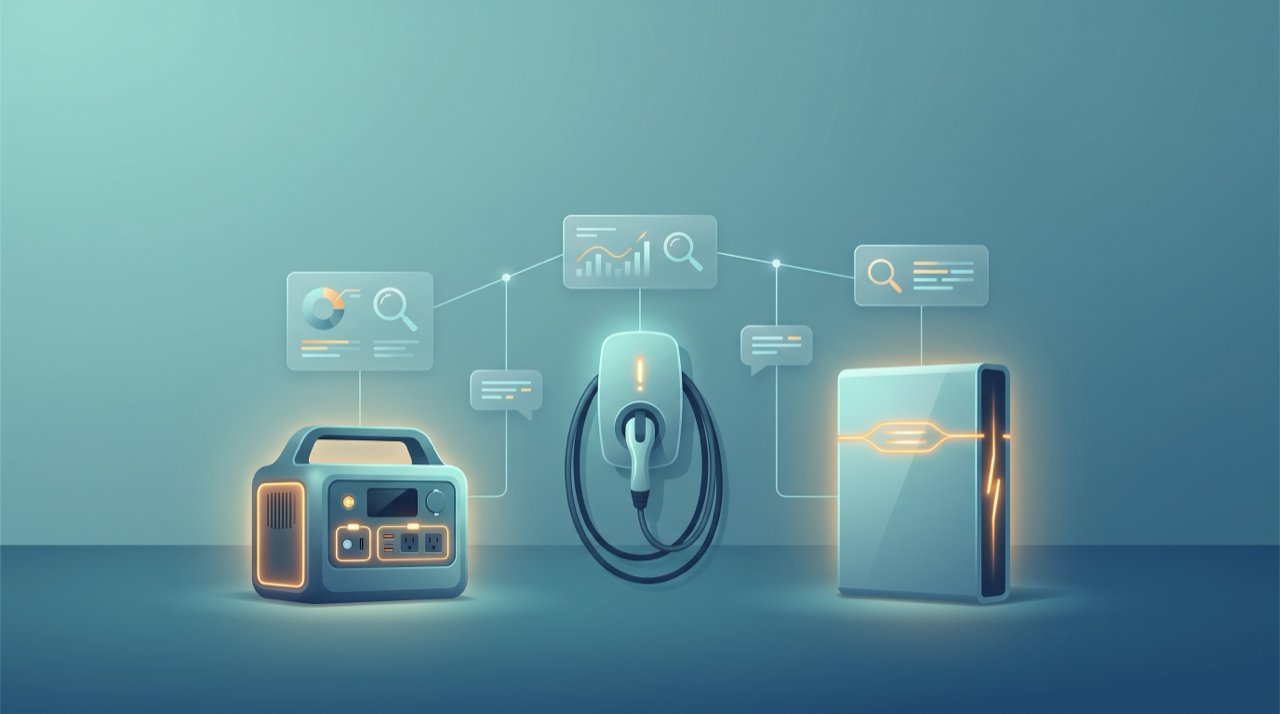
When European households ask AI which portable power station, home EV charger, or battery to buy, one name already owns the answer: EcoFlow leads AI's "share of voice" on all four major engines. But the moment the question moves from portable power to EV charging or home storage, that dominance evaporates — no single brand leads, and the "best" flips by country and by platform. We know because we audited roughly 100 AI answers across ChatGPT, Gemini, Google AI Overviews, and Perplexity, covering 25 real buyer questions across the home-energy stack. This report shows which home-energy brands AI recommends, where the leaderboard splinters, and exactly which sources each engine reads to decide.
This is a home-energy companion to our broader study on how AI decides which brands to recommend, and a sibling to our solar brands GEO report and 3D printer brands GEO report — same method, applied to portable power, EV chargers, and home batteries.
Key findings at a glance
- One brand owns portable power. EcoFlow tops AI's share of voice on all four engines (180 total mentions), well ahead of Bluetti (87) and Anker SOLIX (83). In portable power stations, the engines agree on the leader — a rarity in these audits.
- But EV charging and home storage are wide open. No brand dominates chargers or batteries the way EcoFlow dominates power stations. The EV-charger "winner" was myenergi on ChatGPT and Gemini but Wallbox on Google AI Overviews and Perplexity; in home batteries, Sungrow led mentions on most engines while Tesla Powerwall stayed the best-known Western name.
- The answer changes by country. Ask for the most-trusted charger in Italy and you get Enel X JuiceBox; in the wider EU it flips to Wallbox and myenergi. Ask for a home battery in Spain and Sonnen surfaces; the "best Chinese-origin" battery is Sungrow almost everywhere.
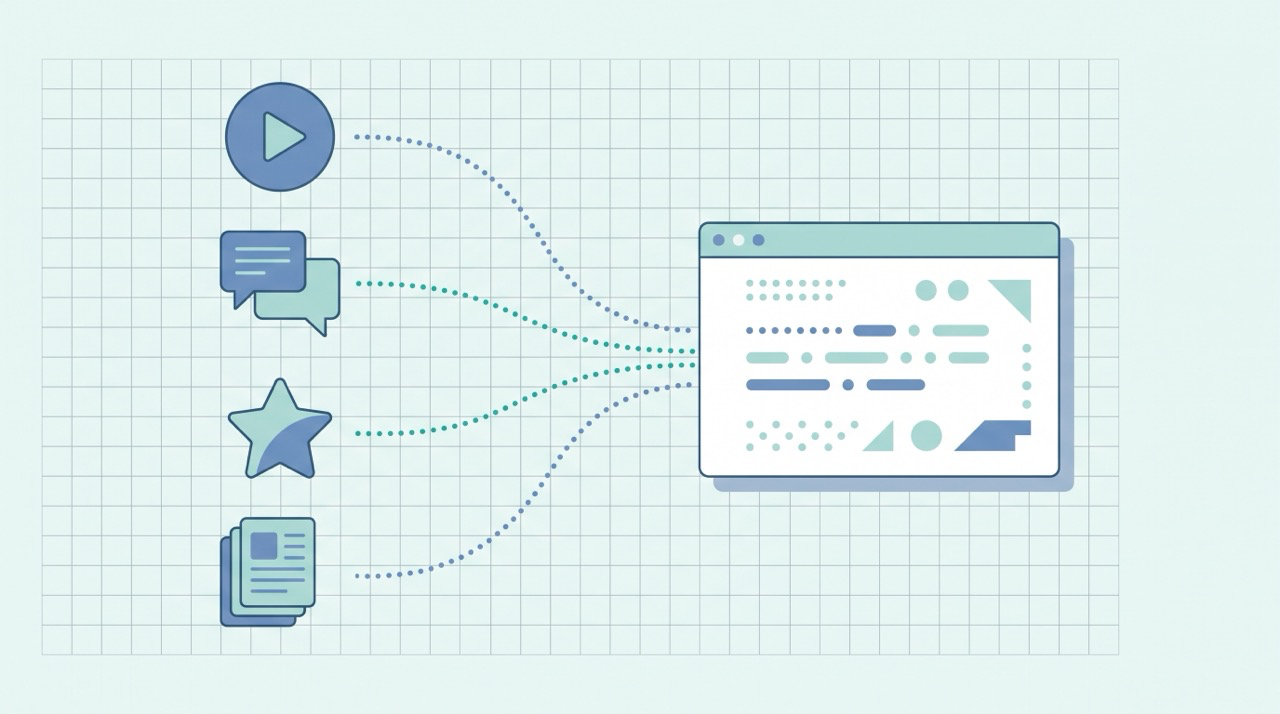
- Each engine reads a different slice of the web. Portable-power answers lean on Reddit, YouTube, and review sites (TechRadar, OutdoorGearLab); charger and battery answers lean on UK installer and comparison blogs; Perplexity pulls heavily from B2B marketplaces like made-in-china.com and Alibaba.
- Mentioned isn't recommended isn't liked. EcoFlow led both mentions and explicit "best pick" wins, but the brands framed most positively — BYD, Tesla Powerwall, Zaptec, Sungrow — weren't the volume leaders.
How we ran the audit
We asked 25 brand-free buyer questions — the kind real European buyers and installers type, with no company named — to ChatGPT, Gemini, Google AI Overviews, and Perplexity. The questions spanned the full home-energy stack (portable power stations, home EV chargers, and residential battery storage) and the whole funnel, from broad awareness ("is a portable power station worth it?") to country-specific face-offs ("most-trusted home EV charger in Italy in 2026?"). That's roughly 100 AI answers, each parsed for which brands and products were mentioned, which were explicitly recommended, which domains were cited, and the sentiment around each brand. AI answers are non-deterministic, so treat the figures as a snapshot of patterns, not a fixed ranking.
The AI share-of-voice leaderboard
Counting every brand mention across all ~100 answers, the home-energy leaderboard is top-heavy — and one brand sits far above the rest:
| Rank | Brand | Total mentions | Platforms covering |
|---|---|---|---|
| 1 | EcoFlow | 180 | 4 / 4 |
| 2 | myenergi | 88 | 4 / 4 |
| 3 | Bluetti | 87 | 4 / 4 |
| 4 | Anker SOLIX | 83 | 4 / 4 |
| 5 | Jackery | 57 | 4 / 4 |
Below the top five, the mid-table is a long tail of category specialists: Wallbox (50) and Ohme (48) in EV charging, Sungrow (44) and Zaptec (39), then Easee (35), Tesla Powerwall (31), Sonnen (20), BYD Battery-Box (14), and a dozen more that appear on one or two engines only. EcoFlow's 180 mentions are more than the #2 and #3 brands combined — the single most lopsided lead we've seen in a home-hardware category.
AI already crowned a winner in portable power
In portable power stations, the four engines rarely disagreed. EcoFlow was the most-mentioned brand on every platform — 81 mentions on ChatGPT, 42 on Gemini, 28 on Google AI Overviews, 29 on Perplexity — and its Delta 2 and Delta Pro were the two most-named products in the category across engines. Bluetti was the consistent #2 (strongest on Perplexity), with Anker SOLIX and Jackery rounding out the shortlist.
The one interesting crack: asked "who is the most-trusted portable power station brand in Germany?", ChatGPT still said EcoFlow, but Gemini, Google AI Overviews, and Perplexity all flipped to Anker SOLIX. So even in the category with the clearest leader, the country-level "most-trusted" question can surface a challenger — a reminder that share of voice and trust framing aren't the same signal.
For a brand, portable power is the hard category to break into: AI has already consolidated around EcoFlow, and dislodging an incumbent that owns the review-site and Reddit conversation is a long game.
But EV charging and home batteries are wide open
Move one shelf over and the picture inverts. In home EV chargers, there is no EcoFlow. myenergi wins the UK questions decisively (25 mentions on ChatGPT, 20 on Gemini for the "best UK home charger" question) but fades elsewhere; Wallbox is the broad-consensus pick across the EU; Zaptec owns the OCPP-compliant multi-family question; Easee and Alfen trade the load-management answers, with Ohme strong on the everyday UK-charging questions. Ask for the most-trusted charger in Italy and Enel X JuiceBox appears; ask the EU-wide version and it flips to Wallbox and myenergi. It's a fragmented, geography-split market — exactly the kind of open field where a newcomer can still win the answer. (For the underlying hardware context, the U.S. Department of Energy's home-charging primer is a good baseline on Level 1 vs Level 2.)
Residential battery storage is just as unsettled. Sungrow led home-battery mentions on most engines, but the explicit "best home battery" pick splintered — ChatGPT named Sonnen, while Gemini and Perplexity named Tesla Powerwall; Sonnen resurfaced for Spain, and the "best Chinese-origin BESS" answer was Sungrow on all four engines. No brand here has the lock EcoFlow has on power stations.
The takeaway mirrors what we found in 3D printing: a single "home energy" category actually contains several different AI leaderboards, and you have to compete in the one you sell into — not the umbrella term.
Where AI looks for home-energy answers (the part you can act on)
Each engine builds its answer from a different source diet, and in home energy the split is unusually clean:
- Portable power runs on community and review content. Across ChatGPT, Google AI Overviews, and Perplexity, the heaviest-cited domains were Reddit, YouTube, and consumer-review sites like TechRadar, OutdoorGearLab, and Popular Mechanics. Google AI Overviews even cited ecoflow.com directly (7 times) — the manufacturer's own pages are part of the answer.
- Chargers and batteries run on installer and comparison blogs. Gemini leaned on UK installer sites (certifiedinstaller.co.uk, bestchargers.co.uk, comparesolarni.com); Google AI Overviews cited wallbox.com and specialist charger blogs (injetcharger.co.uk). These are niche, trust-built sites, not big media.
- Perplexity leans on B2B marketplaces. For sourcing-flavored questions it cited made-in-china.com (17×), Alibaba (10×), and LinkedIn (13×) heavily — a very different diet from the others, and a channel most consumer brands ignore.
The practical read: if you sell portable power, you win by being present and well-reviewed on Reddit, YouTube, and the review sites. If you sell chargers or batteries, you win on the installer and comparison blogs — and, for Perplexity, on the B2B marketplaces.
Mentioned, recommended, and liked are three different battles
Getting mentioned is not the same as getting recommended, and neither is the same as being described positively.
- Mentioned and recommended aligned at the top. EcoFlow led both raw mentions and explicit "best pick" wins (11 on ChatGPT, 13 on Gemini) — an unusual case where the volume leader is also the recommendation leader. myenergi punched above its weight on Gemini recommendations (11 wins), converting mentions into picks efficiently.
- The best-liked brands weren't the loudest. By our sentiment lexicon, the most positively framed home-energy brands were BYD Battery-Box (+79% net positive), Tesla Powerwall (+71%), Zaptec (+70%), and Sungrow (+69%) — all mid-table on mentions. EcoFlow's sentiment (+52%) was solid but not category-leading. Owning the conversation and owning the warmest conversation are separate wins.
What home-energy brands should do about it
- Measure where you stand, per category. Run brand-free buyer questions ("best portable power station under €1,500," "most-trusted home EV charger in Germany") through ChatGPT, Perplexity, and Google's AI Overviews and see whether you're named. Our free monthly AI-visibility check walks you through it.
- Target the right sources per engine. Portable-power brands earn presence on Reddit, YouTube, and review sites; charger and battery brands earn it on installer and comparison blogs — and on B2B marketplaces if Perplexity matters to you.
- Publish clear, citable content. Structured, well-sourced pages with real authorship and the trust signals Google describes as E-E-A-T are what AI lifts into answers. There's no separate trick beyond the fundamentals.
- Compete in your sub-category and your country. The leaderboard for portable power, EV chargers, and home batteries is different — and it flips again by market. Optimize for the specific question you can actually win.
- Be consistent. AI share of voice compounds: EcoFlow got its lock by being referenced again and again, across exactly the sources these engines read.
This is the kind of intelligence QuickCreator produces as a GEO Industry Report — and it's built to do the follow-on work too, from finding the questions buyers ask to drafting the citable content that earns those mentions. If GEO is new to you, start with our explainer on what generative engine optimization is.
Frequently asked questions
Which home-energy brand does AI recommend most?
Across our audit of ~100 AI answers, EcoFlow led overall with 180 mentions — driven almost entirely by portable power stations, where it topped every engine. myenergi (88) and Bluetti (87) followed, but their strength is concentrated: myenergi in EV chargers, Bluetti in portable power. There is no single brand that leads across power stations, chargers, and batteries at once.
Do ChatGPT, Gemini, and Google recommend different home-energy brands?
Yes, outside portable power. EcoFlow leads power stations on all four engines, but the EV-charger pick was myenergi on ChatGPT and Gemini versus Wallbox on Google AI Overviews and Perplexity, and the home-battery answer splintered further — Sungrow led mentions on most engines while the flagship "best battery" pick ran from Sonnen (ChatGPT) to Tesla Powerwall (Gemini, Perplexity). There is no single "AI answer" — you have to think per platform.
Why do AI engines disagree about chargers and batteries?
Because they cite different sources. Gemini and Google AI Overviews lean on UK installer and comparison blogs; ChatGPT and Perplexity lean more on Reddit, YouTube, and — for Perplexity — B2B marketplaces like made-in-china.com and Alibaba. Each engine recommends the brands that appear in the sources it trusts, so the leaderboard follows the citation diet.
How can a home-energy brand show up in AI answers?
Measure your current AI visibility with brand-free buyer questions, then earn a presence on the specific sources each engine cites for your category — review sites and Reddit for portable power, installer and comparison blogs for chargers and batteries — publish credible content with real E-E-A-T, and do it consistently. AI share of voice builds over time, not overnight.
Is this report only about home energy?
The data covers portable power, home EV charging, and residential storage across European markets, but the patterns — a top-heavy leaderboard, per-platform divergence, distinct citation sources, and the gap between being mentioned and recommended — hold across industries. Our broader study covers the universal version, and our solar report covers PV specifically.
A note on the data and its limits
This was a discovery-mode audit: 25 brand-free questions across the home-energy stack, each sent once to ChatGPT, Gemini, Google AI Overviews, and Perplexity, with answers parsed for mentions, recommendations, cited domains, and sentiment. AI answers are non-deterministic, so exact counts shift if you re-run them — treat these as a snapshot of patterns, not fixed rankings. Sentiment used a simple positive/negative lexicon, and some engines surfaced few explicit recommendations, so per-platform "winners" rest on smaller samples than the mention counts. It's one slice of the market at one point in time; your numbers will differ. What generalizes is the shape, not the specific figures.
Try QuickCreator free and start earning the AI recommendations your competitors are already getting.