Search just split into two front doors
For most of the internet's life, getting found meant one thing: ranking on Google. You optimized a page, you climbed the blue links, people clicked. That was SEO, and for a solopreneur it was the single highest-leverage marketing skill you could learn.
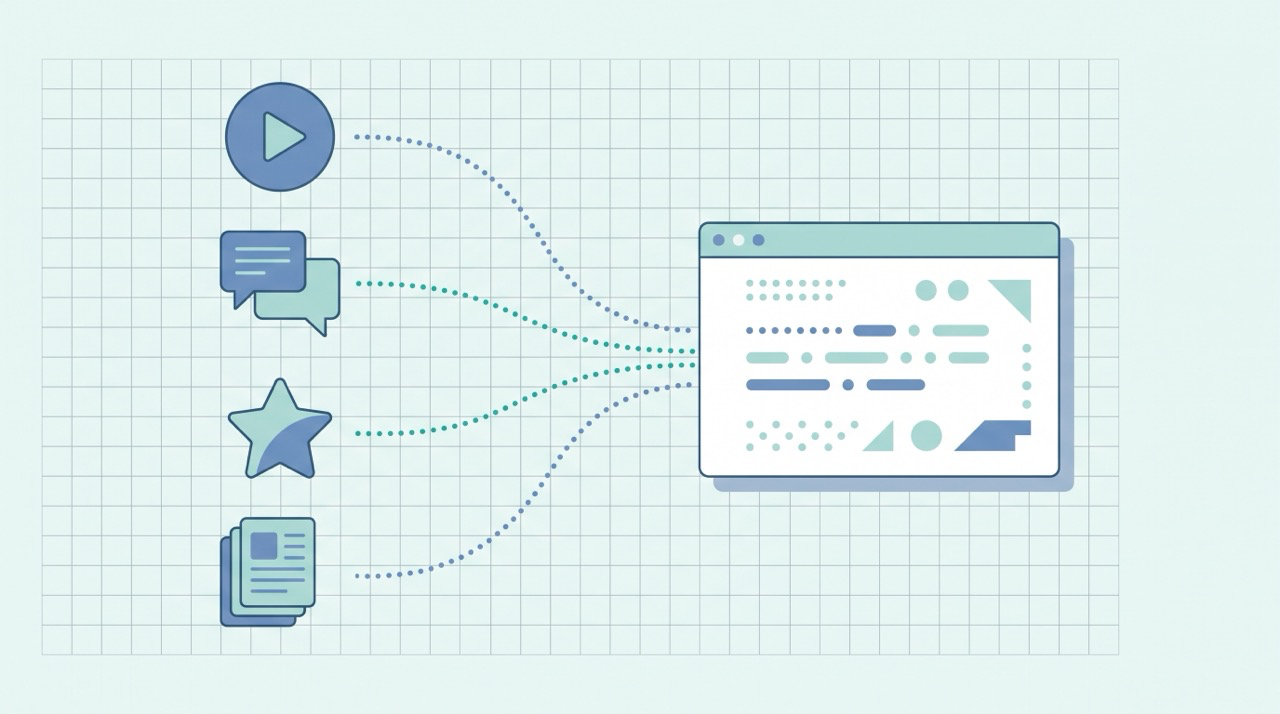
That world still exists. But in 2026 a second front door has opened next to it. Google now shows AI Overviews — the AI-written summary at the top of the results — on a large and growing share of searches by default, and a rising portion of searches end without any click at all because the answer was right there. Meanwhile millions of people now start their research inside ChatGPT, Perplexity, or Gemini instead of a search box. In all of these, the user gets a written answer with a handful of sources named inside it — and often never scrolls to the blue links. Being the page that ranks and being the brand that gets named in the answer are now two different games.
The discipline of winning that second door has a name: GEO, or Generative Engine Optimization. And here's the uncomfortable part for a one-person business: you don't get to pick one. The people most affected by this shift are exactly the ones with the least time to react — solopreneurs, freelancers, and founders who are the entire marketing department.
The good news, which almost nobody is telling solopreneurs clearly, is that SEO and GEO are not two separate workloads. Done right, they're mostly the same work pointed at two destinations. This guide explains why you need both, how they divide the labor, and how to actually run them as a team of one.
Do solopreneurs even need SEO anymore?
This is the question lurking behind every "is SEO dead?" headline, and for solopreneurs it carries real anxiety: if AI is going to answer everything, why pour months into ranking on Google?
Here's the honest answer. AI hasn't killed search — it's changed where the search happens. People are searching more than ever; they're just doing some of it inside AI tools instead of only on Google. And those AI tools are built on top of the web. When ChatGPT or Perplexity answers a question, it's crawling and retrieving from pages it can find, read, and trust — much of the same open web that search engines index. The engines and crawlers differ in the details, but the principle holds: a site that's invisible to traditional search is largely invisible to AI too, because both are reading the same web.
So SEO isn't obsolete. It's the foundation that GEO stands on. A solopreneur who skips SEO entirely isn't "leapfrogging to AI" — they're locking themselves out of both doors at once.
What has changed is that SEO alone is no longer the whole job. Ranking #1 still wins you the click from people who scroll the links. But it does nothing for the growing share of people who read the AI answer and stop there. To reach them, you need the second discipline.
What's the difference between SEO and GEO?
They sound similar and they overlap heavily, but their goals are different.
SEO (Search Engine Optimization) is about earning a position in the ranked list of links. Success looks like: your page sits at the top of Google for a query, someone clicks it, and lands on your site. You win the visit.
GEO (Generative Engine Optimization) is about getting your business cited inside an AI-generated answer. Success looks like: someone asks ChatGPT "what's a good tool for X" or asks Google's AI Overview a question in your niche, and your brand gets named, quoted, or linked as a source. You win the mention — and the trust that comes with being the answer rather than one of ten options.
Here's how the two compare across what matters to a solo operator:
| SEO | GEO | |
|---|---|---|
| Where you show up | Ranked list of blue links | Inside the AI's written answer |
| The win | The click to your site | Being named as the source |
| Main engine | Google, Bing | ChatGPT, Perplexity, Google AI Overviews, Gemini |
| What it rewards | Relevance, authority, backlinks | Clear structure, citable facts, entity clarity, trust signals |
| How you measure it | Rankings, organic clicks, impressions | Mentions and citations in AI answers, referral traffic from AI tools |
| Time to results | 3–6 months to start, compounds | Often faster to get cited, but volatile early |
Notice the overlap in the bottom-left of each column. The inputs — clear, well-structured, trustworthy content on a crawlable site — are almost identical. That overlap is the whole reason a solopreneur can realistically do both.
Why you can't just pick one
It's tempting, when you're a team of one, to choose a lane. "I'll just do SEO" or "I'll just chase AI mentions." Both are mistakes, for the same reason: they each abandon half of how people now find businesses.
Think about a single potential customer researching a purchase in your niche. Some of the time they'll Google it, scan the links, and click the most credible result — that's SEO's moment. Other times they'll ask an AI assistant to just tell them the best option, and act on whatever it names — that's GEO's moment. Often it's the same person doing both on the same day.
If you only do SEO, you're invisible the moment that person asks an AI instead of scrolling. If you only do GEO, you have no foundation of ranked, trusted pages for the AI to cite in the first place — and you forfeit every high-intent searcher who still clicks links (which is most of them, for now).
For a solopreneur, the stakes are higher than for a big company, not lower. A 50-person marketing team can afford to be mediocre at one channel because they're covering ten. You have one shot at being found. Cutting off half the ways people discover you isn't a simplification — it's cutting your reach in half.
The part nobody tells solopreneurs: it's mostly the same work
Here's the insight that changes everything about how a one-person business should think about this.
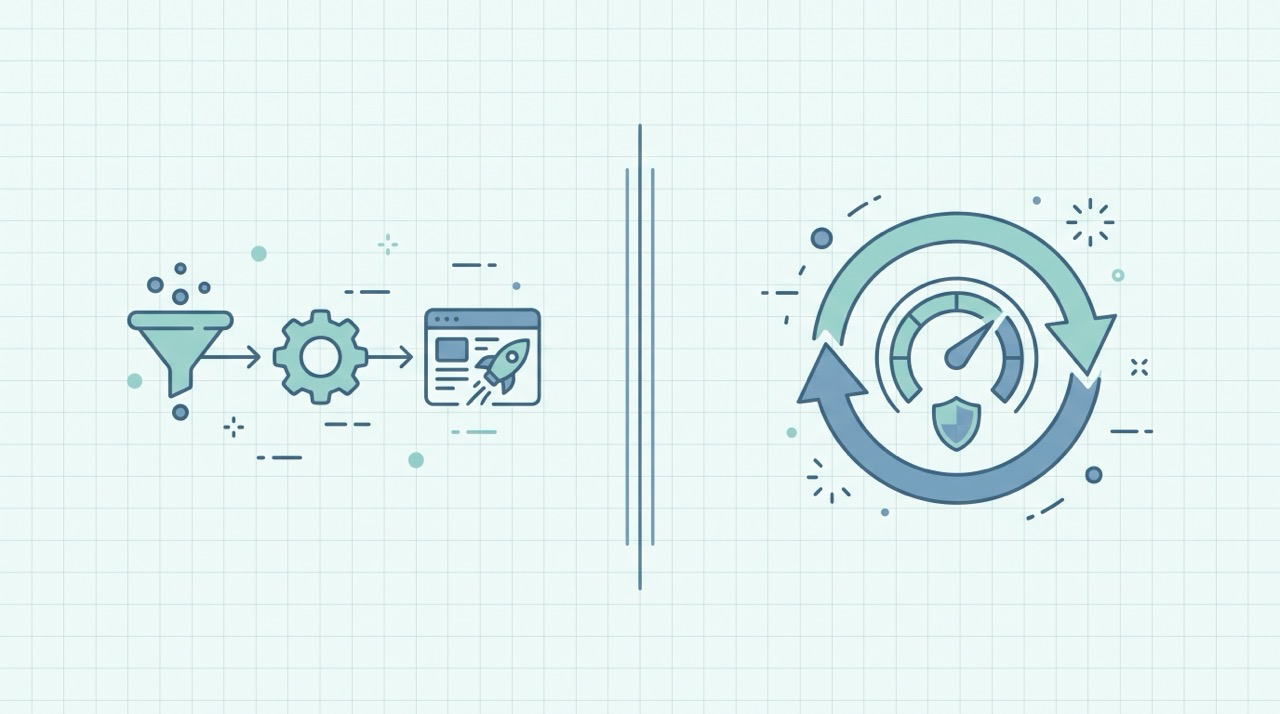
SEO and GEO are not two separate to-do lists. They are two outcomes of one underlying practice: publishing clear, well-structured, genuinely useful content on a technically sound site. The same article that ranks on Google is the same article an AI reads to decide who to cite. The same clear answer to a real question is what wins a featured snippet and gets quoted in an AI Overview.
When you write a focused, well-organized post that answers a specific question:
- Google can rank it (SEO)
- An AI engine can read, trust, and cite it (GEO)
- It builds your topical authority, which helps both (SEO + GEO)
You are not doing the work twice. You're doing it once and collecting two payoffs. That's the compounding return solo operators desperately need, because the one resource you can't buy more of is your own time.
This isn't wishful thinking — it's what Google itself says. Its official guidance on AI features in Search states there are "no additional requirements" to appear in AI Overviews or AI Mode beyond the standard SEO fundamentals: be crawlable, be helpful, be high quality. The work that wins one door is the work that wins the other.
The handful of places where GEO asks for extra effort are small and mostly one-time: making your content structurally clean (clear headings, direct answers near the top, lists and tables AI can parse), adding schema markup so machines understand your pages, and being explicit about facts and entities — who you are, what you do, what you're an authority on. Do those things and you've improved your SEO at the same time. There is almost no GEO task that hurts your SEO. They pull in the same direction.
What actually moves the needle (a solo-sized checklist)
You don't have 20 hours a week. So here's where a realistic 2–5 hours a month should go, in priority order — each item serving both doors at once.
Target long-tail, low-competition keywords. As a solo site, you will not outrank enterprise brands for broad head terms. Go for specific, three-to-five-word queries with clear intent ("best invoicing app for freelance designers," not "invoicing"). These are winnable on Google and they're exactly the specific questions people ask AI assistants. (For the full method of choosing and clustering these, see our guide to building an SEO content plan for a small team.)
Answer one real question per page, clearly and early. Lead with a direct, quotable answer in the first paragraph, then go deeper. This wins featured snippets, and it's the single biggest factor in whether an AI cites you, because AI engines lift clean, self-contained answers.
Structure for both humans and machines. Use descriptive H2s phrased as the questions people actually ask. Break complex points into lists and tables. This is what makes content scannable for readers and parseable for AI.
Get the on-page basics right. A descriptive title tag, a compelling meta description, one H1, optimized image alt text. Boring, fast, and still foundational for ranking. (New to this? Our beginner's guide to blog SEO walks through each one.)
Add schema markup and be explicit about who you are. Mark up your articles, your business, your FAQs using structured data so machines understand your pages. Spell out your expertise and credentials — what Google calls E-E-A-T (Experience, Expertise, Authoritativeness, Trust). This helps Google trust you and helps AI engines understand what entity you are and what you're authoritative about.
Claim and fill out your Google Business Profile if you serve any local or named market. It feeds both local SEO and the AI systems that increasingly pull from it.
Earn a few quality backlinks and mentions. You don't need hundreds. A handful of credible sites linking to or mentioning you raises authority for ranking and makes AI engines more confident citing you.
Notice there's no separate "GEO checklist" and "SEO checklist." There's one list, and every item pays into both.
How long until any of this works?
Set expectations honestly, because this is where most solopreneurs quit too early.
SEO is a compounding investment, not an ad you switch on. Expect three to six months before you see meaningful movement, and six to twelve before content starts pulling steady traffic. The flip side is that, unlike ads, it doesn't stop when you stop paying — a post that ranks keeps working for years.
GEO can show results faster but moves around more. You can sometimes get cited in AI answers not long after publishing something genuinely useful and well-structured — but the timing is unpredictable and AI outputs are volatile, so treat early wins as encouraging signals, not guarantees.
The mistake to avoid is judging either by week-three results. Both reward consistency. For a solo operator, that means a sustainable cadence you can actually keep — one solid, well-structured post a week beats a heroic burst that burns you out by month two.
How do you know if any of it is actually working?
SEO has had clear scoreboards for years, but GEO is newer, so most solopreneurs have no idea how to tell if they're being found by AI. You don't need a paid tool to start. Here's a free, ten-minute monthly check covering both doors.
For SEO:
- Google Search Console (free) is non-negotiable. Watch impressions, clicks, average position, and which queries you show up for. Rising impressions before clicks is normal and early — it means you're starting to surface.
- Check whether your target pages are even indexed (search
site:yourdomain.comon Google).
For GEO:
- Ask the AI engines your own target questions. Open ChatGPT, Perplexity, and Google's AI Overview and type the exact queries a customer would ("best [your category] for [your audience]"). See whether your brand gets named, quoted, or linked. Repeat monthly — this is the most direct GEO scoreboard there is.
- Watch your analytics for referral traffic from AI domains —
chatgpt.com,perplexity.ai,gemini.google.comand similar. When those show up as referrers, you're being cited and clicked. - Track branded mentions. A simple Google Alert for your business name catches when you start getting referenced around the web — which is both an SEO signal and the kind of footprint AI engines learn to trust.
If you're invisible in both checks after a few months of consistent publishing, that's your signal to revisit your content's structure and clarity — not to quit.
How a one-person team competes with content teams
Here's the real bottleneck. None of the steps above are individually hard. The problem is that there are a lot of them, they have to be done consistently, and you are also running the entire rest of your business. A 30-person competitor assigns SEO to one specialist and AI visibility to another. You have you.
This is exactly the gap QuickCreator is built to close. Instead of a single AI tool that spits out a draft from a prompt, it runs the whole content workflow as a team of specialized agents: one that analyzes search intent and finds the winnable long-tail terms, one that researches what your audience is actually asking, one that drafts in your brand voice, one that optimizes the structure and on-page signals that feed both search and AI engines, and one that publishes to your site. The point isn't to take you out of the loop — you still steer and approve — it's to give a solo founder the operational capacity of a content team, so the consistent publishing that SEO and GEO both demand actually happens.
Because the two disciplines share the same underlying work, a workflow that produces clear, structured, authoritative content is, by definition, doing your SEO and your GEO at the same time. That's the only realistic way one person keeps up with both front doors.
The bottom line for a business of one
Search didn't get replaced by AI. It got a second surface. People now find businesses both by clicking ranked links and by reading AI answers — frequently the same people, on the same day, for the same purchase.
As a solopreneur you can't afford to be present at only one of those doors, and the encouraging truth is that you don't have to do twice the work to cover both. SEO and GEO grow from the same root: clear, useful, well-structured content on a site that search engines and AI engines can both read and trust. Do that consistently, and you're not choosing between getting ranked and getting cited. You're earning both from one effort — which is exactly the kind of leverage a one-person business runs on.
Try QuickCreator free and turn one content workflow into visibility across both search and AI — without hiring a team.