
What is Technical SEO and Why It Matters for Search Performance
What is Technical SEO? It improves site speed, security, and structure so search engines can crawl, index, and rank your website for better search performance.
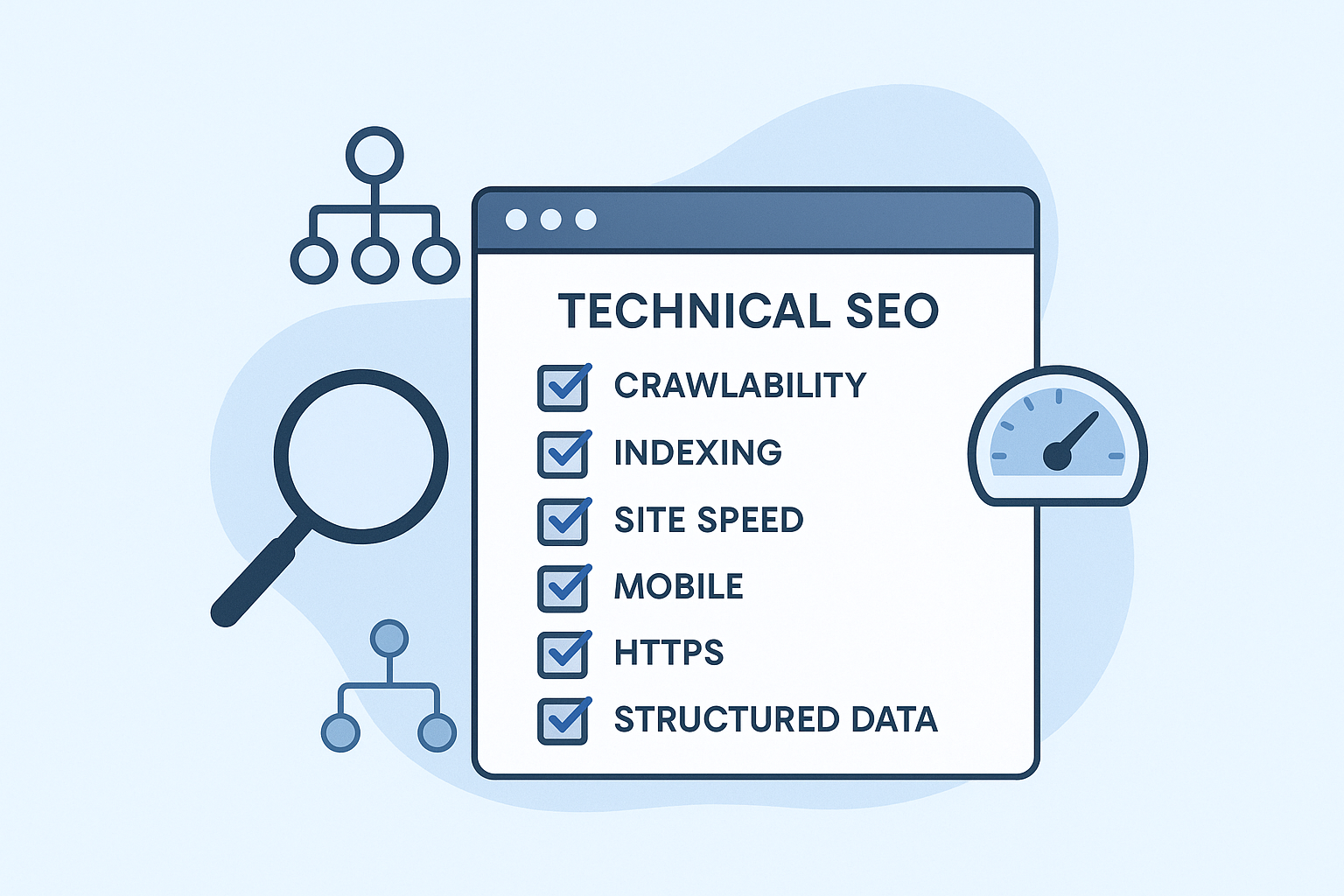
Image Source: unsplash
You might ask what technical seo is and why it is important for search performance. Technical seo means making your website’s backend better so search engines can look at and list your pages. When you work on technical seo, you make your site faster, easier to use on phones, and add structured data. These things help search engines find your pages and make your site show up more. Research shows that sites with good technical seo get higher rankings and give users a better experience. Faster sites, good indexing, and mobile-friendly pages make your site simple to use and easier to find in searches. Technical seo helps answer the question: what is technical seo and why does it matter for search performance? It makes sure your site works well for both search engines and people.
Key Takeaways
Technical SEO makes your website's backend better. This helps search engines find and list your pages more easily.
A site that loads fast and works on phones is good for users. It can also help your site show up higher in search results.
Check often for problems like crawl errors and slow pages. This helps your site stay strong in search results.
Use structured data so search engines know what your content means. This can help more people click on your site.
Do a technical SEO check every month. This helps you find and fix problems that can make your site harder to find.
What Is Technical SEO

Image Source: pexels
Technical seo is when you make your website work better. This helps search engines find and understand your content. You focus on things people do not see, like how fast pages load. You also check if search engines can look at your site easily. When you do technical seo, you help search engines crawl, index, and rank your pages. This makes your site show up more in search results. It also brings more people to your website. Experts say technical seo means making your website’s setup better. This helps your site do well in organic search. You want search engines to crawl, understand, and index your content. This helps your site get higher in search rankings.
Technical SEO vs. Other SEO Types
You may wonder how technical seo is not the same as other seo types. There are three main types of seo. These are technical seo, on-page seo, and off-page seo. Each type has its own job and goal. The table below shows how they are different:
SEO Type | Focus Areas | Purpose |
|---|---|---|
Technical SEO | Site performance, structure, site speed, security, mobile-friendliness | Makes sure search engines can crawl and index the site. |
On-Page SEO | Content quality, keyword strategy, internal linking, meta tags | Makes the site better for users and helps it rank higher. |
Off-Page SEO | Link-building, social media engagement, local SEO | Builds site authority and helps more people find your site. |
Technical seo works in the background. You make sure your site works well and search engines can reach everything. On-page seo is about what you write and how you set up your content. Off-page seo is about how other sites link to yours and what people say about your site. All three types are important. But technical seo gives your site a strong base.
Why Technical SEO Matters
You need technical seo so search engines can crawl and index your site. If search engines cannot reach your pages, your content will not show up in search results. Technical seo also makes your site faster and better on phones. This helps you rank higher for important keywords. Here are some ways technical seo helps your search performance:
Technical seo helps search engines crawl and index your site. This makes your site easier to find in search results.
When you make your site faster and better on phones, you can rank higher for keywords. This brings more people to your site.
Making your site easy to use can keep people on your site longer.
Technical seo also fixes things like secure connections and good URL structures. These are important for search visibility.
Technical seo helps your site stay strong when search engines change their rules.
You should also look out for common technical seo problems. These problems can hurt your search results:
Unoptimised crawl budget
PageSpeed and Core Web Vitals issues
Duplicate pages
Thin content pages
Broken pages
Content discovery and promotion issues
Reduced image optimisation
Site’s security issues
Internal URLs that redirect to another URL
Two Google Tag Manager codes
When you fix these problems, search engines can crawl your site better. For example, if you move your site to a new domain and use only JavaScript, search engines might not see your content. One site lost all its visitors because crawlers could not see the JavaScript. This mistake made the site disappear from search results because bots could not find any content.
Crawlability means search engines can get to your pages. If they cannot crawl your site, they cannot index or rank your content. Indexability means your pages can show up in search results. Noindex tags or wrong settings can block your pages. You should check for duplicate content, make sure your sitemaps are right, and fix crawl errors. Good technical seo helps you avoid these problems and keeps your site strong in search results.
Tip: Check your site often for technical seo problems. Fixing small problems early can stop big drops in traffic later.
Key Technical SEO Factors
Crawlability and Indexing
You need to make sure search engines can find and read your website. Crawlability means search engines can move through your site and see all your pages. Indexing means search engines can add your pages to their list. If you block search engines by mistake, your site will not show up in search results. Many websites lose traffic when they use a no-index tag by accident. When you fix crawlability and indexing, you help search engines read your site and boost your rankings. This leads to more people visiting your site. Good technical seo helps you avoid these problems and keeps your site strong.
Crawlability lets search engines discover your content.
Indexing puts your pages in search results.
Fixing crawl errors increases your visibility.
Site Speed
Page speed is one of the most important technical seo factors. Fast-loading pages keep users happy and help your site rank higher. Research shows that the average page speed for a first-page Google result is 1.65 seconds. If your page speed improves by just 0.1 seconds, your conversions can go up by 8.4%. Slow page speed makes people leave your site. If your page speed goes from one to five seconds, the chance of someone leaving jumps by 90%. You should always check your page speed and improve it to help your seo.
Evidence Description | Statistic |
|---|---|
Average page speed of a first-page Google result | 1.65 seconds |
Conversion increase per 0.1-second speed improvement | 8.4% |
Bounce probability increase from 1 to 5 seconds | 90% |
Mobile Optimization
You must make your site work well on phones and tablets. More people use mobile devices to search the web. Google uses mobile-first indexing, so it looks at your mobile site first. If your mobile site is slow or hard to use, your rankings will drop. Data shows that 53% of users leave if a mobile site takes longer than three seconds to load. Mobile optimization improves user experience and helps your seo. Fast mobile page speed also lowers bounce rates and keeps users on your site.
Security (HTTPS)
Security is a key part of technical seo. You need to use HTTPS to protect your site and your users. Google gives higher rankings to secure sites. HTTPS keeps data safe and builds trust. If your site is not secure, users may leave and search engines may not index your pages. Secure sites help with crawl efficiency and make your site more reliable.
Structured Data
Structured data helps search engines understand your content. When you add schema markup, you make your site more attractive in search results. Google can show rich snippets, like star ratings or reviews, which makes users more likely to click your link. Structured data can increase your click-through rates and help your site stand out. This is a smart technical seo move for better search performance.
Tip: Use structured data to make your search listings more interesting and boost your seo.
Internal Linking
Internal linking connects your pages and helps search engines move through your site. Good internal links spread authority and improve crawl efficiency. They also help users find more content and stay longer on your site. A strong internal linking strategy supports your site structure and makes your seo stronger. Internal links give search engines clues about your site structure and help with indexing.
Internal links guide search engines and users.
They improve crawl efficiency and boost your seo.
Good internal linking supports your site structure.
Benefits of Technical SEO
Higher Search Rankings
You want your website to show up first in search results. Technical seo helps you do this. When your site is fast, safe, and well-organized, search engines can find it easily. This means your pages can get higher spots in search results. If you move up just one place, more people will click your link. In fact, your click-through rate can go up by 30.8%. The table below shows how technical seo can help your business.
Benefit | Evidence |
|---|---|
Increased Traffic | 53.3% of all website traffic comes from organic search |
Improved Conversions | 78% of local mobile searches result in in-store purchases |
Higher Click-Through Rate | Moving up 1 spot in search results increases CTR by 30.8% |
Increased ROI | SEO gives a higher ROI than paid ads |
Measurable Results | SEO lets you track user behavior and content performance |
Better User Experience
Technical seo makes your website simple to use. You want people to stay longer and enjoy what they see. Fast loading, easy menus, and pages that work on phones help a lot. When your site gives people what they want, they stay longer. This means fewer people leave right away. Good content and technical seo work together to make users happy.
Slow sites and hard-to-use menus make people leave.
Bad or tricky content makes visitors go away fast.
When you give users what they need, they stay longer and leave less.
Increased Organic Traffic
Technical seo helps more people find your site. When you fix problems and make your site better, search engines send you more visitors. Some case studies show that fixing technical seo can make organic traffic grow by over 180%. For example, one site got 283% more visitors after fixing problems and making content better. The table below shows real results from businesses that worked on technical seo.
Case Study | Organic Traffic Increase | Key Actions Taken |
|---|---|---|
SALT.agency (Classified) | 185% YoY | Technical seo audit, JavaScript rendering solution |
Riordan SEO (recruiter) | 280% | Technical seo audits, content strategy |
Damteq (Alitex) | 283% | Fixed 645,000 technical seo issues, ongoing checks |
Improved Site Reliability
You want your website to work well all the time. Technical seo helps stop errors and keeps your site running. Search engines like sites that are safe and do not break. If your site has problems, search engines may not show your pages. Good hosting, updates, and strong security help your site stay trusted and working.
Search engines like stable sites. If your site breaks a lot because of old themes or plugins, Google’s crawlers may have trouble seeing your content.
Security is important for trust — and trust helps SEO. When your site has backups, malware scans, and SSL, it is safer for users and search engines.
Technical SEO is not just a one-time job. Websites change, new pages are added, and URLs can change. That is why you need to check your site often.
You build trust with users and search engines when your site is safe and works well.
Technical SEO Best Practices
Image Source: unsplash
SEO Audits
You should start with a technical seo audit to find problems that hurt your website performance. A good audit checks for crawl errors, slow pages, and mobile issues. You can use tools like XOVI, Ahrefs Site Audit, Moz, Screaming Frog, Google Search Console, and Semrush. These tools help you see what works and what needs fixing. Regular audits keep your seo strong and your site healthy.
Tip: Run a technical seo audit every month to catch new issues early.
Speed Optimization
Website performance depends on how fast your pages load. Fast sites keep users happy and help your seo. You can improve speed by compressing images, reducing HTTP requests, and using browser caching. The table below shows the best ways to boost speed:
Method | Description |
|---|---|
Optimizing Images | Compress and resize images for faster loading. |
Reducing HTTP Requests | Remove extra files to speed up your site. |
Minimizing Code Weight | Clean up HTML, CSS, and JavaScript. |
Enabling Browser Caching | Store files in browsers for quicker repeat visits. |
Reliable Hosting & CDN | Use good hosting and a CDN for better delivery. |
Websites that load in one second get more conversions than slow sites. Google also uses speed as a ranking factor.
Mobile-Friendly Design
You need a mobile-friendly site for good website performance. Design for small screens first. Use large buttons and simple menus. Place navigation where thumbs can reach. Test your site on real phones to make sure it works well. Fast mobile pages help your seo and keep users on your site.
Secure Website (HTTPS)
Security is part of technical seo. You should get an SSL certificate and move your site to HTTPS. Redirect all traffic to the secure version. HTTPS protects user data and builds trust. Search engines give a small ranking boost to secure sites. Users also feel safer when they see the padlock icon.
Structured Data Implementation
Structured data helps search engines understand your content. Add schema types like Article, Product, FAQPage, and Review to your pages. This can make your site show up with rich results, like stars or images, in search. Rich results get more clicks and improve website performance. Structured data also helps with voice search and AI tools.
Fixing Crawl Errors
Crawl errors can block search engines from your site. Use Google Search Console to find errors like 404, 500, or 403. Fix broken links, set up redirects, and check server settings. Update internal links to point to the right pages. Fewer errors mean better technical seo and higher rankings.
Note: Check for crawl errors every week to keep your site easy to find.
Ongoing Maintenance
Keep your technical optimization strong with regular checks. Review speed and mobile usability each week. Audit crawling and indexing every month. Update old content and fix broken links. Track your website performance to stay ahead in seo.
You can make your site show up more in searches by working on technical seo. A good site structure, using the right keywords, and updating your content often help both seo and people who visit your site. The table below lists important things learned from new case studies:
Key Takeaway | Description |
|---|---|
Importance of Site Structure | Organizing content into clusters improves seo and user experience. |
Keyword Focus | Targeting the right keywords boosts rankings and traffic. |
Content Updates | Updating older content keeps pages performing well in search results. |
User Experience Enhancements | Improving navigation and load times increases conversions. |
You can start making your technical seo better by doing these things:
Let search engines crawl and index your site.
Make your site safe with HTTPS.
Give users a good mobile experience.
Add structured data to your site.
Fix crawl errors as soon as you find them.
Technical seo helps you get more for your money and makes your site nicer for people. Start now and see your seo get better.
2026 SEO Trends: Google AI Overviews and AI Mode
If technical SEO used to be about helping Google crawl and index your pages, 2026 is about helping Google understand, select, and summarize them. Google’s AI-driven experiences — especially AI Overviews and AI Mode — increasingly answer questions directly in the results, which can change when (and whether) you earn a click.
Google explains that AI features in Search are meant to help people “get to the gist” faster and then explore links. In practice, many sites are seeing fewer clicks on informational queries when AI summaries appear. For example, Search Engine Land reported that AI Overviews correlated with measurable CTR drops in some studies, including an Ahrefs analysis showing a 34.5% CTR drop for top rankings on affected keywords.
What AI Overviews change for SEO
AI Overviews are the summary blocks that appear above classic organic results for many informational searches. They pull from multiple sources and may cite several pages, which shifts the game from “rank #1” to “be among the sources that the summary trusts.” Google’s own guidance on succeeding in AI Search emphasizes the same fundamentals as traditional SEO: helpful content, a great page experience, and being accessible for crawling.
From a technical SEO perspective, the practical takeaway is simple: your content needs to be easy to extract and unambiguous at the passage level. That means clean HTML, stable rendering, and content that’s structured so individual sections can stand on their own.
What Google AI Mode changes for SEO
AI Mode is designed for more complex, conversational searches with follow-up questions. It tends to expand queries and synthesize across sources, which means:
Your pages may compete at the section level, not just the page level.
Visibility can show up as citations/mentions inside an AI answer, even when your blue-link ranking is lower.
Clicks often shift toward bottom-funnel actions (comparisons, pricing, “best for” decisions), while top-funnel “what is” traffic becomes harder to win.
Google’s Search team has shared that these AI experiences are encouraging people to ask longer and more nuanced questions in Search (see Google’s AI Mode and AI Overviews updates).
2026 technical SEO priorities to stay visible
Below is a quick map of what’s changing and what to do next.
2026 change | What it can do to your organic performance | Technical SEO response |
|---|---|---|
AI answers reduce clicks for many informational queries | More impressions, fewer clicks; CTR volatility | Improve CWV and mobile UX to win the clicks that remain; make pages fast enough that users don’t bounce when they do click |
Passage-level extraction and summarization | Pages that are hard to parse don’t get cited | Use clear H2/H3 structure, descriptive headings, and tight paragraphs; avoid “wall of text” sections |
Stronger emphasis on entities and trust | Generic pages get ignored in summaries | Strengthen E-E-A-T signals: author info where appropriate, accurate schema, consistent brand/entity references |
More diverse sources in AI experiences | Non-traditional sources can appear | Ensure indexability and canonicalization; reduce duplication; keep sitemaps clean so Google discovers your best version |
Tactical checklist for AI Overviews and AI Mode
If you want a concrete starting point, focus on these technical/content intersections:
Make key answers “snippable.” Put the direct answer in the first 1–2 sentences under a heading, then expand.
Use schema markup conservatively and correctly. Article, FAQPage (where applicable), Product/Review (where applicable). Mark up what’s on the page — nothing more.
Fix rendering and indexing ambiguity. Avoid blocked resources, inconsistent canonicals, and accidental
noindex. AI systems can’t cite what they can’t reliably fetch.Measure visibility beyond clicks. Track which pages get cited/linked in AI features and which queries trigger them; treat this like a new SERP feature class.
The core idea is not to “optimize for the bot.” It’s to make your site technically clean and your content structurally clear — so when Google summarizes, it can safely use your page as the reference point.
FAQ
What is the first step in technical SEO?
You should start with a technical audit. This helps you find problems that stop search engines from seeing your site. Fixing these issues gives your website a strong base for better search results.
How often should you check your website for technical issues?
You should check your website every month. Regular checks help you catch problems early. This keeps your site healthy and easy for search engines to crawl.
Does technical SEO help small websites?
Yes, technical seo helps all websites, even small ones. You can improve your site’s speed, security, and structure. These changes make your site easier to find in search results.
Can you do technical SEO without coding skills?
You can do basic technical seo tasks without coding. Many tools guide you through fixes. For advanced changes, you may need help from a developer.