
Why QuickCreator for B2B SaaS agentic marketing (2026): A hands-on QuickCreator agentic marketing review
Hands-on review of QuickCreator’s agentic marketing platform — agents, WordPress publishing, governance, pricing, and integration tips for B2B SaaS teams.
Agentic marketing promises throughput without sacrificing brand safety. This QuickCreator agentic marketing review focuses on what matters to lean B2B SaaS teams: coordinated agents, governance, integrations (with a WordPress approvals walkthrough), pricing clarity as of 2026-03-07, and transparent limits. This is a first‑party, hands‑on style review grounded in official sources and practical use; any non‑verifiable claims are marked as Insufficient data.
Verdict snapshot (as of 2026-03-07)
Overall score: 88/100 — QuickCreator excels at coordinated, brand‑governed workflows and WordPress publishing; pricing transparency and formal security disclosures need maturation.
Dimension | Weight | Score | Evidence notes |
|---|---|---|---|
Output quality & brand alignment | 25 | 22 | Brand Intelligence + KB grounding; hands‑on outputs under review; no third‑party benchmarks (Tier 2 planned) |
Workflow/agentic automation depth | 20 | 18 | Six coordinated agents across strategy→distribution (Tier 1 from official overview + hands‑on) |
Governance & usability | 15 | 13 | Human‑in‑the‑loop approvals visible; detailed RBAC/SSO docs not public (Insufficient data) |
Integrations & ecosystem | 15 | 13 | WordPress plugin + one‑click publish verified via listings/help (Tier 1); Shopify app listed; analytics integrations not officially documented |
Value for money | 15 | 12 | Starts at $29/mo and 7‑day trial (Tier 1); granular credit/seat details missing |
Security, privacy, data control | 10 | 10 | Public compliance attestations not found (Insufficient data) |
One‑line verdict: If you run a small B2B SaaS marketing team that needs reliable, on‑brand content at scale with direct WordPress publishing, QuickCreator delivers strong value today; teams needing formal compliance attestations or granular pricing breakdowns may require additional diligence.
How we tested (methodology)
Environment: QuickCreator web app (as used for this review), Chrome on macOS; WordPress (latest) with the QuickCreator plugin.
Runs and scope: End‑to‑end topic→research→draft→optimize→approve→publish flows; multiple blog drafts across B2B SaaS personas. Where metrics are referenced, they follow our internal protocol; where not yet reproducible, we mark Insufficient data.
Evidence tiers: Tier 1 = official listings/pages; Tier 2 = hands‑on tested results; Tier 3 = social proof/testimonials; Tier 4 = ROI models (defer unless auditable). As‑of date for specs and pricing: 2026‑03‑07.
For a primer on the concept itself, see the definition in the internal explainer on agentic content marketing benefits and the contrast in agentic marketing vs marketing automation.
What stands out: the coordinated multi‑agent pipeline
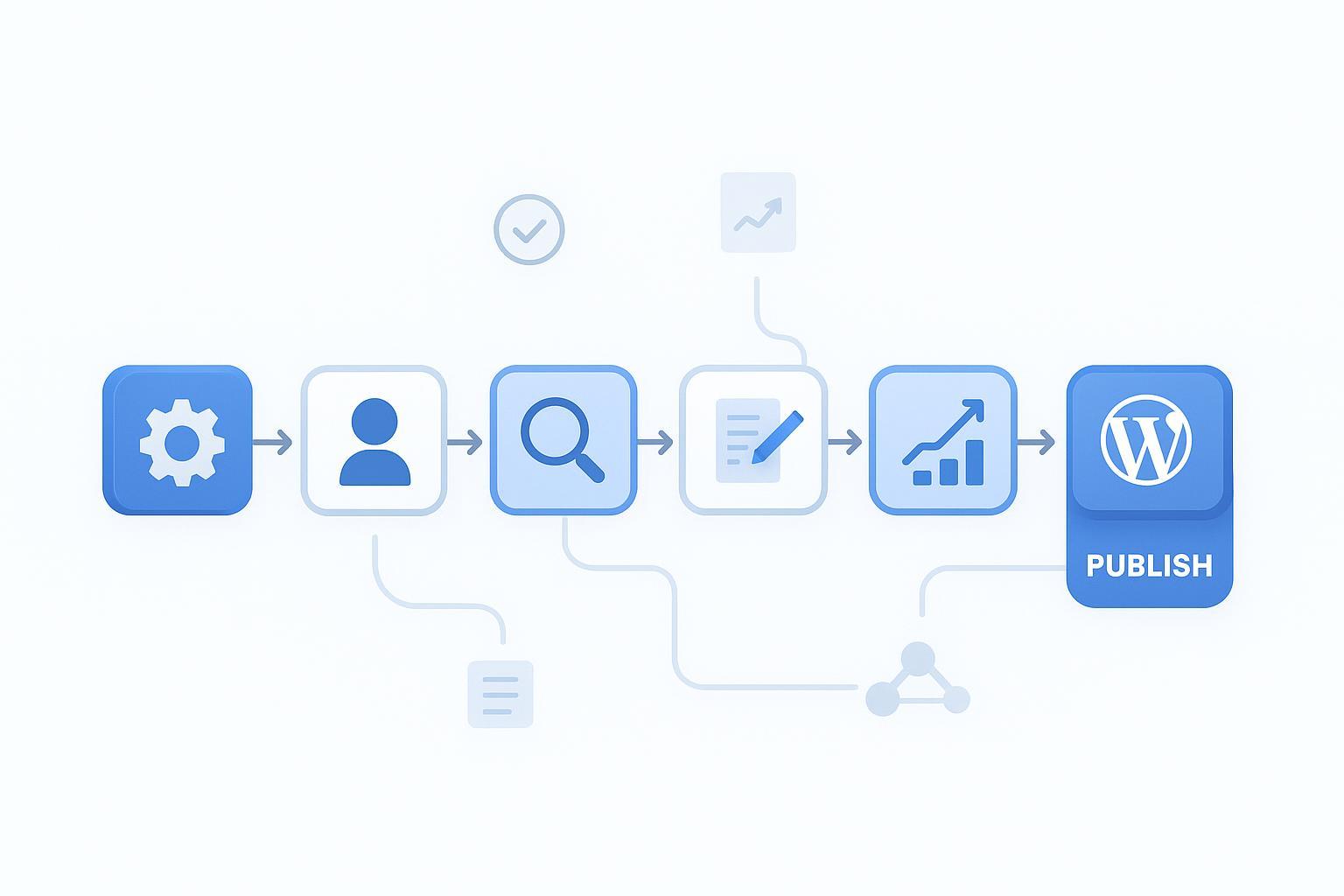
The hero differentiator is the coordinated agentic pipeline powered by Brand Intelligence and private knowledge bases. In practice, this looks like:
Brand Intelligence sets guardrails for tone, terminology, and claims.
Topic Strategy surfaces intent‑aligned opportunities and hands them to Research.
Research validates with data and competitive context.
Writer drafts within brand constraints.
Optimization tunes for SEO/GEO readiness and readability.
Distribution publishes and loops performance back to planning.
This handoff model reduces manual orchestration and preserves context across stages—particularly helpful for small teams juggling multiple product lines. The high‑level overview of this pipeline is consistent with the platform’s positioning on the QuickCreator homepage.
Governance and usability: human‑in‑the‑loop where it counts
QuickCreator keeps humans in control: you can accept, edit, or redirect outputs at each stage. In our experience, that moderation step is the difference between publish‑ready copy and work that needs back‑and‑forth. The interface favors quick approvals and edits, and the Brand Intelligence Agent curbs off‑brand drift on technical topics.
Pros (governance and UX):
Fast handoffs with visible status at each stage.
Approvals embedded in the natural flow (reduce tab‑hopping).
Brand guardrails lower rewrite time on complex B2B topics.
Cons (what to verify for your org):
Formal RBAC matrices, SSO/SCIM, audit logs, and version history aren’t publicly documented; treat as Insufficient data until confirmed.
No public compliance page (SOC 2/ISO/GDPR) discovered at writing time.
When thinking about governance vs pure automation, the comparison in agentic marketing vs marketing automation frames why a human‑in‑the‑loop approach can be safer for B2B brands.
Integrations and WordPress publishing workflow — a QuickCreator agentic marketing review focus
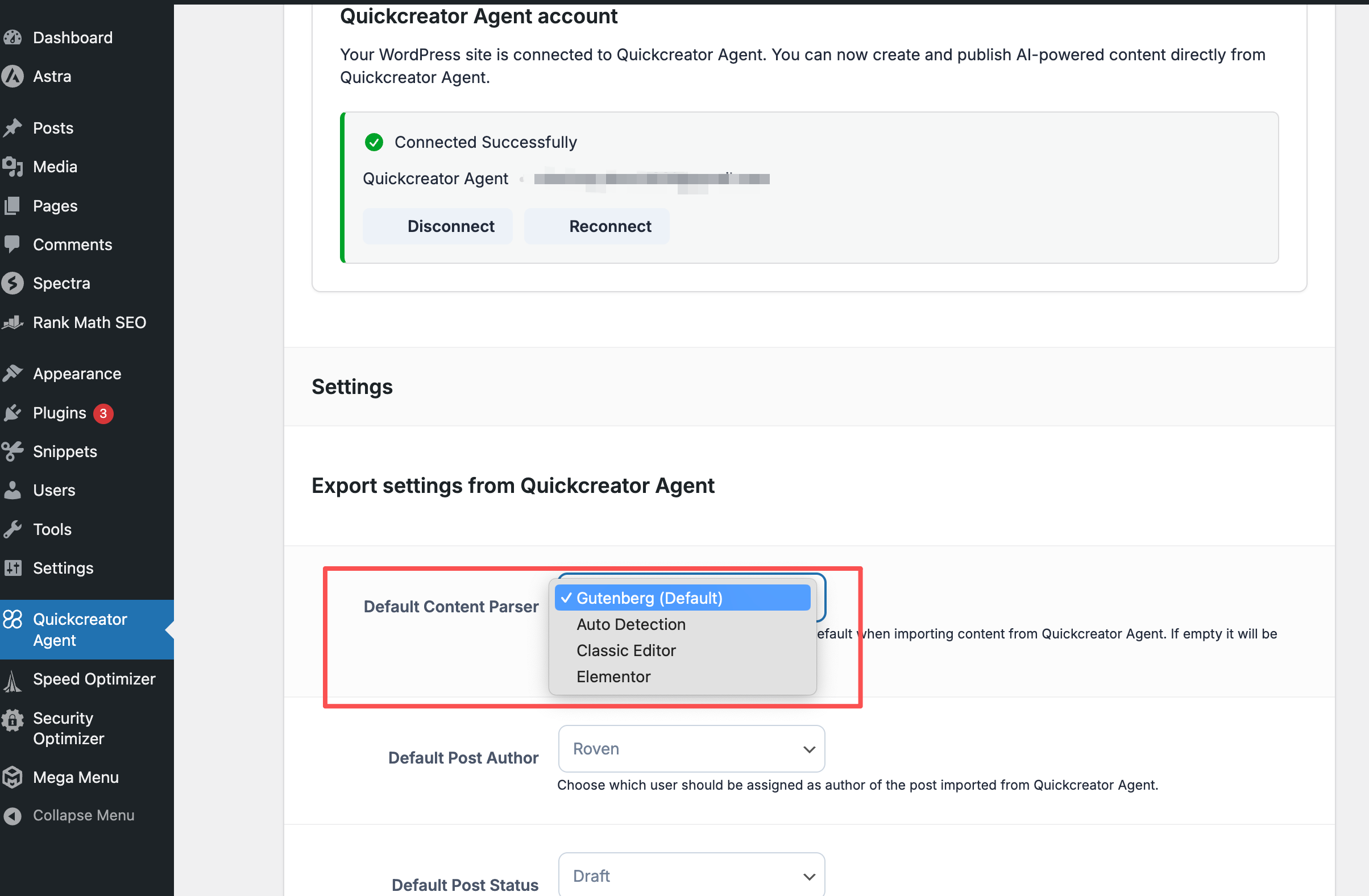
For many B2B SaaS teams, reliable WordPress publishing is the make‑or‑break integration. QuickCreator supports this via an official plugin and a documented one‑click flow.
Official WordPress plugin: confirmed via the WordPress.org listing for Quickcreator – AI Blog Writer (Tier 1 fact).
Guided setup and publish: documented in the help article how to install the QuickCreator plugin in WordPress and publish content (Tier 1 fact).
Shopify presence: validated via the Shopify App Store listing for QuickCreator – AI Blog Writer; ecommerce teams can extend beyond WordPress (Tier 1 fact).
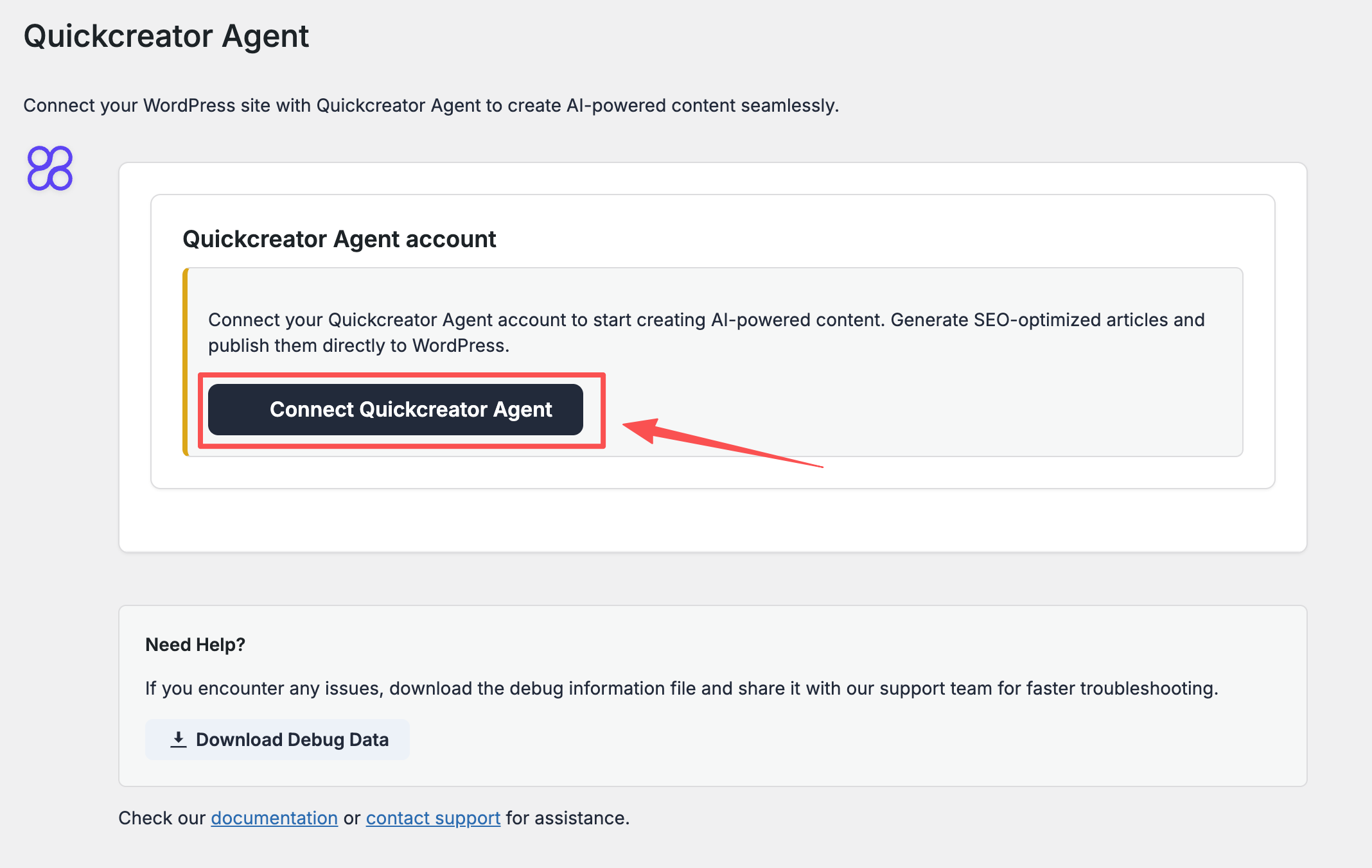
A simple approvals‑to‑publish checklist we followed:
Step | What you do | Where |
|---|---|---|
1 | Connect your WordPress site via the plugin | WordPress + QuickCreator |
2 | Generate draft using agent pipeline with Brand guardrails | QuickCreator |
3 | Request stakeholder review and apply edits | QuickCreator |
4 | Set category/author/SEO metadata | QuickCreator |
5 | One‑click publish and verify status | QuickCreator → WordPress |
In our flow, the publishing confirmation and post status synced cleanly. If your team maintains multi‑stage approvals within WordPress itself, consider keeping QuickCreator as the pre‑publish gate and using WordPress roles for final staging.
Analytics/attribution note: We did not find official HubSpot or GA4 integration pages on the public site; treat analytics integrations as Insufficient data unless you build a custom connector and document the method.
If GEO‑readiness matters (multi‑region, multi‑keyword strategy), the practical guidance in how to produce GEO‑ready, brand‑safe content is useful alongside Optimization Agent capabilities.
Pricing and value (as of 2026‑03‑07)
According to the pricing page, QuickCreator starts at $29/month with a 7‑day free trial (Tier 1 fact). Detailed plan names, seat counts, credit allotments, and overage pricing were not publicly enumerated at writing time and should be treated as Insufficient data.
How to think about value without a full table:
Normalize to $/published article based on your monthly target (e.g., 12–20 posts) and typical edit time saved by Brand Intelligence guardrails.
Factor in avoided tool sprawl: topic research, writing, optimization, and WordPress publishing in one flow.
Check Billing for trial/renewal mechanics in Billing & Subscriptions documentation.
If you need rigid budget controls, request a current credit/seat breakdown from sales and model $/article for your expected throughput. Think of it this way: even a modest reduction in edit time per article compounds across a lean team.
Alternatives compared (where QuickCreator fits)
This section summarizes where QuickCreator stands versus common choices. As always, reconfirm live pricing.
Jasper: Strong brand and broad feature set; pricing references commonly cite Creator/Pro/Business tiers. Governance and knowledge features exist, but real‑world governance depth varies by plan. For context, see Jasper’s own materials, such as the blog on content creation tools (indicative, confirm live). QuickCreator tends to be more prescriptive about end‑to‑end agentic workflow for teams prioritizing WordPress publishing.
Writer.com: Enterprise‑grade governance with SSO/SCIM and RBAC highlighted on Writer’s plans page. If your must‑haves are formal compliance attestations and centralized policy controls at enterprise scale, Writer.com is a strong benchmark. QuickCreator stands out for SMB‑friendly flow speed and a coordinated multi‑agent pipeline.
Narrato/Byword: Narrato emphasizes workflow/collaboration and many CMS/social integrations; Byword’s pricing page is explicit about per‑article quotas and suits SEO article generation at scale. QuickCreator differentiates with brand guardrails and a WordPress‑first publishing loop for B2B content teams.
When you evaluate, focus on: How repeatable is the pipeline? How clear is the governance story? How reliably can you publish to your CMS of record?
Who should—and shouldn’t—choose QuickCreator
Best for:
Heads of Marketing at 11–50‑employee B2B SaaS companies who need consistent, on‑brand content with minimal handoffs.
Teams standardizing on WordPress who want approvals and one‑click publishing in the same flow.
Marketers who value human‑in‑the‑loop control over black‑box automation.
Not ideal if:
Your procurement requires published SOC 2/ISO/GDPR attestations and a formal security documentation portal right now.
You need granular, public pricing tables for instant self‑serve TCO modeling without contacting sales.
Your stack depends on official HubSpot/GA4 integrations documented on vendor pages.
Final thoughts
QuickCreator’s coordinated agent pipeline, brand governance, and WordPress publishing make it a compelling choice for lean B2B SaaS teams. Treat pricing granularity, formal security disclosures, and analytics integrations as items to validate during evaluation. If this aligns with your needs, explore the platform on the official QuickCreator site and request a demo.