Social media content pillars for B2B SaaS companies in the United States (2025)

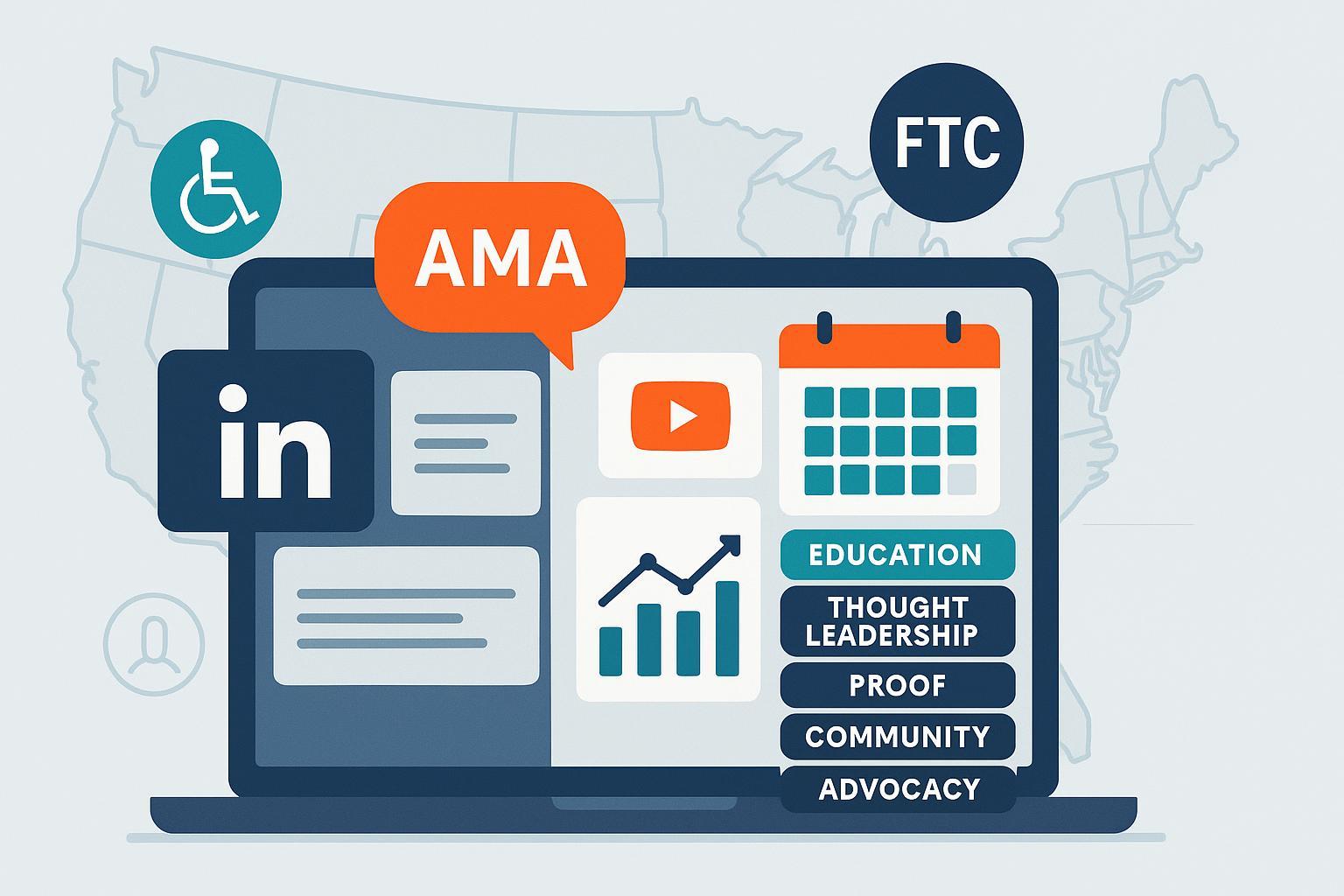
As someone who has built and rebuilt B2B SaaS social programs over the past decade, I can say this with confidence: 2025 is the year to operationalize your social media content pillars or get buried by algorithmic noise. Organic reach remains tight, executive attention spans are shorter, and U.S. privacy and accessibility expectations are higher than ever. The upside: teams that commit to a disciplined pillar system are seeing clearer attribution, faster creative cycles, and steadier pipeline influence—especially on LinkedIn.
Below is a practical, U.S.-centric playbook to design, run, and evolve content pillars that actually move the needle in 2025.
The case for pillars in 2025 (and how they’ve changed)
In 2025, LinkedIn is still the anchor channel for B2B SaaS. Format trends have evolved: multi-image posts and document/carousel formats continue to drive outsized engagement relative to single-image or link posts, per the April 2025 analysis in the Socialinsider 2025 LinkedIn Benchmarks. LinkedIn organic ROI is real but uneven across industries and strategies; the First Page Sage 2024 LinkedIn organic ROI report shows material variability by sector and content approach across multi-year programs.
Two implications for SaaS teams:
- You can’t post “everything everywhere.” You need a repeatable pillar mix aligned to business outcomes, ICPs, and buying committees.
- You must measure at the pillar level, not just the post level, to understand what drives assisted conversions and pipeline.
The 5-pillar matrix for B2B SaaS (United States, 2025)
I’ve consistently seen the following five pillars deliver the strongest mix of awareness, demand, and trust for U.S. B2B SaaS. Use this as a starting template and adapt to your ICP and resources.
- Educational/Enablement
- Business goals: Problem awareness, consideration, and trust building; enable buyers and users with concrete how-tos.
- Best-fit formats (LinkedIn-first): Document/carousel explainers, step-by-step clips, annotated screenshots, product-neutral templates.
- Cadence: 2–3x per week on LinkedIn; expand to YouTube for in-depth how-tos and shorts for snippets.
- Workflow: Maintain a running backlog of FAQs from sales/support. Turn top questions into carousels and short videos. Keep brand-light and outcome-heavy.
- Compliance & accessibility: Provide captions/transcripts; use descriptive alt text and meaningful link copy; design carousels with WCAG 2.2 AA-level contrast and legible font sizes (see W3C WCAG 2.2, 2024).
- Mini-case: A mid-market DevOps SaaS team converted their top three onboarding tickets into LinkedIn carousels and a 3-minute tutorial series. Over one quarter, those assets became their top three assisted-conversion touchpoints, improving demo-to-close velocity by clarifying setup questions earlier.
- Thought Leadership (executive and SME-led)
- Business goals: Executive trust, strategic differentiation, deal acceleration; ABM touchpoints for senior buyers.
- Best-fit formats: First-person executive posts, research snippets, market POVs, “if I were you” advisory threads; optional long-form with carousel summaries.
- Cadence: 1–2x weekly per executive/SME; prioritize quality and originality over volume.
- Workflow: Build a quarterly POV map for your execs—3–5 themes tied to your ICP’s business risks/opportunities. Ghostwriting is fine if the voice is authentic and signed by the author.
- Evidence: The Edelman–LinkedIn 2024 Thought Leadership Impact Report found that strong executive thought leadership increases buyer trust and willingness to pay a premium in B2B contexts.
- Mini-case: A series-B cybersecurity SaaS had their CTO post weekly “lessons learned” threads on incident response trade-offs. Engagement was moderate, but the content became high-performing sales enablement; prospects referenced the posts during security reviews, shortening legal hold-ups.
- Storytelling/Proof (customer wins, behind-the-scenes)
- Business goals: Social proof, objection handling, and expansion/retention.
- Best-fit formats: Anonymized mini-case carousels, “before/after” explainer posts, founder/PM interviews, day-in-the-life clips.
- Cadence: 1–2x weekly; aim for a consistent “proof drop” each week.
- Workflow: Standardize a mini-case template (objective, problem, action, outcome). If NDA limits names, focus on quantified process improvements and screenshots of anonymized workflows.
- Compliance: Avoid unsubstantiated claims. If you incentivize reviews or use customer-generated content, follow the FTC endorsements and reviews guidance (2024–2025) with clear, conspicuous disclosures.
- Mini-case: A data integration SaaS shifted from generic product updates to weekly “1-page wins.” By quarter’s end, SDRs reported fewer “will this work in our stack?” objections, citing those posts in outreach.
- Interactive/Community (conversations, not broadcasts)
- Business goals: Earned reach, community learning, category shaping.
- Best-fit formats: LinkedIn polls with serious follow-up analysis, AMAs, Reddit Q&As, and user challenges.
- Channel nuance: Authenticity is everything on Reddit. Participate in relevant subs with helpful, non-promotional answers and occasional AMAs; treat it as a credibility channel, not a lead-gen form. See the community-first approach in TopRank’s guidance on Reddit for B2B (2024).
- Cadence: 1 interactive thread per week on LinkedIn; monthly community activations in niche forums.
- Workflow: Maintain a running list of high-signal questions from discovery calls and support tickets; turn them into polls/AMAs. Close the loop by summarizing learnings in a follow-up post.
- Mini-case: A cloud cost-management SaaS ran a monthly LinkedIn poll on FinOps trade-offs and a quarterly Reddit AMA with engineers. The learnings fed their product roadmap posts and nurtures, while boosting SEO via community recaps.
- Employee & Executive Advocacy (humanizing the brand)
- Business goals: Extend reach, build trust, and create 1:1 engagement opportunities.
- Context: Formal LinkedIn employee advocacy analytics were sunset in late 2024, so programs now rely on authentic posting and lightweight enablement.
- Best-fit formats: Personal stories, practical tips from practitioners, and executive POV posts. Provide prompt packs; avoid corporate copy-paste.
- Enablement: Give employees monthly topic prompts, pre-approved talking points, and light editorial help. Encourage original angles over uniform messaging.
- Compliance: Remind employees to disclose material connections when relevant (see FTC guidance above) and to use accessible formats.
- Mini-case: A U.S.-based data observability SaaS equipped 30 SMEs with a “write in your voice” kit (topics, hooks, and a 20-minute editing slot). Over two quarters, their collective posts contributed to 20% of social-assisted opportunities, measured in CRM.
Map pillars to funnel stages and buying committee roles
The fastest way to stop debating content ideas is to map pillars to funnel stages and roles, then score them by fit and effort.
- Awareness: Educational and Thought Leadership pillars seeded via carousels and executive posts attract the right audience.
- Consideration: Educational deep dives, Storytelling/Proof, and Interactive/Community clarify fit and resolve anxieties.
- Conversion: Storytelling/Proof with specific outcomes and side-by-side comparisons; executive Thought Leadership that frames ROI.
- Expansion/Retention: Educational enablement and customer storytelling that show new use cases; community sessions that surface product feedback.
Buying committee overlays:
- Executives (CIO/CFO): Thought Leadership and ROI narratives, ideally from your execs.
- Technical evaluators: Educational deep dives, demos, and hands-on explainers.
- Procurement/legal: Compliance, security, and accessibility content (e.g., how you approach ADA/WCAG and privacy-by-design in your product collateral).
Prioritization rubric (score 1–5 each):
- ICP fit: How tightly does this pillar align to priority segments?
- Impact: How well does it influence key behaviors (demo requests, trials, expansion)?
- Effort: Realistic time and skill required to produce at quality/cadence.
- Strategic differentiation: Does it showcase unique expertise or access?
Total the scores per pillar to set your 90-day focus. Re-score quarterly.
Channel playbook: LinkedIn-first, with supporting channels
- Formats that overperform in 2025: Multi-image posts, document/carousels, and native video, as highlighted in the 2025 LinkedIn Benchmarks by Socialinsider.
- Cadence guardrails: 4–7 high-quality posts per week on the company Page is typically sustainable; aim for 1–2 executive/SME posts weekly per leader.
- Comment strategy: Prioritize “first-hour” comment velocity with SME responses and clarifying follow-ups. Repurpose quality comment threads into new carousels.
- Role: Credibility and learning, not direct conversion. Participate with genuine problem-solving and transparent brand affiliation (no astroturfing).
- Tactics: Share distilled learnings from your research or engineering team; host AMAs quarterly; recap key takeaways in LinkedIn carousels.
YouTube
- Role: Depth and search discoverability. Support Educational and Storytelling pillars.
- Tactics: Post 3–8 minute tutorials and customer walk-throughs; track watch time, audience retention, and comments to diagnose resonance. Use clear chapters and end screens to related Education assets.
X/Twitter (optional)
- Role: Real-time commentary for execs; amplify Thought Leadership and community updates. Keep threads concise and link back to deeper resources on LinkedIn or your blog.
Workflow: how to run a pillar program week to week
Here’s a cadence that has worked across multiple U.S. SaaS teams (adapt timing to your org size):
Weekly operating rhythm
- Monday
- Review last week’s pillar performance and comments; note promising angles.
- Confirm this week’s post lineup by pillar (e.g., 2x Education, 2x TL, 1x Proof, 1x Community, 1x Advocacy).
- Brief SMEs/executives on their posts; book 20-minute editing sessions.
- Tuesday–Thursday
- Publish LinkedIn-first; syndicate snippets to Reddit/YouTube as appropriate.
- Engage comments in the first hour; add clarifying mini-threads.
- Collect questions for future Education or Community posts.
- Friday
- Accessibility QA on next week’s creatives; verify captions, alt text, color contrast.
- Compliance checks for any sponsored or incentivized content; disclosures must be clear as required by the FTC endorsements guidance.
- UTM and tracking checks; update the backlog with validated topic ideas.
Enablement assets
- Pillar-tagged content calendar (columns: Pillar, ICP/role, format, CTA, UTM).
- Executive POV map (themes, stances, anecdotes).
- SME prompt library (questions to answer, visuals to capture).
- Accessibility checklist aligned to W3C WCAG 2.2: alt text, captions, CamelCase hashtags, AA contrast, minimal text in images.
- Privacy checklist referencing California’s CPRA updates (e.g., opt-out of sale/sharing without account creation as noted in the CPPA Enforcement Advisory 2024-01). Coordinate with legal on any audience-building or retargeting that could be considered “sharing.”
RACI (suggested)
- Owner: Social lead (calendar, QA, reporting).
- Support: Content lead (editing), Designers (creative), SMEs/Execs (voice), Legal/Privacy (reviews), RevOps (tracking/CRM).
Measurement and attribution: prove pillar-level impact
Track at three layers: platform, web analytics, and CRM/revenue.
UTM conventions
- utm_source: linkedin, reddit, youtube, twitter
- utm_medium: social, paid-social
- utm_campaign: pillar + quarter (e.g., education_q1_2025)
- utm_content: asset variant (e.g., carousel_v1)
GA4 setup
- Define key events (demo_request, form_submit, webinar_signup, content_download) and mark them as key conversions. Use GTM to standardize parameters. For a practical walkthrough, see this 2025 explainer on tracking social in GA4 by Hootsuite.
- Pass UTM fields into your CRM (HubSpot/Salesforce) via hidden form fields.
- Create campaigns by pillar and associate assets; adopt a multi-touch model (position-based or time decay) to reflect social’s assistive role.
- Report quarterly on pipeline and revenue influenced by pillar, not just channel.
Dashboard schema (minimum viable)
- Reach/engagement by pillar and format on LinkedIn.
- Web sessions, key events, and conversion rate by pillar in GA4.
- Opportunities, pipeline, and revenue influenced by pillar in CRM.
- Insights log: qualitative notes from comments/AMAs that informed product or messaging.
Guardrails: compliance and accessibility that scale
- Accessibility by default: Treat WCAG 2.2 AA as your baseline for social visuals—clear contrast, large text, alt text, captions/transcripts, and meaningful link/anchor text as outlined in the W3C WCAG 2.2 specification.
- Endorsements and reviews: Disclose any material connection or incentive in a clear, conspicuous way per the FTC’s endorsements and reviews guidance.
- Privacy in the U.S.: Partner with legal on CPRA/CPPA requirements; the CPPA’s April 2024 Enforcement Advisory 2024-01 emphasizes that consumers must be able to opt out of sale/sharing without creating an account—relevant if you retarget based on social interactions.
Bake these checks into your weekly workflow so they don’t become last-minute blockers.
Common pitfalls—and the pivots that paid off
-
Pitfall: One-size-fits-all posts sprayed across channels.
- Pivot: Build once for LinkedIn with pillar intent, then adapt for Reddit (text-first, community tone) and YouTube (depth with chapters). Track by pillar, not just channel.
-
Pitfall: Over-automation that strips voice and context.
- Pivot: Keep AI in the loop for drafts and outlines, but route final posts through human SMEs. Prioritize executive and practitioner voices for Thought Leadership and Advocacy.
-
Pitfall: Chasing vanity metrics over revenue influence.
- Pivot: Adopt pillar-level reporting to correlate content with assisted conversions and opportunity creation. As highlighted by the First Page Sage LinkedIn ROI analysis (2024), results hinge on strategy and content quality, not just volume.
-
Pitfall: Neglecting accessibility and disclosures.
- Pivot: Use a pre-publish checklist that includes WCAG 2.2 checks and FTC disclosure phrasing. Doing this upfront reduces risk and rework.
-
Pitfall: Under-investing in executive POVs because “they’re busy.”
- Pivot: Create a quarterly POV map and 30-minute monthly recording sessions to capture raw takes. Edit into posts; secure approvals asynchronously. The 2024 Edelman–LinkedIn study shows well-crafted thought leadership materially impacts trust.
Pillar evolution roadmap (90–270 days)
Quarter 1: Baseline and stabilization
- Define your five pillars and initial cadence. Create 2–3 format templates per pillar (e.g., carousel, POV post, mini-case).
- Establish UTMs, GA4 key events, and CRM campaign structure. Start your dashboard.
- Run small experiments: hooks, lengths, image styles, and calls to conversation.
Quarter 2: Scale what works
- Review pillar-level performance. Double down on the top two pillars for pipeline influence; increase cadence or expand to YouTube/Reddit as appropriate.
- Launch an executive POV series if you haven’t already.
- Formalize employee advocacy with monthly prompt packs and editing support.
Quarter 3: Optimize and prune
- Retire the bottom-performing pillar or format variant. Introduce one new series (e.g., AMA or customer mini-cases) to refresh.
- Tighten compliance and accessibility muscle memory; run an audit against W3C WCAG 2.2 and your FTC disclosure patterns.
- Publish a synthesis post of learnings and outcomes—great for Thought Leadership and recruiting.
Success thresholds (use as directional triggers)
- Double down when a pillar contributes ≥15% of assisted conversions for two consecutive quarters.
- Sunset or rework when a pillar drives <5% of assisted conversions and requires disproportionate effort.
Practical templates you can adopt today
- Hook: Problem or myth your ICP cares about.
- Insight: 1–2 specific, testable ideas.
- Visual: Diagram, annotated screenshot, or carousel with large, legible text.
- CTA: Question that invites qualified discussion; avoid sales-y CTAs on organic Thought Leadership.
Executive POV map (quarterly)
- Theme: 3–5 market issues your buyers face.
- Stance: Your point of view (where you agree/disagree with consensus).
- Evidence: Customer patterns, small-scale data, or practitioner anecdotes.
- Formats: Alternating between short takes and document carousels.
Accessibility + compliance pre-publish checklist
- Alt text present; captions/transcripts; AA contrast; CamelCase hashtags; minimal text on images; clear disclosure if any incentive/endorsement is involved.
Measurement essentials
- UTM builder sheet; GA4 key events list; CRM campaign naming convention by pillar and quarter.
Final word
The teams winning U.S. B2B SaaS social in 2025 aren’t louder—they’re more disciplined. Pick five pillars, map them to buyers and funnel stages, run a weekly operating rhythm, and hold yourself accountable to pillar-level impact. When in doubt, prioritize formats that spark qualified conversation on LinkedIn, demonstrate proof with specifics, and bring your executives and practitioners to the front lines. The compounding effect of this discipline shows up not only in engagement, but in pipeline and retention.
