Why are product pages difficult to index and what are the solutions?

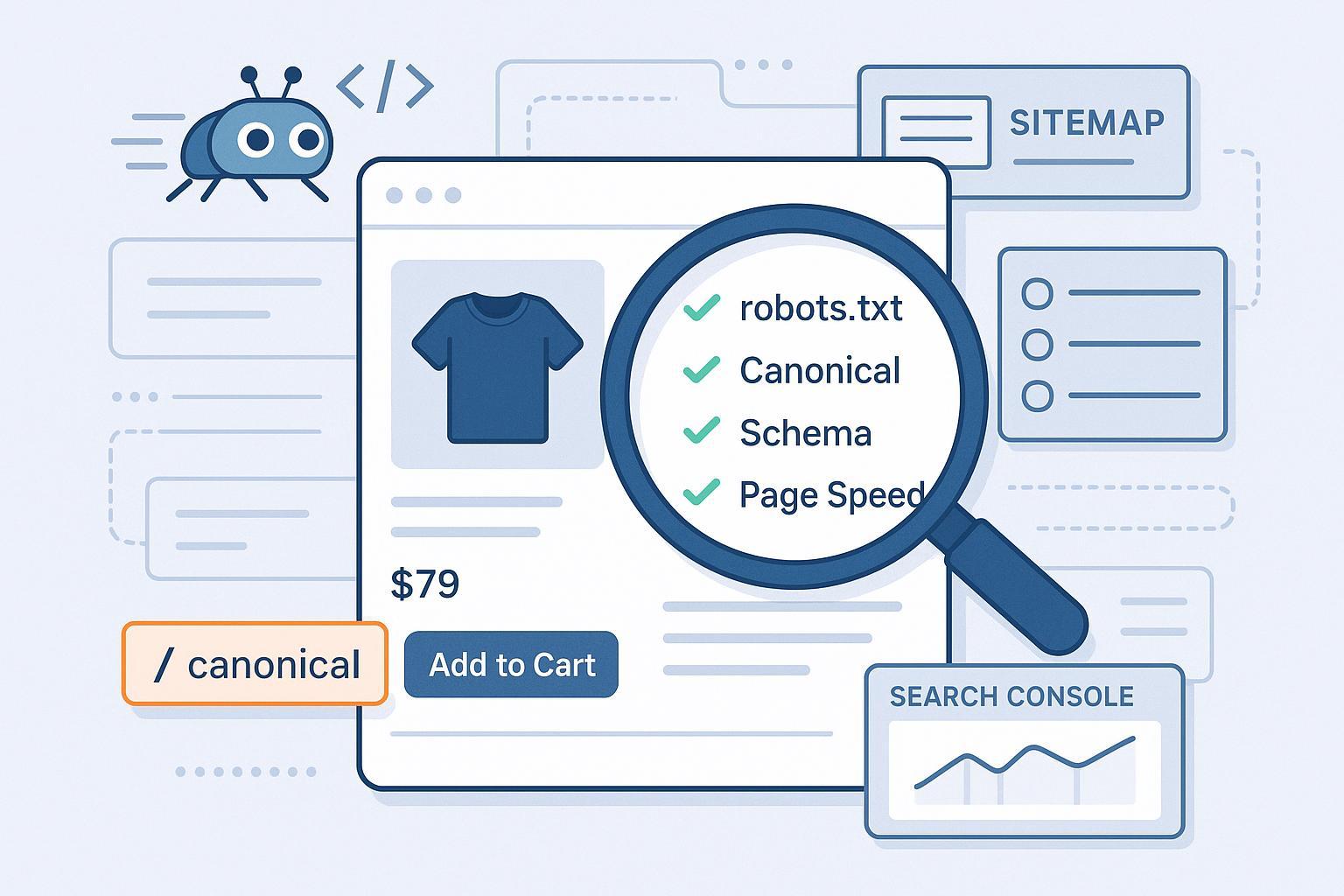
Product pages should be the revenue engine of an eCommerce site, yet they’re often stuck in “Discovered—currently not indexed” or “Crawled—currently not indexed” limbo in Google Search Console. In practice, indexation failures rarely come from a single issue; they’re a stack of small missteps across crawlability, duplication, JavaScript rendering, and content quality. This guide distills the workflows I use with eCommerce and SMB sites to diagnose and fix product page indexation—no hype, just steps you can implement.
According to Google Search Central’s official guidance in How Search Works—Indexing (2024–2025), Google discovers, renders, and assesses pages before deciding whether—and which version—to index. The decision hinges on crawlability, canonicalization, and perceived value. Keep that mental model in front of you during troubleshooting.
Why product pages fail to index (the practical failure modes)
-
Accidental blocking or noindex
- Robots.txt blocks key directories, or pages carry meta/HTTP
noindex. Remember that robots.txt controls crawling, not indexing; if Google can’t fetch the page, it can’t see yournoindexeither. See Google’s Robots.txt introduction (2025).
- Robots.txt blocks key directories, or pages carry meta/HTTP
-
Canonicalization mistakes
- Products canonically pointing to categories or variant parents, or mismatched canonicals vs sitemaps. Google treats rel=canonical as a hint; incorrect signals often result in “Duplicate, Google chose different canonical.” Refer to Google’s Consolidate duplicate URLs (rel=canonical) (2025).
-
Thin or duplicate content
- Manufacturer boilerplate, minimal specs, near-duplicate SKUs/variants. Per How Search Works—Indexing (2024–2025), Google may exclude low-value or near-duplicate pages.
-
JavaScript-dependent critical content
- Price, description, or images only appear after client-side rendering or user interaction; the rendered HTML Google sees is sparse. See Google’s JavaScript SEO basics (2025).
-
Faceted navigation and parameter bloat
- Filters and sorts explode URL combinations; crawl budget gets wasted; core product pages aren’t prioritized. Google’s December 2024 guidance on facets—“Crawling December: Faceted navigation”—explains risks and mitigations.
-
Pagination pitfalls
- Infinite scroll or lazy loading hides links; deep pages remain undiscovered. Follow Google’s Pagination and incremental page loading for ecommerce (2025).
-
Orphaned or weakly linked product pages
- Product URLs lack internal links from categories, collections, or related products; sitemaps omit them.
-
Performance instability
- High latency or intermittent 5xx errors reduce crawl efficiency; Core Web Vitals regressions complicate rendering and discovery.
A proven diagnostic workflow (from first symptom to fix)
When a product URL isn’t indexed, run this triage end-to-end. It’s faster to fix cohorts of similar issues than to chase single pages.
-
Start in Google Search Console (GSC)
- Use URL Inspection to check index status and “Test Live URL” (see rendered HTML and HTTP status). In the Pages report, segment product URLs by reason (e.g., “Crawled—currently not indexed,” “Duplicate without user-selected canonical”). Cross-reference patterns with Google’s Crawling and Indexing overview (2025) so you align fixes to the right failure mode.
-
Crawl and extract signals
- With Screaming Frog/Sitebulb, extract meta robots, x-robots-tag, canonical, HTTP status, response time, internal inlinks/outlinks, sitemap inclusion, and structured data presence. Flag:
noindex, blocked resources, non-200s, incorrect canonicals, orphaned pages.
- With Screaming Frog/Sitebulb, extract meta robots, x-robots-tag, canonical, HTTP status, response time, internal inlinks/outlinks, sitemap inclusion, and structured data presence. Flag:
-
Check JavaScript rendering
- Confirm that core product content (title, price, description, main image) is present in the rendered HTML without user interaction. If content is client-side only, plan SSR/prerender for essentials. Review Google’s JavaScript SEO basics (2025) for rendering constraints.
-
Audit facets and pagination
- Map parameterized URLs and pagination behavior. Ensure unique URLs and crawlable links for each page of collections; restrict low-value filters; canonicalize appropriately. Apply guidance from Faceted navigation (Google, 2024) and Ecommerce pagination (Google, 2025).
-
Evaluate content duplication and quality
- Identify near-duplicate SKUs, manufacturer-only descriptions, and thin pages. Plan enrichment: specs, FAQs, UGC (reviews/Q&A), unique imagery/videos, clear shipping/returns.
-
Validate structured data
- Ensure Product markup matches on-page content (price, availability, ratings). Use Google’s Product structured data documentation (2025) for required properties and validation rules.
-
Remediate in batches and revalidate
- Fix issues by cohort, update XML sitemaps with canonical product URLs, resubmit sitemaps, and request indexing for priority SKUs. Monitor the Pages report and Crawl Stats for improvement.
A practical example to operationalize enrichment and metadata
If your audit identifies thin descriptions across a segment (e.g., all “summer tees”), standardize an enrichment workflow: pull specs from ERP/PIM, summarize differentiators, add common FAQs, and generate unique imagery alt text. Platforms that combine AI writing and SEO diagnostics help speed this work. For example, QuickCreator can draft unique product copy, flag missing metadata, and surface internal linking opportunities across collections in one pass. Disclosure: QuickCreator is our product.
Keep this to prioritized SKUs first (top sellers, high-margin, new arrivals), then roll out to long-tail products you want indexed.
Fixes that move the needle (implementation details)
-
Robots and meta directives
- Remove
noindexfrom index-worthy product pages and avoid blocking/products/or asset directories in robots.txt. Confirm crawlability with GSC’s live test and pay special attention to resources (JS/CSS) required for rendering. Reference Google’s Robots.txt introduction (2025) while reviewing your directives.
- Remove
-
Canonicalization patterns that work
- Make each product page self-canonical. If variants are separate URLs but differ minimally, decide whether to consolidate to a parent (canonical to main) or treat each as unique with distinct content. Avoid canonicalizing products to categories; that frequently causes exclusion.
-
Sitemap strategy at scale
- Include only canonical product URLs. Split large catalogs (e.g., by category or freshness) and keep lastmod current. Sitemaps don’t force indexing but improve discovery; ensure internal links corroborate priority.
-
JavaScript: prefer SSR/prerender for essentials
- Render title, price, description, primary image, and structured data server-side. Avoid requiring clicks/scrolls to load core content. Google’s JavaScript SEO basics (2025) outlines rendering delays and constraints; design for bot-friendly HTML.
-
Faceted navigation governance
- Identify low-value facets (e.g., color filters that don’t change results meaningfully). Use
noindexor canonical to the unfiltered state; avoid linking to infinite combinations. Apply the guidance in Google’s 2024 post on faceted navigation.
- Identify low-value facets (e.g., color filters that don’t change results meaningfully). Use
-
Pagination do’s
- Provide crawlable links for each page (no #fragments for pagination), unique URLs, and self-canonicals per page. Follow Google’s ecommerce pagination guidance: Pagination and incremental page loading (2025).
-
Internal linking models
- Strengthen pathways: categories → products, products → related products, breadcrumbs, and editorial content linking to strategic SKUs. Ensure your top products have multiple, contextual inlinks.
-
Structured data consistency
- Keep Product markup consistent with on-page content (e.g., price and availability). Validate regularly based on Google’s Product structured data documentation (2025).
-
Performance and stability
- Optimize image sizes, reduce JS/CSS bloat, cache aggressively, and monitor server uptime/5xx errors. If crawl stats show latency spikes, prioritize fixes; unstable sites are crawled less reliably.
Content that earns indexation (beyond boilerplate)
I’ve found product pages stop being “just another SKU” when they answer real buyer questions and demonstrate uniqueness:
-
Unique, helpful copy
- Summarize key differentiators, materials, fit, and use cases. Avoid manufacturer-only text.
-
Structured specs and FAQs
- Present core specs in a scannable format. Add FAQs covering sizing, compatibility, care, or installation.
-
User-generated content (UGC)
- Reviews and Q&A often surface the long-tail queries that differentiate pages. Moderate for spam and duplicates.
-
Rich media and accessibility
- Unique images/videos with descriptive alt text and captions. Ensure accessibility (semantic markup) so bots and users can parse content easily.
-
Policy clarity
- Shipping, returns, and warranty links or blocks on-page. Ambiguity lowers perceived value.
To streamline this work at scale, see our explainer on SEO Content Quality Analysis Tools (2025) for practical audits, and review safe practices in AI‑Generated Content: A Practical Guide (2024) when using AI to draft descriptions. For workflow efficiency, many teams leverage Best AI SEO Chrome Extensions (2025) to speed inspection and on-page checks.
International product pages: hreflang and canonicals
For multilingual or multi-region catalogs, misconfigured hreflang often causes only one locale to be indexed:
-
Self-canonicals per locale
- Each language/region version should canonicalize to itself; don’t point canonicals across locales or Google may pick only one.
-
Reciprocal hreflang
- Ensure all variants reference each other, and add
x-defaultwhere a global fallback makes sense.
- Ensure all variants reference each other, and add
-
Meaningful localization
- Local currency, shipping, policies, and translated copy help Google treat variants as distinct pages.
Review Google’s Localized versions of your pages (2025) for correct annotations and pitfalls.
Monitoring and alerting that keeps indexation healthy
- Weekly: Review GSC’s Pages report segments (“Crawled—currently not indexed,” duplicates, soft 404s). Spot new patterns early.
- Monthly: Check Crawl Stats for fetch failures and response times; audit a sample of rendered HTML on product templates; validate Product structured data.
- Quarterly (large catalogs): Run log-file analysis; prioritize critical products and new arrivals in sitemaps and internal linking.
- Deployment hygiene: Add automated checks for
noindex, canonical correctness, and structured data to your release pipeline.
The printable checklist (run this before escalation)
Technical Readiness
[ ] Robots.txt does not block product/category directories or required JS/CSS
[ ] No meta/HTTP noindex on index-worthy product pages
[ ] Self-referential canonical on each product; variants handled consistently
[ ] Canonical product URLs included in XML sitemaps (split by category/size)
[ ] Essential product content rendered server-side (SSR/prerender)
[ ] Pagination has crawlable links, unique URLs, self-canonicals per page
[ ] Facets: low-value filters noindexed or consolidated; internal links prioritize core pages
[ ] Stable performance (no 5xx spikes; acceptable latency)

Content & Schema
[ ] Unique descriptions (not manufacturer boilerplate)
[ ] Structured specs and helpful FAQs
[ ] UGC: reviews/Q&A present and moderated
[ ] Unique images/videos with descriptive alt text
[ ] Clear shipping/returns/warranty information
[ ] Product structured data consistent with on-page content (price, availability, ratings)

Monitoring & Recovery
[ ] Weekly Pages report review (segment by reason)
[ ] Monthly Crawl Stats and rendered HTML spot-checks
[ ] Quarterly log-file analysis for large catalogs
[ ] After fixes: resubmit sitemaps; request indexing for priority SKUs
What if nothing works? An escalation map
-
Re‑audit canonicals vs sitemaps vs internal links
- Conflicts among these signals commonly cause “Google chose different canonical.” Align them.
-
Reduce JavaScript dependency on product essentials
- If the rendered HTML still looks thin, increase SSR coverage.
-
Dial back facet crawlability
- Overly indexable filters can drown product discovery; consolidate aggressively.
-
Reprioritize internal links
- Add editorial features, seasonal guides, or collection showcases that link to strategic SKUs.
-
Confirm API misconceptions
- The Indexing API isn’t for product pages; its scope is limited to job postings and broadcast events per Google’s Indexing API reference (2025). Focus on sitemaps, internal links, and content quality.
-
Time factor and documentation updates
- After significant fixes, give Google time to recrawl. Keep an eye on documentation changes via Google Search Central; recent updates (2024–2025) have refined guidance on pagination and faceted navigation.
Final notes
- Indexing is not guaranteed; Google decides which pages and canonical versions best represent your site. Ground your fixes in official guidance like How Search Works—Indexing and the Crawling and Indexing overview, then validate your implementation with GSC and structured data checks.
- Avoid silver bullets. The consistent combo—clean crawl signals, correct canonicals, SSR for essentials, disciplined facet/pagination, strong internal linking, and genuinely helpful content—solves most product page indexation problems I see.
