On-Page SEO for Industrial Automation Product & Category Pages (2025): Field-Tested Best Practices for Titles, H1s & Internal Links

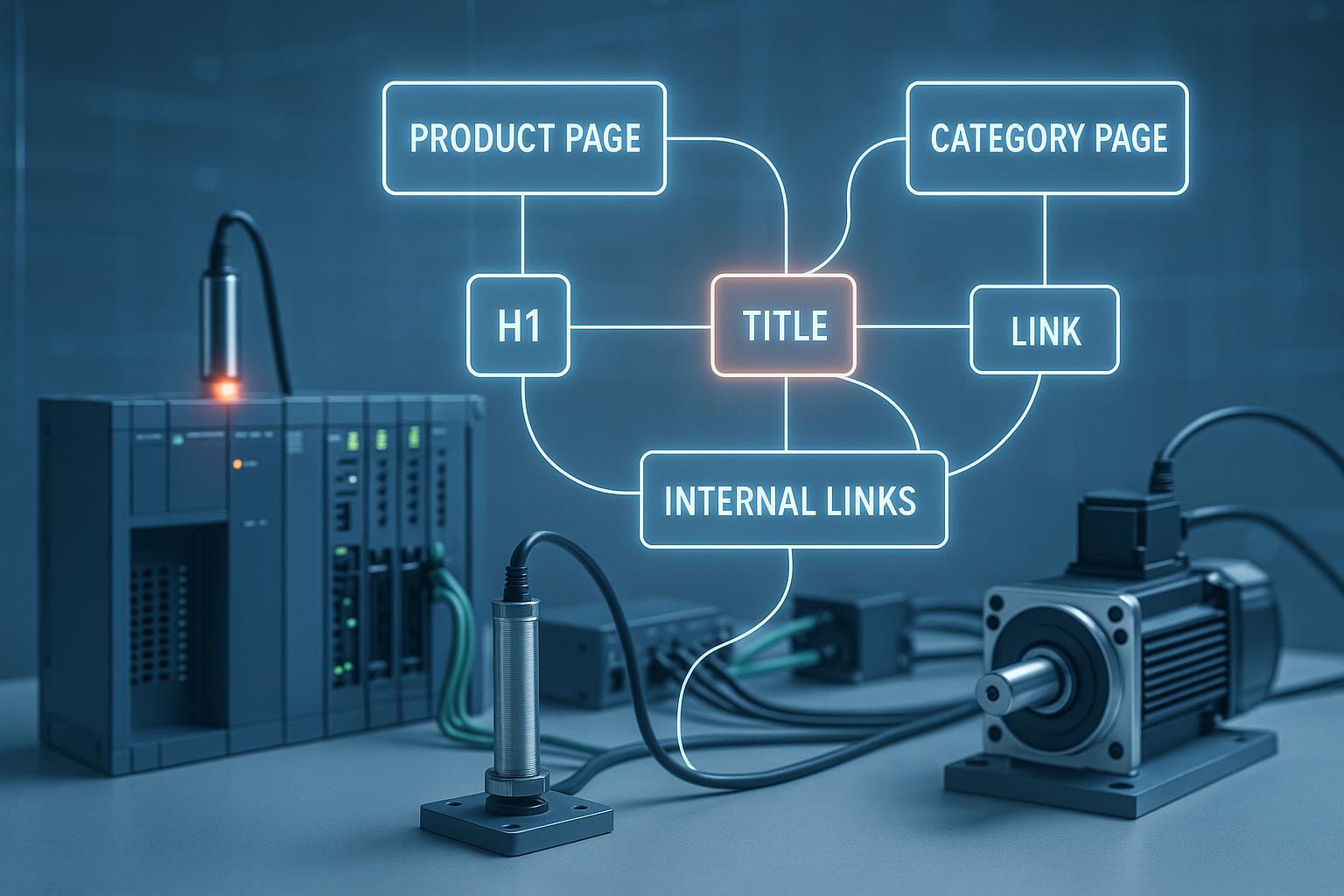
Why On-Page SEO in Industrial Automation Demands a Different Playbook in 2025
If you’ve managed SEO for PLCs, sensors, or servo systems, you already know: ranking technical B2B product and category pages isn’t just about tick-the-box keywording. The buyers—engineers, plant managers, procurement teams—search with deep intent, using language that’s detailed, precise, and often brand- or standard-specific. Add in the relentless evolution of Google’s algorithms (now AI-assisted and intent-driven as of 2025), and even well-built websites risk slipping into obscurity without a field-proven, industry-specific SEO approach.
What Sets Technical B2B SEO Apart (and Why It Matters)
Unlike standard e-commerce, industrial automation SEO must balance:
- Technical Content Depth: Every page needs specs, data sheets, and real application detail (not slogans).
- Complex Buyer Journeys: Pages aren’t just sales-driven—they’re used for due diligence, shortlisting, and knowledge transfer.
- Precision Keywords: Searches are low volume, high intent, and frequently multi-word or model-specific.
- Authority Signals: Vendor credibility, certifications, and technical resources matter as much as price or promos.
Short version: What works for shoes or smartphones usually falls flat for PLCs and sensors (FirstPageSage).
Best Practice #1: Crafting Titles & H1s That Actually Rank for Industrial Automation
1.1 Formulas for Success in 2025
-
Category Page Titles
[Primary Keyword/Category] for [Application/Industry] | [Feature/Brand]- Example:
Programmable Logic Controllers (PLCs) for Factory Automation | Siemens & Allen-Bradley - H1:
Industrial PLCs for Automated ManufacturingorSiemens PLCs: Reliable Control Solutions
-
Product Page Titles
[Product Name/Model] | [Category/Key Feature]- Example:
S7-1200 Modular PLC | Ethernet/IP Compatible Compact Controller - H1:
S7-1200 PLC: Modular Automation Controller
-
Subcategory or Solution Pages
Motion Control Servo Systems for Robotics | High Precision- H1:
Servo Systems for Robotics Automation
Based on evidence from SEO agencies and technical brands in 2025 (WindmillStrategy).
1.2 Key Action Steps
- Start titles with the primary technical keyword (not brand or fluff).
- Keep titles under 60 characters for search display, but never sacrifice clarity.
- H1 should directly echo the primary page intent—no clever puns or generic phrases.
- Use unique titles/H1s per page to avoid cannibalization and satisfy multi-stage industrial research.
- Layer in relevant secondary keywords, but always keep to natural, professional phrasing.
1.3 Using AI and Modern Keyword Tools
- Leverage platforms like SEMrush, SurferSEO, or Ahrefs for regular keyword clustering.
- Use AI-powered title suggestions that analyze both user intent and current top-ranking competitors—no more gut-feel guessing.
- Run title/H1 audits quarterly to eliminate duplication or outdated phrasing (Salesforce).
1.4 What to Watch Out For
- Keyword Stuffing: “PLC PLC PLC” only gets you penalized (SearchEngineLand).
- Duplicate Titles/H1s: Common on catalog-heavy sites—always resolve, page by page.
- Overly Technical/Internal Jargon: Use terms real buyers are Googling, not just what your engineers say.
- Titles That Are Too Long or Vague: Truncation kills CTR; ambiguity kills trust.
Pro Tip: In my experience, simply updating titles and H1s based on live keyword trends and fixing duplicates often delivers a visible lift in impressions—sometimes within weeks.
Best Practice #2: Internal Linking for Crawlability & Buyer-Focused Navigation
2.1 Linking Hierarchy: Structure Is Everything
- From Broad to Deep: Link from the main “Industrial Automation” landing, to product families (PLCs, sensors, servo systems), then down to individual products.
- Cross-Linking: On every product spec page, link to related accessories, application guides, or similar series. This builds topical authority and surfaces deeper resources.
- Category-to-Category: “Servo Systems” should reference “Motors,” “Drives,” or “Motion Controllers” as appropriate.
- Resource Linking: Sprinkle contextual links from product descriptions to in-depth white papers, datasheets, and technical articles. This signals quality to Google and builds trust with researching buyers (RobomechJournal).
2.2 Anchor Text: Get Granular
- Always use descriptive, specific terms (“temperature sensors for BMS”, “CANopen-enabled PLCs”), never just “click here.”
- Regularly update internal links based on evolving industrial keyword trends (AI-driven audit tools help here).
2.3 Audit and Maintenance
- Use analytics (e.g., Google Search Console, Screaming Frog) to catch and fix: orphan pages, broken links, or outdated anchors.
- Quarterly internal link audit cycles are now standard for leading industrial firms (AutomationDirect).
2.4 Common Pitfalls
- Orphaned Product Pages: High-value specs never indexed because nothing links in—build a map to fix!
- Overlinking with Generic Text: Dilutes authority and confuses crawlers/buyers.
- Broken or Redirect Chains: Especially common after site replatforms—use automated tools to resolve.
Insider’s Note: On a recent project, fixing ‘deep orphan’ technical pages (linked only from PDFs or via search) doubled organic clicks for those product lines over the next two quarters.
Next-Level 2025 Considerations
Schema, Mobile, Speed: SEO Basics… Now Strict Prerequisites
- Schema Markup: Use full product and FAQ schema (specs, documentation, certifications) to gather rich results (Seosly).
- Mobile-First and Performance: Your buyers might use desktops, but Google judges you on mobile experience and speed (OWDT).
- Technical SEO Hygiene: Clean URLs, HTTPS, no broken links—these are “table stakes” today.
AI-Driven SEO: Your Secret Weapon for 2025
- AI tools now provide real-time title suggestions, semantic clustering, link audits, and keyword monitoring tailored for long-tail industrial automation queries (MobilizeCloud).
- Semi-automated quarterly site health checks catch and correct issues before they sap your rankings.
Quick Lessons from the Real World: What Actually Happens
- Success Snapshot:
- A US automation supplier reworked duplicate PLC category titles and H1s using AI-assisted keyword mapping. Within 2 months, those pages jumped from page 3 to page 1 for “industrial PLCs for packaging automation” (source: private client case).
- Course Correction:
- An enterprise site migration orphaned dozens of servo motor spec sheets—organic traffic for that line dropped by 60%. Systematic internal link repair (and new anchor text templates) brought most of that traffic back within one quarter (author experience, 2024).
The pattern: Progress isn’t about “one-and-done.” It’s about action, auditing, and iteration—always aligned with the technical buyer’s journey.
Quick-Access Tools & Resource Checklist
- SEO Audit Platforms: Screaming Frog, Ahrefs, SEMrush
- AI Optimization Tools: SurferSEO, Salesforce AI SEO Guide
- 2025 Field Guides: WindmillStrategy Industrial SEO, FirstPageSage B2B SEO Factors
- Technical SEO Hygiene: OWDT Technical SEO Checklist
Audit Checklist (2025 edition):
- Are all titles/H1s unique, readable, and keyword-aligned?
- Do category, subcategory, and product pages link bi-directionally?
- Are broken, redirected, or orphan links promptly resolved?
- Is schema markup fully implemented for products/FAQs?
- Is mobile speed and page performance optimal?
Final Word: Action First, Iterate Relentlessly
In technical B2B SEO, even a modest set of improvements can deliver big wins—so long as they’re rolled out, measured, and continually iterated. For 2025, let field-tested on-page optimization (unique, intent-driven titles/H1s, intelligent internal linking, schema, and AI-powered audit cycles) become the backbone of your industrial automation SEO process.
Set your benchmarks based on user behavior, not theoretical guides. Stay curious, stay iterative, and treat every Google update as an opportunity, not a threat.
References:
- FirstPageSage: The Google Algorithm Ranking Factors
- WindmillStrategy: SEO for Industrial Companies
- SearchEngineLand: Title Tag Length
- RobomechJournal: Hierarchical Product Site Linking (2025)
- Salesforce: AI for Marketing
- OWDT: Technical SEO Checklist
