On-Page SEO Best Practices for Furniture & Office Chairs: Titles, H1s & Internal Links (2024 Edition)

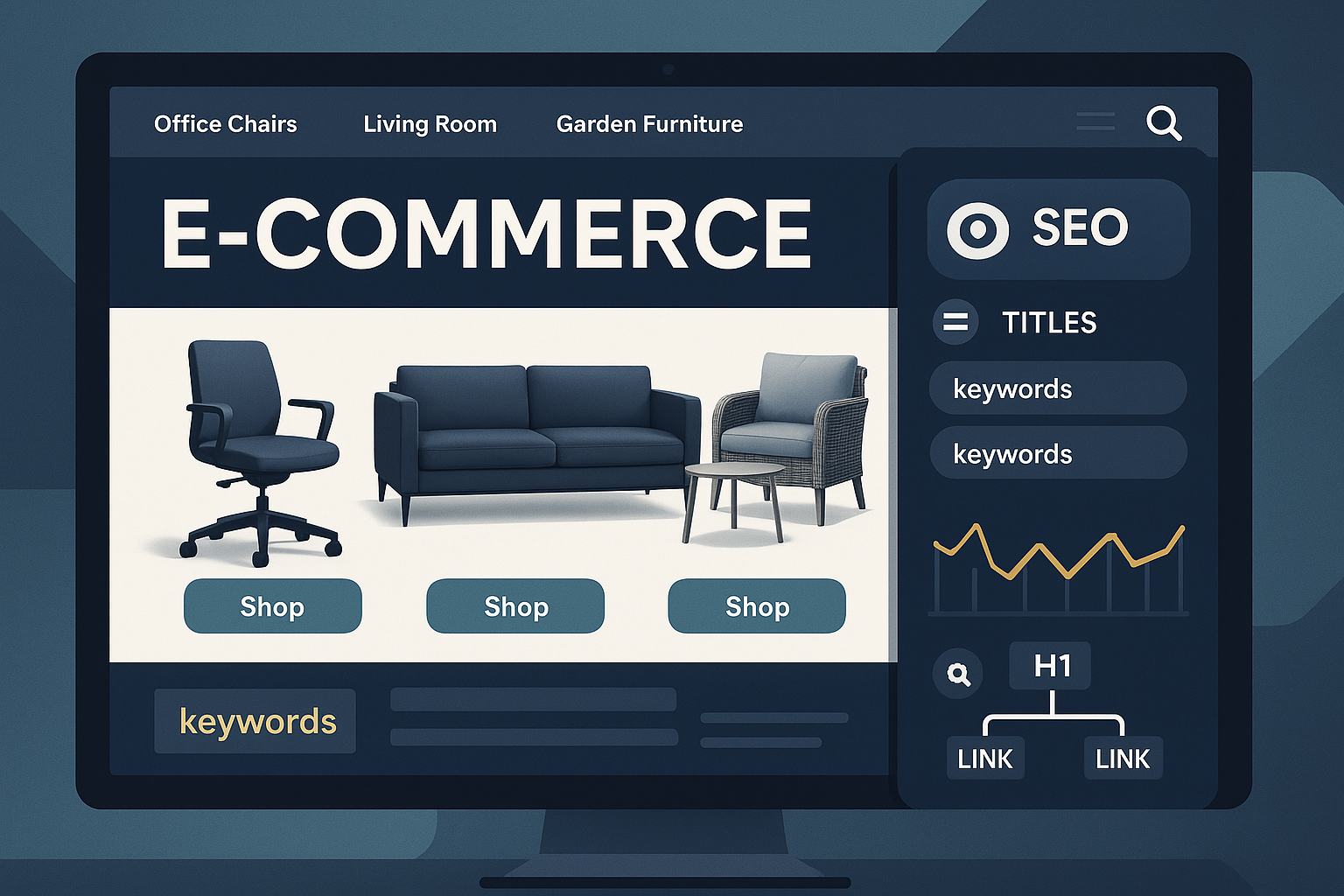
The High-ROI Impact of SEO Optimization for Furniture E-Commerce
The first organic result on Google gets an average 27.6% CTR (Backlinko), and furniture e-commerce brands have documented revenue lifts exceeding 2000% after systematic on-page optimization (Evok Case Study). For office chairs, indoor, and outdoor furniture, mastering Titles, H1s, and Internal Links is critical to maximizing organic traffic and conversions in a competitive market.
1. SEO Fundamentals for Furniture/Office Chair Pages
Best Practice: Effective Titles, H1s, and Internal Linking drive rankings, visibility, and buyer conversions—especially in large, complex catalogs.
| Element | Purpose | Impact (SEO/UX) |
|---|---|---|
| Title Tag | Keyword focus, page topic for search | Ranking signal, CTR |
| H1 Tag | Visible main heading | Clarity, keyword relevance |
| Internal Links | Crawl/authority flow, navigation | Indexation, engagement, sales |
Stat: Reviews and optimized on-page content can boost conversion rates by up to 270% (Duda).
2. Crafting SEO-Optimized Titles for Furniture & Office Chair Pages
Best Practice: Write unique, keyword-rich Titles targeting furniture type, collection, or buyer intent for every category and product page—never rely on auto-generated or truncated defaults.
A. Product Pages
- Formula: ["Buy"/Primary Keyword] + [Material/Style/Type] + [Product Name] | [Brand/Store]
- Example (Before): Office Chair 1056C | XYZ Furniture
- Example (Optimized): Buy Ergonomic Mesh Office Chair 1056C | XYZ Furniture Store
Template Table:
| Page Type | Formula/Template | Example | ||||
|---|---|---|---|---|---|---|
| Product | Buy [Material] [Type] [Model] | [Store Name] | Buy Leather Executive Office Chair A11 | OfficePro | ||
| Category | [Adjective] [Product Type/Collection] | [Room/Use] | [Brand] | Modern Outdoor Dining Sets | Patio | HomeStyle |
- Tip: Research high-intent, non-brand keywords with SEMrush/Ahrefs tailored for furniture (e.g., “ergonomic mesh office chair,” “mid-century outdoor sofa”).
- Avoid: Duplicates (“Wooden Chair” appearing across dozens of SKUs); always include unique descriptors and intent signals.
Pro Insight: Category and product pages, if not differentiated in Title focus, risk keyword cannibalization. Keep Titles granular!
B. Category Pages
- Focus on breadth (e.g., “Mid-Century Modern Living Room Furniture | [Shop]”), but make sure Titles reflect user search patterns—“Sectional Sofas” vs. “Sofas”.
- Add USPs or intent modifiers: “Free Delivery,” “Shop Online,” etc.
Before/After Example:
- Before: Chairs – BestSeating.com
- After: Shop Indoor & Outdoor Office Chairs – Ergonomic, Modern & Classic | BestSeating.com
3. Writing Effective H1s for Maximum Clarity & Keyword Coverage
Best Practice: Each page should have a single, descriptive H1 that aligns with searcher intent, integrates target keywords, and is unique within the site.
A. Product Pages H1s
- Structure: [Type] + [Specific Model/Attribute] (e.g., "Ergonomic Mesh Office Chair 1056C")
- Do: Reflect the natural product title, ensuring user and search engine clarity.
- Don’t: Repeat category, brand, or use ultra-generic labels-only (e.g., “Office Chair”).
B. Category Pages H1s
- Structure: [Category Name/Primary Keyword] (e.g., “Outdoor Patio Furniture Sets”)
- Consider differentiators: style, material, use-case.
| Page Type | H1 Example |
|---|---|
| Product | Ergonomic Mesh Office Chair 1056C |
| Category | Modern Outdoor Patio Chairs |
Troubleshooting Section:
- Duplicate H1s: Use Screaming Frog or Ahrefs to audit for duplicates—each page must be unique.
- Cannibalization: If product variants/copies exist, use model numbers, materials, or styles to differentiate H1s.
4. Internal Linking: Architecting Authority & Relevance
Best Practice: Build robust internal link structures between products, categories, and editorial/blog content to distribute authority, surface high-margin items, and provide UX pathways to conversion.
How to Level-Up Internal Links
- Category <> Product: Ensure each product back-links to its parent category; category pages host featured/top-rated product links.
- Cross-Category: Link similar or complementary categories (“Outdoor Sets” > “Patio Umbrellas”).
- Content Integration: Embed links to relevant guides/blogs (e.g., “How to Choose an Ergonomic Chair”) for SEO and engagement.
- Breadcrumbs: Consistent, crawlable breadcrumbs aid navigation for both bots and users.
| Link Type | Example Anchor Text |
|---|---|
| Product-Category | Explore more Office Chairs |
| Category-Category | Shop Patio Dining Sets |
| Blog-Product | Read our Guide to Leather Sofas |
Case-Outcomes:
- Office Furniture Resources: SEO audit with restructured internal linking delivered higher organic sessions (Source: NWS Digital).
Pro Tool: Use Ahrefs for internal link opportunity reports—boosts ranking for top-value pages (see Ahrefs' official resources for updated guides).
5. Common SEO Mistakes & Troubleshooting
Avoid These Pitfalls:
- Mass duplicate Titles or H1s (common in large catalogs)
- Neglecting model/style descriptors (hurts keyword coverage & user clarity)
- Thin internal links (relying on navigation only—missed cross-sell/SEO value)
- No regular audit for cannibalization or duplicate content
Troubleshooting Checklist:
- Use Screaming Frog or SEMrush to crawl H1s/Titles.
- Map category > product hierarchy to avoid crossovers.
- Regularly update product descriptors for new styles/collections.
6. Tools & Resources: Power Up Your Implementation
Indispensable Tools:
- SEMrush: Keyword mapping, SERP analysis
- Ahrefs: Internal link audits, content gap identification
- Screaming Frog: Bulk crawl for technical issues, duplicate detection
Reference Guides & Sector Resources:
7. Action Checklist: On-Page SEO for Furniture/Office Pages
| Task | Product Page | Category Page |
|---|---|---|
| Unique, keyword-rich Title | ✓ | ✓ |
| Descriptive, single H1 | ✓ | ✓ |
| Keyword + attribute in H1 | ✓ | — |
| Internal links (cat<>prod<>blog) | ✓ | ✓ |
| Audit for duplicate/cannibalization | ✓ | ✓ |
| Review schema/features | ✓ | — |
| Breadcrumbs enabled/crawlable | ✓ | ✓ |
Further Reading & References
- SEO for Furniture Stores – Hypotenuse AI
- E-Commerce SEO Audit Checklist – Duda
- Ecommerce Category Page SEO – SEOTesting
- SEO for Ecommerce Category Pages – WebFX
Keep auditing, measuring, and iterating—because in furniture e-commerce, SEO is never done.
