Non-Profit SEO Strategy: Why Your Nonprofit Should Invest in Search Optimization

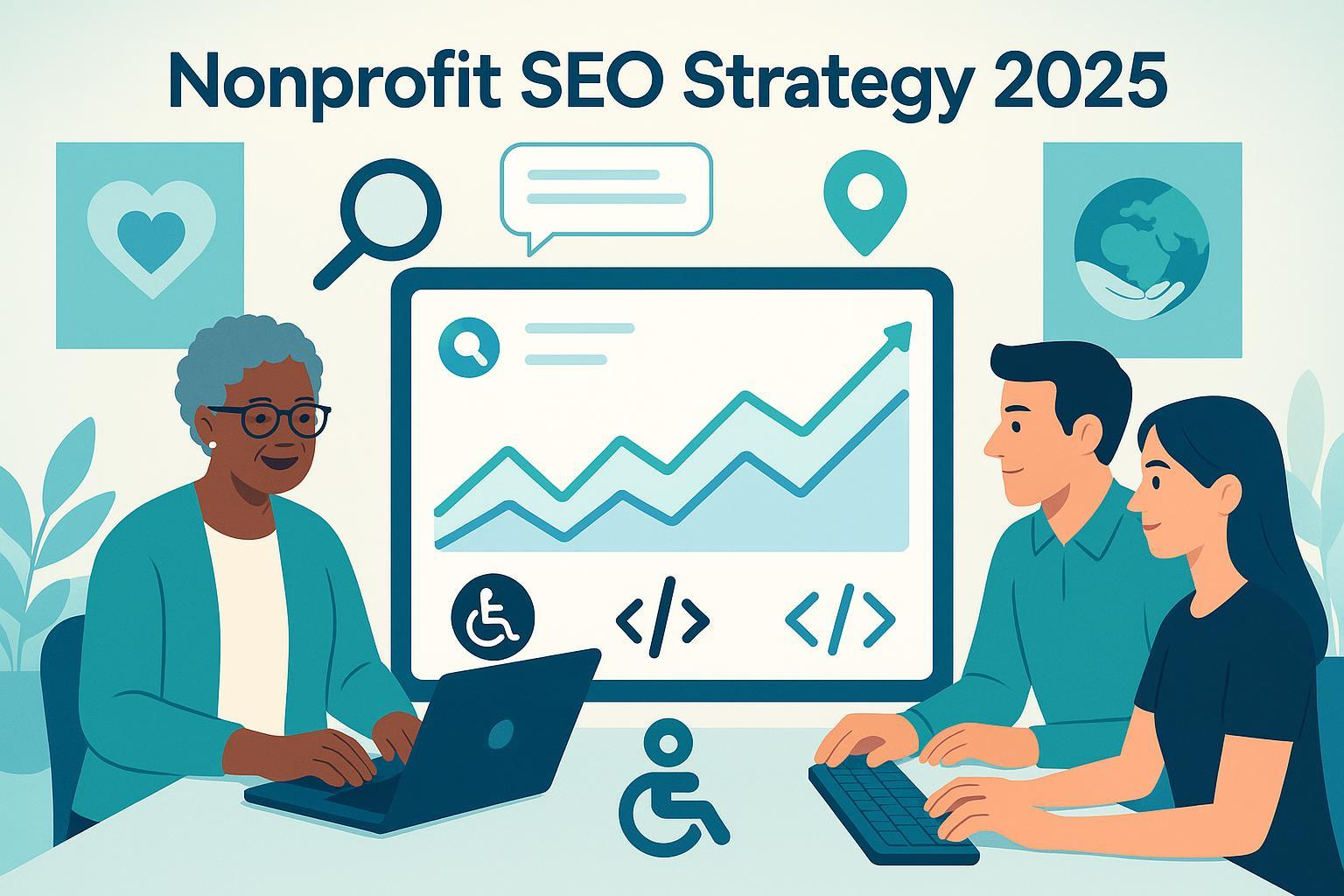
As a nonprofit digital strategist, I’ve watched organic search become the quiet workhorse behind donor growth, volunteer recruitment, and program reach. The data backs it up: multiple sector summaries citing M+R’s annual benchmarks indicate that organic search drives roughly “44% of nonprofit website visits,” with desktop still converting disproportionately for donations in recent years. See M+R’s hub for definitions and trends in the latest report and glossary, and note how sector analysts summarize key ratios in the 2024–2025 window (for example, Getting Attention’s writeup referencing M+R). For background, start with the M+R reference pages and the 2025 commentary by NonprofitPro.
- M+R Benchmarks 2025 hub: Key findings (M+R, 2025) and Glossary (M+R)
- Sector summary: NonprofitPro’s 2025 takeaways from M+R
- Traffic-share context: Getting Attention’s nonprofit marketing statistics citing M+R
Beyond the traffic share, 2025 brings two realities nonprofits can’t ignore:
- Google’s AI-driven experiences (AI Overviews) increasingly shape how answers are surfaced. Guidance from Google’s Search Central in 2025 emphasizes clarity, verifiability, and structured data for visibility in these experiences. See Google’s “Succeeding in AI search” (2025) and AI features and your website.
- Page experience and performance still matter for discoverability and conversion. Google’s Core Web Vitals now use Interaction to Next Paint (INP) instead of FID; thresholds for LCP, INP, and CLS remain practical targets. See Core Web Vitals overview (Google, updated 2024–2025) and the INP deep dive (web.dev).
In short: SEO is one of the most cost-effective ways for nonprofits to compound impact over time—if you focus on the fundamentals and adapt to AI-era changes.
What “good SEO” means for nonprofits
Outcomes first. A nonprofit SEO program should be accountable to mission outcomes, not just rankings:
- More completed donations and recurring gifts
- More qualified volunteer signups and event registrations
- Greater program reach (services accessed, resources downloaded)
- Growth in brand queries and earned media mentions
Common pitfalls I still see:
- Publishing scattershot blogs that don’t match search intent or your program areas
- Neglecting technical basics (crawl/index issues, slow pages, duplicate titles)
- Underusing structured data and FAQs that help search (and AI Overviews) interpret your content
- Treating Local SEO as optional when you have chapters, clinics, or events
- Poor donation UX (long forms, friction on mobile, unclear impact copy)
A 90-day nonprofit SEO action plan
This plan assumes a lean team. If you can dedicate 5–15 hours per week for 12 weeks, you can lay down durable foundations.
Weeks 1–2: Assess and set up
- Connect tools
- Verify Search Console; submit XML sitemaps and check Coverage and Page Indexing
- Ensure GA4 is capturing key events (donation completion, volunteer signup, contact form)
- Crawl and indexation sanity check
- Robots.txt, canonicals, clean 404s/redirects; no orphaned high-value pages
- Performance and accessibility triage
- Aim for Core Web Vitals thresholds: LCP ≤ 2.5s, INP ≤ 200 ms, CLS ≤ 0.1 per Google’s targets. See Core Web Vitals overview (Google)
- Confirm keyboard navigability and tap target sizes per WCAG 2.2 (W3C, 2023). Public-facing organizations should also be mindful of the DOJ’s 2024 rule on web accessibility expectations
Weeks 3–4: Research and map content
- Keyword intent buckets tailored to nonprofits
- Donate: “donate to [cause]”, “monthly giving [cause]”
- Volunteer: “volunteer [cause] near me”, “virtual volunteering [cause]”
- Services/Programs: “free [service] near me”, “support for [population] [city]”
- Advocacy/Education: “what is [issue]”, “how to help [population]”
- Local: “[cause] nonprofit [city]”, “[service] [neighborhood]”
- Map queries to pages
- Cluster by program area; assign a primary page and supporting articles/FAQs
- Define one clear call-to-action per page (donate, sign up, refer, learn)
Weeks 5–8: Fix, build, and optimize
- On-page essentials
- One primary keyword and intent per page; descriptive H1; scannable H2s
- Clear meta title/description with benefit and local modifiers where relevant
- Internal links from high-traffic pages to priority program/donate pages
- Structured data
- Add Organization and Nonprofit markup to your homepage/about; Event schema for events; FAQ/HowTo where appropriate. See Google’s structured data introduction and Nonprofit/Organization docs
- AI Overviews (GEO) readiness
- Add concise Q&A sections answering “People also ask” queries with citations; keep answers clear and verifiable per Google’s 2025 AI search guidance
Weeks 9–12: Promote and measure
- Partnerships and PR
- Coordinate with coalition partners, universities, and local media for story placements and resource roundups; target 2–5 quality mentions this month
- Measurement cadence
- Review GA4 conversion events weekly and Search Console query/pages monthly; annotate site changes and campaigns
Keyword research that respects intent (and budgets)
A pragmatic workflow I use:
- Start with your team’s language. Pull real questions from staff, helpline emails, and program intake forms.
- Expand with GSC queries, Google Ads Keyword Planner, and competitive SERP scans. Prioritize long-tail phrases with service or action intent.
- Validate SERP intent by reading the top results. If the page types are “resources” and you’re trying to rank a “donate” page, create a companion resource page and link to the donation CTA.
- Group by program themes (e.g., housing, food, mental health) and by audience (donors, volunteers, beneficiaries).
- Decide page ownership. A single “pillar” per cluster with supporting guides and FAQs typically works best.
If you need to spin up a blog quickly to house educational content, this primer on the best free blog sites for beginners in 2025 explains platform trade-offs in plain language.
On-page, structured data, and AI Overviews: the 2025 essentials
- Search Essentials: ensure your site follows Google’s core guidance on content, indexing, and structured data. See Google’s SEO Starter Guide hub.
- Titles and headings: write for humans first, but reflect query language; avoid duplicating titles across chapters or events.
- FAQs and Q&A blocks: these improve clarity for readers and help AI summarizers extract correct answers. Pair concise answers with citations to reputable sources.
- Structured data: implement Organization/Nonprofit; extend with Event for fundraisers, FAQ for common questions, and HowTo for step-by-step resources. Start with Google’s structured data overview and only mark up what’s actually on the page.
- Page experience: optimize for LCP, INP, and CLS. Review interaction bottlenecks (slow third-party scripts, heavy images) using the INP deep dive on web.dev.
- Accessibility: WCAG 2.2 criteria like Focus Not Obscured and Minimum Target Size reduce friction on donation forms and mobile nav; they are aligned with mission and conversion.
For teams exploring AI-assisted drafting, start with principles and guardrails. Here’s a plain-language explainer on what AI-generated content is and where it helps. Keep human review and subject-matter verification in the loop.
Local SEO for nonprofits with locations, chapters, or events
If people access your services in person or regionally, Local SEO is not optional.
- Google Business Profile (GBP)
- Complete every field; pick the right primary and secondary categories; keep hours, address, and phone consistent across the web
- Post updates and events; add photos of programs and facilities
- Ask for and respond to reviews
- Understand Google’s local ranking factors: relevance, distance, prominence as outlined in Google’s official local ranking guidance
- Local content and links
- Publish service-area pages with real directions, transit info, and local partner shout-outs
- Earn mentions from city sites, libraries, schools, clinics, and community calendars
Content creation workflow that teams actually follow
- Editorial cadence
- 2–4 new or refreshed pieces per month mapped to priority clusters
- Quarterly refresh of top 10 organic pages (update facts, add FAQs, improve internal links)
- Formats that work
- Impact stories (what $50 does), “How to access [service]” guides, “Volunteer 101” FAQs, chapter/clinic location pages, and annual impact summaries with charts
- Light-weight tooling
- Assign topics, deadlines, and subject-matter reviewers; keep a simple keyword-to-page map and an internal link wishlist
Tool note: Platforms that combine drafting, structured data support, and on-page SEO checks can reduce overhead. Consider QuickCreator if you want an AI-assisted editor with SEO prompts and one-click publishing. Disclosure: QuickCreator is our product.
Earning links the nonprofit way
You don’t need cold outreach at scale to build authority. Focus on authentic relationships:
- Partners and coalitions: co-author resource pages and toolkits; request a link back to your program page
- Foundations and sponsors: ensure grantee profiles link to your site with descriptive anchors
- Universities and research centers: collaborate on reports; publish executive summaries with canonical links
- Local media and calendars: submit to event roundups; provide expert quotes with a link to your resource hub
Measure link quality (topical relevance, domain authority, traffic) over quantity. A handful of high-relevance mentions can move more than dozens of low-quality links.
Measurement and reporting that boards understand
Translate SEO into outcomes that matter:
- Leading indicators
- Rankings for priority queries by cluster
- Organic sessions to donate, volunteer, and program pages
- Click-through rate from SERPs (Search Console)
- Outcome indicators
- Completed donations (one-time and recurring)
- Volunteer applications and program referrals
- Resource downloads or helpline calls initiated
Build a monthly one-page KPI deck: top insights, what changed, what’s next. Keep a change log (site releases, earned links, PR) to correlate with shifts in traffic or conversions.
Resource matrices: what to do with 5h, 15h, or 40h per month
- If you have 5 hours/month
- Maintain GBP, respond to reviews, and post one local update
- Refresh one high-impact page (donate, volunteer, or top program guide)
- Fix obvious on-page issues (duplicate titles, missing H1)
- If you have 15 hours/month
- All of the above, plus publish 2 pieces mapped to priority clusters
- Add FAQ sections to top pages and implement Organization/Nonprofit schema
- Outreach to 2 partners/month for link mentions
- If you have 40 hours/month
- Run a quarterly technical audit and CWV improvements
- Build location/service-area pages and add Event schema for recurring events
- Publish 4 pieces/month, refresh the top 10 pages quarterly, and run a pilot PR partnership
For teams formalizing AI in content ops, this guide to AI writing tools and workflows can help you evaluate options while keeping quality controls.
A nonprofit SEO win, quantified
One transparent case I point to when boards ask “Does SEO even work for nonprofits?” is the Rainbows project in Chicago. In 2025, an agency reported a pro bono campaign that produced a 277% year-over-year increase in new organic users, first-page rankings for about 130 non-branded keywords, and a bounce rate improvement from 44.5% to 14%, with multiple form conversions tied to the effort. See the detailed outcomes in the Rainbows nonprofit case study by Pilot Digital (2025). While every organization is different, the levers used—technical cleanup, intent-matched content, local visibility, and consistent measurement—are replicable.
Monthly/bimonthly nonprofit SEO checklist
- Crawl & index
- Review Search Console Coverage and Page Indexing; fix 404s/redirect chains
- Validate robots.txt, canonicals, and XML sitemaps
- Core Web Vitals & page experience
- Track LCP/INP/CLS; compress images; defer non-critical scripts; limit heavy widgets
- On-page hygiene
- Unique, intent-matched titles and H1s; descriptive meta; internal links to donate/volunteer/program pages
- Structured data
- Organization/Nonprofit on core pages; Event for upcoming events; FAQ/HowTo where relevant
- Content cadence
- Publish 2–4 pieces/month; refresh top 10 pages quarterly; add Q&A blocks for common queries
- Local SEO
- Update GBP (posts, photos); respond to reviews; confirm NAP consistency and local citations
- Partnerships & PR
- Pursue 2–5 quality mentions/month from partners, foundations, and media
- Analytics & reporting
- GA4 events for donations/volunteers; Search Console performance review; monthly KPI deck with insights and next steps
Governance, accessibility, and risk notes
- Keep a living style and SEO governance doc: target audiences, voice, fact sources, schema types used, internal link conventions, and review cycles.
- Accessibility is non-negotiable: WCAG 2.2 compliance improves usability and often benefits SEO. Review W3C guidance and stay mindful of the DOJ’s 2024 rule for public-facing web content.
- Don’t overfit to AI Overviews. You can’t “force” inclusion; focus on clarity, citations, and authority signals.
- Avoid vanity metrics. Tie SEO to donations, volunteer hours, and program utilization.
Why invest now
- Compounding returns: pages that rank and convert can drive value for years with light maintenance.
- Budget leverage: organic search offsets rising paid media costs while improving overall channel efficiency.
- Mission alignment: accessibility, clarity, and trust signals are good for users and good for search.
If you implement the 90-day plan above and adopt the monthly checklist, you’ll cover 80% of what moves the needle—without needing a big team or budget.
References and official guidance used in this article include Google’s Search Essentials and Core Web Vitals (INP), W3C’s WCAG 2.2, the DOJ’s 2024 accessibility rule, and nonprofit benchmark insights from M+R and sector analyses. For exact methodologies and definitions, consult the primary resources cited above:
- Google’s SEO Starter Guide hub
- Core Web Vitals overview (Google, 2024–2025)
- INP deep dive (web.dev)
- Structured data overview (Google)
- Succeeding in AI search (Google, 2025)
- AI features and your website (Google)
- Improve your local ranking on Google (GBP)
- WCAG 2.2 (W3C)
- DOJ 2024 web accessibility rule
- M+R Benchmarks 2025 hub
- Rainbows case study (Pilot Digital, 2025)
