Mastering Local SEO Competition in 2025


You want your business to stand out in your town, right? Local SEO Competition keeps getting tougher. Nearly half of all Google searches now look for local results, and “near me” searches have exploded. When you analyze your local competitors, you spot market trends, find keyword gaps, and set smart goals. Local SEO brings more customers to your door, boosts your reputation, and helps you grow faster than rivals. Ready for step-by-step guidance? Let’s get started!
Tip: Most small businesses still miss out on local SEO, so you have a real chance to pull ahead.
Why Local SEO Competition Matters
Local Search Impact
You probably use your phone to find a pizza place or a plumber nearby. Your customers do the same. Local search shapes how people choose where to spend their money. In 2025, almost half of all Google searches have local intent. That means people want answers about businesses close to them. Here’s what the numbers show:
- 80% of U.S. consumers search online for local businesses every week. About a third do this every day.
- Mobile “near me” searches have jumped by over 500% in recent years.
- 76% of people who search locally visit a business within a day. 28% of those visits turn into a purchase.
- 93% of shoppers say online reviews help them decide where to buy.
- 42% of people click on Google’s Local Pack results, which highlights top local businesses.
People trust what they see online. If your business has lots of recent, positive reviews, you build trust. If you ignore reviews or have wrong business info, people lose confidence fast. Most shoppers check several review sites and look for photos or videos before making a choice. Keeping your business details accurate and responding to reviews can make a huge difference.
Business Growth
Local SEO Competition is not just about showing up in search results. It’s about growing your business. When you appear in the Google Local 3-Pack, you can see a 126% jump in website traffic. That means more people walk through your door or call you. Take a look at how local search drives real results:
| Metric Description | Statistic/Value | What It Means for You |
|---|---|---|
| ROI from local SEO campaigns | Up to 500% | Big returns for your investment |
| Consumers visiting a business within a day | 76% | Fast foot traffic from search |
| Mobile local searches leading to visits/calls | 88% | Mobile users take action quickly |
| Traffic increase from Google Local 3-Pack | 126% | More eyes on your business |
| Percentage of local searches leading to action | 80% | Most searches end with a visit or call |
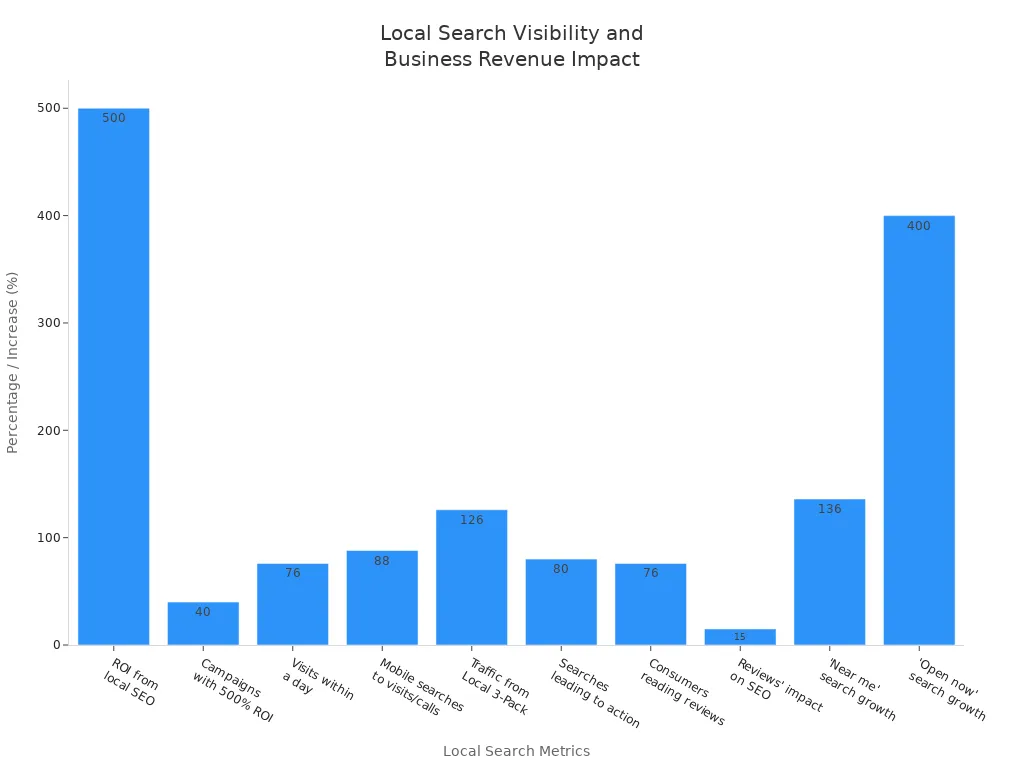
Let’s look at a real example. A cleaning service used local SEO tools to boost its rankings. They got more website visits, more bookings, and a stronger online presence. Their investment paid off with a positive ROI. When you focus on Local SEO Competition, you set your business up for steady growth and more customers.
Identifying Competitors

Local Pack and Maps
You want to know who shows up when customers search for businesses like yours nearby. The Google Local Pack, also called the Map Pack, displays the top three local businesses on a map. These results depend on how close you are to the searcher, how relevant your business is, and how strong your online presence looks. Your Google Business Profile (GBP) plays a huge role here. If you keep your business details accurate, collect positive reviews, and build local citations, you boost your chances of showing up.
To find your competitors in the Local Pack and Maps, you can use smart tools. Local Dominator stands out for tracking GBP rankings and map positions. It gives you clear geo-tracking and heat maps, so you see exactly where you rank and which businesses outrank you. Other popular tools include:
- Semrush’s Map Rank Tracker
- Local Falcon’s Map Rank Tracker
- BrightLocal’s Local Rank Tracker
These tools let you check rankings from different locations, just like your customers do. You can also use GBP insights and UTM tracking to see how users interact with your profile and spot what your competitors do better.
Tip: Regular audits help you catch changes in competitor rankings and find new opportunities to improve your own local SEO.
Organic Search Results
Organic search results show up below the Local Pack. These results come from Google’s main algorithm, which looks at your website’s content, backlinks, and keyword use. Here, you compete with a wider range of businesses, not just those nearby. Some competitors might be national brands or online-only companies.
When you want to identify competitors in organic search, focus on website authority and content relevance. Use tools like Ahrefs, SpyFu, and Semrush’s Keyword Gap to see which keywords drive traffic to your rivals. You can reverse-engineer their strategies and target similar keywords in your own site’s titles, headers, and blog posts. AI-powered tools also help you spot search patterns and local trends.
- Track backlink profiles and review scores
- Check NAP (Name, Address, Phone) consistency
- Analyze directory listings and review platforms
Knowing who ranks above you in both local and organic results helps you set clear goals and build a stronger strategy. You get a full picture of your competition and learn where you can stand out.
Local SEO Competition Analysis
Google Business Profile
You want your Google Business Profile to shine brighter than your competitors. Start by checking their profiles for accuracy and completeness. Look at their business name, address, phone number, and website. Make sure your details match everywhere online. Compare their photos and videos. Do they look professional and inviting? More visual content often means more clicks.
Check how many reviews they have and what people say. Are their ratings high? Do they respond to reviews? Frequent replies show they care about customers. Look at their Google Posts. Are they posting often? Do people engage with their posts? Use tools like BrightLocal, Moz Local, Whitespark, and Semrush to track how visible they are in local searches. Local Falcon helps you see where they rank on the map.
A verified and complete profile helps you rank higher in the Local Pack. Add photos, videos, products, categories, and answers to common questions. Make sure your profile works well on mobile devices. If you offer appointments or bookings, test those links to see if they work smoothly.
Tip: Businesses with more positive and recent reviews usually rank higher. Responding to reviews boosts trust and can improve your ranking.
Website SEO
Your website is your digital storefront. Compare your site to your competitors. Is your site mobile-friendly? Does it load fast? Easy navigation and clear contact info help visitors stay longer. Check if your competitors use local keywords in their titles and headings. Do they have blogs or news about local events?
Look for schema markup on their pages. Schema helps search engines understand your business. See if they have reviews, products, or local business schema. Check their site speed and security. HTTPS and a clean URL structure matter for rankings.
Here’s a quick table to help you compare:
| SEO Factor Category | Key Influencing Elements |
|---|---|
| On-Page SEO Signals | NAP consistency, local keyword optimization, mobile-friendliness |
| Backlinks and Citations | High-quality backlinks from authoritative local sites, consistent citations |
| Behavioral Signals | User engagement metrics such as click-through rates and time on site |
| Local Content Marketing | Creation of local blogs, news, events, and culturally relevant content |
| Technical SEO | Site speed, HTTPS security, schema markup, XML sitemap, site structure |
| Google Business Profile | Accurate and optimized business profile management |
| Online Reviews | Genuine reviews and active responses to build trust |
| Spam Listing Management | Identification and removal of spam or duplicate listings |
| Traditional SEO Factors | Keyword usage, content quality, user experience |
Check if your competitors sponsor local events or work with influencers. These activities build community engagement and can boost your rankings.
Citations and NAP
Citations are mentions of your business name, address, and phone number (NAP) on other websites. Consistent NAP data helps search engines trust your business. Compare your citations to your competitors. Are their details the same everywhere? Inconsistent NAP info confuses search engines and customers. This can lower rankings and hurt your reputation.
Regular audits help you spot errors. Use tools like Yext, Moz Local, and BrightLocal to check your listings. Standardize your NAP format across your website, directories, and social media. Businesses with consistent NAP listings attract more local searchers and appear more often in the Local Pack.
- Consistent NAP data improves local search rankings and visibility.
- Inconsistent info leads to lower rankings and lost customers.
- Uniform NAP details strengthen your local presence and boost conversions.
- Accurate NAP on Google My Business increases your chances of showing up in the Local Pack.
Backlinks
Backlinks are links from other websites to yours. They show search engines that your site is trustworthy. Analyze your competitors’ backlinks using tools like Ahrefs, Semrush, Moz, Majestic, and SEO SpyGlass. Look for high-authority domains linking to their sites. Categorize their backlinks by quality and relevance.
Track which links your competitors gain or lose each month. Set goals for your own link-building. Reach out to local news sites, blogs, and community organizations for backlinks. Focus on high-value links that drive real traffic. Use dashboards to monitor your progress and adjust your strategy.
- Identify high-authority referring domains.
- Use automation and SEO tools for backlink analysis.
- Prioritize outreach to Tier 1 and Tier 2 backlinks.
- Track lost and gained backlinks monthly.
- Report progress with clear, data-driven dashboards.
Reviews
Reviews matter a lot in Local SEO Competition. Check your competitors’ review profiles. How many reviews do they have? Are they mostly positive? Look at the quality of the reviews. Detailed feedback helps search engines understand what customers like.
Fresh reviews show your business is active. A steady stream of new reviews looks natural. Responding to reviews shows you care about customers. This can boost your rankings and build trust.
- Quality: Detailed, well-written reviews help search engines understand your business.
- Quantity: More positive reviews signal credibility.
- Velocity: Consistent new reviews show ongoing engagement.
- Positive reviews increase trust and click-through rates.
- Responding to reviews demonstrates customer care.
- Recency matters for rankings and consumer trust.
Social Media
Social media helps you connect with your local community. Check your competitors’ profiles. Are they active? Do they use local hashtags and geotags? Social signals like likes, shares, and comments don’t directly affect Google rankings, but they boost visibility and engagement.
Social media profiles can show up in search results. Sharing useful content and responding to comments builds authority. Encourage customers to leave positive reviews on social media. Use a consistent posting schedule to show reliability.
- Search engines notice social media activity and engagement.
- Relevant hashtags increase local reach.
- Engaging with the community builds reputation.
- Positive reviews on social media boost credibility.
- Sharing quality content establishes authority.
- Consistent posting signals freshness to search engines.
Note: Social media also helps keep your NAP details consistent across platforms, which supports your local SEO efforts.
Finding Gaps and Opportunities
Performance Benchmarking
You want to know how your local SEO stacks up against your competitors. Start by looking at what they do well and where they fall short. This helps you spot areas where you can improve and get ahead. Here are some key things to check:
- Review their websites and see how they engage with visitors. Do they have clear calls to action? Is their site easy to use?
- Check their social media profiles. Are they active? Do they respond to comments and reviews?
- Use SEO tools like SEMrush or Ahrefs to find out which keywords they rank for and what content brings them traffic.
- Test their website speed and mobile friendliness with Google PageSpeed Insights. Fast, mobile-ready sites attract more customers.
- Look at their backlinks. Are they getting links from trusted local sources? Quality backlinks help boost rankings.
- Compare their Google Business Profile listings. Are their business details accurate? Do they have lots of photos and reviews?
- Watch how they handle customer feedback, especially negative reviews. Good responses build trust.
Tip: Make a simple table to track these benchmarks for each competitor. This makes it easy to see who leads in each area and where you can catch up.
Keyword Gaps
Finding keyword gaps gives you a big advantage. You want to know which search terms your competitors rank for that you don’t. This helps you target new keywords and reach more local customers. Here’s how you can do it:
- Search your main keywords and see which businesses show up at the top.
- Study their content and keyword use. Look for patterns and topics they cover that you might miss.
- Check their on-page SEO. Review their title tags, meta descriptions, headers, and Google Business Profile details.
- Use tools like Ahrefs’ Keyword Gap or SEMrush’s Keyword Gap Analysis. These show you keywords your competitors rank for but you don’t.
- After you find gaps, create new pages or update your content to target those keywords.
- Use Google Analytics and Google Search Console to track which local keywords bring visitors to your site.
- Monitor your rankings and traffic. Adjust your strategy as you find new opportunities.
Note: Regular keyword gap analysis helps you stay ahead and keeps your local SEO strategy fresh.
Adapting Competitor Strategies
Reverse Engineering
You want to know what makes your top competitors so successful in local search. Reverse engineering helps you break down their strategies and learn what works. Start by looking at the keywords they rank for. Use tools like Ahrefs or SEMrush to spot location-specific terms they use that you might miss. These tools show you keyword gaps and help you find new content ideas.
Next, check out their most popular pages. What topics do they cover? Do they write guides about local events or share customer stories? You can create similar content, but add your own twist. Look at their backlink profiles. See which local news sites, blogs, or forums link to them. Reach out to those sources or find new ones in your area.
Don’t forget about their website structure. Is their site easy to navigate? Do they have a helpful FAQ section? Fast loading and mobile-friendly pages matter a lot. You can use free trials of SEO tools to get this data without spending much.
Here’s a simple process to reverse engineer competitor strategies:
- Find keyword gaps using Ahrefs or SEMrush.
- Analyze top-performing pages for content themes.
- Review backlink profiles for local link opportunities.
- Check site speed, mobile optimization, and navigation.
- Use free or trial SEO tools for cost-effective analysis.
Tip: Regularly track your competitors’ rankings and updates. This helps you stay ahead in Local SEO Competition.
Customization
Reverse engineering gives you a blueprint, but you need to make it your own. Every local market is different. What works for one competitor might not work for you. Customization helps you stand out and connect with your community.
Start by mapping your competitors. Look at their pricing, market share, and customer satisfaction. Use audience mapping to see who their customers are. Segment your audience by age, interests, and location. This helps you tailor your marketing and services.
Product mapping shows which features local customers love. You can adjust your offerings based on what people want in your area. Sales mapping helps you focus on regions with the most opportunity. If you run a multi-location business, use hyperlocal market mapping to create unique strategies for each spot.
AI-powered tools like Birdeye Competitors AI give you smart recommendations. They help you benchmark your performance and spot new opportunities. You can also use CRM systems and customer feedback to improve your services. Building strong local relationships through networking and partnerships boosts your reputation.
Here are ways to customize competitor strategies for your market:
- Visualize competitor positions with mapping tools.
- Segment your audience for targeted marketing.
- Adjust products and services to fit local preferences.
- Use AI tools for smart insights and recommendations.
- Build local partnerships and engage with your community.
- Monitor reviews and feedback to find gaps in competitors’ offerings.
- Continuously update your strategy as local trends change.
Note: Customization lets you move beyond imitation. You create a unique value for your customers and build lasting success in your local market.
Hyperlocal Content and Relationships

Local Content
You want your business to feel like part of the neighborhood. Hyperlocal content helps you connect with people right where they live. When you create content that speaks to your community, you show customers you understand their needs. You can use location-specific landing pages for each neighborhood or district. These pages make your business show up in searches for local spots.
Blog posts about local events, community issues, or customer stories grab attention. People love reading about things happening nearby. You can add neighborhood-specific reviews and testimonials to build trust. Videos work well, too. Try sharing recaps of local events, behind-the-scenes footage, or short customer testimonials. Embedding these videos on your Google Business Profile or website boosts your local relevance.
Photos matter a lot. Geotagged photos help search engines know you are active in the area. You can also use Google Business Profile features like Q&A, reviews, and regular updates to keep your profile fresh. Here are some ideas for hyperlocal content:
- Create unique pages for each neighborhood, including local landmarks and customer stories.
- Write blog posts tailored to local vibes and guides.
- Share geotagged photos and videos from community events.
- Engage with Google Business Profile Q&A and reviews.
- Optimize landing pages with neighborhood keywords.
Tip: The more you talk about your local area, the more likely people will find you when they search nearby.
Community Partnerships
Building strong relationships with other local businesses and organizations helps your SEO and your reputation. When you sponsor local events, you get quality backlinks from event websites. These links boost your site’s authority and help you rank higher in search results. Sponsorships also increase brand recognition and build trust in your community.
You can work with nearby businesses for mutual backlinking. This acts like a digital endorsement and increases your credibility. Joining local events and organizations makes your brand more visible. Partnerships help you stand out in a crowded market by offering something unique.
Here’s how you can build community partnerships:
- Sponsor local events and get mentioned on their websites.
- Collaborate with other businesses for joint promotions.
- Share each other’s content on social media to boost engagement.
- Write guest posts or host webinars with local partners.
- List your business in local directories and groups.
Note: Track your traffic and conversions from these partnerships. This helps you see what works and improve your strategy.
Ongoing Monitoring
Competitor Tracking
You want to stay ahead of your local competitors, right? Ongoing monitoring helps you spot changes fast and react before they pull ahead. The best way to track competitors is to set up a routine. You can break it down into daily, weekly, and monthly tasks. Here’s a simple plan:
- Check your rankings and your competitors’ positions every day. Look for sudden jumps or drops.
- Review new content, ad copy, and SERP features each week. Watch for fresh blog posts, new landing pages, or changes in Google Business Profiles.
- Run monthly reports on backlinks, citations, and conversion updates. Use tools like Ahrefs, Semrush, or BrightLocal’s local search grid to see who’s gaining ground.
- Set up alerts for big ranking shifts or new reviews. Automation saves you time and keeps you informed.
- Focus on metrics that help you make smart decisions. Don’t try to track everything—stick to what matters most for your business.
- Always use ethical methods. Only look at public data like competitor websites, social media, and newsletters. Never scrape private info or use negative tactics.
Tip: Use geo-grid rank trackers to see how you stack up in specific neighborhoods. This helps you find areas where you can outrank competitors.
You can also analyze competitor landing pages and conversion funnels. Look for chat options, appointment booking, and FAQs. These features often boost engagement and drive more leads.
Strategy Updates
Your local SEO strategy should never stand still. You need to update your tactics as soon as you notice competitors making changes. Watch their Google Business Profile, website SEO, backlinks, reviews, and social media activity. If they add new categories, get more reviews, or launch fresh content, you should respond quickly.
Local SEO works best when you adapt often. There’s no set schedule for updates. You should make changes whenever you spot new trends or see competitors moving ahead. This keeps your business competitive and visible.
| Update Type | When to Act | Why It Matters |
|---|---|---|
| Ranking Changes | Daily or Weekly | Stay ahead of sudden shifts |
| New Content | Weekly | Match fresh competitor tactics |
| Backlink Growth | Monthly | Build authority and trust |
| Review Activity | Ongoing | Boost reputation and rankings |
| Social Engagement | Weekly | Connect with your community |
Note: Frequent updates help you stay on top. If you wait too long, you risk falling behind in local search.
You can master Local SEO Competition by following a few clear steps. Start with regular audits, keep your Google Business Profile updated, and create local content that speaks to your community. Use tools like Google Analytics and Search Console to track your progress and spot changes fast.
Search engines and competitors change all the time, so you need to keep analyzing and adapting. Take action now—monitor your results, adjust your strategy, and watch your business grow.
FAQ
What is the Local Pack in Google search?
The Local Pack shows the top three local businesses on a map when you search for something nearby. You see their names, ratings, and addresses right at the top of the results.
How often should I update my Google Business Profile?
You should update your profile at least once a month. Add new photos, reply to reviews, and check your business hours. Staying active helps you rank higher.
Do reviews really help my local SEO?
Yes! Positive and recent reviews make your business look trustworthy. Google uses reviews to decide who shows up in the Local Pack. Always ask happy customers to leave feedback.
Which tools help me track local SEO competitors?
You can use tools like Semrush, Ahrefs, Local Falcon, and BrightLocal. These tools show you where you rank, what keywords you miss, and how your competitors perform.
Tip: Set up alerts in these tools so you never miss a change in your rankings or reviews.
See Also
How To Use SEO Writing Tools To Boost Rankings
Effective SEO Content Distribution Strategies For Marketing Growth
Key SEO Ranking Factors Shaping Search Results In 2024
SEO Trends In 2024: AI, Disruptions, And Content Plans
Exploring SEO's Future With Google's Generative Search Experience
