Build Your Own Keyword List in a Scientific and Convenient Way

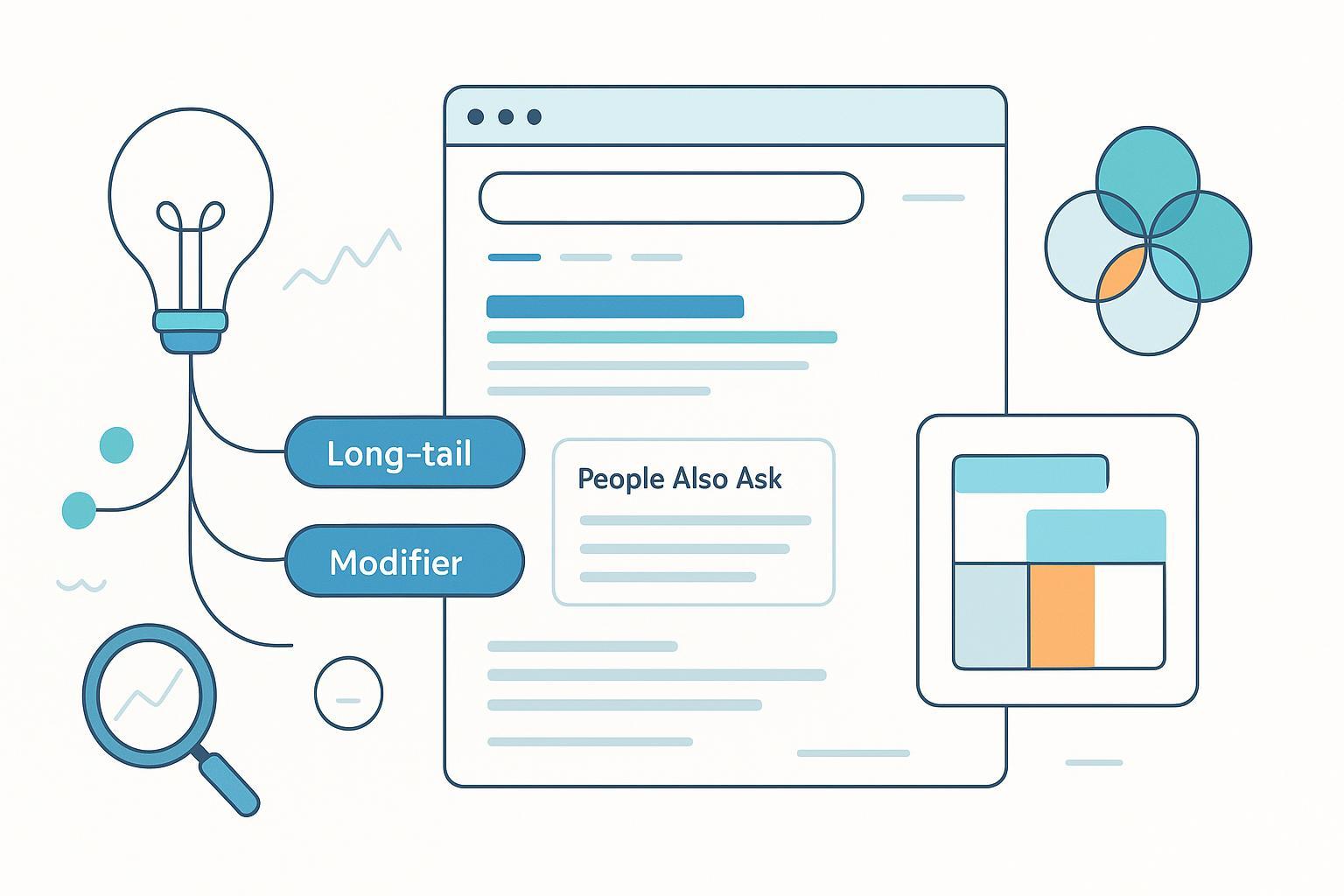
If you’ve ever felt overwhelmed by keyword research, this guide will walk you through a practical, tool-agnostic workflow to produce a clean, prioritized keyword list with clusters you can use right away. Expect to spend about 60–120 minutes on your first pass. Difficulty: moderate. Prerequisites: access to at least one keyword tool (free or paid), and the ability to run simple Google SERP checks.
Why this works: The process is grounded in aligning with real user intent and validating via SERP patterns and performance data—principles emphasized by Google’s guidance to create helpful, reliable content and meet users’ needs, as reinforced in the Google SEO Starter Guide (Search Central, 2025) and the Google March 2024 Search update overview.
Before you start: set up your workspace
- Create a spreadsheet with these columns: Keyword, Cluster, Primary Target, Intent, Volume, KD, CPC, SERP Features (notes), Topical Fit (1–5), Business Value (1–5), Effort (Low/Med/High), Status, Target URL, Notes.
- If you’re newer to keywords and topics, skim this brief explainer: What are keywords, topics, and differences?
- Decide your main topical pillars (e.g., product categories, core services) to keep your list relevant.
Pro Tip: I give “Topical Fit” and “Business Value” more weight than raw volume. High alignment often wins faster than chasing trophy head terms.
Verification milestone: Your sheet is ready, and you’ve listed 3–5 pillars to guide discovery.
Step 1: Discover seed keywords
Do this:
- Map your business offerings and audiences. Write 5–10 seed phrases per pillar.
- Mine competitors: scan their top pages and category names; collect recurring phrases.
- Pull current queries from Google Search Console (Performance → Queries) to capture what you already appear for.
- Use Google Autocomplete, People Also Ask, and Related Searches to find common phrasing and questions.
- Check your own site search logs and support tickets for real customer language.
Why this matters: Strong seeds anchor your entire list and reduce noise. Competitor mining and structured seed discovery are widely recommended starting points, as explained in the SE Ranking guide to seed keywords (2024+).
Verification checkpoint: You have 40–80 seeds across pillars, each clearly tied to a page type (guide, category, product/service).
Pitfall to avoid: Overly broad seeds (“software,” “marketing”) without audience or use-case context. Add modifiers to reflect your value proposition.
Step 2: Expand with long-tail modifiers and question patterns
Do this:
- Apply common modifiers: problem/solution, price, compare, best/top, vs, how-to, template, checklist, near me, brand/model, industry/role.
- Gather question-based queries from People Also Ask, forums, and Q&A sites.
- Use tools to scale:
- Free: Keyword Planner (directional volume), Google Trends for seasonality, manual SERP observations.
- Paid: Ahrefs Keywords Explorer, Semrush Keyword Magic Tool, Mangools KWFinder, SE Ranking “Keyword suggestions.”
What to look for: Semantically close variants, questions you can answer, and modifiers that imply clear intent. Tool walkthroughs emphasize questions and related terms as expansion goldmines; see the Ahrefs keyword research guide (2024–2025) and the Mangools keyword research guide (2025).
Verification milestone: Your list now includes 200–500 ideas with at least three emerging clusters per pillar.
Pitfall to avoid: Copying suggestions wholesale. Skim for relevance; remove off-topic or brand-mismatch terms.
Step 3: Collect the right metrics (and a few qualitative signals)
Capture for each keyword:
- Search Volume: Average monthly searches (directional, varies by tool).
- Keyword Difficulty (KD): Relative competitiveness; methodology differs across vendors.
- CPC / Commercial Value: Ad bidding signal; rough proxy for transactional value.
- Search Intent: Informational, navigational, transactional, commercial investigation.
- CTR Potential: Note SERP features (featured snippet, PAA, ads, video, local pack) that may impact organic click opportunities.
- Topical Fit and Business Value: Your custom relevance scores.
Why these: A balanced view of audience size, feasibility, value, and alignment helps avoid chasing volume at the expense of ROI. Definitions and practical use of these metrics are covered in the Mangools keyword research guide (2025) and foundational principles in the Google SEO Starter Guide (Search Central, 2025).
Verification checkpoint: Every row has numbers (Volume, KD, CPC where available) and assigned intent. You’ve highlighted SERP features for 10–20 priority terms.
Pitfall to avoid: Treating CPC as an absolute indicator for SEO. It’s a directional signal—context matters.
Step 4: Analyze the SERP to confirm intent and format
Do this:
- Google the keyword and inspect the top results. Note content types (listicles, guides, product pages, videos).
- Confirm dominant intent. If the top 3 all look informational, plan a guide. If they’re product pages, plan a transactional page.
- Note special features (snippet, PAA, video, local pack). Consider how your content can qualify or complement them.
Why this matters: Matching what satisfies users is core to helpful content. Google’s March 2024 update emphasizes surfacing helpful, reliable results and reducing low-quality content; aligning with intent and useful formats helps meet that bar, as discussed in the Google 2024 Search update overview and the SEO Starter Guide (Search Central, 2025).
Verification checkpoint: For each candidate keyword, the top 3 results share a similar intent and content type. Mixed results? Mark as split intent.
Pitfall to avoid: Forcing your preferred format onto a keyword with a different dominant intent.
Step 5: Cluster keywords to avoid cannibalization
Do this:
- Group keywords by semantic similarity and SERP overlap (e.g., if multiple keywords share ≥40% of the same top URLs, they likely belong in one cluster).
- Assign one primary target keyword per cluster and list close variants as supporting terms.
- Plan pillar pages (broad topic) and supporting content (specific angles, FAQs, comparisons) within each cluster.
Why this matters: Clustering builds topical authority and prevents multiple pages from competing for the same query. Organizing content into pillars and supporting pieces is a widely endorsed practice; see the First Page Sage SEO best practices (2025) and complementary on-page guidance in the Backlinko SEO best practices hub.
Verification checkpoint: Each cluster has one primary target and 5–20 semantically close variants; no two clusters chase the exact same primary.
Pitfall to avoid: Over-splitting clusters based on minor wording differences; use SERP overlap as the tie-breaker.
Step 6: Prioritize with a defensible rubric
Do this:
- Score clusters on Volume, KD, CPC, Intent Fit, CTR Potential, Topical Fit, Business Value, and Effort.
- Identify quick wins: low KD, moderate volume, high fit/value. Identify pillars: higher volume/difficulty that anchor your strategy.
- Flag split-intent keywords; decide whether to tackle multiple formats or deprioritize.
Operational cadence: To move fast, consider short “sprints” where you ship a handful of high-fit clusters weekly; this approach is outlined in Implementing SEO Sprints: Quick Results Guide.
Verification checkpoint: You have a ranked list of clusters with clear next actions (publish now, research more, or park for later).
Pitfall to avoid: Prioritizing solely on volume. Missed fit or excessive difficulty will slow outcomes.
Step 7: Map clusters to pages and link them smartly
Do this:
- Assign one cluster per page. Define pillar vs. supporting pages.
- Outline internal links: pillar links to supports, supports link back to pillar, and related supports link laterally.
- Note target URL(s) and working titles in your sheet.
Why this matters: Clear mapping and internal linking help search engines understand your topical coverage and help users navigate. On-page best practices such as logical structure and internal linking are covered in the Backlinko SEO best practices hub.
Verification checkpoint: Every prioritized cluster has a planned page and 3–5 internal link opportunities.
Pitfall to avoid: Creating multiple pages for the same primary target—risks cannibalization.
Step 8: Verify and iterate post-publication
Do this:
- Monitor Google Search Console (Performance) for impressions, clicks, and position on your target queries.
- Adjust titles/meta/headers and add concise answers or FAQ sections where appropriate to improve clarity and potential snippet eligibility.
- Validate structured data (Article, FAQPage, Product, BreadcrumbList where applicable) using the Rich Results Test; monitor enhancements in Search Console.
Why this matters: Real performance data closes the loop on your assumptions and guides iteration. Google documents these practices in the SEO Starter Guide (Search Central, 2025) and structured data guidance under Search Central rich results documentation.
Verification checkpoint: Within 2–6 weeks, target queries show impressions; if not, re-check intent, content completeness, and internal linking.
Pitfall to avoid: Assuming no early impressions means “bad keyword.” Often it’s a format or content gap.
Practical workflow example (neutral, tool-agnostic)
Here’s how I’d validate a “how-to” cluster quickly:
- Seeds: “how to choose running shoes,” “running shoes for beginners,” “best running shoes for flat feet.”
- Expansion: Add modifiers like “for trail,” “vs stability,” “checklist,” and gather questions from PAA.
- Metrics: Pull Volume, KD, CPC; mark intent as informational or commercial investigation.
- SERP check: Top results are guides and lists—intent confirmed as informational.
- Cluster: Primary target “how to choose running shoes”; supporting terms include “running shoe types,” “stability vs neutral,” “trail vs road.”
- Prioritize: KD is moderate, business value is high for a shoe retailer; ship this cluster in your next sprint.
If you prefer some AI assistance validating related terms and surface-level clusters, you can use QuickCreator. Disclosure: QuickCreator is our product. In a single workspace, you can paste your seeds and compare topic recommendations against your draft clusters, then bring any relevant terms back into your spreadsheet. Keep decisions evidence-based—SERP checks remain your source of truth.
Troubleshooting and edge cases
- If your list is tiny: Go back to competitors and forums; extract category labels, comparison pairs (X vs Y), and common questions.
- If difficulty is too high: Target long-tails first to build topical authority; use head terms only as pillars.
- If intent is split: Choose one format based on your business goal (guide vs product page). Consider separate pages to avoid confusing users.
- If volume is zero/low but the term is high-intent: Keep it. Publish to serve real sales conversations and validate via GSC after a few weeks.
- If the SERP is packed with non-click features: Note CTR risks; design content to qualify for snippets/FAQ visibility and consider adjacent keywords with cleaner SERPs.
- Local SEO: Add geo modifiers; check for local pack; tailor content to location pages or service pages accordingly.
- Multi-language: Replicate the process per locale with native seeds; confirm regional SERP features and local competitors.
Optional advanced: intent alignment and collaboration
- Deepen your understanding of mapping query intent to format with Aligning Keywords for Improved Search Intent. Matching intent is central to satisfying users and earning visibility.
- For teams, standardize the spreadsheet schema and agree on weightings for Business Value and Topical Fit. Add a Status column with states like “Research,” “Drafting,” “Published,” “Refreshing.”
What “done” looks like (and next steps)
By the end of your first cycle, you should have:
- 3–6 clusters prioritized for near-term publishing.
- One primary target per cluster with supporting variants, mapped to specific pages.
- Clear internal linking plans and basic SERP notes on intent and features.
Ship content in short sprints and iterate based on GSC data. When you move from planning to drafting, follow a structured execution approach like How to Write SEO-Optimized Articles: Comprehensive Guide. For quality checks during or after drafting, you can evaluate clarity and structure with a framework like Content Quality Score.
If you benefit from an integrated workspace that keeps research and drafting close together, consider evaluating QuickCreator in your stack alongside your preferred SEO tools. Keep your process scientific: collect evidence, verify with SERP, and iterate in sprints.
Printable checklist
-
Prep
- Create the spreadsheet schema and list topical pillars.
- Define weightings for Topical Fit and Business Value.
-
Discover seeds
- Map offerings and audiences; list 5–10 seeds per pillar.
- Mine competitors, GSC, site search logs; collect PAA and related searches.
-
Expand
- Apply modifiers (how-to, vs, best, price, template, checklist, near me).
- Pull question-based variants from SERP and forums.
- Use free/paid tools to scale discovery.
-
Collect metrics
- Add Volume, KD, CPC, Intent, CTR features, Fit/Value, Effort.
-
SERP analysis
- Confirm dominant intent and format; note special features.
-
Cluster
- Group by semantic similarity and SERP overlap; choose one primary per cluster.
-
Prioritize
- Score clusters; select quick wins and pillars; flag split-intent.
-
Map & link
- Assign cluster → page; plan pillar/support internal links.
-
Verify & iterate
- Monitor GSC; refine titles/meta/headers; validate structured data.
Reference reading (authoritative)
- Fundamentals of helpful content and aligning with user needs: Google SEO Starter Guide (Search Central, 2025)
- Update focus on helpful, reliable results: Google Search update overview (March 2024)
- Definitions, metrics, and process details: Mangools keyword research guide (2025)
- Tool-driven discovery and intent checks: Ahrefs keyword research guide (2024–2025)
- Seed discovery from competitors and structure: SE Ranking seed keywords guide (2024+)
- Pillar/support organization and best practices: First Page Sage SEO best practices (2025)
- Complementary on-page and internal linking practices: Backlinko SEO best practices hub
