10 High‑Intent Blog Topics for Outdoor Sports & Camping Gear Buyers (with Reusable Brief Templates) — 2025

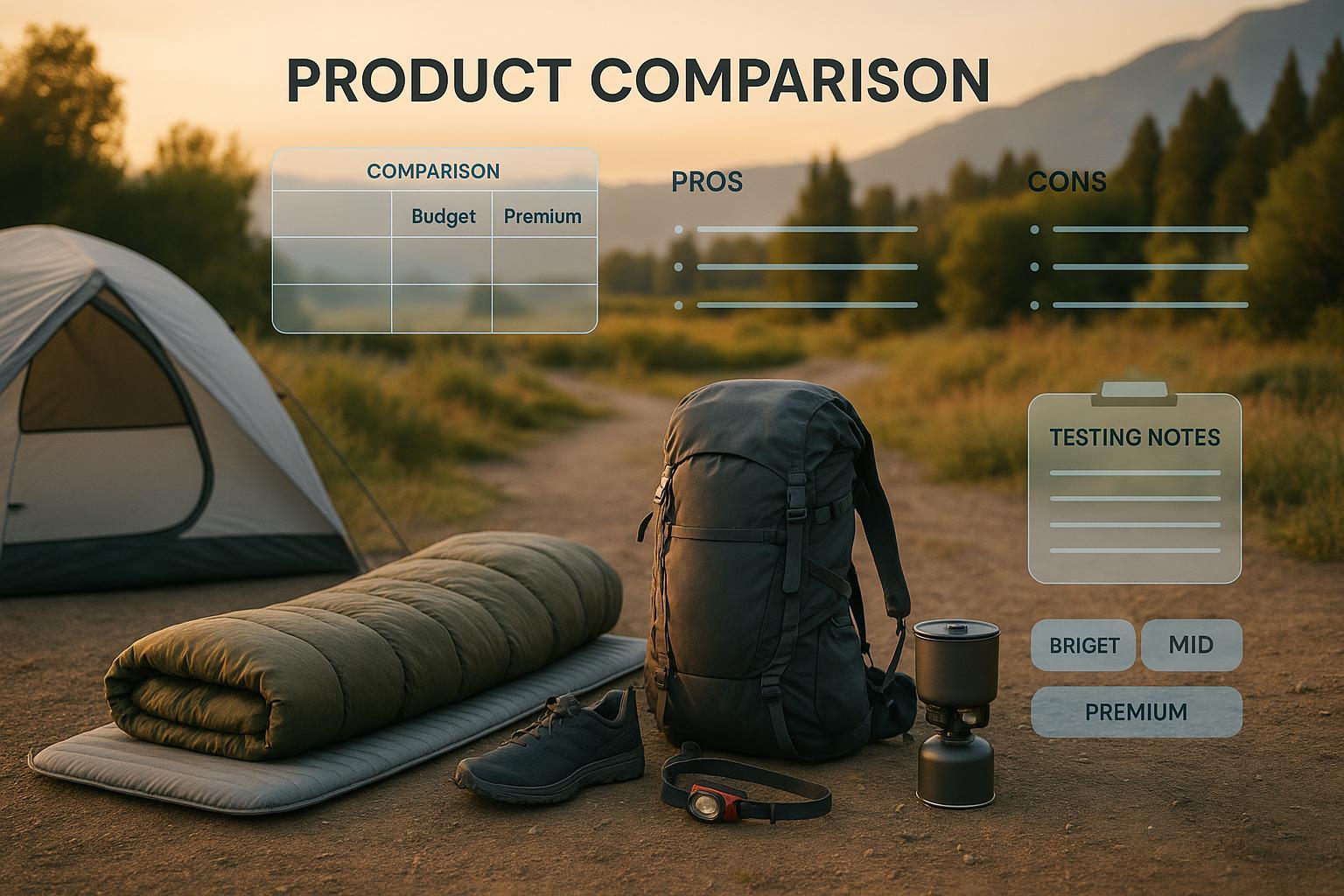
If your audience is actively shopping for outdoor and camping gear, they’re looking for clear decisions, not fluff. These 10 bottom/mid‑funnel topics are built to convert: each comes with a plug‑and‑play brief template tuned for 2025 SERP patterns (pros/cons, testing methodology, price tiers, FAQs, and spec tables). Where standards matter, reference anchors like ISO sleeping bag ratings, ASTM sleeping pad R‑values, and ANSI/PLATO headlamp metrics so buyers can compare apples to apples.
Helpful anchors for your spec/testing blocks:
- Sleeping bag ratings defined by the 2025‑relevant ISO 23537 temperature standard.
- Sleeping pad warmth by the ASTM F3340 R‑value method used by major brands.
- Headlamp output/runtime metrics via ANSI/PLATO FL 1 definitions and IPX water‑resistance codes.
- Safety/context blocks can cite the Mountaineers’ Ten Essentials and Leave No Trace principles.
Updated: September 2025
1) Best [Product] for [Use Case] 2025 (Field‑Tested Picks by Budget)
A top converter that captures high‑intent “best” searches while segmenting by scenario and price.
Template
- Working title: “Best [Category] for [Scenario] 2025 (Field‑Tested Picks: Budget, Mid, Premium)”
- Target intent & stage: Bottom‑funnel; shortlist and purchase.
- Primary keywords: best [product] 2025, best [product] for [use case], top [product], under $X.
- Audience & use case: Ultralight backpackers, family car campers, winter campers, overlanders, trail runners.
- Angle & differentiator: Measurable criteria + transparent testing notes. For bags/pads/headlamps, include standards blocks referencing ISO 23537 temperature bands, ASTM F3340 R‑values, and FL 1 metrics.
- Must‑include sections:
- Quick verdict (1‑2 sentences)
- Who it’s for / who should skip it
- Testing notes (locations, conditions, competitor set, limitations)
- Spec table (see below)
- Pros/cons bullets
- Price tiers (Budget/Mid/Premium)
- Alternatives (2–3)
- FAQs (size/fit, availability, warranty basics)
- Where to buy / in‑stock options (add local pickup when relevant)
- Spec table fields (example for sleeping bags): ISO Comfort/Limit; fill type; weight; pack size; shell/lining; women‑specific option; warranty.
- Visuals: Comparison table, hero + detail close‑ups; “At‑a‑glance” badges for weight, warmth, durability.
- Internal links: Related guide pairs (e.g., sleeping bag ↔ pad; tent ↔ footprint).
- CTA: Compare prices; check stock near me; view size chart.
Why it works: Marries scenario‑based picks with objective metrics. For sleeping bags, clarify that “Extreme” in ISO 23537 definitions is a survival rating—not a shopping target.
2) [Product A] vs [Product B]: Side‑by‑Side Field Comparison
High CTR for brand/model matchups; great for internal linking from reviews and “best” lists.
Template
- Working title: “[Product A] vs [Product B] (2025): Which Should You Buy for [Use Case]?”
- Intent & stage: Bottom‑funnel; deciding between two.
- Primary keywords: [product] vs [product], compare [product], which is better [product].
- Audience & use case: Shoppers torn between two models or materials (e.g., freestanding vs trekking‑pole tents; down vs synthetic bags).
- Angle & differentiator: Transparent scoring rubric; weigh specs, field performance, warranty, availability, and value.
- Must‑include sections:
- Winner by scenario (e.g., windy alpine vs humid forest)
- Spec table comparison (weight, materials, capacity/volume, notable standard metrics)
- Testing notes (terrain, nights used, weather)
- Pros/cons per model
- Price & value over time (MSRP, typical sale %)
- Warranty & repair support (e.g., summarize repair‑first programs like Osprey’s All Mighty Guarantee)
- Final recommendation with “if you are X, buy Y” logic
- Visuals: Split chart, radar plot of criteria, fit/size overlays where relevant.
- CTA: See current prices; check stock; view warranty details.
3) In‑Depth Review: [Product Name] (Specs, Pros/Cons, Value by Price Tier)
Converts on model‑level searches while supporting your “best” lists and comparisons.
Template
- Working title: “[Product Name] Review (2025): Tested Specs, Pros/Cons, and Who Should Buy It”
- Intent & stage: Bottom‑funnel; model research and validation.
- Primary keywords: [product] review, is [product] worth it, [product] pros and cons.
- Angle & differentiator: Field‑tested detail; clear limitations; link to alternatives.
- Must‑include sections:
- Quick verdict & score
- Who it’s for / who should skip it
- Testing conditions (time in field, load/terrain/temp)
- Spec table (include standard metrics when relevant, e.g., FL 1 runtime/beam distance for headlamps)
- Pros/cons
- Price history & value; typical sale ranges
- Warranty/repairs (e.g., repair pathways like Patagonia Worn Wear)
- Alternatives (2–3) with quick rationale
- FAQs (sizing quirks, common issues)
- Visuals: Scale shots, setup/fit photos, wear areas.
- CTA: Compare prices; check local stock.
4) Where to Buy [Product] in 2025 (Online, In Stock, Near Me, Secondhand)
Captures “near me,” “in stock,” and “where to buy” intent; excellent for conversion and affiliate UX.
Template
- Working title: “Where to Buy [Product] in 2025 (In Stock, Near Me, Secondhand Options)”
- Intent & stage: Bottom‑funnel; ready to purchase.
- Primary keywords: where to buy [product], [product] in stock, [product] near me, secondhand [product].
- Angle & differentiator: Real‑time stock pointers; local pickup; credible secondhand.
- Must‑include sections:
- Fast picks: Online retailers with stock indicators and pickup options
- Local pickup note (how to check store inventory)
- Secondhand marketplaces (e.g., curated outdoor resale like Geartrade marketplace)
- Return policy summary (link to official pages; verify windows before publishing)
- Price‑match/guarantee notes when official
- Visuals: Retailer comparison table, “in stock” badge legend.
- CTA: Check stock near me; set price‑drop alerts; see return policy.
Example callouts you can include when verified at publish time: retailer pages that show real‑time inventory (some co‑ops and specialty stores provide this feature) and returns policies like Backcountry’s returns page. Avoid quoting windows until confirmed.
5) Size & Fit Guide: [Product Type] by Body, Season, and Activity
Reduces returns and confusion; particularly effective for packs, footwear, and sleeping bags.
Template
- Working title: “[Product Type] Size & Fit Guide (2025): Measure Right, Choose Right”
- Intent & stage: Mid‑ to bottom‑funnel; confidence to buy.
- Primary keywords: [product] size guide, fit guide, sizing chart, how to measure [product].
- Angle & differentiator: Step‑by‑step measuring + brand fit nuances.
- Must‑include sections:
- How to measure (e.g., torso length for packs; foot length/width for hiking shoes)
- Fit translation to size charts; brand‑by‑brand notes
- Seasonal/usage adjustments (winter socks, thicker layers, expedition loads)
- Common pitfalls & troubleshooting
- FAQs (half sizes, width options, women‑specific fits)
- Reference anchors you can cite: backpack torso/hipbelt fitting guides from brands like Deuter’s fit advice and shoe fit tips from HOKA’s sizing info.
- Visuals: Measurement diagrams, width/volume overlays, lacing/strap tricks.
- CTA: View size chart; check local try‑on stock; read return policy.
6) Price Tiers & Value Guide: [Product] from Budget to Premium (2025)
Speaks directly to price‑sensitive buyers without burying performance context.
Template
- Working title: “[Product] Price & Value (2025): Budget vs Mid‑Range vs Premium—What You Actually Get”
- Intent & stage: Mid‑funnel; framing expectations and trade‑offs.
- Primary keywords: [product] price, [product] under $X, best value [product], budget [product].
- Angle & differentiator: Clear trade‑offs; where spending more pays off; repair/warranty context.
- Must‑include sections:
- What changes across tiers (materials, weight, durability, adjustability)
- Typical price brackets (update with current ranges)
- Warranty & repair support examples (e.g., Therm‑a‑Rest limited lifetime warranty overview)
- When to buy: seasonal sale patterns; model‑year transitions
- Alternatives within each tier
- Visuals: Tiered comparison table; durability vs weight plot.
- CTA: See best value today; check sale prices; view warranty details.
7) Best Bundles & Starter Kits: Ready‑to‑Camp Picks by Budget
Helps new campers buy confidently; great for family car camping and first‑timers.
Template
- Working title: “Best Camping Bundles & Starter Kits (2025): Ready‑to‑Camp Picks by Budget and Group Size”
- Intent & stage: Mid‑ to bottom‑funnel; simplify multi‑item purchase.
- Primary keywords: best camping bundle, beginner camping kit, family camping set.
- Angle & differentiator: Scenario‑based kits; ensure compatibility and safety.
- Must‑include sections:
- Kit options by budget (2P/4P/6P tent systems, sleep systems, lighting, kitchen)
- Spec/compatibility table (e.g., pad sizes vs tent floor; stove fuel type; lantern runtime per FL 1 runtime concept)
- Safety & essentials block referencing the Ten Essentials checklist
- Add‑ons by climate/season (bug nets, insulated pads, winter bags)
- FAQs (what to upgrade first, pack‑down sizes, car space)
- Visuals: Bundle flat‑lay, capacity charts, pack‑into‑car diagram.
- CTA: Compare bundle prices; check local availability.
8) Camping Gear Essentials: Scenario Checklists (Car, Backpacking, Winter, Overlanding)
Earns saves and shares; doubles as an internal‑link hub to category guides.
Template
- Working title: “Camping Gear Essentials Checklist (2025): Car, Backpacking, Winter, and Overlanding”
- Intent & stage: Mid‑funnel; planning and cross‑selling.
- Primary keywords: camping checklist, packing list, backpacking checklist, winter camping checklist.
- Angle & differentiator: Scenario‑specific essentials with safety/regulatory notes.
- Must‑include sections:
- Core checklist by scenario
- Safety/regulatory notes (e.g., fire restrictions, bear storage requirements)
- Sustainability tips (repair, resale, borrow/rent)
- Links to in‑depth category guides (tents, sleep systems, lighting, kitchen)
- Reference anchors you can cite: seasonal fire restriction stages summarized by agencies like the BLM fire restrictions hub and bear‑resistant storage rules that vary by park (for example, Yosemite’s food storage guidance). Always verify local rules before you publish.
- Visuals: Printable checklist, icons per scenario, “do not forget” box.
- CTA: Download checklist; check local restrictions; shop essentials.
9) Alternatives to [Popular Product/Brand]: Comparable Options Worth Buying in 2025
Captures switch‑intent and out‑of‑stock frustration while keeping shoppers with you.
Template
- Working title: “Best Alternatives to [Popular Product/Brand] (2025): Similar Fit and Performance”
- Intent & stage: Bottom‑funnel; ready to buy but model/brand is unavailable or pricey.
- Primary keywords: [product] alternatives, [brand] alternatives, like [product], similar to [product].
- Angle & differentiator: Map alternatives by why people loved the original (fit, weight, warmth, price, warranty).
- Must‑include sections:
- What shoppers like about the original (criteria table)
- 4–6 alternatives matched by criteria
- Price/value notes and warranty/repair support (e.g., repair‑forward programs like Patagonia’s Worn Wear trade‑in)
- Sizing/fit caveats
- FAQs (break‑in time, availability)
- Visuals: Criterion‑match matrix; “closest fit” badges.
- CTA: See today’s prices; check in‑stock sizes.
10) Seasonal Safety & Regulatory Guide: What to Know Before You Buy & Go
Builds trust and reduces returns by aligning gear choices with rules and conditions.
Template
- Working title: “Seasonal Outdoor Safety & Regulations (2025): Fire Restrictions, Bear Storage, and Winter Ratings”
- Intent & stage: Mid‑funnel; context that influences buying the right gear.
- Primary keywords: bear canister rules, fire restrictions camping, winter sleeping bag rating, leave no trace.
- Angle & differentiator: Link safety/regulatory realities to gear decisions; keep regional examples current.
- Must‑include sections:
- Fire restrictions overview (Stage 1/2 norms; always check local agency updates such as the BLM restriction levels)
- Bear‑resistant storage requirements vary by park (e.g., seasonal canister zones in North Cascades NP and park‑wide rules in Gates of the Arctic); remind readers to verify before trips
- Winter ratings demystified: ISO 23537 comfort vs limit; pair with pad R‑values per ASTM F3340 guidance
- Leave No Trace refresher with links to the core 7 principles
- FAQs (stove fuel legality, campfire gear, wildlife food storage)
- Visuals: Regional map callouts; rule‑of‑thumb boxes; rating explainer diagram.
- CTA: Check local regulations; choose compliant gear; see bear‑canister options.
How to Execute These Briefs (Quality & Compliance)
- Testing transparency: List test locations/conditions, duration, and competitor set; state limitations. This mirrors credible reviewers’ practice of disclosing methods and criteria similar to what outlets highlight in their methodology roundups (see, for example, the 2024–2025 emphasis on weight, durability, weather resistance, and value noted across reviewers like Outside/Backpacking Light/Blister; anchor your specific posts accordingly).
- Standards clarity:
- Sleeping bags: explain comfort/limit/extreme per the ISO 23537 definition set.
- Sleeping pads: report R‑values measured to ASTM F3340 and note that R‑values add when stacked.
- Headlamps/lanterns: include lumens, beam distance, runtime, and impact/water ratings as defined by ANSI/PLATO FL 1 and IPX.
- Warranty/returns: Link to official policy pages only; summarize repair orientation when relevant (e.g., Osprey’s lifetime repair approach and Therm‑a‑Rest warranty scope).
- Stock & secondhand: When helpful, point readers to credible resale venues like the Geartrade outdoor marketplace and retailer pages that show real‑time inventory or pickup options. Verify before you publish.
- Safety & ethics: Include the Ten Essentials list and Leave No Trace guidance in appropriate posts. For bear storage, provide region‑specific examples and link to the park’s page (e.g., Yosemite’s climber/food storage guidance). Fire restrictions shift—link readers to agency hubs like the BLM’s restriction portal and your local USFS district.
Pro tip for SERP: Add Product, Review, and FAQ schema where appropriate; front‑load pros/cons and “At a Glance” tables; and use transactional modifiers in headers (best, vs, review, price, under $X, where to buy, in stock, near me, warranty).
Quick Editorial Checklist (Use on Every Post)
- Title includes transactional modifiers and “2025” where it aids CTR.
- Above‑the‑fold “Quick Verdict” + pros/cons box.
- Spec table with standard metrics where relevant (ISO/ASTM/FL 1).
- Testing notes with conditions and limitations.
- Price tiers with clear trade‑offs; alternatives listed.
- Size/fit or compatibility note if applicable.
- Where to buy/stock and verified return/warranty links.
- FAQs marked up for rich results.
- Safety/sustainability notes where relevant.
- Update date and next refresh reminder.
With these 10 briefs, your team can ship decision‑ready posts that earn rankings, clicks, and conversions—while actually helping buyers make the right call.
