Ultimate Guide to E‑Commerce SEO

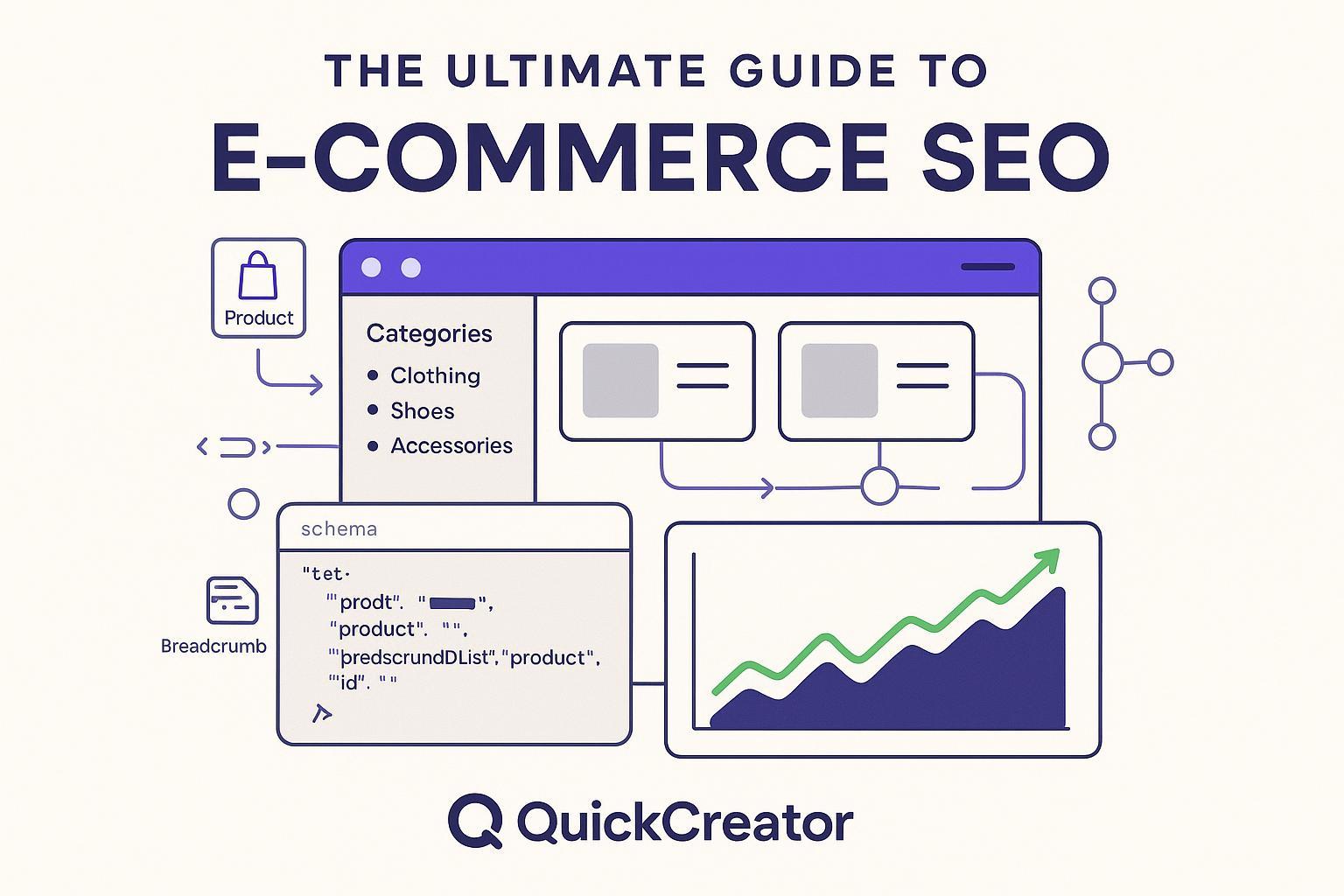
E‑commerce SEO isn’t just “regular SEO on a shop.” It has different constraints: endlessly combinable filters, duplicate manufacturer copy, variant handling, and the need to scale quality across hundreds or thousands of URLs. In 2024–2025, Google’s AI features and structured data updates made execution details matter even more. This guide gives you an operator‑level playbook to ship a practical plan in 14 days, plus an A‑to‑Z reference for Shopify and WooCommerce.
AI Overviews have expanded since May 2024 in the U.S. and across more countries in late 2024–2025; optimize for citation by publishing helpful, structured content with clear E‑E‑A‑T signals, as explained in Google’s guidance on AI features and your website alongside the May 2024 announcement on generative AI in Search.
Google’s March 2024 update clarified spam rules around scaled content abuse—AI content isn’t penalized per se; quality and intent matter, per Google’s core update and spam policies (2024).
Core Web Vitals for 2025 emphasize INP (<200ms), LCP (≤2.5s), and CLS (<0.1), documented in Google’s Core Web Vitals overview.
Product structured data supports variants via ProductGroup since Feb 2024; see Google’s Product variants documentation.
14‑Day E‑Commerce SEO Blueprint (Ship a Practical Plan)
The blueprint is designed for growth‑focused SMB teams running Shopify or WooCommerce. It balances impact and feasibility. Follow the steps and check the progress markers.
Day 1–2: Baseline Audit
Focus areas:
Crawlability and indexing
Site performance (mobile first)
Technical hygiene (SSL, sitemaps, canonicalization)
Steps:
Crawl your site (e.g., Screaming Frog) and export duplicate titles, thin pages, non‑200 status codes, and parameterized URLs.
Verify XML sitemaps are present and submitted in GSC:
Shopify auto‑generates /sitemap.xml (see Shopify SEO guide).
WooCommerce often uses plugin sitemaps, typically /sitemap_index.xml (see WooCommerce SEO documentation).
Check Core Web Vitals using PageSpeed Insights and CrUX data. Aim for LCP ≤2.5s, INP <200ms, CLS <0.1, per Google’s Core Web Vitals guidance.
Confirm canonical tags: each indexable page should self‑canonical; avoid canonicalizing paginated pages to page 1.
Indexing sanity check: In GSC, spot‑check key categories and PDPs; confirm no soft 404s, crawl anomalies, or accidental noindex.
Progress markers:
Sitemaps submitted; coverage report shows expected categories/PDPs
CWV passing on top templates
Canonicals consistent; pagination using self‑canonical
Day 3–4: Information Architecture (IA) for Categories, Subcategories, Filters
Why this matters: Ecommerce sites create huge URL spaces via facets. Without governance, crawl budget gets wasted and duplication rises.
Rules and patterns (Shopify/WooCommerce):
Indexable facets should be “static” semantic URLs (e.g., /running‑shoes/waterproof/) with curated content and self‑canonical.
Non‑valuable filter combinations (sort=price, price ranges, infinite combos) should be meta noindex, follow; keep links crawlable for equity.
Use breadcrumbs and a clear hierarchy. Google’s ecommerce site structure guidance (updated late 2024) and faceted navigation post outline risks and controls; see Help Google understand your ecommerce site structure and Faceted navigation: crawling December (2024), complemented by the Ahrefs faceted navigation deep dive.
Implementation tips:
Shopify: For indexable facets, create dedicated collections or use apps/custom dev to generate static URLs; control meta robots in theme.
WooCommerce: Use attribute archives for indexable facets; otherwise apply noindex via Yoast/Rank Math.
Pagination: Use self‑canonical; include crawlable “Prev/Next” links (HTML), even though Google deprecated rel=prev/next.
Progress markers:
Defined list of 3–5 indexable facets per top category; others set to noindex
Breadcrumbs consistent; category/subcategory pages mapped
Day 5–6: Category Page Booster (Template)
Objective: Transform thin collection pages into intent‑matching landing pages.
Content model:
H1: Clear category intent (e.g., “Men’s Waterproof Trail Running Shoes”).
Intro (80–150 words): Benefits, top attributes, and a link to a buying guide.
Comparison block: Short table comparing top subtypes/brands.
FAQ section: On‑page user help (don’t expect rich results due to policy changes since 2023).
Internal link modules: Link to subcategories, bestsellers, relevant PDPs, and one topic hub post.
Schema (copy‑paste examples):
BreadcrumbList:
{
  "@context": "https://schema.org",
  "@type": "BreadcrumbList",
  "itemListElement": [
    {"@type": "ListItem", "position": 1, "name": "Home", "item": "https://example.com/"},
    {"@type": "ListItem", "position": 2, "name": "Running Shoes", "item": "https://example.com/running-shoes"},
    {"@type": "ListItem", "position": 3, "name": "Waterproof", "item": "https://example.com/running-shoes/waterproof"}
  ]
}
Reference: Google’s breadcrumb docs: Breadcrumb structured data.
ItemList:
{
  "@context": "https://schema.org",
  "@type": "ItemList",
  "itemListElement": [
    {"@type":"ListItem","position":1,"url":"https://example.com/product/a"},
    {"@type":"ListItem","position":2,"url":"https://example.com/product/b"}
  ]
}
Note: ItemList aids understanding; rich results aren’t guaranteed.
FAQPage (user value only):
{
  "@context":"https://schema.org",
  "@type":"FAQPage",
  "mainEntity":[
    {"@type":"Question","name":"Are waterproof shoes breathable?",
      "acceptedAnswer":{"@type":"Answer","text":"Most use membranes that balance water resistance with breathability; consider vented uppers for summer."}}
  ]
}
Caveat: Ecommerce FAQ rich results are typically limited per Google’s updated eligibility; see FAQPage structured data.
Progress markers:
1 priority category updated with content blocks and schema
Internal links added to top PDPs and related subcategories
Day 7–8: PDP Description Refresh at Scale
Objective: Replace manufacturer duplicates with unique, benefit‑led copy.
Checklist:
Unique description (150–300 words) highlighting use‑cases and differentiators.
Spec table: Materials, dimensions, compatibility.
UGC snippets: Recent reviews and Q&A.
Internal links: Category, compatible accessories, care guide.
Media: Multiple angles; compress images; descriptive filenames and alt text.
Schema: Product (abbreviated):
{
  "@context": "https://schema.org",
  "@type": "Product",
  "name": "Trail Runner X",
  "image": ["https://example.com/img1.webp"],
  "sku": "TRX-123",
  "brand": "ExampleBrand",
  "offers": {
    "@type":"Offer",
    "price":"129.00",
    "priceCurrency":"USD",
    "availability":"https://schema.org/InStock",
    "url":"https://example.com/product/trail-runner-x"
  },
  "aggregateRating": {
    "@type":"AggregateRating",
    "ratingValue":"4.6",
    "reviewCount":"128"
  }
}
Variants with ProductGroup:
{
  "@context":"https://schema.org",
  "@type":"ProductGroup",
  "name":"Trail Runner X",
  "productGroupID":"TRX",
  "variesBy":["https://schema.org/size","https://schema.org/color"],
  "hasVariant":[
    {
      "@type":"Product",
      "name":"Trail Runner X – Blue – US 10",
      "sku":"TRX-BL-10",
      "color":"Blue",
      "size":"10",
      "offers":{"@type":"Offer","price":"129.00","priceCurrency":"USD","availability":"https://schema.org/InStock"}
    }
  ]
}
Reference: Google’s Product and variants docs: Product structured data and Product variants support (2024).
Progress markers:
10 PDPs refreshed with unique copy, spec tables, and schema
Image weights reduced; alt text descriptive
Day 9: Topic Hub Builder (1 Cluster Live)
Objective: Launch a revenue‑adjacent topic hub that supports category/PDP rankings and captures long‑tail intent.
Steps:
Pick a cluster tied to a category (e.g., “Trail Running Shoes Guide”).
Create one pillar page and 8–12 supporting posts (care, terrains, waterproofing, sizing, accessories).
Interlink: Pillar → supporting posts; each post → relevant category/PDPs; consistent breadcrumbs.
Add on‑page FAQs for users; don’t rely on FAQ rich results.
Progress markers:
Pillar + 8–12 posts published; internal links mapped
Early impressions in GSC for long‑tail queries
Day 10: Programmatic SEO (Long‑Tail at Scale)
Objective: Build curated, indexable pages for high‑intent attribute combinations and compatibility use‑cases without cannibalization.
Models:
Size–color–brand combos: e.g., /trail‑runner/blue/size‑10/
Compatibility guides: “Fits with X hydration pack”
“Best for X” curated pages: e.g., “Best trail shoes for winter”
Governance:
Demand threshold: Index only pages with measurable demand and unique utility.
Cannibalization control: Distinct titles/H1; consolidate and canonicalize where overlap exists.
Static semantic paths for indexable pages; parameters are generally noindex unless clearly valuable.
Reference touchpoints: Use platform guides and faceted navigation best practices from Ahrefs and Google; balance crawl control with utility. See Ahrefs: Faceted navigation and Google’s ecommerce site structure.
Progress markers:
3–5 programmatic pages live; no index bloat detected in GSC
Day 11: Rich Results & Schema Pass
Objective: Ensure consistent schema coverage that aligns with eligibility.
Checklist:
Product (with Offer, AggregateRating, and reviews as available)
BreadcrumbList
Organization (logo, contact)
FAQPage for onsite UX (expect limited rich results)
Validation:
Run Rich Results Test; monitor GSC Enhancements (Merchant listings).
References: See Google docs for Product structured data, Breadcrumb markup, and Rich Results testing via the Rich Results Test tool.
Progress markers:
No schema errors; coverage reported in GSC
Day 12: Internal Linking System
Objective: Reinforce a hub → category → PDP pyramid across templates.
Rules:
From blog posts: link high in the article to related category/PDPs with descriptive anchors.
Categories: link to subcategories, bestsellers, and related guides.
PDPs: link back to parent category, accessories, and care guides.
Breadcrumbs across all templates.
Evidence and guidance: Internal linking best practices are outlined by Search Engine Land; see their 2025 discussion of anchors, placement, and hierarchy in Internal links: best practices. Observational case studies from seoClarity show meaningful traffic gains after internal linking work, though results vary; see seoClarity internal linking case study.
Progress markers:
Internal linking rules implemented across templates; broken link audit clean
Day 13: Off‑Page and PR
Objective: Acquire relevant, trustworthy links and signals without spam.
Ideas:
Supplier/brand links: Authorized retailer and “where to buy” pages.
Retail directories/local citations: Industry associations, chambers.
Digital PR: Product launches, seasonal guides, original testing.
UGC velocity: Encourage reviews; publish Q&A.
Governance:
Transparent review policies; avoid review schema misuse.
Focus on relevance and quality over volume.
Progress markers:
5–10 relevant links acquired; review cadence documented
Day 14: Measurement & Iteration
Objective: Tie SEO changes to outcomes and plan improvements.
Framework:
GSC query mapping: Build a matrix of queries → categories/PDPs; monitor impressions/CTR and AI features exposure.
Rank buckets: 1–3, 4–10, 11–20, 21–50, 51+; prioritize movement.
Schema coverage: Track errors/warnings; ensure Product/Breadcrumb/Organization.
Core Web Vitals: Watch LCP/INP/CLS targets.
Revenue attribution: GA4 events; assisted vs. last‑click conversions.
References: Combine GA4 and GSC data per Google’s guidance; see Monitoring with GA and GSC.
Progress markers:
Baseline metrics recorded; next iteration plan set
A‑to‑Z Reference Section
Keyword Research for E‑Commerce
Segment by template: category, PDP, blog/topic hub.
Modifiers: brand, size, color, material, use‑case (“waterproof”, “winter”), commercial intent (“buy”, “best”, “discount”).
Use GSC data to find high‑impression low‑CTR opportunities.
For Shopify/Woo, map keywords to specific collections, attribute archives, and PDPs, then create hub content to support.
Faceted Navigation & Duplicate Content Controls
Canonical vs noindex: Self‑canonical for valuable static facets; meta noindex for parameterized filter combinations without unique utility.
Parameters: Avoid combinatorial explosion; disallow obviously useless parameters in robots.txt only if necessary—prefer precise meta controls.
Pagination: Self‑canonical on each paginated page; include crawlable links.
Breadcrumbs: Reinforce hierarchy and user navigation.
Content Templates Library
Category intro draft (fill‑in‑the‑blanks):
H1: [Primary category intent]
Intro: [80–150 words highlighting key attributes, use‑cases]
Comparison table: [Top subtypes/brands]
FAQ: [3–5 common questions]
Internal links: [Subcategories, bestsellers, hub posts]
PDP description draft:
Hook: [Use‑case benefit]
Specs: [Materials, dimensions, compatibility]
Social proof: [Recent review snippet]
Links: [Category, accessories, care guide]
Buying guide outline:
Who it’s for
Key attributes
Comparison
Care & maintenance
FAQs
Seasonal landing page:
Seasonal intent and timing
Featured products/collections
Shipping/promotions
Links to relevant guides
Schema Library (Copy‑Paste JSON‑LD)
Product, Offer, AggregateRating/Review, Breadcrumb, FAQ, Organization. Use the examples above and validate with the Rich Results Test.
Technical SEO Quick Wins (Platform‑Specific)
Shopify:
Sitemaps: Auto‑generated; submit /sitemap.xml.
Performance: Compress images (WebP/AVIF), lazy‑load, minimize app bloat.
SSL/CDN: Built in; keep themes lean.
WooCommerce:
Sitemaps: Plugin‑generated; submit /sitemap_index.xml.
Performance: Caching (LiteSpeed/Cloudflare), defer JS, optimize images.
SSL/CDN: Via hosting/CDN setup.
Official docs: Shopify’s overview on SEO Shopify SEO; WooCommerce docs on SEO and performance.
Link Building Playbooks for E‑Commerce
Suppliers and brands: secure “authorized retailer” listings.
Affiliates/partners: co‑marketing pages.
Local citations: relevant directories.
Digital PR: product testing, seasonal releases, guides.
Contrarian Notes (2025)
Don’t chase only head terms—own the long‑tail via topic hubs and curated programmatic pages.
Blogs matter for e‑commerce when tied to category revenue and internal links.
AI content isn’t penalized; low‑quality content is. Use editorial QA and E‑E‑A‑T discipline, aligned to Google’s 2024 spam policy clarifications.
Manufacturer descriptions hurt; unique use‑case copy, specs, and UGC win.
Tooling Workflows with QuickCreator (Example Integration)
QuickCreator supports an end‑to‑end workflow—keyword → brief → AI draft → E‑E‑A‑T score → on‑page optimizer → publish/host—use it where it accelerates execution while maintaining quality. Disclosure: QuickCreator is our product.
Example workflow:
Generate keyword list and briefs for a category and 8–12 hub posts.
Create AI drafts; apply human editorial QA and brand voice.
Use E‑E‑A‑T scoring as a quality gate; revise content and add structured data snippets.
Publish and host; monitor CWV and schema coverage.
Parity path (no‑tool or alternative): You can replicate this with Shopify sections, Woo plugins (Yoast/Rank Math), manual JSON‑LD, and a crawler for QA. Whichever path you choose, keep governance rules identical.
Related internal reads:
Compare AI SEO tool choices in the context of workflows in the Surfer SEO vs ChatGPT 2025 comparison.
See automation principles in the Agentic AI marketing workflows (2025).
For maintaining voice quality, review the brand voice definition guide.
If you publish to WordPress as part of your stack, this list touches one‑click options in the AIGC tools compilation.
For seasonal landing systems, explore this landing page template walkthrough.
Case Snapshot (Anonymized)
Baseline: Mid‑size Shopify store with thin PDPs, empty category intros, filter chaos, and no schema on variants.
Actions: Fixed IA (limited indexable facets), launched one topic hub (10 posts), refreshed 25 PDPs with unique copy/specs/UGC, added ProductGroup schema, implemented internal linking rules.
Results: +X% non‑brand organic sessions, +Y% category page revenue, Z weeks to first lift. Your mileage will vary; attribute lifts via GSC query mapping and GA4 ecommerce events.
Implementation Checklist (14‑Day) and 90‑Day Roadmap
14‑Day Checklist:
Audit: sitemaps in GSC; CWV pass on templates; canonical sanity; index coverage
IA: 3–5 indexable facets defined; breadcrumbs consistent
Category: 1 priority collection boosted with content + schema
PDPs: 10 descriptions refreshed; Product/Offer/Rating schema added
Hub: 1 pillar + 8–12 posts live; interlinking done
Programmatic: 3–5 curated pages; noindex rules enforced
Schema pass: validation and coverage in GSC
Internal links: rules applied across templates
Off‑page: 5–10 relevant links; review cadence set
Measurement: query mapping, rank buckets, revenue attribution
90‑Day Roadmap:
Month 1: Complete PDP refreshes on top 50 SKUs; expand category boosters to 3 more collections.
Month 2: Launch 2 additional topic hubs; scale programmatic pages (10–20) with governance; improve CWV via image/CDN tweaks.
Month 3: Iterate based on GSC; consolidate cannibalizing pages; expand internal links; pursue seasonal landing campaigns and PR.
CTA
Ready to turn this blueprint into outcomes? Start a free trial of QuickCreator and generate your first 5 SEO blog posts with the Topic Hub Builder. Then use the Category Page Booster template to add SEO blocks to collection pages and download the E‑Commerce SEO Toolkit (checklists + templates).
