Best Keyword Opportunities for Ecommerce Fashion in the United States (2025)

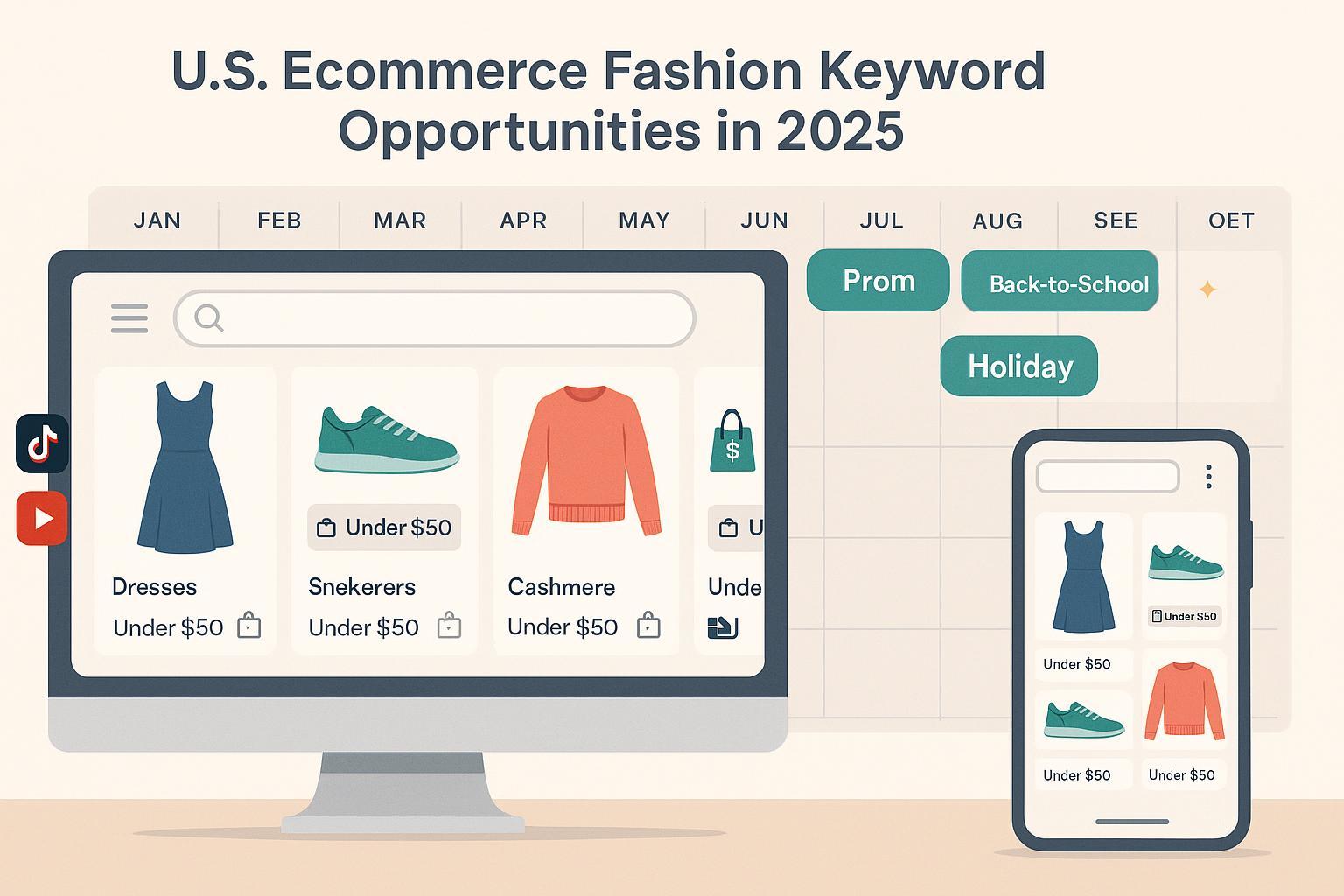
If you manage SEO or growth for a U.S. fashion retailer, 2025 is all about catching the right demand at the right moment—across seasonal spikes, social discovery, marketplace spillovers, and high-intent long-tails. This curated list highlights keyword themes with commercial potential, plus exactly how to target them on PLPs, PDPs, and content pages.
How we chose (quick methodology)
We prioritized keyword themes using five criteria and weights:
- Demand evidence (trend strength and recency): 30%
- Transactional intent depth (commercial modifiers and page suitability): 25%
- Seasonality predictability and timing clarity: 15%
- Platform spillover potential (social/marketplace → Google): 15%
- Evidence quality/recency (A/B/C grading): 15%
We cite authoritative 2024–2025 sources sparingly but meaningfully to keep the reading experience clean. Execution notes include AI Overview/SGE realities, schema, and merchandising tactics.
1) Prom dresses (peak late winter → spring)
- Opportunity: Capture high-intent prom queries that surge Feb–Apr with color, silhouette, size, and budget modifiers.
- Why it matters: Retailers seed prom content early to align with fittings/alterations and event timing; trend hubs and inventory refreshes typically roll out mid-winter. See David’s Bridal’s 2025 prom trend timing in the U.S. market via the David’s Bridal prom 2025 trends hub (published in 2025).
- How to target: Build a Prom hub by January; segment PLPs by silhouette (A-line, mermaid), color, and size (plus, petite). Add try-on videos with transcripts (Video schema), alteration timelines (FAQ schema), store locator/BOPIS modules, and clear returns.
- Pitfalls: Thin content on fit/alterations, JS-only specs, and late publishing (misses early demand). Avoid brand/trademark misuse in styling.
2) Wedding guest dresses (spring–summer with a fall bump)
- Opportunity: Venue and dress-code modifiers (beach, black tie, cocktail) signal ready-to-buy intent.
- Why it matters: Guest dress demand persists across spring/summer with a secondary Aug–Oct wave; retailers win by mapping modifiers to segmented PLPs.
- How to target: Create venue/dress-code landing pages; publish by March and refresh in August. Add styling videos, fabric/care copy in HTML, and etiquette Q&A (Video + FAQ schema).
- Pitfalls: Cannibalization between “formal/cocktail/black tie optional”; use internal links and canonical strategy to keep intent clean.
3) Festival outfits (spring → early summer)
- Opportunity: Outfit queries tied to specific festivals and Western/rave aesthetics convert well when bundled.
- Why it matters: Seasonal spikes align with marquee events; western boots/hats often trend. Google and Pinterest note recurring surges around festival season in 2025; see Google’s 2025 festival season search trends post.
- How to target: Build shoppable lookbooks, “complete the outfit” bundles, and short-form try-ons. Mark up videos (Video schema), and expose accessories (cowboy boots, crossbody) with inventory widgets.
- Pitfalls: Over-indexing on one aesthetic; keep country/rave/coastal variants to avoid missed demand.
4) Back-to-school apparel (mid-July → August)
- Opportunity: Value-led queries (uniforms, multipacks, kids’ sneakers, backpacks) and teen aesthetics (Y2K, “clean girl”) dominate.
- Why it matters: U.S. BTS demand concentrates in July–August; value-seeking is pronounced. Deloitte’s 2025 Back-to-School survey highlights timing and budget sensitivity, and Adobe reported Prime Day drew $24.1B across U.S. retailers in 2024—useful for July deal hunters.
- How to target: Launch a BTS hub by early July; align promos near Prime Day (subject to change). Use multipack PLPs, size charts, and fast pickup/returns messaging.
- Pitfalls: Late publishing; missing budget filters (under $50/$100); generic copy that ignores school policies or uniform needs.
5) Holiday party dresses & family pajamas (Nov → Dec)
- Opportunity: High-intent modifiers like “NYE dress,” “sequin,” “velvet,” and “matching family pajamas” spike late Q4.
- Why it matters: Tight shipping windows and extended returns influence conversion.
- How to target: Publish party/holiday hubs by early November; add shipping cutoff guidance and return windows near CTAs (FAQ schema). Emphasize fast delivery modules.
- Pitfalls: Promising cutoff dates too early—use ranges and “subject to change.” Avoid heavy JS for key specs during peak.
6) Athleisure & performance basics
- Opportunity: Fabric-tech and fit modifiers (“moisture-wicking,” “odor control,” “buttery soft leggings,” “tall inseam,” “with pockets”) capture late-stage shoppers.
- Why it matters: The athleisure market continues to expand; IMARC’s 2025 athleisure market overview cites sustained growth through the decade.
- How to target: Put fabric composition and performance claims in crawlable HTML on PDPs; add comparison tables and care instructions. Use Product + Video schema; facet PLPs by activity (Pilates, pickleball) and features (pockets, tall inseam).
- Pitfalls: Ambiguous claims without substantiation; avoid image-only spec tables and ensure accessibility.
7) Sustainable, circular, and resale
- Opportunity: Queries around “preloved,” “recycled polyester,” “organic cotton,” and “take-back program” map to high-intent shoppers.
- Why it matters: Secondhand keeps gaining share; ThredUp’s 13th Resale Report (2025) documents growth and mainstream adoption.
- How to target: Create a sustainability hub with certifications (GOTS, GRS) and resale integration. Mark PDPs with provenance and material details; consider ClaimsReview or structured evidence where appropriate.
- Pitfalls: Greenwashing; be precise and avoid vague eco copy.
8) Inclusive sizing & adaptive apparel
- Opportunity: Fit-forward queries like “plus size wedding guest,” “petite trousers 25" inseam,” “tall inseam leggings,” and “adaptive jeans magnetic” signal strong purchase intent.
- Why it matters: Inclusive assortments align with real consumer needs and reduce returns when fit information is clear.
- How to target: Build dedicated fit guides and measurement charts; enable inseam/torso-length filters; display consistent imagery across sizes. Use Product + Accessibility-friendly markup.
- Pitfalls: One-size imagery; hiding measurement details behind JS or PDFs.
9) Quiet luxury & investment basics
- Opportunity: Searchers gravitate to materials and craftsmanship (cashmere crewnecks, Italian leather belts, tailored trousers) with neutral palettes and longevity messaging.
- Why it matters: Minimal, logo-light products remain relevant in 2025; McKinsey’s State of Luxury outlook points to ongoing demand for quality-focused staples.
- How to target: Emphasize material provenance, care, and cost-per-wear tools. Use Product schema with material attributes in HTML and comparison content (without disparagement).
- Pitfalls: Overusing “timeless/best” without evidence; light specs that fail to differentiate quality.
10) Menswear growth niches
- Opportunity: “Men’s golf pants,” “tech chinos,” “wide-leg trousers men,” and “workleisure” reflect mixing function with polish.
- Why it matters: Dedicated menswear segments continue to modernize; IMARC’s U.S. menswear baseline supports a sustained market with performance and comfort features.
- How to target: Segment PLPs by occasion (office, hybrid, travel). Explain fabric tech and fit; add video try-ons showing drape and movement.
- Pitfalls: Generic naming; missing filters for rise/inseam/stretch.
11) TikTok Shop/social discovery spillover
- Opportunity: “Viral [item],” “as seen on TikTok,” and creator-led style names drive cross-platform search.
- Why it matters: Apparel is a material share of TikTok Shop; Statista’s 2024 category breakdown shows apparel as a notable slice of U.S. GMV.
- How to target: Build “Trending now” collections; aggregate UGC (with consent); publish short reviews and shoppable videos. Keep claims accurate; avoid trademark misuse and “dupe” language.
- Pitfalls: Chasing fads without inventory depth; non-compliant creator references.
12) Video-led search (YouTube in the mix)
- Opportunity: “How to style [item],” “best [category] for [occasion/body type],” and “try-on reviews” can surface within richer SERPs.
- Why it matters: AI Overviews shifted CTR patterns in 2025; analyses show lower clicks to classic blue links. Search Engine Journal reported a top-result CTR drop of 32% post-AIO expansion; see SEJ’s 2025 CTR analysis.
- How to target: Embed short/long styling videos with transcripts and jump links; mark up with Video schema; place on PLPs and guides. Lean into comparison formats that answer “best for X” candidly.
- Pitfalls: Hosting videos off-domain without transcripts; bloated pages that undercut performance.
13) Marketplace-informed queries (Amazon/Walmart signals)
- Opportunity: “Best [category] under $50,” “comfortable [shoe type],” “white sneakers,” “puffer crossbody bag,” and “wide-leg jeans” echo marketplace behaviors.
- Why it matters: Amazon commands significant apparel share versus Walmart; PYMNTS’ 2025 apparel spend analysis highlights this gap and its merchandising implications.
- How to target: Mirror value filters; address durability/comfort in copy; add FAQs about fit and “true to size.” Use Reviews schema only where policy-compliant.
- Pitfalls: Chasing under-$50 terms without quality control; ignoring customer Q&A patterns.
14) Material & construction modifiers
- Opportunity: Late-stage intent lives in specifics: “100% linen shirt,” “merino wool base layer,” “seamless underwear,” “lined blazer.”
- Why it matters: Specific features reduce friction and raise conversion when surfaced clearly.
- How to target: Put composition, care, and origin in HTML—not images. Add comparison tables and fit notes. Target exact-match long-tails on PDPs/PLPs and consider FAQ schema for material questions.
- Pitfalls: Hidden specs (accordion JS only), vague fabric claims, or missing care instructions.
15) Shipping, returns, and store pickup modifiers
- Opportunity: Queries like “free returns,” “same-day pickup,” “2-day shipping,” and “near me” convert on convenience.
- Why it matters: Clear omnichannel features lift conversion; Digital Commerce 360’s 2025 analysis associates BOPIS/curbside and in-store stock status with higher conversion rates across top retailers.
- How to target: Build local landing pages with inventory widgets, store locator, and precise pickup timelines. Put return windows in proximity to CTAs (FAQ schema). Use LocalBusiness + Product schema.
- Pitfalls: Ambiguous pickup timing; outdated policies; heavy JS that hides availability from crawlers.
Execution notes for 2025 SERPs (woven across items)
- Expect broader queries to show AI Overviews and product grids; design semantically rich clusters with multimedia (video, images) and crawlable HTML for specs.
- Map clusters across the buyer journey: styling guides (informational), fit/size explainers (consideration), and PLPs/PDPs with exact modifiers (transactional).
- Keep claims grounded and measurable; avoid absolutes (“best” or “only”).
- For promo pricing and shipping windows, use ranges and include “subject to change.”
Quick checklist to operationalize
- Publish seasonal hubs in advance: Prom (by Jan), Weddings (by Mar; refresh Aug), Festival (by Mar), BTS (by early Jul), Holiday (by early Nov).
- Standardize PDP spec hygiene: fabric composition, care, fit notes in HTML; avoid image-only tables.
- Add schema where it matters: Product, FAQ, Video, LocalBusiness.
- Build inclusive filters: inseam/torso length, adaptive features, body-type navigators.
- Create “Trending” and “Under $50/$100” collections to intercept social/marketplace spillover.
- Embed and mark up videos; add transcripts and jump links for styling guides.
- Expose omnichannel value: BOPIS, return windows, and availability messaging near primary CTAs.
If you’d like a tailored version of this plan mapped to your catalog, traffic data, and inventory realities, reach out and we’ll build the keyword clusters and publishing calendar with you.
