How Content Update Frequency Directly Impacts SEO in 2025

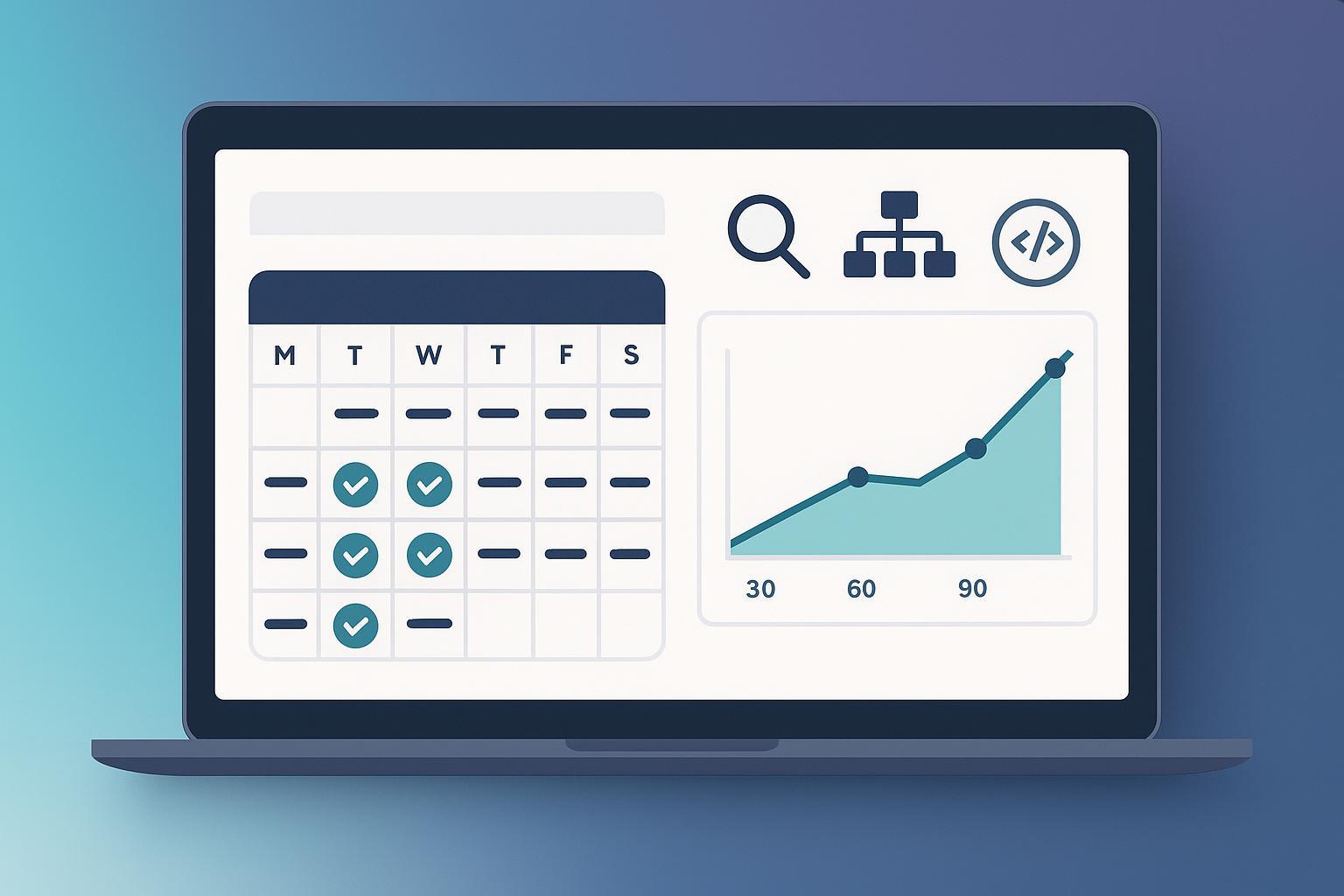
If you’ve run content programs through the 2024–2025 algorithm shifts, you already know this: frequency alone doesn’t move the needle anymore. In 2025, “update cadence” means two things in practice—consistent publishing and substantive refreshes that measurably improve helpfulness. When those two align with clean technical signals, crawling stays efficient, rankings become more resilient, and your content portfolio decays more slowly.
Below is how teams I’ve led (SaaS + agency) plan cadence, decide what to update, and avoid the common traps that waste crawl budget or trigger volatility.
The 2025 Reality: Consistency Matters—But Only With Substance
Google’s guidance hasn’t changed in spirit: help searchers with original, trustworthy content, and keep your technical signals accurate. A few points anchor best practice:
- Sitemap “lastmod” is useful when it truthfully reflects significant changes (main content, structured data, links). See Google’s official explanation in the Search Central sitemap overview and large-site crawl budget notes in Crawl Budget Management (Google, 2025).
- Superficial freshness manipulation (like changing dates in XML sitemaps without real updates) is discouraged; Google’s John Mueller reiterated that updating sitemap dates “doesn’t help SEO,” covered by Search Engine Journal’s 2024 write-up.
- Manual crawl limiting is gone (retired Jan 2024); teams should watch the Crawl Stats report instead, per Search Engine Land’s deprecation coverage (2024).
- The March 2024 core update sharpened Google’s ability to reduce unoriginal or unhelpful content; if your updates don’t increase helpfulness, they won’t help rankings. See Google’s March 2024 update announcement.
- Quality considerations continue into 2025; the Search Quality Raters Guidelines saw a spam-focused revision (Jan 2025), summarized by Search Engine Land’s coverage. Raters don’t set rankings, but their guidelines inform algorithm improvements.
Bottom line: frequent updates help only when they genuinely improve the page. Cadence without substance can waste crawl resources and invite instability.
Recommended Cadence by Site Type and Resource Level
These ranges come from running multi-year programs and comparing outcomes with peers. They’re starting points—adjust based on topic velocity, competition, and your team’s bandwidth.
By business model
| Site Type | New Content Cadence | Refresh Cadence | Notes |
|---|---|---|---|
| News/Publishers | Daily to multiple per day | Evergreen refreshed monthly or quarterly | High topic velocity; prioritize index hygiene |
| Ecommerce | 1–2 blog/category posts per week | Product pages on inventory/seasonal cycles | Align refreshes with demand cycles |
| SaaS | 1–4 posts per week | Core pages semi-annually; top blogs every 6–12 months | Balance thought leadership and feature education |
| Local/Service | 1–2 posts per month | Service pages quarterly; GMB weekly updates | Leverage local events and FAQs |
| Content Publishers | 2–5 posts per week | Cornerstones quarterly; supporting articles 6–12 months | Consolidate overlapping topics to avoid cannibalization |
By resource level
- Solo operator
- New: Biweekly
- Refresh: Monthly for your top performers
- SME team (2–5 contributors)
- New: 1–3 per week
- Refresh: Quarterly program focused on the top 20% of traffic-driving posts
- Agency/enterprise scale
- New: Daily multi-stream (blog, resources, product updates)
- Refresh: Continuous “revive squads” triggered by performance thresholds (GSC/GA4)
What to Update—and When: A Data-Driven Priority Framework
Use triggers you can verify in data, not gut feel.
- Content decay signals
- Sustained decline over 3+ consecutive months on a historically meaningful page (≥1% of site traffic) is classic decay. See the definition and workflow in Animalz Revive methodology (2025).
- Mid-pack opportunities
- Pages ranking #4–#15 often respond well to substantive refreshes—new sections, updated data, clearer intent alignment.
- High-traffic pages due for maintenance
- Evergreen guides and core money pages: schedule reviews every 6–12 months.
- Intent shifts or SERP feature changes
- If AI Overviews or new SERP elements alter click behavior, adjust format and information density. The 2025 Semrush AI Overviews study highlights how clicks redistribute—your refresh should reflect that reality.
Substantive update checklist
- Revalidate search intent and competitor landscape
- Fill keyword and topical gaps (FAQs, comparisons, use cases)
- Add current-year data, examples, and citations
- Update structured data (Article, Product, FAQ) to reflect changes
- Repair/optimize internal links to cornerstone pages
- Refresh media (diagrams, screenshots) and ensure accessibility
- Accurately update dateModified on-page and sitemap lastmod only if substantive
- QA for regressions (title, H1, canonical, schema, links)
Workflow Example: From Audit to Publish to Measure
Here’s the lightweight workflow my teams use to keep cadence predictable and outcomes measurable.
- Monthly audit
- Pull GSC impressions/clicks and GA4 engaged sessions for the last 90 days.
- Flag decay (≥3-month decline), mid-pack (#4–#15), and top 20% traffic pages.
- Prioritize and brief
- Assign owners and define update scope (sections to add, data to update, schema changes, internal links).
- Update and ship
- Edit, fact-check, and publish. Update dateModified on-page and lastmod in the sitemap for substantive changes.
- Measure and iterate
- Track 30/60/90-day deltas in GSC/GA4. Watch Crawl Stats for spikes/drops and fix errors quickly.
In practice, an AI-enabled editor can help you structure briefs and keep calendars tight. For example, QuickCreator centralizes calendaring, AI-assisted drafting, and one-click publishing to WordPress while preserving SEO hygiene. Disclosure: This example includes our own product to illustrate how an integrated workflow can reduce coordination overhead.
If you’re exploring how AI fits into editorial operations, our primer on AI-generated content (AIGC) workflows explains where automation helps and where human review remains essential.
Technical Hygiene: Signals That Make Frequency Work
Cadence works best when your technical signals are clean and trustworthy.
- Accurate lastmod only for real updates
- Use ISO 8601 timestamps and only update when the main content, structured data, or links change. See guidance and cautions in Google’s sitemap overview and Crawl Budget Management. Avoid artificial lastmod changes; per SEJ’s coverage of John Mueller (2024), they don’t help.
- Keep sitemaps clean
- Only indexable, canonical URLs. No duplicates or noindex pages. Submit through Search Console and monitor indexing.
- Monitor Crawl Stats
- Use the Crawl Stats report to spot spikes/drops, slow responses, or host issues. With manual limits removed (see Search Engine Land, 2024), this is your control panel.
- Refresh schema
- When you update content, update applicable schema (Article, FAQ, Product) to match. Helpfulness signals matter post-Google’s March 2024 update.
For audit tools that streamline parts of this workflow, see our roundup of best AI SEO Chrome extensions (2025).
Avoid These Cadence Traps
- Over-updating and cannibalization
- Spinning near-identical pages or repeatedly re-publishing overlapping topics fragments signals. Audit regularly and consolidate/redirect duplicates. See Moz’s guidance on keyword cannibalization.
- Superficial tweaks to fake freshness
- Date-only changes, title nudges without substance, or schema updates without content value won’t help—and can complicate crawling.
- Ignoring crawl signals
- If Crawl Stats shows rising errors or host issues, pressing ahead with aggressive cadence is counterproductive.
- Doorway pages and spam policies
- Cadence must serve users, not just rankings. Google’s policies make doorway-style pages risky; the 2025 raters framework kept the focus on spam and helpfulness (see the Jan 2025 Search Engine Land summary cited earlier). Review Google’s current stance via Spam Policies for Web Search.
Troubleshooting: When Consistency Breaks
Even mature teams miss weeks. Here’s a recovery playbook that’s worked reliably.
- Week 0–2: Stabilize
- Resume a reduced cadence (e.g., 1 post/week) while prioritizing an evergreen refresh with high ROI potential.
- Fix any crawl issues surfaced in the last 30 days.
- Day 30: Assess
- Compare 30-day post-resumption deltas for impressions, clicks, and engaged sessions. If mid-pack targets show movement, schedule phase-two updates.
- Day 60: Expand
- Restore full cadence and launch a small consolidation sprint to clean overlapping topics.
- Day 90: Review
- Re-run decay analysis; pages still declining get a comprehensive refresh or consolidation decision.
If you’re just getting started and need a platform that won’t slow you down, here’s a practical overview of the best free blogging sites for beginners (2025) to help you match cadence with the right tooling.
Measurement: Make Cadence Measurable
Before/after comparisons keep teams honest and help leaders justify resourcing.
- Benchmarks (pre-update)
- GSC: impressions, clicks, average position
- GA4: sessions, engaged sessions, engagement time
- SERP features: presence of FAQs, sitelinks, AI Overviews inclusion (observational)
- Post-update windows
- 30/60/90-day deltas; annotate releases in your analytics
- Crawl health
- Requests per day, response time, host status, error trends
- Regression watchlist
- Titles, H1s, schema validity, broken links, canonicalization
Advanced Scaling: AI-Assisted, Human-Reviewed
AI in 2025 is best used to scale planning and reduce repetitive work—never as a license for low-quality mass content.
- Topic clustering and gap analysis
- Use AI to suggest clusters and missing subtopics; editorial leads still decide what’s worth publishing.
- Performance-triggered refresh reminders
- Automate alerts when pages meet decay thresholds or drop below certain click/impression baselines.
- Human editorial standards
- Every update should have a named owner, fact-checking, and clear intent alignment.
For context on where AI adds value in content ops, revisit the AIGC workflows resource linked earlier.
Pulling It Together: A Practical Action Plan
- Set a realistic cadence tied to resources (e.g., SME: 1–3 posts/week; quarterly refresh for top 20%).
- Build a monthly audit routine using GSC/GA4 and Crawl Stats.
- Prioritize decay, mid-pack, and evergreen maintenance.
- Execute substantive updates using the checklist; update schema and lastmod accurately.
- Track 30/60/90-day deltas; fix regressions quickly.
- Keep cannibalization and spam risks in check; consolidate when needed.
- Use AI to plan and accelerate workflows, but keep human editorial quality non-negotiable.
Consistency wins only when every update genuinely improves the page. If you hold that bar and make measurement routine, 2025’s SERP volatility becomes manageable rather than maddening.
