Best Practice Strategies for Patient Acquisition in the United States Healthcare Industry (2025)

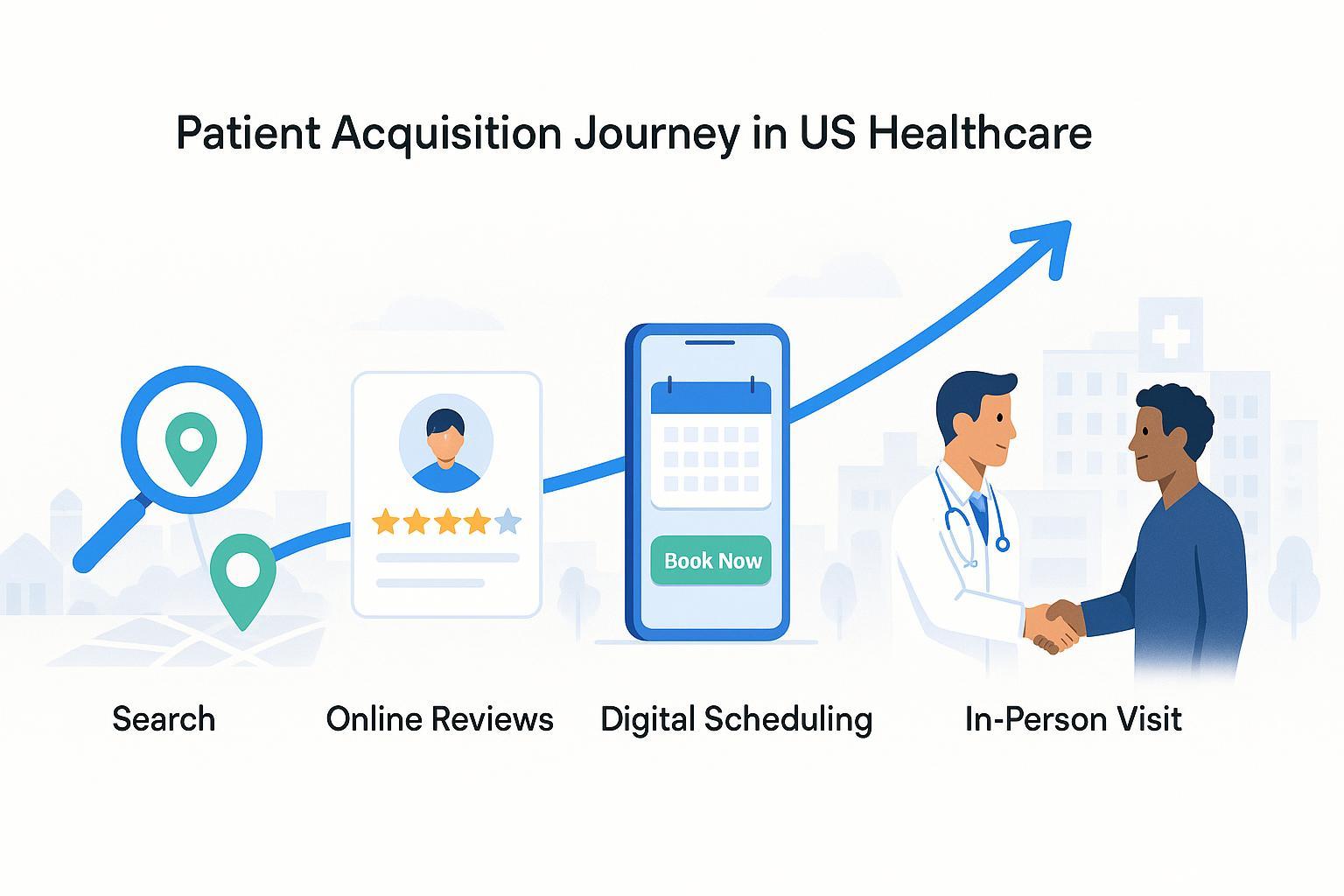
I’ve spent the past decade helping U.S. practices—from single-site clinics to multi-specialty groups—grow new patient volume. The highest-ROI programs in 2025 blend three things: being findable and trustworthy online, removing access friction (scheduling and responsiveness), and running compliant, data-informed outreach. Below is the playbook my teams use, with concrete targets, workflows, and guardrails you can implement this quarter.
1) Be findable and trustworthy where patients decide
Patients don’t just “search”—they compare. They scan maps, read reviews, and look for proof you accept their insurance and can see them soon.
Practical steps I recommend:
- Fix your local data: Ensure exact NAP (name, address, phone) consistency across your website, Google Business Profile (GBP), Apple Maps, and top directories. Use one primary category per location and add procedure-level services in GBP where allowed. Keep holiday hours and walk-in/telehealth flags current.
- Build intent-centered service pages: One page per top service with plain-language descriptions, typical timelines, accepted insurances, and a visible “Book online” button.
- Operationalize reviews: Automate post-visit review requests via SMS/email within 6–24 hours. Aim for +20 net new reviews per month per location and a 4.6★ average. Respond to every review (brief, empathetic, non-PHI).
Why this matters in 2025:
- Consumers weigh reviews heavily before choosing a provider; in the 2025 BrightLocal survey, majorities require strong star ratings and value consistent owner responses. See the details in the BrightLocal 2025 Local Consumer Review Survey (published 2025-01-29).
Execution tip: Draft a 6-line review response playbook your front office can apply without exposing PHI: thank, acknowledge, invite offline resolution, and signal improvement actions.
Trade-offs: Aggressive review solicitation can backfire if the experience falters. Pair review requests with fast issue resolution and empowerment to fix common friction (billing confusion, directions, parking).
2) Remove access friction: scheduling and responsiveness win patients
The top reason I see prospects bail is wait time and slow follow-up. Appointment availability has tightened; the 2025 AMN Healthcare survey across major metros found average new-patient wait times at 31 days and rising. See: AMN Healthcare 2025 survey of appointment wait times (2025).
Non-negotiables that move the needle:
- Offer online self-scheduling for new and established patients. Target ≥30% of visits scheduled online within 6–12 months. Keep templates accurate and expose same/next-day slots.
- Stand up SMS/email reminders with easy rescheduling. Track no-show rate weekly and segment by visit type.
- Set response SLAs: answer calls within 120 seconds; reply to web forms within 1 hour during business hours; portal messages within 24 hours. Keep call abandonment <5%.
Evidence points to real throughput and revenue gains when self-scheduling is implemented well. A 2024 EHR-based study of automated schedule offers reported 60,660 offers, 11% acceptance, and visits completed a median of 14 days sooner, translating to thousands of patient service hours and significant revenue lift. See the JMIR 2024 automated self-scheduling study (published 2024-03-19).
Workflow I deploy in clinics:
- Front desk watches a live queue dashboard; if wait >90 seconds, overflow routes to backup staff.
- Daily open-access sweep at 7:30 a.m. to convert cancellations into same-day slots.
- Automated reminder cadence: booking confirmation → 72-hour reminder → 24-hour reminder with one-click reschedule → day-of at 2 hours.
Pitfalls to avoid: Allowing scheduling rules to drift (providers blocking too many hold slots), hiding insurance acceptance until late in the funnel, and failing to publish realistic next-available dates.
3) Omnichannel outreach that respects consent and context
In 2025, effective outreach is timely, personalized, and compliant. What works consistently:
- Segment your audience: new vs. established patients, by top conditions/procedures, insurance type, and distance to clinic.
- Match channel to intent: use search ads for high-intent procedures; use SMS for reminders and confirmed opt-in marketing; use email for education and follow-ups.
- Keep cadences light: A typical welcome sequence is 2–3 emails over 10 days, then monthly education. For SMS marketing, limit to 2–4 per month with clear value.
Compliance guardrails:
- For SMS, the FCC’s 2024 rule codified standardized consent revocation keywords and timelines; ensure your system honors STOP-type requests promptly and logs consent states. Review the Federal Register 2024 TCPA consent revocation rule (published 2024-03-05). Distinguish treatment messages (HIPAA-related) from marketing and capture express written consent for marketing messages.
Trade-offs: Over-personalization without explicit consent creates legal and trust risks. Keep protected health details out of marketing channels unless consented and secured.
4) Close the loop on referrals and show up in the community
Referral leakage quietly erodes growth. Two practical moves make a difference:
- Map leakage and fix handoffs: Identify top 20 referring PCPs/specialists. Standardize referral intake, set a 24-hour callback SLA for referred patients, and assign a patient concierge for high-value service lines.
- Build community presence that actually converts: Co-host screening days with FQHCs, faith-based organizations, or employers. Offer same-week follow-up slots for event attendees and provide transportation or telehealth options for rural or mobility-limited patients.
For rural and underserved areas, partner with HRSA-funded health centers and align on social drivers of health (transportation, language access, broadband). This focus improves equity and widens your acquisition funnel.
5) Data and privacy: measure what matters without risking PHI
You can’t optimize what you can’t measure—but measurement must be compliant.
- Web analytics: Avoid exposing PHI via tracking technologies in authenticated areas (patient portals, online bill pay). A 2024 federal court decision limited HHS’s attempt to treat pixels on unauthenticated pages as HIPAA violations, but authenticated areas remain protected; treat them as such and use vetted, HIPAA-friendly analytics for any PHI exposure. See the AHA v. HHS opinion and order (issued 2024-06-20).
- Telehealth strategy: Leverage 2025 Medicare flexibilities (e.g., patient home as originating site, broadened practitioner types, audio-only allowances with modifier 93 where appropriate) to widen access and reduce leakage from long waits. Confirm coding and date-based rules in the CMS Telehealth FAQ 2025 (published 2025-01-08).
- Core KPI set: new-patient bookings, percentage of online self-scheduled visits, call answer time and abandonment, web lead response time, show rate/no-show rate, review volume and rating, next-available appointment days by service line, and cost per booked new patient by channel.
6) A 90-day rollout plan you can copy
This is the plan we execute for most practices; adapt based on specialty and capacity.
Weeks 1–2: Baseline and targets
- Audit: GBP accuracy, NAP consistency, site speed, online scheduling enablement, review volume/avg rating, call center metrics, next-available appointments, and top referral sources.
- Set targets for 90 days: +20 reviews/month per location, average rating ≥4.6; online scheduling ≥30% of all appointments; call answer ≤120 seconds; web form response ≤1 hour; no-show rate −20% relative; publish insurance acceptance clearly on top service pages.
Weeks 3–6: Launch acquisition sprints
- SEO/Content: Publish or refresh your top five service pages with insurance and pricing guidance ranges. Add prominent “Book online” buttons.
- Paid search: Run tightly themed campaigns for high-intent procedures with call extensions and online booking links. Route calls to the shortest-queue location.
- Communications: Enable SMS and email reminders with the cadence above; begin automated review requests.
- Access: Release 10–15% of templates as same/next-day slots and turn on online rescheduling.
Weeks 7–10: Referral and community activation
- Meet top referring offices, share direct scheduling links and referral intake email/phone, and commit to 24-hour callbacks. Assign a concierge to shepherd complex referrals.
- Host one community screening or education event with a partner; reserve clinic capacity the following week to convert interest.
Weeks 11–13: Optimize and lock in
- A/B test landing pages (headline, proof, CTA). Tune keywords and budget toward lowest cost-per-booked-patient. Tighten SLAs where you see drops.
- Train front desk on the review response playbook and benefits verification scripting to prevent cancellations.
Two anonymized mini-cases from recent implementations
- Primary care, 3 locations: Online booking rose from 8% to 34% in 90 days; no-shows fell from 22% to 14%; new-patient volume +18%. Lessons: accurate templates and visible same-day slots matter more than any ad tweak.
- Orthopedics, single site: GBP overhaul, procedure pages with price ranges, and consistent review requests led to consults +22% in 120 days; phone abandonment −45%. Fixing insurance FAQs reduced last-minute cancellations.
7) Operating cadence, pitfalls, and fixes
Weekly dashboard review
- Marketing lead and front office review: online booking %, response SLAs, call abandonment, review velocity, next-available days, and cost per booked new patient.
- Flag bottlenecks: clinics with >5% abandonment or >2-day callback delays on referrals get immediate staffing or workflow fixes.
Common pitfalls and how to avoid them
- Pixel problems: placing third-party pixels inside authenticated pages. Fix by segregating trackers and executing BAAs with vendors handling any PHI.
- Overloaded schedules: turning on online scheduling without freeing capacity. Fix by holding open-access slots and aligning templates.
- Consent gaps: texting marketing messages without express written consent or failing to honor STOP within required timelines. Fix by separating treatment vs marketing lists and automating revocations per the 2024 rule.
- Review mishandling: responding with PHI or disputing patient narratives publicly. Fix with a strict, templated response policy focused on empathy and offline resolution.
If you’re ready to implement this 90-day plan, start with a one-hour audit of access, responsiveness, and reputation. Then commit to two sprints focused on scheduling and review velocity. If you want a second set of eyes, I’m available to help you baseline, prioritize, and execute with your team—so you see measurable gains in new-patient bookings this quarter.
