Local SEO for Sustainable/Green Packaging Suppliers & Installers (2025): GBP, Citations, and Reviews That Win Local Leads

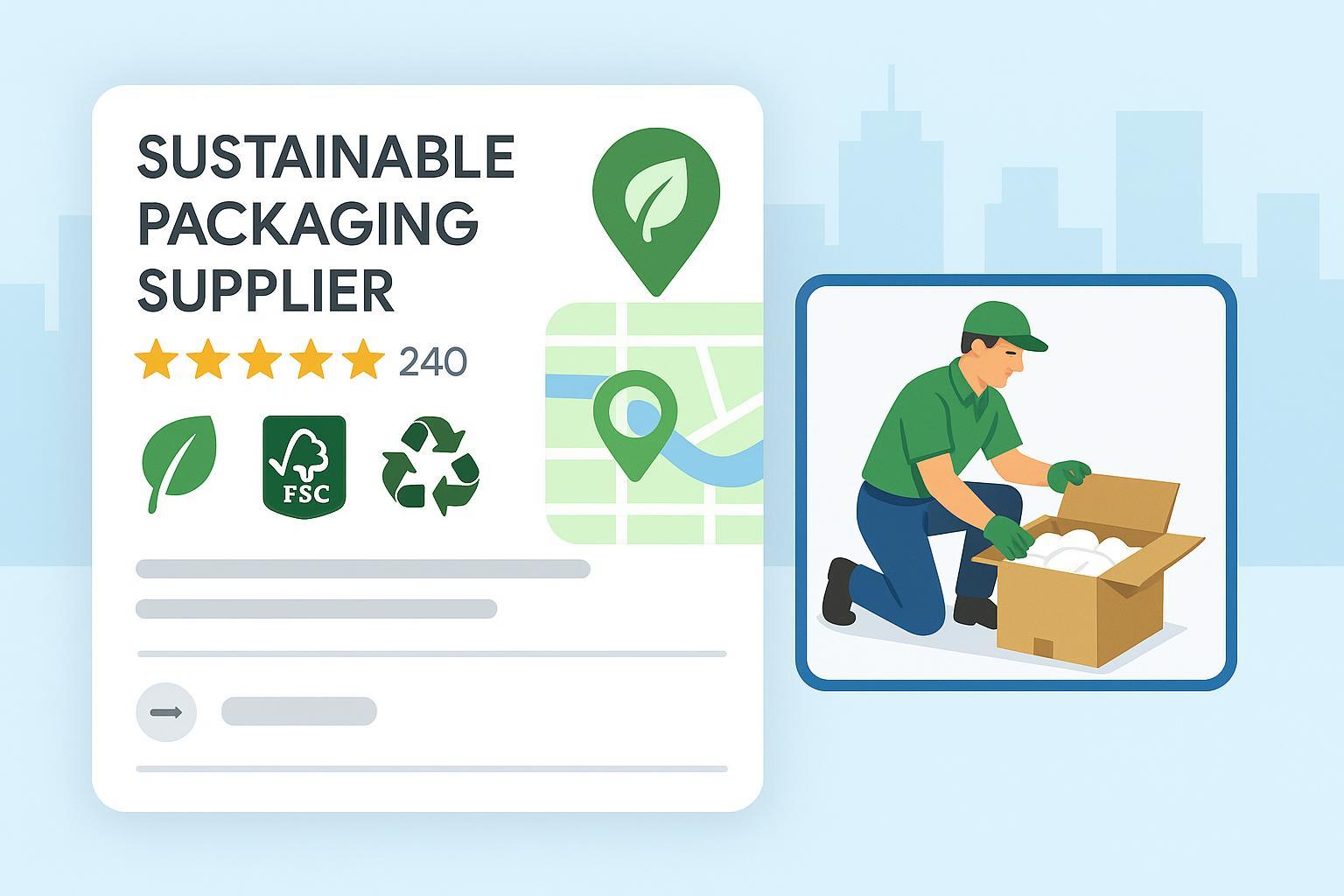
If you supply eco-friendly packaging or install protective packaging systems, local buyers don’t just want “near me” — they want credible, compliant, and sustainable. In 2025, most of the local visibility lift still comes from three levers: a complete, policy-safe Google Business Profile (GBP), clean and relevant citations, and a steady cadence of authentic reviews. This playbook shows exactly how to execute those three levers for green packaging suppliers and installers.
Key premise: We’ll stick to what’s proven in 2024–2025, citing primary sources and real tests. No silver bullets — just disciplined execution that compounds.
1) Google Business Profile (GBP): The Highest-Leverage Wins
What still moves the needle in 2025: accurate NAP, the right primary category, a policy-compliant name, rich service details, high-quality photos, and consistent posting. All of that is rooted in Google’s policies. If you do nothing else, get this right.
- Naming and content rules: Follow the 2024-updated guidance in Google’s official Guidelines for representing your business on Google. See the sections on business name format, categories, attributes, photos, posts, and prohibited content in the consolidated policy hub in Google’s Business Profile guidelines (updated 2024).
- Service-area vs. storefront: If you install on-site and don’t serve walk-ins, set up as a Service Area Business (SAB) and hide your street address per Google’s service-area business help (2024). Hybrid businesses can show a location and service radius.
- Categories and relevance: The primary category is a major local pack signal. Pick the most accurate fit (e.g., “Packaging supply store,” “Packaging materials supplier,” or an installer-relevant category like “Insulation contractor” only if truly relevant). Avoid stuffing; categories describe what you are, not marketing claims. See Google’s category handling in the help workflows in Google’s category guidance.
- URL targeting matters: Independent tests show the page you link to from GBP can influence relevance. Sterling Sky’s 2024 study found that the GBP landing page choice can impact local pack rankings; see Sterling Sky’s GBP URL test (2024).
- Service areas don’t boost rankings: Adding more service areas did not improve rankings in Whitespark’s 2024 testing. Focus on proximity and relevance instead; see Whitespark’s service area test (2024).
- Reviews and posts for prominence: Reviews and consistent, policy-safe posts support prominence and conversions. Google documents the available post types and content rules in Google’s Business Profile posts guide.
Practical niche tips for green packaging:
- Description: Concisely state sustainability credentials (e.g., FSC-certified cartons, recycled-content mailers) and installer capabilities. Avoid unqualified claims; we’ll cover compliance below.
- Services/Products: Add specific services like “On-site packaging system installation,” “Compostable mailer supply,” “Right-size packaging audits,” “EPS foam alternatives.”
- Attributes: Enable online appointments, accessibility, and other relevant attributes per Google’s policies in the 2024-updated Business Profile guidelines.
- Photos: Upload your facility, material labels showing certifications, jobsite photos (with client permission), and before/after waste reduction visuals. Keep to Google’s quality rules (see Photos & Videos section within the same Business Profile guidelines).
30-minute GBP audit checklist (for owners/managers):
- Verify name matches real-world signage; no keywords (“Acme Packaging – Sustainable Packaging Experts” is risky). Check against Google’s Business Profile guidelines (2024).
- Confirm primary category accuracy; add only truly relevant secondary categories.
- Link GBP to your best local landing page (not always the homepage) that matches services and location — align with Sterling Sky’s 2024 URL test.
- Add services/products with concise copy; avoid jargon.
- Upload 6–12 authentic, recent photos; include sustainability proof (labels, certificates, process shots).
- Publish 1 fresh post (offer, case highlight, event) per month following Google’s posts rules.
- Turn on relevant attributes and appointment/website links.
2) Citations: Build Trust and Consistency (Foundations First)
Citations aren’t the top driver, but they’re still foundational for data trust and discovery. Whitespark’s research places citation signals lower than GBP, reviews, and on-page work, but still material; see the Whitespark Local Search Ranking Factors (2023). The goal is clean, consistent NAP, targeted relevance, and zero duplicates.
Core moves:
- Claim the big three first: GBP, Apple Maps via Apple Business Connect Help, and Bing Places for Business Help.
- Standardize NAP: Set a single, canonical business name, address (or SAB settings), phone, and hours. Use that format across every listing.
- Industry/green directories: Prioritize authoritative, relevant sources. For packaging and sustainability, consider PMMI ProSource, Packaging World’s supplier directory, Thomasnet, Sustainable Packaging Coalition membership, Green Business Bureau, B Corp Directory, GreenPages.org, FSC certificate directory, and Cradle to Cradle Certified listings (if applicable). Membership/certification may be required; ensure eligibility.
- Keep a master sheet: Track every profile’s URL, login, status, categories, and last update date. Audit quarterly for duplicates, wrong categories, or outdated hours.
- Use trusted education for building lists and maintaining hygiene. Moz’s fundamentals remain useful in 2025; see Moz’s guide to local citations.
Submission order I’ve found reliable:
- GBP, Apple Business Connect, Bing Places
- Your industry/green directories (as applicable)
- High-quality local chambers/associations
- Secondary general directories (selectively)
3) Reviews (B2B-Friendly): Generate, Respond, and Leverage — Without Violations
Why they matter: Reviews impact both prominence and conversions. They also serve as social proof in proposals and landing pages. In 2024–2025, two compliance pillars apply:
- Google’s rules prohibit fake engagement, conflicts of interest, and other abuses; see Google’s Business Profile fake engagement restrictions (2024).
- The FTC’s final rule banning fake reviews/testimonials took effect in October 2024; penalties can be significant. See the FTC’s 2024 rule announcement.
Practical, compliant generation in B2B:
- Timing: Ask 24–72 hours after a successful delivery or installation, when the outcome is fresh.
- Link delivery: Send a short email/SMS with your direct “Write a review” link. Include a QR code on delivery notes and technician cards.
- Don’ts: No incentives tied to sentiment. No gating (e.g., “only if you’re happy”). No reviews from owners/employees.
- Specificity: Encourage comments on sustainability outcomes (e.g., reduced dunnage, recycled-content performance) but avoid sensitive client data.
Copy-and-paste request templates (customize for tone):
-
Email (post-installation): Subject: Quick favor after your packaging install Body: Thanks again for partnering with us on the right-size packaging system at [Site/Region]. If the work met expectations, would you share a brief review so local teams can find us? It takes about a minute: [Review link]. If anything wasn’t right, just reply here and we’ll fix it.
-
Email (supplier/delivery): Subject: Your feedback on the recycled mailers Body: We appreciate your order of the [Product]. A short review helps other local businesses choose certified, lower-waste options: [Review link]. If we can improve, reply and we’ll make it right.
-
SMS (keep under 320 chars): Hi [Name], this is [Rep] from [Company]. Mind sharing a quick review about your [install/delivery]? It helps local teams find certified sustainable options: [Review link]. Text back if anything needs attention.
Response playbook (reply within 1–5 business days):
- Positive example: Thanks, [First name]. Glad the compostable mailers met your specs. We’ll share your note with our fulfillment team. Next time, we can also assess right-sizing to reduce void fill by up to 20%. Appreciate your partnership.
- Neutral/negative example: Thanks for the candid note, [First name]. We’re sorry about the delay. We’ve adjusted our delivery window and scheduled a follow-up to replace the damaged cartons. If you’re open, we’ll review alternatives with higher recycled content next week.
Repurposing reviews (safely):
- On-site and in proposals: Quote reviews with attribution; avoid editing meaning.
- Structured data caveat: Google excludes self-serving review markup on your own LocalBusiness/Organization pages from rich results; see Google’s review snippet policy (2019).
4) On-Site Local Signals and Schema That Support GBP
- GBP landing page: The page you link from GBP should match searcher intent and location (e.g., “Sustainable Packaging Supply in Austin, TX”). Internal links to relevant services help Google parse topical relevance — consistent with the relevance effect discussed in Sterling Sky’s 2024 URL test.
- Localized content: Create lean, useful service pages per market with specifics (lead times, service radius, common materials, recycling drop-off partners if applicable). Avoid boilerplate.
- Structured data: Implement LocalBusiness plus Service markup accurately; ensure NAP, openingHours, and sameAs align with citations. See Google’s LocalBusiness structured data documentation.
- Review markup: Do not add review schema to self-controlled reviews on your own pages; ineligible per Google’s review snippet policy (2019).
- AI/answer engine readiness: There is no special schema for AI Overviews as of 2025. Focus on accurate, well-structured content, authoritative citations, and a clean GBP/citation footprint, per Google’s “AI features and your website” guidance (2024–2025).
5) Putting It Together: A Focused Citations Plan for Green Packaging
You don’t need hundreds of listings. You need clean core coverage + a handful of high-credibility verticals.
- Must-have platforms: GBP, Apple Business Connect, Bing Places (Apple Business Connect Help; Bing Places Help).
- Industry/green options (choose those you’re eligible for): PMMI ProSource, Packaging World’s supplier directory, Thomasnet, Sustainable Packaging Coalition member profile, Green Business Bureau, B Corp Directory, GreenPages.org, FSC database, Cradle to Cradle Certified. Ensure your company name and certification IDs match exactly.
- Local authority: Chamber of Commerce, regional manufacturing alliances, municipal sustainability programs (if they maintain public directories).
- Hygiene cadence: Quarterly audit for duplicates and category drift. Document logins and owners. Use Moz’s citations guide as a reference when building your list.
6) What Actually Drives Rankings in 2025 (and What Doesn’t)
- Big levers: GBP completeness, category relevance, reviews, and on-page relevance are still the core. See the factor weighting summary in Whitespark’s Local Search Ranking Factors (2023).
- Behavioral/proximity realities: Clicks, calls, and proximity influence visibility; proximity is non-controllable but your landing page and reviews can improve conversions — summarized well in industry overviews like BrightLocal’s local algorithm explainer (2024/2025).
- Service areas ≠ rankings: Adding more service polygons doesn’t increase rankings per Whitespark’s 2024 test.
- Policy risks to avoid: Keyword stuffing the business name, fake or incentivized reviews (violates Google policy and the FTC’s 2024 rule on fake reviews), and misleading environmental claims.
7) Compliance for “Green” Claims (Don’t Undermine Trust)
Sustainability claims increase both lead quality and legal exposure. Keep claims specific, substantiated, and current.
- Marketing claims: Align copy in GBP, your website, and review responses with the FTC’s environmental marketing guidance (Green Guides). See the FTC’s Green Guides hub (ongoing).
- Proof points: Only reference certifications you actually hold (e.g., FSC, C2C, B Corp). Keep certificate numbers and expiration dates on file. If you list them in directories, ensure exact name matching.
- Review responses: Don’t promise environmental performance beyond what you can substantiate. If a reviewer mentions an outcome, acknowledge but avoid inflating claims.
8) 30/60/90-Day Execution Plan
Days 1–30 (Foundations):
- Claim/verify GBP (SAB if applicable). Complete name, categories, services, attributes, photos, and one fresh post.
- Choose and link the best GBP landing page; align content to core services and location.
- Claim Apple Business Connect and Bing Places; align NAP.
- Build your master citations sheet; add 5–8 top vertical/green directories you’re eligible for.
- Launch review request workflow (email/SMS + QR). Train field staff on when/how to ask.
Days 31–60 (Momentum):
- Publish 2–3 localized service pages; interlink to the GBP landing page.
- Implement LocalBusiness + Service schema (no self-serving review markup).
- Respond to all reviews within 1–5 business days; share wins in sales enablement.
- Add 5–10 more citations (local chambers/associations). Fix duplicates.
Days 61–90 (Optimization):
- Photo refresh: Add project photos from 2–3 recent installs with permissions.
- Analyze calls/clicks and post performance; iterate post topics and CTAs.
- Quarterly citation audit; verify hours/categories.
- Reassess categories and services; validate against actual demand.
9) Common Pitfalls and How to Avoid Them
- Greenwashing by accident: Vague claims like “eco-friendly” without proof can invite scrutiny. Anchor copy to certifications, recycled content %, or measurable reductions. Use the FTC’s Green Guides overview to sanity-check language.
- Overloading service areas: You won’t rank farther just by adding more polygons; see Whitespark’s 2024 findings.
- Category mismatch: Choosing a category because it “sounds green” can hurt relevance. Use the most accurate business category and describe sustainability in the description and services.
- Review shortcuts: Incentives or gating can trigger penalties and removal under both Google policy and the FTC’s 2024 rule.
- Self-serving review schema: Ineligible for rich results; follow Google’s review snippet policy (2019).
10) Monitoring and Staying Future-Ready
- Monthly review: Track calls, directions, website clicks from GBP; correlate with on-site conversions and qualified lead notes.
- Policy checks: Revisit Google’s Business Profile guidelines (2024) quarterly; Google enforces against misrepresentation and fake engagement.
- AI/Answer engines: Focus on robust, accurate content and citations rather than tricks. Google’s own notes on AI features emphasize standard technical hygiene and eligibility; see Google’s “AI features and your website” guidance (2024–2025).
Quick Reference: Tools and Docs Cited
- GBP policy & features: Google Business Profile guidelines (2024); Posts guide; Service-area business help (2024)
- Ranking factors/tests: Whitespark Local Search Ranking Factors (2023); Whitespark service area test (2024); Sterling Sky GBP URL test (2024)
- Citations: Apple Business Connect Help; Bing Places for Business Help; Moz’s guide to local citations
- Reviews & compliance: Google fake engagement restrictions (2024); FTC fake reviews rule (2024)
- Structured data & AI: LocalBusiness structured data; Google’s AI features and your website
Bottom line: For sustainable/green packaging suppliers and installers, local SEO in 2025 rewards credibility and consistency. Nail policy-safe GBP fundamentals, keep your citations clean and relevant, and run a steady, compliant review program. Do that for 90 days and you’ll see visibility and lead quality move in the right direction — no hacks required.
