Best Keyword Opportunities for Fintech in the United States (2025)

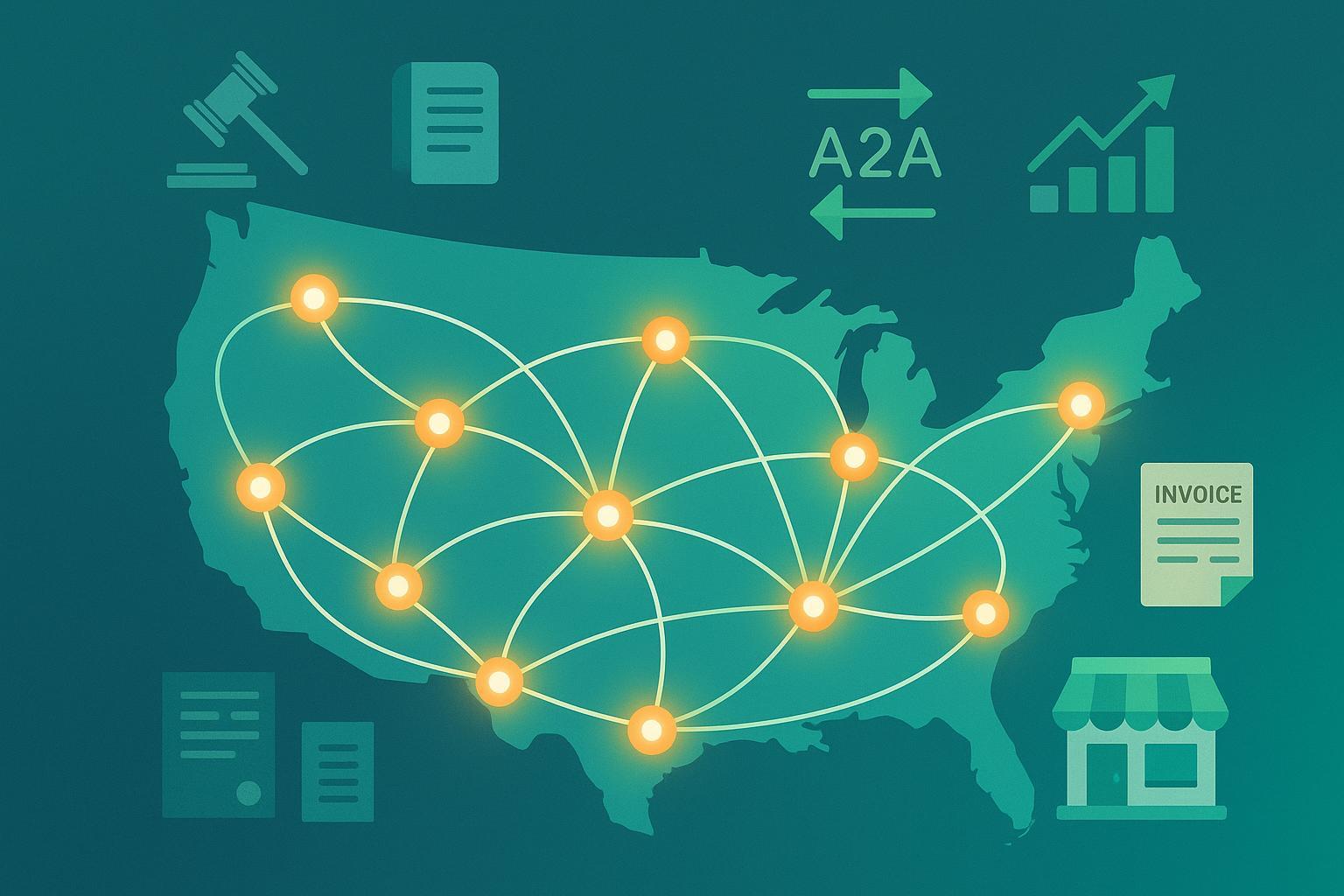
If you’re planning 2025 fintech content that actually converts, focus where regulation, infrastructure, and budget line items collide. The clusters below are U.S.-specific, evidence-backed, and mapped to search intent and content formats that drive pipeline—without leaning on hype. Use them to build thematic hubs (and lead magnets) that compound throughout the year.
1) FedNow enablement (limits, pricing, readiness)
Positioning: Demand surges for instant payments, but most institutions are still working through operational readiness—and buyers are searching for pragmatic guidance.
Why now:
- Q2 2025 activity reached 2.13M payments and $245.76B in value, signaling accelerating adoption according to the Federal Reserve’s official FedNow quarterly volume/value stats (2025).
- The Federal Reserve raised the FedNow credit transfer limit to $1M in June 2025 per the FRBServices risk-mitigation and limit update press release (2025).
Example queries:
- “FedNow transaction limit 2025”
- “FedNow pricing and fees 2025”
- “FedNow receive-only vs. send enablement”
Intent and formats:
- Informational: detailed explainer and FAQ
- Commercial investigation: implementation checklist, bank/vendor readiness guide, RFP template
- Transactional: integration playbook, migration guide, ROI worksheet
Monetization paths:
- Enablement services, bank sponsorship, payout products, treasury value-adds
Pitfalls to address:
- Receive-only vs. send-enabled confusion; liquidity and limit management; fraud controls for irrevocable payments; cite dates on policy changes.
2) RTP network adoption and high-value use cases
Positioning: RTP is mature and expanding into larger-ticket flows; buyers compare RTP and FedNow on concrete criteria.
Why now:
- The Clearing House raised the RTP per-payment limit to $10M effective Feb 9, 2025, enabling more B2B scenarios per the RTP $10M limit announcement (2024 with 2025 effective date).
Example queries:
- “RTP $10M limit date and use cases”
- “RTP vs. FedNow differences 2025”
- “Request for Payment (RfP) implementation RTP”
Intent and formats:
- Informational: side-by-side rail comparison with identical criteria (limits, irrevocability, fees, coverage)
- Commercial: connectivity options landscape, bank onboarding guide, vendor matrix
- Transactional: pricing explainer, migration checklist, technical integration guide
Monetization paths:
- Instant B2B payables/receivables, cash concentration, payroll/payout rails
Pitfalls to address:
- Coverage varies by bank; APP scam risk and refund expectations; ISO 20022 conformance nuances.
3) Pay by bank (A2A) for checkout and bill pay
Positioning: Merchants are testing account-to-account to reduce card costs; success hinges on authentication, guarantees, and returns management.
Why now:
- The Federal Reserve’s July 2025 FEDS Notes analyzes merchant “pay by bank” use cases and adoption drivers in the U.S. See Federal Reserve FEDS Notes on pay‑by‑bank (July 2025).
Example queries:
- “Pay by bank vs. card fees U.S.”
- “ACH return codes for ecommerce”
- “A2A checkout authentication and conversion”
Intent and formats:
- Informational: A2A authentication patterns, NACHA return codes primer
- Commercial: guarantee model comparison, vendor evaluation checklist, integration pathways (ACH vs. instant rails)
- Transactional: playbook for checkout integration, KPI dashboard template
Monetization paths:
- Pay-by-bank checkout modules, open banking linking, risk add‑ons (account status checks, balance checks)
Pitfalls to address:
- No standardized U.S. guarantee; conversion varies by vertical; returns/disputes handling expectations vs. cards.
4) CFPB Section 1033 (open banking) — status‑aware content
Positioning: Compliance and product teams need clear, date‑stamped guidance as timelines shift.
Why now:
- The Bureau issued an Advance Notice of Proposed Rulemaking to reconsider parts of the Personal Financial Data Rights rule on Aug 22, 2025; timelines are fluid. See the CFPB’s 1033 rule reconsideration ANPR (2025).
Example queries:
- “Section 1033 compliance timelines 2025”
- “Covered data providers under 1033”
- “Consent and permissions management requirements”
Intent and formats:
- Informational: status tracker with timestamps, glossary, FAQ
- Commercial: API standards overview and vendor landscape, consent UX patterns
- Transactional: gap assessment template, audit checklist
Monetization paths:
- Data access APIs, consent management, developer tools, compliance advisory
Pitfalls to address:
- Don’t assert final dates as settled; keep a regulator-linked status box in every article and update promptly.
5) CFPB Section 1071 (small business lending data) — phased compliance
Positioning: Banks and fintech lenders are scoping data collection systems, vendor selection, and policy updates.
Why now:
- Compliance dates were extended in June 2025, shifting first filing windows. See the Federal Register notice on the 1071 compliance extension (June 18, 2025).
Example queries:
- “Section 1071 compliance dates 2025”
- “1071 data fields and coverage thresholds”
- “Filing instructions guide”
Intent and formats:
- Informational: data dictionary explainer, coverage decision tree
- Commercial: vendor selection/RFP checklist, solution architecture guides
- Transactional: implementation timeline planner, QA test scripts
Monetization paths:
- Loan origination systems, compliance data platforms, advisory/implementation services
Pitfalls to address:
- Privacy and fair-lending implications; governance for sensitive demographic data; reconciliation with existing underwriting systems.
6) Instant disbursements: push‑to‑card vs. RTP vs. FedNow
Positioning: Insurance, gig, and marketplace payouts hinge on the right rail for cost, reach, and irrevocability.
Why now:
- FedNow pricing remains low per transaction and the June 2025 limit increase to $1M expands use cases; RTP’s $10M ceiling opens high‑value payouts; push‑to‑card remains the broadest in consumer reach. See the FedNow 2025 risk/limit update and the RTP $10M limit announcement.
Example queries:
- “RTP vs. push‑to‑card fees”
- “FedNow pricing 2025”
- “Insurance instant payout rails”
Intent and formats:
- Informational: rail comparison matrix (limits, fees, coverage, irrevocability, messaging)
- Commercial: provider options and bank sponsor pathways, SLA design
- Transactional: payout orchestration blueprint, exception‑handling runbooks
Monetization paths:
- Payout products, orchestration layers, risk add‑ons (name/descriptor checks, account verification)
Pitfalls to address:
- Chargeback/dispute expectations differ across rails; communicate irrevocability and customer support flows.
7) Real‑time payroll and Earned Wage Access (EWA)
Positioning: Employers and payroll platforms are navigating divergent state rules and choosing rails to deliver funds instantly.
Why now:
- States advanced EWA frameworks in 2025, with differences in licensing, fee caps, and disclosures. Buyers need state‑by‑state guidance tied to payout rails.
Example queries:
- “EWA licensing New York 2025”
- “California DFPI EWA registration requirements”
- “RTP vs. push‑to‑card for instant payroll”
Intent and formats:
- Informational: state regulation tracker, glossary (advance vs. loan classification)
- Commercial: rail selection guide, employer integration options, compliance checklist
- Transactional: rollout playbook, communications kit for employees
Monetization paths:
- Payroll rail add‑ons, employer programs, compliance tooling, earned wage products
Pitfalls to address:
- Consumer disclosure standards; debt‑collection prohibitions; fee transparency; align with employer HR/payroll cycles.
8) AI fraud and risk for instant and A2A rails
Positioning: As irrevocable payments scale, fraud and mule activity push buyers toward real‑time analytics and stronger model governance.
Why now:
- U.S. central‑bank analysis discussing pay‑by‑bank highlights authentication and fraud‑prevention design for instant rails in 2025; see the Federal Reserve’s FEDS Notes on pay‑by‑bank (July 2025).
Example queries:
- “APP scam prevention for RTP/FedNow”
- “Behavioral biometrics banking 2025”
- “Model risk governance for fraud ML”
Intent and formats:
- Informational: fraud typologies and control stack (device, behavior, network signals)
- Commercial: vendor landscape by capability (account verification, mule detection, step‑up auth)
- Transactional: model governance templates (validation, monitoring), incident response runbooks
Monetization paths:
- Fraud platforms, device intelligence, consortium data, governance tooling
Pitfalls to address:
- Balance false positives with irrevocability; ensure explainability and regulator‑grade documentation.
9) Identity, KYC/KYB, and BOI (CTA) changes
Positioning: Onboarding SMBs and consumers in 2025 requires reconciling BOI reporting scope and modernized CIP/KYB practices.
Why now:
- FinCEN’s interim final rule (Mar 26, 2025) revised who must file BOI and adjusted deadlines; consult the Federal Register BOI interim final rule (Mar 26, 2025).
Example queries:
- “Who must file BOI 2025”
- “KYB checklist for SMB onboarding”
- “Remote KYC liveness requirements U.S.”
Intent and formats:
- Informational: decision trees (entity coverage), glossary of identifiers, playbooks for document vs. database checks
- Commercial: vendor evaluation criteria (liveness, spoofing resistance, KYB data sources)
- Transactional: onboarding flow blueprints, exception management procedures
Monetization paths:
- Identity verification, KYB orchestration, BOI intake workflows, document capture SDKs
Pitfalls to address:
- Keep status boxes date‑stamped; align CIP with any regulator‑approved flexibilities; handle edge cases (foreign entities, trusts).
10) BNPL oversight and disclosures
Positioning: State‑level action is reshaping BNPL compliance while federal priorities evolve; merchants and lenders need practical guidance.
Why now:
- New York enacted a first‑of‑its‑kind BNPL licensing and disclosure law in 2025, prompting similar discussions elsewhere; see the legal analysis in Mayer Brown’s explainer on New York’s BNPL law (June 2025).
Example queries:
- “BNPL licensing New York 2025 requirements”
- “BNPL disclosures and credit reporting U.S. 2025”
- “Reg Z status for BNPL programs”
Intent and formats:
- Informational: state rule tracker, disclosure checklist
- Commercial: partner models (bank vs. nonbank), merchant integration playbooks
- Transactional: compliance implementation guide, customer communications templates
Monetization paths:
- BNPL platforms, merchant plug‑ins, compliance advisory
Pitfalls to address:
- Differences in state licensing, fee caps, and disclosures; coordination with credit reporting practices and servicing.
11) Embedded finance for SMB platforms (invoicing, payouts, capital)
Positioning: Vertical SaaS is bundling payments, instant payouts, and working‑capital offers; 1071 and BOI/KYB changes shape onboarding and underwriting.
Why now:
- Sponsor‑bank models and instant rails are improving SMB cash flow and reconciliation; content that turns regulatory complexity into clear workflows converts.
Example queries:
- “Embedded finance sponsor bank models U.S.”
- “SMB instant payouts via RTP/FedNow”
- “Platform capital underwriting with alternative data”
Intent and formats:
- Informational: architecture diagrams (ledgering, reconciliation, sponsor bank oversight)
- Commercial: bank partnership playbooks, risk policies, RFP templates
- Transactional: launch checklist, data contracts, go‑to‑market pricing frameworks
Monetization paths:
- Payments/treasury features, payout rails, capital products, compliance tooling
Pitfalls to address:
- Third‑party risk management expectations, cash‑flow risk on advances, reconciliation integrity.
12) Onchain finance (stablecoin settlement, tokenized assets)
Positioning: Interest in tokenized treasuries and compliant stablecoin settlement is rising; buyers want clarity on permissible designs.
Why now:
- 2025 federal and state signals suggest clearer frameworks for stablecoins and tokenized assets; treat specifics cautiously and cite primary policy pages as they finalize.
Example queries:
- “U.S. stablecoin law 2025 framework”
- “NYDFS expectations for banks using blockchain analytics”
- “Tokenized treasuries compliance checklist”
Intent and formats:
- Informational: regulatory status trackers, custody and audit overview
- Commercial: vendor landscape (issuers, custody, compliance analytics)
- Transactional: integration runbooks, risk controls, accounting and audit guides
Monetization paths:
- Settlement rails, custody/compliance solutions, treasury products
Pitfalls to address:
- Regulatory fragmentation; custody and reserve attestations; sanctions/AML screening on-chain.
How to turn these clusters into a 2025 content plan
- Build topic hubs, not one‑offs: Each H2 above can anchor a mini‑hub with explainer → comparison guide → RFP template → integration playbook. Interlink pages to capture multi‑intent journeys.
- Pair format to intent: Explainers and FAQs earn snippets; comparisons and vendor landscapes capture commercial investigation; playbooks and templates convert.
- Use schema where it helps: FAQPage for regulatory timelines, HowTo for integration guides, TechArticle for deep dives.
- Keep status boxes fresh: For rules (1033, 1071, BNPL), timestamp a “What changed last” note with a link to the primary regulator page.
- Publish rail‑agnostic comparisons: Use equal criteria (limits, irrevocability, fees, coverage, messaging, fraud controls) to build trust.
Methodology (selection and ranking)
We prioritized clusters using six factors: market momentum and timeliness (25%); commercial‑intent density (20%); regulatory criticality (20%); implementation complexity/decision support need (15%); SERP white space (10%); evidence quality (10%). We favored primary sources—Federal Reserve/FedNow, The Clearing House, CFPB, FinCEN—and limited external links to maintain readability.
Quick-reference citations used in this guide
- Federal Reserve’s FedNow quarterly volume/value stats (2025)
- FRBServices risk‑mitigation features and $1M limit press release (June 24, 2025)
- The Clearing House RTP $10M limit effective Feb 9, 2025
- Federal Reserve FEDS Notes on pay‑by‑bank merchant use cases (July 7, 2025)
- CFPB Section 1033 reconsideration ANPR (Aug 22, 2025)
- Federal Register Section 1071 compliance date extension (June 18, 2025)
- Federal Register FinCEN BOI interim final rule (Mar 26, 2025)
- Mayer Brown’s overview of New York’s BNPL law (June 2025)
This article is informational and not legal advice. For compliance decisions, consult counsel and the latest regulator publications, and keep your content’s status notes current.
