Best Baidu Alternatives to Cultivate in 2025

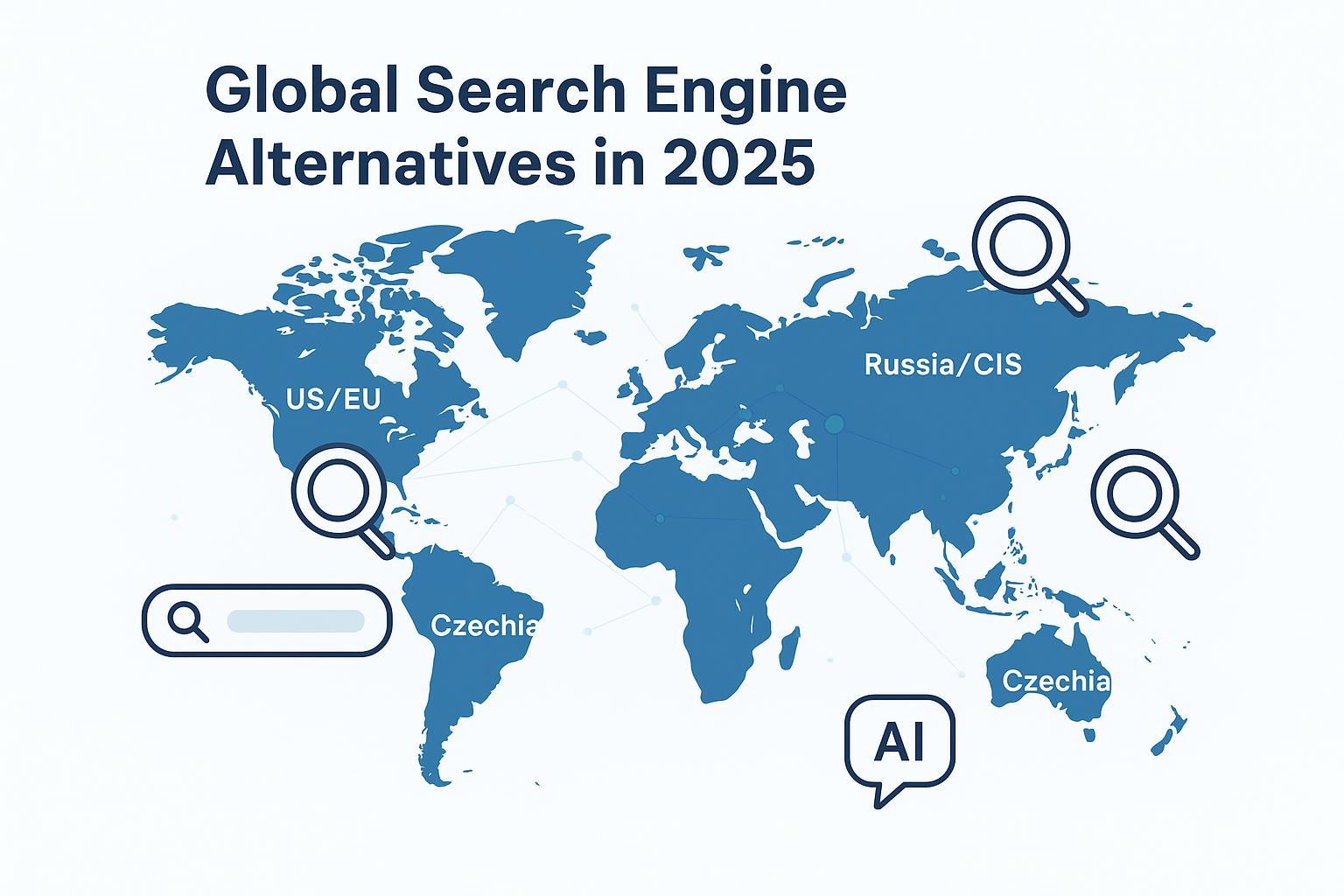
If Baidu doesn’t fit your audience or your growth plans, 2025 offers plenty of credible search engines to cultivate. This guide is written for marketers and SEOs who either operate outside mainland China or want diversified, lower-risk traffic sources. We’ll focus on where each engine really matters, what it takes to win there, and when not to choose it.
I’ll acknowledge up front: Baidu excels for mainland China—vast reach, strong integration with local ecosystems, and mature monetization. But if your customers aren’t primarily in China, the ROI can be limited and the localization overhead is high. Below, we’ll curate engines that offer real audiences, clear SEO pathways, and practical migration timelines.
As of November 2025, Google remains globally dominant, with Bing stronger on desktop and several regional leaders shaping local discovery. Device splits and AI-in-SERP changes matter more than ever, so we’ll bake them into the recommendations. Market share snapshots are fluid, but two aggregates are useful context: global tracking shows Google hovering around the ~89–90% range in late 2024–2025, while Bing holds notably higher share on desktop compared to mobile, according to the desktop and global views in Statcounter’s worldwide dashboards (2025). Trade press has also chronicled Google’s dip below 90% in late 2024, which persisted into 2025, as reported by Search Engine Land’s 2024 market share update.
How we ranked the alternatives
To keep this pragmatic, I evaluated each engine on five weighted criteria:
- Reach potential (35%): regional/device market share and trend direction.
- SEO controllability (25%): webmaster tools, documentation, clarity of ranking levers, access to SERP features.
- Localization load (15%): language requirements, platform-native content demands, compliance.
- AI impact/readiness (15%): presence of AI answers/chat and tactics to earn citations.
- Measurement/ads ecosystem (10%): analytics/referral clarity, ad platform maturity.
This framework favors engines where you can reasonably plan, execute, and measure success—not just “nice-to-have” listings.
Quick guidance by scenario
- If you need broad global reach with predictable tooling: prioritize Google and Microsoft Bing (with Yahoo as a Bing-powered adjunct in some markets).
- If you target RU/CIS: invest in Yandex—but only with genuine Russian-language content and local signals.
- If South Korea is strategic: Naver is non-negotiable, and winning requires participation in Naver-native surfaces (Blogs, Cafes, Knowledge In), not just web SEO.
- If Czechia matters: Seznam is worth the effort, especially with Czech-language content and local citations.
- If privacy-driven cohorts are core to your brand: DuckDuckGo and Brave can be worthwhile; expect leaner personalization and analytics.
- If you want a values-aligned, eco-conscious audience: Ecosia adds incremental reach on top of Bing.
1) Google: still the default for global scale
- Where it shines: Everywhere outside a few regional exceptions. Mobile dominance reinforces its role for consumer discovery.
- How to win:
- Double down on entity-centric content and structured data—these help earn citations and rich features in AI-in-SERP modules. See Google’s site owner guidance for AI features in Google Search Central (2025).
- Monitor how AI Overviews reshape SERPs. Multiple cohorts reported significant reductions in traditional modules (e.g., fewer sitelinks, videos, and Knowledge Panels when AI Overviews appear), summarized in WordStream’s 2025 AI Overviews statistics.
- Keep technical hygiene sharp: clean sitemaps, crawl budget management, fast, stable rendering.
- Measurement and ads: Mature across the board; analytics and paid integrations are standard.
- When not to choose: If your audience is primarily in Russia or South Korea and you can’t invest in local ecosystems; you’ll need Yandex/Naver-specific efforts.
- Migration difficulty from Baidu: Low. Technical SEO and English-first content are typically sufficient to start.
2) Microsoft Bing (and Yahoo): desktop strength + Copilot integrations
- Where it shines: Stronger on desktop than mobile worldwide; presence amplified via Windows and Edge. Yahoo is Bing-powered and can add pockets of incremental reach in the US and Japan.
- How to win:
- Register and optimize in Bing Webmaster Tools. Use IndexNow for rapid signaling and the built-in Site Explorer, SEO reports, and backlinks insights.
- Track Copilot-in-search behavior and aim to be a trusted citation source. Microsoft announced broader Copilot improvements in 2025; the feature rollout and integration context are captured in Microsoft TechCommunity’s October 2025 update and the Bing Webmaster blog on Copilot availability (March 2025).
- Measurement and ads: Microsoft Advertising is mature; Bing Places helps local visibility.
- When not to choose: If your market is almost entirely mobile-first with minimal desktop usage and you have limited resources, Google may deliver better base ROI.
- Migration difficulty from Baidu: Low. Similar technical SEO; English/Western content OK.
3) Yandex: de facto for Russia/CIS—local language is essential
- Where it shines: Russia and parts of CIS; culturally and linguistically aligned with local users.
- How to win:
- Use Yandex Webmaster for verification, sitemaps, and performance.
- Understand SQI as a quality indicator and tune content toward usefulness and behavioral satisfaction; details are outlined in Yandex’s official SQI help.
- Prioritize Russian-language content, local backlinks, and relevance to local intent. The official Yandex SEO guide provides a baseline.
- Measurement and ads: Yandex Metrica for analytics; Yandex.Direct for ads with regional rules documented in the Direct display rules.
- When not to choose: If you cannot invest in authentic Russian localization and local signals; translating your English site rarely suffices.
- Migration difficulty from Baidu: High. Expect 2–4 weeks for setup, 4–8 weeks for meaningful localization and link-building.
4) Naver: win South Korea by playing on Naver-native surfaces
- Where it shines: South Korea, with strong user preference for Naver-owned content surfaces.
- How to win:
- Don’t limit your efforts to web indexing; participate in Naver Blogs, Cafes, and Knowledge In. Verification and submission happen through Naver Search Advisor.
- Align content with Korean-language expectations and community norms; build presence where users actually consume content.
- Measurement and ads: Naver’s ad ecosystem includes high-visibility Brand Search Ads for branded queries; strategic guidance is available via reputable agency explainers (e.g., The Egg and others) and Naver’s own communications.
- When not to choose: If you can’t produce native Korean content or invest in platform participation. English-only strategies tend to stall.
- Migration difficulty from Baidu: High. Setup 3–6 weeks, with 6–12 weeks to build credible blog/cafe presence.
For a deeper execution primer on multilingual content workflows, you might appreciate this internal guide on the AI blog writing category for multilingual production.
5) Seznam: meaningful in Czechia—Czech language and local citations win
- Where it shines: Czech Republic; long-standing local loyalty and ecosystem (Sklik ads, Zboží.cz shopping).
- How to win:
- Produce Czech-language content mapped to local intent; pursue local citations and media.
- Review ad and tracking requirements; Seznam’s ads (Sklik) have privacy-focused technical parameters—see the official Sklik shopping ads placement guidance for surface details.
- Measurement and ads: Sklik provides text/display/shopping/video formats, with documented privacy/consent parameters and audience features covered in Seznam’s help/blog resources.
- When not to choose: If Czechia isn’t a target market; the global spillover is tiny.
- Migration difficulty from Baidu: Medium. Plan 2–4 weeks for setup; 4–6 weeks for localized content/citations.
6) DuckDuckGo: privacy-first cohorts, lean personalization
- Where it shines: Privacy-minded users in the US/EU; modest share but strong brand affinity among privacy-conscious audiences.
- How to win:
- Build evergreen, high-authority content; personalization is limited, so topical depth and credibility matter.
- Indexing largely leverages Bing’s ecosystem; ensure your Bing fundamentals are strong (sitemaps, IndexNow, basic technical hygiene).
- Measurement and ads: Referral attribution can be leaner than Google/Bing; set expectations accordingly.
- When not to choose: If you rely heavily on personalized SERP features and granular audience targeting; DDG’s model is intentionally conservative.
- Migration difficulty from Baidu: Medium. Content-first wins; technical setup is straightforward.
If you’re newer to foundational planning, this primer on what keywords vs. topics mean and how they differ can help you structure evergreen content that travels well across engines.
7) Brave Search: independent index + AI “Detailed Answers”
- Where it shines: Privacy-conscious users and developers; rare non-Google/Bing independent index.
- How to win:
- Brave crawls independently and offers AI-grounded answers driven by its index. Product evolution of “Detailed Answers” in 2025 was covered by TechCrunch’s update on Brave’s AI-powered answers.
- Focus on clean, well-structured, authoritative content with clear entities; this increases chances of being cited in AI answers modules.
- Measurement and ads: Limited compared with Google/Bing; set modest expectations for analytics granularity.
- When not to choose: If you need large-scale reach quickly; Brave is a complement, not a cornerstone.
- Migration difficulty from Baidu: Medium. Strong content posture is key; technical submissions are minimal.
8) Ecosia: values-aligned incremental reach on top of Bing
- Where it shines: Users who value climate-positive missions; incremental reach in EU markets, powered by Bing results.
- How to win:
- Treat this as an additive channel: ensure Bing fundamentals are in place; Ecosia overlays its mission.
- Measurement and ads: Limited unique tooling; analytics similar to other privacy/value engines.
- When not to choose: If your KPI is scale-only and you don’t value brand affinity with eco-minded audiences.
- Migration difficulty from Baidu: Low. Leverage Bing technical SEO and measurement.
Execution checklist: expanding beyond Baidu in 2025
- Validate your target regions and devices: desktop vs. mobile splits still influence ROI (Google’s mobile dominance is well-documented across 2024–2025; see the broad global patterns in Statcounter’s dashboards cited above).
- Set up webmaster tools early:
- Google Search Console for indexing/performance.
- Bing Webmaster Tools for IndexNow, crawls, and Copilot-aware insights.
- Yandex Webmaster for SQI visibility and Metrica.
- Naver Search Advisor for verification and participation in Naver-native surfaces.
- Seznam’s ecosystems (Sklik; Zboží.cz) for Czech commerce and ads.
- Align content localization to user expectations:
- Yandex: Russian-language depth + local links.
- Naver: Korean-language content plus Blogs/Cafes/Q&A participation.
- Seznam: Czech-language pages and local citations.
- Prepare for AI-in-SERP shifts:
- For Google, follow the evolving site owner guidance and experiment with schema and entity clarity; see Google’s AI features docs (2025).
- For Bing, analyze Copilot displays and ensure your content can be cited confidently; guidance and product context are outlined in the Microsoft Copilot resources above.
- Measurement and quality:
- Calibrate expectations for privacy engines (DDG, Brave, Ecosia) where attribution is leaner.
- Systematically evaluate content quality signals. If you need a practical framework, this explainer on a Content Quality Score aligned to E‑E‑A‑T can help with internal QA.
For ongoing benchmarking across engines and content types, this roundup of SEO content quality analysis tools for 2025 gives pragmatic ways to instrument your workflow.
A note on AI features and earning citations
Google’s AI modules continue to evolve. The product team outlined “AI Mode” updates (multi-step reasoning, multimodality) in 2025, detailed on the Google Search blog’s AI mode update post. Regardless of engine, the practical takeaway is the same: structure content around entities, add schema, and demonstrate source credibility (author bios, references, media, and clear claims). Expect lower CTR on some traditional listings when AI answers appear; your goal is to be the source that engines cite.
Tools to support execution (neutral recommendation)
If you need help producing multilingual, SEO‑friendly content and measuring quality at scale, consider using QuickCreator to accelerate drafting, localization, and optimization across these engines. Disclosure: QuickCreator is our product.
- Practical use cases: generate native-language articles for Yandex/Naver/Seznam, apply on‑page SEO, and publish fast.
- To understand how AI‑generated content fits into modern SEO, our detailed primer on the comprehensive guide to AI‑generated content (AIGC) covers workflows, guardrails, and opportunities.
When staying with Baidu still makes sense
- Your primary audience is mainland Chinese users.
- You already run Chinese-language content and (ideally) local hosting/CDN with integration into Baidu-native surfaces (e.g., Baijiahao).
- Compliance requirements make China-first platforms necessary.
When expanding beyond Baidu is warranted
- Your core audience is outside China, or you need diversified traffic and lower platform risk.
- You can’t commit to deep China-specific localization and governance.
- Your growth plan depends on AI-forward SERPs and global ad platforms.
Final selection cheat sheet
- Global default: Google; add Bing for desktop-heavy audiences (Yahoo as Bing-powered adjunct).
- RU/CIS: Yandex (native language and local signals required).
- South Korea: Naver (platform-native surfaces are must-have).
- Czechia: Seznam (Czech content and local citations).
- Privacy/value cohorts: DuckDuckGo and Brave (plus Ecosia for eco-minded audiences).
Every choice involves trade-offs. Start where your audience is, map the localization and platform-native work honestly, and instrument measurement early so you can reallocate toward engines that return meaningful visibility and conversions.
