Local SEO Checklist for an Austin Ecommerce Fashion Boutique (2025)

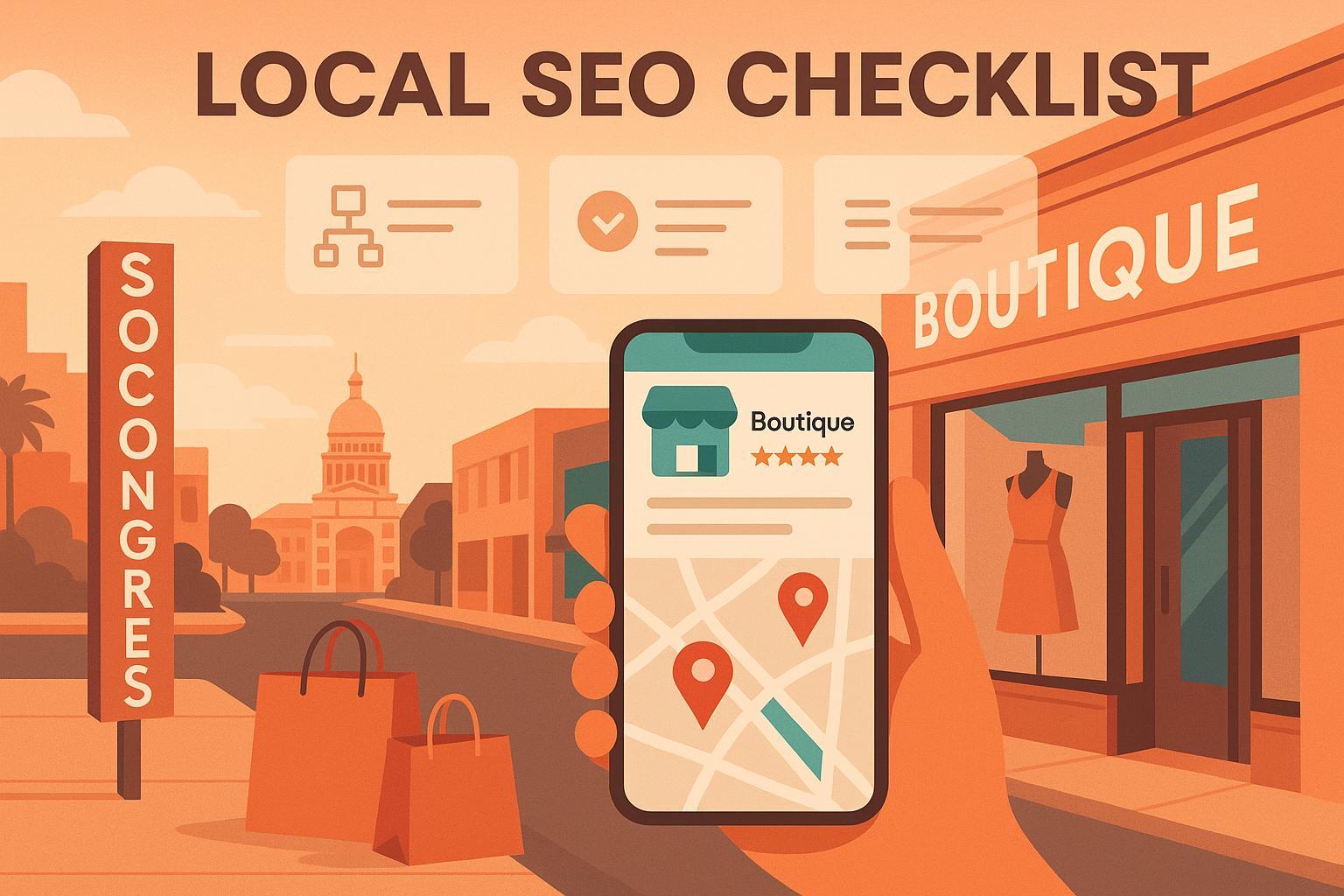
Your Austin fashion brand sells online—and you want steady local foot traffic, curbside pickups, and high-intent shoppers finding you in the local pack. Use this step-by-step checklist to set up, optimize, and maintain local SEO for an ecommerce-first boutique in Austin. It’s organized into one-time setup, weekly/monthly routines, and quarterly/seasonal actions, with practical notes on Google Business Profile (GBP), citations/NAP, reviews, and measurement.
One-Time Setup (Foundation)
-
Verify your Google Business Profile (GBP) and confirm eligibility
- Action: Claim or create the listing and complete verification.
- Compliance: Review Google’s rules in the consolidated policy hub (Google, 2025) via Business Profile policies & guidelines.
- Why this matters: Policy-aligned setup prevents content removals and supports sustainable review growth.
-
Set your primary GBP category precisely, then add relevant secondary categories
- Action: Use “Clothing store” as the primary if that reflects your core; add secondary categories like Women’s Clothing Store, Men’s Clothing Store, Boutique, Accessories Store, Shoe Store (only those truly applicable).
- Reference: See BrightLocal’s categories guide (2025) for selection techniques.
- Why this matters: Accurate categories improve relevance for local intents (e.g., “women’s boutique near me”).
-
Complete applicable GBP attributes (accessibility, payment types, service options)
- Action: Add attributes such as wheelchair-accessible entrance, women-led, LGBTQ+-friendly, offers curbside pickup, delivery options, payment methods.
- Reference: Context on attributes and how they influence user matching from Uberall’s categories & attributes overview.
- Why this matters: Attributes enhance user experience and can surface “justifications” on SERPs.
-
Write a concise, location-aware business description
- Action: Mention your product focus (e.g., Austin-made apparel, designer accessories), areas served (South Congress, The Domain, East Austin), and brand differentiators. Keep it natural; avoid keyword stuffing.
- Why this matters: A clear description helps shoppers quickly understand your offer and local relevance.
-
Add high-quality photos that represent your storefront, interior, staff, and products
- Action: Upload crisp, well-lit images; include seasonal collections and event photos.
- Why this matters: Visuals boost engagement and trust; fashion shoppers rely heavily on imagery.
-
Publish your initial GBP Products with images, price or price range, and product URLs
- Action: Add top sellers and seasonal collections to GBP Products; include descriptive titles, short summaries, accurate pricing, and direct URLs to product pages.
- Tip: Keep product availability up to date and rotate featured items with each collection drop.
- Why this matters: Products increase conversion paths from the local pack and can trigger “in stock” justifications when your site reinforces availability.
-
Configure UTM tracking on all GBP links
- Action: Tag “Website,” “Appointment,” and product/menu URLs (consistently use utm_source=google-business-profile, a preferred utm_medium such as referral, and logical utm_campaigns for Posts).
- Reference: Setup details in BrightLocal’s UTM guide for GBP (2025).
- Why this matters: UTMs let you attribute traffic, calls, and revenue from GBP in GA4.
-
Establish NAP consistency across your site and core citations
- Action: Standardize your business name, full address (with suite), primary phone, and URL; place NAP in plain text on your site (footer + contact page).
- Why this matters: Consistent Name/Address/Phone across directories reduces confusion and supports local trust signals.
-
Submit/claim core US citations and selected Austin-centric listings
- Action: Prioritize Google (GBP), Apple Business Connect, Bing Places, Yelp, Facebook, BBB, YP, Foursquare, MapQuest. Add Austin-focused chambers or neighborhood associations where applicable.
- Reference: Use BrightLocal’s Top USA citation sites (2025) to build your starter list.
- Why this matters: Citations confirm your NAP across the local web and help shoppers discover you.
-
Implement LocalBusiness and Product structured data (JSON-LD)
- Action: Add LocalBusiness schema to your location/contact page (include NAP, opening hours, sameAs social profiles); add Product schema to product pages (name, image, brand, SKU, offers, price, availability).
- References: Google Search Central docs for LocalBusiness structured data and Product structured data.
- Why this matters: Structured data helps search engines understand your local presence and products, enabling rich results.
-
Create a dedicated local landing page optimized for Austin
- Action: Include NAP, embedded Google Map, pickup/curbside info, parking/transport details, local delivery coverage, and internally link to key categories.
- Why this matters: A strong local page supports local pack relevance and user conversion.
-
Set GBP hours, special hours, and store codes (if multi-location)
- Action: Confirm regular hours and add special hours for holidays/events; use store codes to keep multi-location data organized.
- Why this matters: Accurate hours reduce negative experiences and can prevent bad reviews.
Weekly/Monthly Maintenance
-
Publish a GBP Post weekly (new arrivals, drops, launches, events, promotions)
- Action: Add a photo, short copy, and a call-to-action; use UTM on links.
- Why this matters: Regular Posts keep your profile fresh and can drive high-intent clicks to collections.
-
Refresh GBP Products and highlight current collections
- Action: Rotate featured products monthly; archive outdated items.
- Why this matters: Up-to-date product listings better match real-time shopper intent.
-
Add new photos from shoots, lookbooks, and in-store events
- Action: Upload lifestyle shots, fit guides, and user-generated content (with permission).
- Why this matters: Fresh visuals signal activity and quality—critical in fashion.
-
Monitor and answer GBP Q&A promptly
- Action: Seed frequently asked questions (e.g., sizing, pickup windows, alterations) and provide accurate answers; respond to customer questions within 48 hours.
- Why this matters: Q&A can appear directly on your listing and influence conversions.
-
Check NAP consistency and citation sync
- Action: If anything changes (hours, phone, suite), update your site first, then GBP, then major citations; audit monthly for duplicates or outdated entries.
- Why this matters: Drifts in NAP create confusion and hurt local trust.
-
Track GBP Performance and GA4 attribution
- Action: Review direction requests, calls, website clicks, and sessions/conversions driven by UTM-tagged links; compare against revenue from local landing pages.
- Why this matters: Measurement shows which local actions drive sales, guiding priorities.
Policy-Compliant Review Strategy (Ongoing)
-
Generate your official GBP review link and place it in post-purchase touchpoints
- Action: Include the link in order confirmation emails, SMS receipts, and printed QR cards at checkout.
- Compliance: Do not incentivize or gate reviews; follow Google’s rules in Business Profile policies & guidelines (Google, 2025).
-
Ask for specific, photo-rich feedback
- Action: Prompt customers to mention fit, quality, store experience, and pickup convenience; invite photos of outfits.
- Why this matters: Detailed reviews help shoppers and can trigger SERP “reviews mention…” justifications.
-
Respond to every review within 48–72 hours
- Action: Thank happy customers with specific details; for issues, acknowledge, clarify, and offer resolution offline when needed.
- Why this matters: Consistent, professional responses improve trust and retention.
-
Flag and document policy-violating reviews
- Action: Use the three-dot menu in Google Maps/Search to report reviews that include prohibited content (e.g., harassment, fake, conflicts of interest); keep internal logs of incidents.
- Why this matters: Upholding policy protects your reputation and review quality.
-
Maintain a steady review cadence
- Insight: Local consumers rely on recent feedback; the BrightLocal Local Consumer Review Survey (2024) highlights the importance of fresh reviews to purchasing decisions.
- Action: Build routine, compliant asks into your customer communications.
Quarterly/Seasonal Actions
-
Audit GBP categories and attributes for relevance
- Action: Revisit categories each season; add/remove secondary categories that fit new product lines (e.g., “Swimwear store” for summer collections) and adjust attributes (e.g., temporary pop-up locations).
- Why this matters: Fashion inventory is seasonal; reflecting changes helps you rank for timely local searches.
-
Recheck business description and photos
- Action: Update copy with current collection themes and add seasonal lookbook images.
- Why this matters: Alignment between brand storytelling and local listing boosts engagement.
-
Conduct a citation audit and suppress duplicates
- Action: Identify duplicates and outdated entries; request corrections or suppress as needed.
- Why this matters: Clean citation profiles maintain NAP integrity and reduce user confusion.
-
Review structured data and site UX
- Action: Validate schema using Google’s Rich Results Test; ensure mobile UX and page speed are strong on local/product landing pages.
- Why this matters: Technical health supports visibility and conversion.
-
Plan Austin-specific PR and event participation
- Action: Align product launches with local calendars (e.g., Austin Fashion Week pop-ups, neighborhood markets); pitch local publications and chambers.
- Reference: Track seasonal opportunities via Texas Fashion Industry Foundation (Austin Fashion Week).
- Why this matters: Local mentions and backlinks enhance prominence; events generate photos and reviews.
-
Refresh local landing page content
- Action: Add new neighborhood hooks (South Congress, The Domain, East Austin), community initiatives, sustainability programs, and updated pickup/delivery info.
- Why this matters: Locally resonant content improves relevance and user trust.
-
Governance check: policies, hours, store codes, and UTM standards
- Action: Confirm you’re still in compliance with Google’s Business Profile policies; ensure special hours are current and UTMs are consistent across links.
- Why this matters: Governance keeps your local program stable and measurable.
Detailed Field-by-Field GBP Optimization (Fashion-Focused)
-
Categories
- Action: Primary one only; secondary categories that match inventory and services (e.g., Boutique, Women’s Clothing Store, Accessories Store, Shoe Store, Bridal Shop if relevant).
- Tip: Avoid over-stacking; irrelevance can reduce user trust.
-
Attributes
- Action: Fill accessibility, payment methods, women-led/LGBTQ+-friendly if true, service options (curbside pickup, delivery), and highlights (e.g., “Black-owned,” “Sustainable”).
- Tip: Attributes inform shoppers and may surface “why we picked this result” justifications.
-
- Action: Add representative items with images, price/price range, category, and UTM-tagged URLs; rotate for seasonality.
- Tip: Feature new drops and event collabs prominently.
-
Posts
- Action: Weekly updates with photos and clear CTAs; tag links for attribution.
- Tip: Post about pop-ups, trunk shows, and limited-time collections.
-
Photos
- Action: Maintain a visual cadence—storefront, interior, staff styling, product detail, UGC (with permission).
- Tip: Aim for consistent lighting and brand-aligned aesthetics.
-
Q&A
- Action: Seed FAQs (sizing charts, pickup times, return policy); monitor customer questions.
- Tip: Use concise, helpful answers that match on-site policies.
-
Hours & Special Hours
- Action: Keep holiday/special-event hours timely; add temporary pop-up hours if applicable.
- Tip: Inaccurate hours are a common cause of negative reviews.
-
- Action: Website, appointment, and product links should have standardized UTM parameters.
- Tip: Segment campaigns by Posts to learn which topics drive conversions.
Citations & NAP Checklist
-
Standardize NAP on your site
- Action: Place plain-text NAP in footer and on contact/location pages; ensure schema aligns.
- Tip: Match formatting exactly across citations (suite, abbreviations).
-
Claim core US directories
- Action: GBP (Google), Apple Business Connect, Bing Places, Yelp, Facebook, BBB, YP, Foursquare, MapQuest.
- Tip: Use consistent categories and descriptions across profiles.
-
Add Austin-centric memberships/directories as applicable
- Action: Consider the Greater Austin Chamber, Austin LGBT Chamber, neighborhood associations, and relevant local fashion groups.
- Tip: Local memberships often provide a directory listing and backlink.
-
Quarterly audit
- Action: Identify duplicates and outdated entries; request merges/suppressions; re-verify data after changes.
- Tip: Keep a simple spreadsheet to track logins, status, and last update date.
-
Build from a vetted list
- Reference: Start with BrightLocal’s Top USA citation sites and expand to Austin-specific options.
Measurement & Reporting Essentials
-
Tag all GBP links with UTM and define naming conventions
- Action: Use a standard source/medium; add utm_campaign for Posts and special events.
-
Monitor GBP Performance metrics monthly
- Action: Calls, website clicks, direction requests, and top queries; compare with GA4 sessions and conversions from local pages.
-
Tie reviews and events to revenue
- Action: Track revenue trends around major review spikes and local event participation; annotate reports.
-
Validate structured data after major site changes
- Action: Re-test LocalBusiness and Product schema to ensure rich result eligibility.
Common Pitfalls to Avoid
-
Offering discounts or freebies in exchange for reviews
- Why it’s risky: Violates Google’s review policies; can trigger removals and trust issues. See the rules in Business Profile policies & guidelines (Google, 2025).
-
Overloading categories or misrepresenting services
- Why it’s risky: Irrelevant categories hurt user trust and may depress engagement.
-
Ignoring special hours and holiday updates
- Why it’s risky: Leads to customer frustration and negative reviews.
-
Letting GBP Products and photos go stale
- Why it’s risky: Fashion is fast-moving; outdated content reduces click-through and conversions.
-
Failing to measure with UTM/GA4
- Why it’s risky: You won’t know which local actions drive sales, making optimization guesswork.
Austin-Focused Content Ideas to Spark Local Signals
- Create neighborhood mini-guides that feature your styling tips for South Congress, The Domain, or East Austin vibes.
- Publish sustainability and community initiatives (local designers, Austin-made lines, charitable collaborations).
- Tie collection drops to local calendars (e.g., previews before Austin Fashion Week, trunk shows during festival seasons).
- Collaborate with local influencers for in-store styling events and UGC that you can feature on GBP.
Use this checklist as your operating playbook. Run the setup once, then follow the weekly/monthly routines and quarterly audits to keep your local presence sharp. Keep your content current, your reviews compliant, and your measurement clean—you’ll earn more high-intent local traffic and sales in Austin.
