Analyze Local SEO Competition with These Proven Strategies


If you want to analyze local SEO competition, start by looking at what your rivals do well and where they fall short. You gain a big advantage when you analyze local SEO with a clear plan. Many business owners see better results when they focus on local competitors and find gaps in their content or Google Business Profile. Regularly analyze local SEO to spot chances to improve your visibility and draw in more leads. By creating content that speaks to your local audience, you stand out from others and connect with more customers. Use these steps to keep your local business ahead.
Why Competitor Analysis Matters
Gain an Edge
You want your business to stand out in the local market. Competitor analysis gives you the tools to do just that. When you study your competition, you learn why some locations perform better than others. You see which local businesses have strong Google Business Profiles and lots of reviews. This information helps you take action and improve your own local SEO.
Competitor analysis is crucial for local SEO success because it helps you understand your market and identify true competitors. You can see who ranks high in local search results and learn what they do well. By checking their strengths and weaknesses, you find ways to boost your own visibility.
Tip: Regular local competitor analysis lets you adapt quickly to changes in the market and keeps you ahead of the competition.
Here are some ways competitor analysis helps you gain an edge:
- You spot new market opportunities by understanding what your competition offers.
- You develop marketing campaigns that connect with your target audience.
- You improve your digital marketing strategies by finding areas that need work.
- You refine your sales pitch to show your value.
- You may even find chances to work with other local businesses.
Spot Opportunities
Local competitor analysis helps you find gaps and chances to grow. When you look at your competition, you can see where your local SEO needs improvement. You might notice that your competitors have better local link building or more effective seasonal promotions.
You can adjust your pricing strategies based on what other local businesses offer. You also learn about regional trends that help you perform better in different locations.
Competitor analysis helps you:
- Identify who ranks high in local search.
- Understand what your competition does well and where they fall short.
- Develop strategies to capture more local search opportunities.
By using competitor analysis, you set your business up for local SEO success. You stay visible in local search results and keep your business growing.
Identify Local Competition

Define Your Market
You need to know your market before you can win in local search competition. Start by looking at your area and the people who live there. You want to understand what makes your local market unique.
Here are some steps you can follow:
- Conduct local market research to learn about your customers.
- Check how close searchers are to your business.
- Analyze local competitors to see who is active in your area.
- Research Google’s mapped borders to see how your market is defined.
- Use surveys or social media polls to find out what local consumers want.
- Invest in keyword research to discover the words people use when searching for local services.
You should also track how your competitors organize their websites. Look at the keywords they use and study their Google Business Profiles. These actions help you see what works in your local market.
Tip: When you know your market, you can create content that matches what local customers need.
Find Top Competitors
After you define your market, you need to find your top competitors. Use keyword analysis tools like Ahrefs and SEMrush. These tools show you which businesses rank high in local search competition. You can see what strategies they use to get noticed.
Check the backlink profiles of local competitors. Tools like Ahrefs and SEMrush help you see which websites link to them. This shows you how they build trust and authority in the local area.
Look at their Google Business Profiles. You can learn how they present their business and what makes them stand out. This helps you improve your own profile and attract more local customers.
When you study your top competitors, you learn what works and what does not. You can use this information to make your business stronger in local search results.
When to Analyze Local SEO
You need to know the right time to analyze your local SEO competition. This helps you stay ahead and make smart decisions for your business. Many situations can trigger the need for a local SEO review. Here are some of the most common scenarios:
- You want to identify your real local competitors.
- You consider entering a new market.
- New competitors enter your local market.
- You launch a local SEO strategy for the first time.
- You notice a decline in sales or local traffic.
- You want to monitor the effect of ongoing local search optimizations.
New Market Entry
When you plan to enter a new local market, you must analyze the competition. Every local area has its own set of businesses and customer needs. You should look at who already ranks high in local search results. Study their websites, reviews, and local content. This helps you understand what works in that local area. You can then build a strategy that fits the new local market and stands out from the rest.
Traffic Drops
If you see a drop in local website traffic or sales, you need to act fast. A sudden change often means that something has shifted in the local search landscape. Maybe a new local competitor has appeared, or someone improved their local SEO. Check your local rankings and compare them with other local businesses. Look for changes in local keywords, reviews, or backlinks. This helps you find the cause and fix it before you lose more local customers.
Ongoing Checks
You should not wait for problems to appear before you analyze your local SEO. Regular checks keep your business strong in local search results. Experts say that the best frequency depends on your industry. Fast-moving fields may need monthly local SEO reviews. More stable industries can check every six months, with extra checks if needed. Ongoing analysis helps you spot new trends and adjust your local strategy quickly.
Tip: Make local SEO competitor analysis a regular part of your business routine. This keeps you ready for any changes in your local market.
Analyze Local SEO Competitors

Use SEO Tools
You need the right tools to perform competitor analysis for local SEO. Tools like SEMrush, Ahrefs, and Google AdWords help you collect data about your competition. These tools show you which businesses appear in the local pack and how they achieve high ranking in local search. You can track google search results, backlinks, and keyword strategies.
Follow these steps to get the most from SEO tools:
- Identify key competitors in your local market. Look for businesses that show up in the local pack and google maps.
- Analyze competitors’ strategies and objectives. Check their google business profiles and see what they focus on.
- Assess strengths and weaknesses. Use SEMrush or Ahrefs to compare backlinks, content quality, and google reviews.
- Understand competitors’ products and services. Compare features, pricing, and local offerings.
- Observe reaction patterns. Watch how competitors respond to changes in google algorithms or local search trends.
- Draw conclusions and adjust your strategy. Use the data to improve your own local SEO and ranking.
You can also use these tools for local competitor analysis:
- Google Analytics: Track user interactions and traffic sources for local pages.
- Google Search Console: Monitor impressions, clicks, and site health for local search.
- Google Business Profile Insights: See how many calls and website clicks your profile receives.
- Yext: Manage business information and analyze local listings.
- BrightLocal: Track local SEO performance and competition.
- Moz Local: Monitor local search ranking and listing accuracy.
- Whitespark: Review customer feedback and competitor performance.
Tip: Skipping competitor research at the local level can hurt your business. Always use SEO tools to stay ahead in local search.
Check Social Media
Social media plays a big role in local SEO and competitor analysis. You need to review your competitors’ profiles to see how they engage with the local audience. Look at their google business posts, facebook updates, and instagram stories. Check how often they post and how many likes or comments they get.
You can use Hootsuite Analytics to track up to 20 competitor profiles. This tool helps you compare engagement, reach, and audience growth. Benchmark your performance against direct competitors to find areas for improvement.
- Analyze where competitors perform well. Look for trends in google reviews, local events, and seasonal promotions.
- Identify gaps in your own social media strategy. See which posts attract the most attention in your local market.
- Use competitive benchmarking to set goals for your own local SEO and ranking.
Note: Understanding local digital behavior helps you connect with your audience. Social media analysis reveals what works in your area and helps you improve your local pack visibility.
Research Keywords
Local keyword research is essential for competitor analysis. You need to know which keywords drive traffic to your competitors in local search. Use google tools like SEMrush and Ahrefs to gather keyword data from your website and your competitors.
Track these important metrics:
| Metric | Description |
|---|---|
| Local Search Rankings | Track where you rank for local keywords in google search. |
| Google Business Profile Performance | Monitor customer interactions and search queries on your profile. |
| Online Reviews and Ratings | Count the number and quality of google reviews for your business and competitors. |
| Local Citations | Check mentions of your business on directories and social media. |
| Competitor Metrics | Analyze competitors’ strategies to find new opportunities in local SEO. |
| Website Traffic from Local Search | Measure organic traffic from local queries and google searches. |
| Phone Calls | Use call tracking tools to see which strategies lead to phone inquiries. |
| Page Load Times | Faster sites improve user engagement and ranking in local search. |
To find keyword overlap and gaps:
- Gather keyword data from your website and competitors.
- Analyze competitors’ keywords using google tools to find shared and unique terms.
- Identify missing keywords that competitors rank for in local search but you do not.
- Conduct gap analysis to prioritize new keyword opportunities for your local SEO strategy.
Tip: Failing to monitor local SEO performance can prevent you from refining your strategy. Always track keywords and google rankings.
Compare Top Five
You need to compare your business with the top five competitors in your local market. This helps you understand why some businesses rank higher in the local pack and google search results. Use competitor analysis to review online presence, keyword targeting, and website ratings.
Compare these factors:
| Factors to Compare | Your Company | Competitor | Notes |
|---|---|---|---|
| Number of GMBs/Physical Locations | 4 | 11 | More locations enhance SEO visibility. |
| Site Speed | 6.1 | 4.7 | Faster sites rank better, especially on mobile. |
| Domain Authority | 34 | 36 | Higher authority can push local businesses down in rankings. |
| Average Number of GMB Reviews | 42.25 | 26.9 | More reviews build trust with google. |
| Average GMB Star Rating | 4.5 | 4.6 | Ratings between 4.2-4.8 are ideal for credibility. |
| Local Listing Consistency | Yes | Yes | Consistent NAP is crucial for SEO. |
| Structured Location Schema | Yes | No | Helps google understand your business better. |
| Number of Service Area Pages | 13 | 50+ | More content can improve SEO reach. |
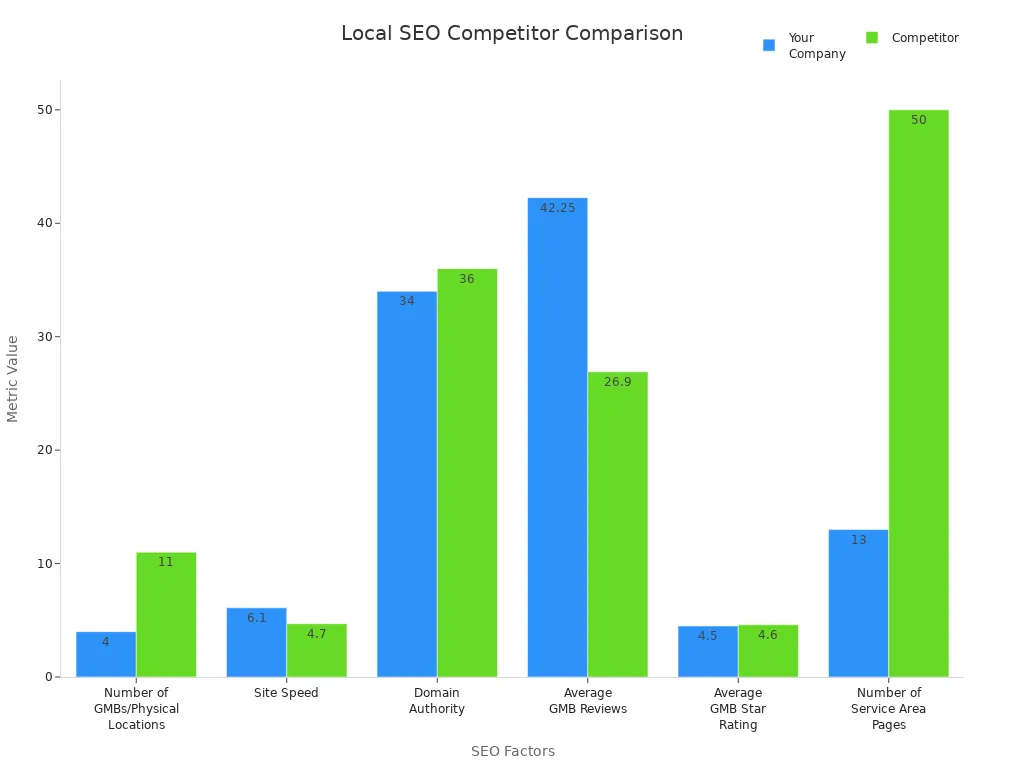
When you analyze the top five competitors, look at proximity, google business profile optimization, and on-page content. Check website authority and traffic to see how these factors influence local search ranking. Review page authority, NAP accuracy, content quality, internal and external links, click-through rate, user engagement, time spent on site, and google business profile activity.
Backlink analysis is also important. Use Ahrefs or SEMrush to review competitors’ backlink profiles. Find link-building opportunities and authoritative sources that can boost your local SEO. Target local websites for backlinks to improve your ranking in the local pack.
Alert: Not conducting local-level competitor analysis can harm your visibility in google search. Always compare your business with the top competitors to stay ahead in local SEO.
Use Insights to Improve
Spot Strengths
You can use competitor analysis to find what works best in your local market. When you study your competitors, you see which strategies help them rank higher in local search. You notice trends that shape your area and learn how to improve your own seo.
Here are steps you can follow to spot strengths:
- Look at your competitors’ websites and Google Business Profiles. See which features attract more customers.
- Check their review counts and ratings. High numbers show strong reputation and trust.
- Watch for changes in their local search rankings. Quick moves often mean they use new local search optimizations.
- Study their content. Find out if they post about local events or share guides for your neighborhood.
- Track their backlinks and local listings. Strong profiles help them stand out in local search.
Tip: When you monitor your competitors, you find areas where you can improve your own local search optimizations. You also spot market trends that help you stay ahead.
A table can help you compare strengths:
| Competitor Name | Review Count | Star Rating | Local Content | Backlink Strength |
|---|---|---|---|---|
| Business A | 120 | 4.8 | Yes | High |
| Business B | 85 | 4.6 | No | Medium |
| Business C | 60 | 4.2 | Yes | Low |
You can use this information to guide your own optimization strategies. If you see a competitor with many reviews and strong local content, you know what to focus on next.
Adjust Strategy
After you spot strengths, you need to adjust your strategy. Use the insights from competitor analysis to make smart changes in your seo plan.
Follow these steps to improve your local search results:
- Identify your competitors. Search for businesses that rank high for your products and services in your area.
- Assess their strategies. Look at their keywords, backlinks, and Google Business Profile completeness.
- Find your competitive edge. Target keywords that others ignore or improve your local listings.
- Fill content gaps. Create unique posts about local events or guides that your competitors do not offer.
- Monitor your progress. Track your rankings in Google’s local pack and watch your review counts grow.
Note: Set up a regular process to track competitors. Check rankings and content every week. Review your market position every month. Run special reports when Google updates its algorithm.
You can measure the effectiveness of your changes by:
- Tracking your rankings in local search.
- Watching your review counts and ratings.
- Analyzing visibility trends in Google’s local pack and Maps.
- Monitoring customer satisfaction with Net Promoter Score (NPS).
Block Quote:
When you use competitor insights, focus on ethical research. Use public content and authorized tools. Avoid negative tactics. Aim to create positive differences that help your business grow.
You can refine your content strategy by:
- Finding gaps in your competitors’ content.
- Creating hyperlocal posts that speak to your audience.
- Sharing information about local events or tips for your neighborhood.
Use these steps to build a strong local search presence. You will see better results in your seo and stay ahead of the competition.
Monitor Competition
Track Changes
You need to keep a close eye on your local competition. Regular checks help you spot new tactics and changes in their strategies. Many businesses use local rank tracking tools to watch both their own and their competitors’ positions in search results. These tools show you when a competitor moves up or down in the rankings. You can also see which keywords help them gain more visibility.
Monthly or bi-weekly reviews work best for most businesses. This schedule lets you react quickly when a competitor improves their ranking. Tools like Local Falcon help you track performance across different areas. You can see how your business compares in each neighborhood. Local Falcon also shows you which Google Business Profile categories your competition uses. This information helps you adjust your own profile to stay competitive.
Tip: When you notice a sudden drop in sales, check if your competition has changed their Google Business Profile or added new content. Quick action keeps you from falling behind.
You should also watch for changes in Google’s local search algorithm. When Google updates its system, your competition may change their tactics. You need to adapt your seo strategy to match the latest ranking factors. Focus on citation management, review signals, and local link building to keep your business strong.
Stay Proactive
Staying ahead in local seo means you must act before problems appear. Analyze your competition often to see if new businesses enter your market. Look at their Google Business Profiles and see what makes them stand out. If you find a new idea or tactic, try it for your own business.
- Check for new competitors in your area.
- Review their Google Business Profiles for updates.
- Watch for fresh ideas that attract your target audience.
- Optimize your own profile to match current search intent.
You should also study market trends. Use local rank tracking tools to spot shifts in customer behavior. When you see a new trend, adjust your marketing strategy right away. This approach helps you stay ahead of the competition and keeps your business visible in local search.
Note: Proactive monitoring gives you the best chance to grow. You can spot opportunities before others do and keep your business at the top.
Ongoing competitor analysis helps you stay visible in local search and ahead of the competition. When you track local search trends, you find new ways to improve your business. Many companies see higher rankings and more visitors by focusing on local search. For example, a medical practice boosted local search traffic by 65% after updating its strategy. Use these steps to keep your business strong and adapt to changes in local search. Start your own competitor analysis today to grow your business.
FAQ
How often should you analyze local SEO competitors?
You should check your competitors at least once a month. Regular analysis helps you spot changes in rankings and new strategies. This habit keeps your business ahead in local search.
Tip: Set a reminder to review your local SEO every month.
Which tools help you track local SEO competition?
You can use SEMrush, Ahrefs, and BrightLocal. These tools show you keyword rankings, backlinks, and Google Business Profile performance. They help you compare your business with others in your area.
| Tool | Main Feature |
|---|---|
| SEMrush | Keyword tracking |
| Ahrefs | Backlink analysis |
| BrightLocal | Local SEO reports |
What is the most important local SEO metric to watch?
You should focus on your Google Business Profile ranking. This metric shows how visible your business is in local searches. High rankings bring more customers to your door.
How do you find your top local competitors?
Search for your main keywords on Google. Look at the businesses that appear in the local pack and on Google Maps. These companies are your main competitors.
- Search your keywords
- Check Google Maps results
- List the top businesses
Can social media affect local SEO rankings?
Yes, social media activity can boost your local SEO. Active profiles attract more reviews and local engagement. This helps your business appear higher in local search results.
Note: Share updates and respond to comments to improve your local presence.
See Also
Enhance Your Search Engine Rankings Using These Effective Strategies
Understanding Effective SEO Techniques via Link Sharing Practices
Utilizing SEO Writing Tools to Improve Your Website Ranking
Optimizing Content Distribution Strategies for Digital Marketing Triumph
