How to Analyze Your Local SEO Competition in 2025


If you want to win in local seo in 2025, you need to keep a close eye on your local seo competition. When you study each competitor, you spot how often they post on Google, the reviews they get, and the words they use. You see who has the best local content, which backlinks work, and which partnerships boost local seo. By looking at every competitor’s review strategy, local citations, and content gaps, you find ways to stand out. Make competitor analysis part of your routine, and you’ll always find new ways to improve your local seo.
Identify Local SEO Competition

Find Competitors in Search Results
Start by searching your top local keywords in incognito mode. This gives you unbiased results. Look at the first page of Google and Google Maps. You will see which businesses show up most often. These are your main competitors in local seo. Check business directories too. Sometimes, you will find local businesses that do not appear in regular search results but still have strong local search visibility. Make a list of these competitors. This step helps you see who is winning in local search and sets the stage for deeper analysis.
Use Google Business Profiles
Next, focus on each competitor’s google business profile. The most important part is making sure all business details are accurate and complete. Look at their name, address, phone number, website, hours, and categories. See how many customer reviews they have and how often they respond. Businesses with lots of reviews and high ratings usually rank higher in local search. Notice if they upload photos often or post updates. Active profiles with regular posts and photos get more calls and clicks. Some competitors use features like FAQs and geo-tagged photos to boost their local search rankings. By studying these profiles, you learn what works best for local seo.
Discover with SEO Tools
You can find hidden competitors using special local seo tools. Tools like Local Dominator, BrightLocal, and SE Ranking help you track local search trends and discover businesses you might miss in regular searches. Local Dominator stands out because it offers street-level rank tracking and automated audits. These tools let you compare keyword rankings, backlink profiles, and traffic sources. They also help you spot gaps in your own strategy. Many experts recommend using an integrated local seo stack for cleaner data and better results. When you use these tools, you stay ahead of local seo competition and improve your search visibility.
SEO Competitor Analysis Steps

If you want to beat your local seo competition in 2025, you need a clear plan for seo competitor analysis. Let’s break down each step so you can analyze local seo competition like a pro and boost your local search visibility.
Audit Google Business Profiles
Start your seo competitor analysis by looking at each competitor’s google business profile. This is where you see how they show up in local search. Check if their profile is complete. Look for these things:
- Is their name, address, and phone number (NAP) correct and matching everywhere?
- Do they have lots of reviews? Are the reviews recent and positive?
- How often do they post updates, photos, or answer questions?
- What categories and services do they list?
- Do they use FAQs, menus, or geo-tagged photos?
Tip: Google’s 2025 algorithm loves fresh, accurate, and detailed profiles. If you see a competitor with lots of new photos, regular posts, and a steady stream of reviews, they’re probably ranking higher in local search.
You should also check the review ratings and volume. Businesses with more reviews and higher ratings get better spots in the local ‘three-pack’. If a competitor has an average rating below 4.0, they might miss out on top search filters. Make sure you keep your own google business profile up to date and encourage happy customers to leave reviews.
Analyze On-Site SEO Elements
Next, dive into your competitors’ websites. This part of seo competitor analysis helps you spot what they do well and where you can do better. Here’s a simple competitor analysis checklist for on-site SEO:
- Look at their landing pages. Do they have pages for each location or service?
- Check their title tags and meta descriptions. Are they using local keywords?
- Review their headings and content. Is it clear, helpful, and focused on local topics?
- See if their NAP is consistent on every page.
- Test their site on your phone. Is it fast and easy to use?
- Look for schema markup. This helps search engines understand their business details.
Here’s a quick table to help you compare on-site SEO elements:
| On-site SEO Element | What to Check For |
|---|---|
| Domain Authority | Is their site trusted and likely to rank well? |
| Page Authority | Do their main pages have strong links and good rankings? |
| NAP Consistency | Is their name, address, and phone number the same everywhere? |
| Keyword Optimization | Are they using local keywords in titles, content, and links? |
| Content Quality | Is their content helpful, error-free, and focused on local needs? |
| Technical & Security | Is the site mobile-friendly, secure, and easy for search engines to crawl? |
Note: Google’s new local search algorithm rewards sites with great user experience, fast load times, and helpful, experience-based content. If you find a competitor with a slow or confusing site, you have a chance to stand out.
Check Domain Authority
Domain authority shows how strong a competitor’s website is. Sites with higher domain authority usually rank better in local search. You can use tools like Moz, Ahrefs, or SEMrush to check this score. Add your top competitors to these tools and compare their scores to yours.
- If a competitor has a much higher domain authority, look at their backlinks. Where are they getting links from? Are they listed in local directories or news sites?
- Check their page authority too. Sometimes, a single page (like their contact or service page) ranks well because it has strong links.
- Use this info to find new link-building opportunities for your own site.
Pro Tip: Don’t just chase high numbers. Focus on getting links from trusted, local sources. This helps your local seo more than random links from far away.
Research Local Keywords
Local keywords are the words people use to find businesses like yours. In 2025, you need to pay close attention to how these keywords change. Here’s how to do seo competitor analysis for local keywords:
- Use tools like SEMrush, Ahrefs, or BrightLocal to see which local keywords your competitors rank for.
- Look for hyper-local searches, like “pizza near me open now” or “best plumber in [your city].” These searches are growing fast.
- Check for multilingual keywords. More people search in Spanish and other languages, so see if your competitors target these audiences.
- Run a keyword gap analysis. Find keywords your competitors rank for that you don’t. Add these to your strategy.
- Watch for new trends. Google’s AI now favors businesses that update their profiles and content with fresh, local info.
Callout: In 2025, local seo is less about keyword volume and more about understanding what your customers want. Look at how competitors use keywords in reviews, posts, and even photos. This gives you ideas for your own content.
Keep your own google business profile and website updated with the latest local keywords. This helps you stay ahead in local seo competition and keeps your search visibility strong.
Competitor Analysis Checklist
Here’s a quick competitor analysis checklist to guide your local seo audit:
- Add your top competitors to SEO tools for tracking.
- Review their google business profile for completeness and activity.
- Analyze their website for local keywords, NAP consistency, and user experience.
- Check their domain authority and backlink sources.
- Research their local keywords and look for gaps.
- Monitor their reviews, posts, and updates regularly.
By following these steps, you’ll master seo competitor analysis and always know how to analyze local seo competition. Make this process part of your regular local seo audit, and you’ll keep improving your search engine rankings and local search visibility.
Analyze Local SEO Competition Tactics
Review Backlink Profiles
When you analyze local seo competition, start with backlinks. Backlinks are links from other websites to your competitor’s site. In 2025, top businesses get quality backlinks from local news, community groups, and trusted directories. These links show search engines that your competitor is important and trusted. Use tools like Ahrefs or SEMrush for seo competitor analysis. Check how many backlinks each competitor has and where they come from. Look for links from local sources. Quality matters more than quantity. A competitor with fewer but better backlinks can outrank others. Keep an eye on new backlinks, and watch for any toxic links that could hurt rankings. This strategy helps you find new link-building ideas for your own business.
Check Local Citations
Local citations are mentions of your business name, address, and phone number on other sites. When you analyze local seo competition, check how many citations each competitor has and where they are listed. The best sources in 2025 include Google Business Profile, Apple Maps, Yelp, Facebook, and LinkedIn. Top competitors often have over 85 citations, which helps them rank higher. Use seo competitor analysis tools like BrightLocal to find gaps in your own citations. Make sure your information matches across all sites. This strategy builds trust with search engines and local customers.
Monitor Social Media and Reviews
Social media and reviews play a big role in local seo competition. Watch how often your competitor posts, responds to comments, and uses local hashtags. User-generated content, like customer photos and reviews, builds trust. When you do seo competitor analysis, see which platforms your competitor uses most. Responding to reviews and staying active on social media helps your competitor connect with local customers. This strategy boosts brand visibility and can lead to more backlinks.
Study Conversion Funnels
A smart strategy for seo competitor analysis is to look at conversion funnels. See how your competitor turns visitors into local customers. Check if they use reviews, testimonials, or videos to build trust. Personalized calls to action and fast-loading pages help increase conversions. Many top competitors use email marketing and retargeting ads to keep in touch with leads. When you analyze local seo competition, look for ways to improve your own funnel. Test new ideas and keep optimizing to win more local customers.
Local SEO Audit and Ongoing Strategy
Perform a Local SEO Audit
You want your business to shine in local search, so regular local seo audits are a must. Start by checking your Google Business Profile. Make sure every detail is correct—your name, address, phone number, hours, and categories. Next, look at your listings on other directories. Consistent information builds trust with search engines and customers. Review your website content and see if it targets the right local keywords. Check your site’s speed and mobile-friendliness. Don’t forget to analyze your reviews. Positive feedback boosts your local seo and helps you stand out from every competitor.
Here’s a quick table to guide your local seo audit:
| Component | What to Check |
|---|---|
| Google Business Profile | Complete info, photos, categories, and regular updates |
| Local Citations | Consistent NAP across all directories |
| Website Content | Local keywords, helpful info, and easy navigation |
| Reviews | Positive sentiment and quick responses |
| Technical SEO | Fast load times, mobile-friendly, schema markup |
| Backlinks | Quality links from local and relevant sites |
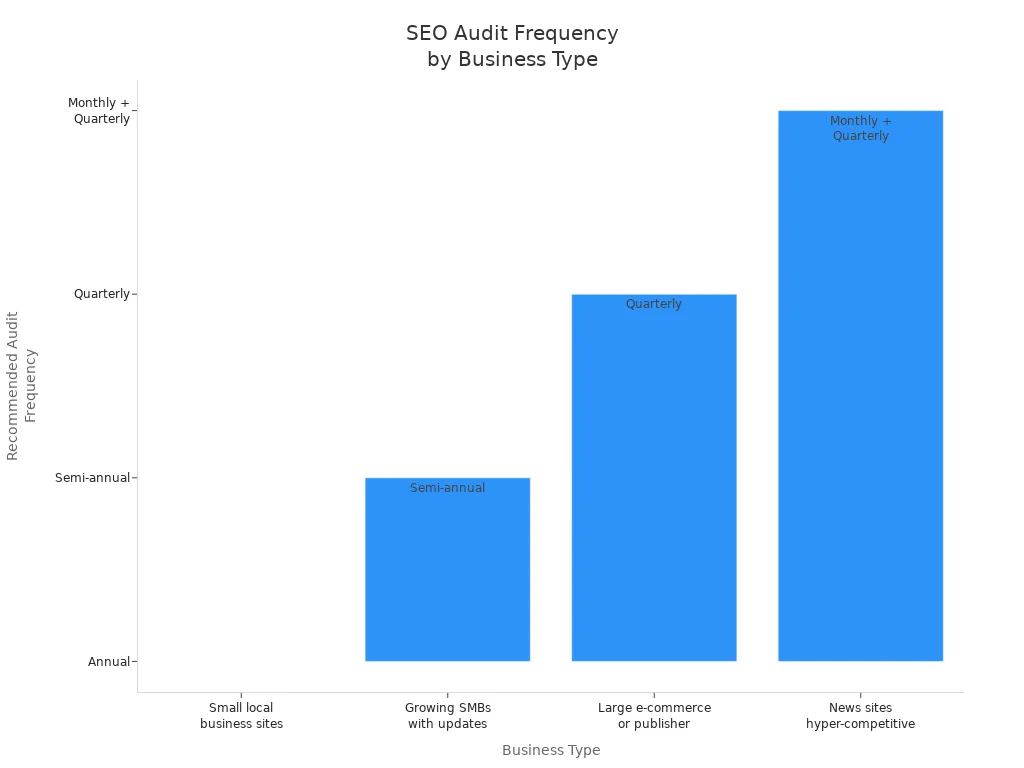
Tip: Top businesses run a local seo audit at least once a year. If your site changes often, check even more. Here’s a chart showing how often different businesses should audit:
Track Competitor Changes
You can’t win at local seo if you ignore your competitor. Use tools like Local Ranking, Places Scout, and Ahrefs to watch their moves. These tools track keyword rankings, backlinks, and Google Business Profile updates. Set up Google Alerts for your competitor names. This way, you’ll know when they get new reviews, launch a new content strategy, or change their seo strategies. If you see a competitor jump in rankings, check what changed. Did they get new backlinks? Did they update their local seo audit process? Stay alert and adjust your own strategy fast.
Apply the 4 P's Analysis
Want to outsmart your competitor? Use the 4 P’s: Product, Price, Promotion, and Place. Look at what products or services they offer. Check their pricing—are they using discounts, bundles, or loyalty programs? Study their promotion strategy. Do they run ads, post on social media, or use special offers? Finally, see where they sell—online, in-store, or both. Make a list of what works for each competitor. Compare their strengths and weaknesses to yours. This helps you spot gaps in your local seo and build a better strategy. Use these insights to improve your seo competitor analysis and boost your local search performance.
If you want to stay ahead in local seo, make competitor analysis part of your daily routine. When you run a local seo audit, you spot keyword gaps, improve your site, and see which strategy works best. You learn from every competitor, adjust your local seo plan, and boost your community engagement. Local seo changes fast, so you need to watch each competitor and update your strategy often. By using a local seo audit and tracking every competitor, you build trust, grow your traffic, and keep your business strong. Local seo is not a one-time job. Treat competitor analysis as your secret weapon for long-term success.
FAQ
How often should you analyze your local SEO competition?
You should check your local SEO competition at least every quarter. If your market changes fast, try to review it every month. Regular checks help you spot new trends and stay ahead.
What tools help with local SEO competitor analysis?
You can use tools like BrightLocal, SEMrush, and Ahrefs. These tools show you rankings, backlinks, and keyword gaps. They also help you track changes over time.
Why do reviews matter for local SEO?
Reviews build trust with customers. Google uses reviews to decide which businesses to show first. More positive reviews can help you rank higher in local search results.
Can you improve local SEO without a big budget?
Yes! Focus on keeping your Google Business Profile updated, asking for reviews, and making your website easy to use. Free tools and regular updates can make a big difference.
What is a local citation?
A local citation is when your business name, address, and phone number appear on other websites. Examples include Yelp, Facebook, and Apple Maps. Consistent citations help search engines trust your business.
See Also
Key SEO Ranking Elements Shaping Search Outcomes In 2024
How AI And Content Will Transform SEO In 2024
Understanding Google's SGE And Its Effect On SEO Optimization
Effective B2B SEO Approaches To Engage Decision Makers 2024
Winning SEO Content Distribution Tactics For Digital Marketing
