About Me on Homepage vs Separate About Page: Impact on Authority and Revenue

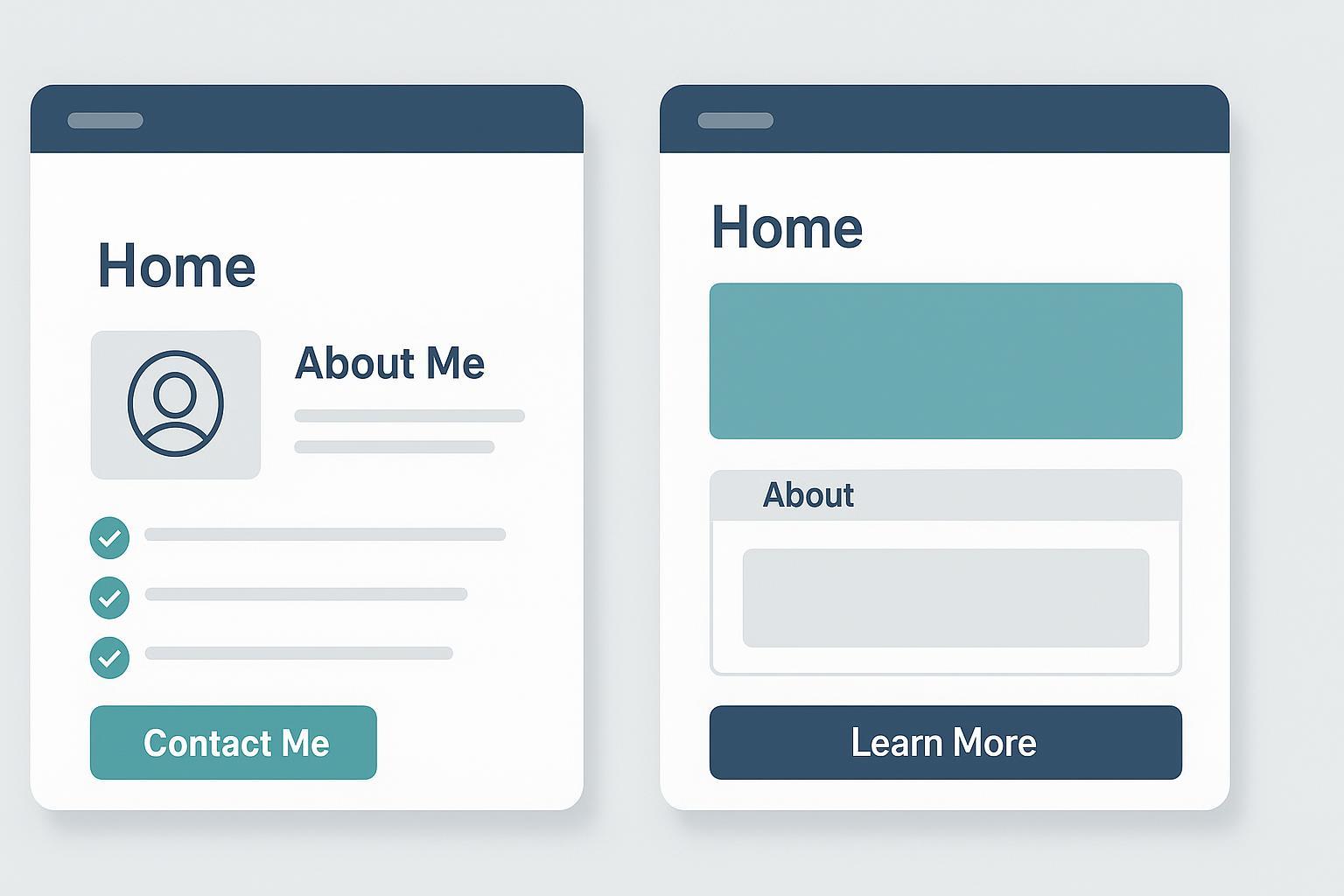
If you’re torn between placing a substantive About Me/brand story directly on your homepage or keeping it on a dedicated About page, you’re not alone. The choice affects first impressions, trust signals (E‑E‑A‑T), conversion focus, Core Web Vitals, crawlability, and how cleanly you can measure impact. While there’s no single large-scale A/B study that isolates this exact decision, we can triangulate from credible 2024–2025 guidance in UX/CRO, Google documentation, and analytics best practices.
Below, we compare both strategies fairly, show where each shines, and offer practical implementation steps—including how to measure what’s actually working.
What actually changes when you move About content
- Authority and trust (E‑E‑A‑T): Google emphasizes making ownership and content creators easy to identify. The principle holds regardless of placement. A dedicated About page typically gives you more room for verifiable proof (credentials, media, testimonials, policies), whereas a homepage block is great for a quick credibility cue. See the identity/ownership guidance in the Google Search Quality Evaluator Guidelines PDF (accessed 2025).
- Conversion focus and revenue: Homepages handle multiple intents; deep narrative can compete with primary CTAs. Landing pages with a single purpose typically convert higher—Unbounce’s 2024 Conversion Benchmark Report shows materially higher conversion rates for focused landing experiences across industries. While not About-specific, the attention mechanism applies.
- UX/navigation: Users benefit from a quick “who you are” cue on the homepage plus a clear “About” link in the header/footer. Scannability favors brevity on the homepage and depth on a separate page.
- SEO/performance: Leaner homepages help Core Web Vitals. Offloading long bios to an About page keeps HTML and assets lighter, improving LCP/CLS in line with the Chrome team’s Core Web Vitals thresholds (2024–2025).
- Measurement: A separate About page lets you attribute page-level engagement and assisted conversions. If About lives only on the homepage, you’ll need granular event tracking to isolate its impact.
Strategy A: A substantive About section on the homepage
When it works
- Story-led personal brands and solo consultants where the founder’s credibility is the value prop and the homepage is the main entry point.
- Audiences that decide based on personal connection, where reducing click friction matters.
Advantages
- Immediate human connection: A headshot, 50–100 word bio hook, and a few proof points build trust fast.
- Fewer clicks: Visitors see who’s behind the brand without leaving the homepage.
- Brand recall: A strong personal narrative can make the hero and mid‑page sections memorable.
Limitations
- Competes with primary CTAs: Long bios can dilute attention and lower click-through to money pages, mirroring why focused landing pages convert better.
- Performance risk: Heavier images and longer HTML can slow the homepage; the 2024 HTTP Archive shows homepages tend to be payload-heavy, making restraint valuable per the Web Almanac 2024 page weight analysis.
- Harder analytics: Without detailed events, you can’t easily separate “About” engagement from general homepage behavior.
Implementation checklist
- Keep it tight: 50–100 word bio hook, a clear headshot, and 2–3 trust cues (client/logo row, brief testimonial snippet).
- One primary CTA: Resist multiple competing CTAs on the homepage hero.
- Performance discipline: Optimize media, lazy‑load below-the-fold images, and keep scripts lean to respect Core Web Vitals thresholds.
- Navigation clarity: Prominently link “About” in the header/footer for visitors who want the full story.
- Authority hygiene: Use consistent naming, a recognizable photo, and links to verifiable profiles.
Strategy B: A dedicated About page (with a concise homepage intro)
When it works
- Businesses with multiple offerings (SaaS, agencies, ecommerce) where the homepage must prioritize primary CTAs (demo, signup, shop).
- Sites that are speed-conscious and want clean attribution for reputation-building content.
Advantages
- Depth and structure: Room for credentials, media mentions, testimonials with identities, case studies, and policy pages. You can also use Google’s Person structured data (accessed 2025) or Organization schema to clarify entities.
- Cleaner homepage focus: A short intro block on the homepage (“who we are” in 1–2 lines) keeps eyes on the main CTA(s).
- Better analytics: Page-level tracking for About lets you build funnels and assess assisted conversions.
Limitations
- Adds one click: The About page must be obvious in navigation and compelling once people land.
- Fragmentation risk: If the homepage is too minimal, visitors who would have been convinced by a longer on-page story might bounce before clicking “About.”
Implementation checklist
- Homepage: A compact identity block—headshot or logo, 1–2 lines on who you are, and a clear “About” link.
- About page: Scannable sections (mission, timeline, credentials, testimonials with names/photos, media logos), links to authoritative external profiles, and a clear CTA (contact/book/subscribe). Consider Person/Organization schema and, if relevant, FAQPage.
- Evidence details: Time-stamp claims (e.g., “Pricing as of Nov 2025”), attribute testimonials, and cite media.
- Internal linking: From relevant posts or product pages, link to the About page where trust context helps the decision.
Why this works: the evidence behind the guidance
- Homepages should be simple, scannable, and action-oriented: Nielsen Norman Group’s Homepage Design: 5 Fundamental Principles (2024) underlines succinct value communication and clear navigation—aligning with a concise About cue on home and depth elsewhere.
- Focused pages convert better: The Unbounce 2024 Conversion Benchmark Report shows higher median conversions on single-purpose landing experiences than on general pages. That supports keeping home conversion-focused and shifting deep narrative to a dedicated page.
- Identity and responsibility matter for trust: Google instructs evaluators to find who’s responsible for a site and its content; making this information obvious (often via About/Contact) is consistent with the Search Quality Evaluator Guidelines (accessed 2025).
- Performance influences outcomes: The Chrome team’s Core Web Vitals (2024–2025) and the HTTP Archive’s 2024 Web Almanac page weight data both argue for lean, fast pages—another vote for avoiding long, media-heavy bios on the homepage.
- Measurement clarity: GA4’s event model makes it straightforward to track specific page views and interactions; see Google’s Create and modify events documentation (2025) to implement About-funnel analysis.
Link density note: we’re linking to each primary source once; subsequent mentions reference them without additional links to maintain readability.
SEO, schema, and internal linking tips
- Schema placement: Use Person schema for author/founder bios and Organization schema for company details on the About page. AboutPage type adds semantic clarity even if it doesn’t produce a rich result.
- Keep home lean: Minimizing homepage payload helps LCP/CLS/INP. Large bios and carousels can slow first impressions.
- Internal links: Link to the About page from the header, footer, and a compact homepage identity block. From key decision pages (pricing, demo, services), a subtle “About” link can reassure hesitant users.
- E‑E‑A‑T depth: Build verifiable proof and keep it up to date. For practical scoring and gap-finding workflows, consider an E‑E‑A‑T content quality score to structure your audit, and proactively avoid content homogenization when crafting bios and proof sections.
- Meta fundamentals: Even with a lean homepage, ensure strong titles and descriptions sitewide; for a refresher, see this primer on SEO meta tags and TDK.
- Performance and UX: Keep the homepage scannable and responsive; a concise identity block typically aids both. If you need a deeper dive, this overview on how responsive design improves UX and SEO is a good companion read.
(Internal link policy: limited to a small number of high-utility resources; each link appears only once.)
Measuring the impact of your About content (GA4)
Separate About page (recommended for clarity)
- Create an about_page_view event: In GA4, build a custom event filtering page_view where page_location or page_path contains /about (or your actual URL). See Google’s Create and modify events documentation (2025) for steps.
- Mark key interactions: Instrument about_contact_click, about_subscribe_click, about_book_call via Google Tag Manager or GA4 custom events; mark the most important as key events (conversions).
- Funnel and attribution: Build a funnel exploration (About → key action) and check Assisted Conversions to understand how About participation influences revenue/lead outcomes.
Homepage-only About block
- Use scroll-depth and click events: Track interactions with the About section module (impressions, link clicks to Contact/Services). Name events clearly (home_about_view, home_about_cta_click) for reporting.
- Compare cohorts: Segment users who interacted with the About block versus those who didn’t to estimate uplift.
A quick decision matrix
| Dimension | About on Homepage | Dedicated About Page |
|---|---|---|
| First‑impression trust | High (immediate cue) | Medium on initial view; high after click |
| Conversion focus | Risk of CTA dilution | Strong—home stays focused |
| Depth of proof | Limited without clutter | High (credentials, media, schema) |
| Performance (CWV) | Can bloat page | Keeps home light |
| Measurement | Requires granular events | Clear page-level analytics |
| Best fit | Story-led personal brands; consultants | Multi-offer sites; SaaS; agencies; ecommerce |
Hybrid recommendation: A compact trust block on the homepage (photo + 1–2 lines + “About” link) plus a robust About page delivers the best of both worlds.
Common pitfalls to avoid
- Burying identity: If users can’t quickly see who’s behind the site, you lose trust. Make identity obvious on the homepage and in navigation.
- Overstuffing the homepage: Long bios, multiple CTAs, and heavy media can hurt scannability and Core Web Vitals.
- Unverifiable claims: Attribute testimonials, link to press, and keep credentials precise and current.
- Thin About pages: If you choose a dedicated page, make it worth the click—structure the story, add proof, and include clear next steps.
- No measurement plan: Set up events and funnels before shipping a redesign to avoid blind spots.
Also consider: implementing and testing your strategy
If you want a streamlined way to create and optimize both a concise homepage identity block and a deep, schema-friendly About page—while testing variations and tracking results—QuickCreator can help you execute either approach using AI-assisted writing, block-based editing, and built-in SEO/analytics workflows. Disclosure: QuickCreator is our product.
How to start (practical next steps)
- Decide your primary homepage job: demo/signup, book a call, or shop? If there’s one dominant action, lean toward a concise homepage About block + dedicated About page.
- Draft two variants:
- Homepage: 50–100 word bio, headshot, 2–3 proof cues, one primary CTA. Link to About.
- About page: Scannable sections, verifiable proof, Person/Organization schema, and a clear CTA.
- Ship with analytics: Create About-specific events and a funnel in GA4. Compare assisted conversions and lead quality.
- Iterate on evidence: If the homepage About block outperforms, test a slightly richer module. If it distracts from core CTAs, trim it further and strengthen the dedicated page.
Sources cited
- Identity/ownership for trust: Google Search Quality Evaluator Guidelines PDF (accessed 2025)
- Author/entity markup: Google Developers: Person structured data (accessed 2025)
- Conversion benchmarks: Unbounce 2024 Conversion Benchmark Report (2024)
- Homepage principles: NN/g: Homepage Design Principles (2024)
- Performance thresholds: web.dev: Core Web Vitals (2024–2025)
- Page weight trends: HTTP Archive: Web Almanac 2024, Page Weight (2024)
- Analytics setup: GA4: Create and modify events (2025)
