On-Page SEO for Automotive Parts & Electronics Product & Category Pages: Titles, H1s & Internal Links (2025 Best Practices)

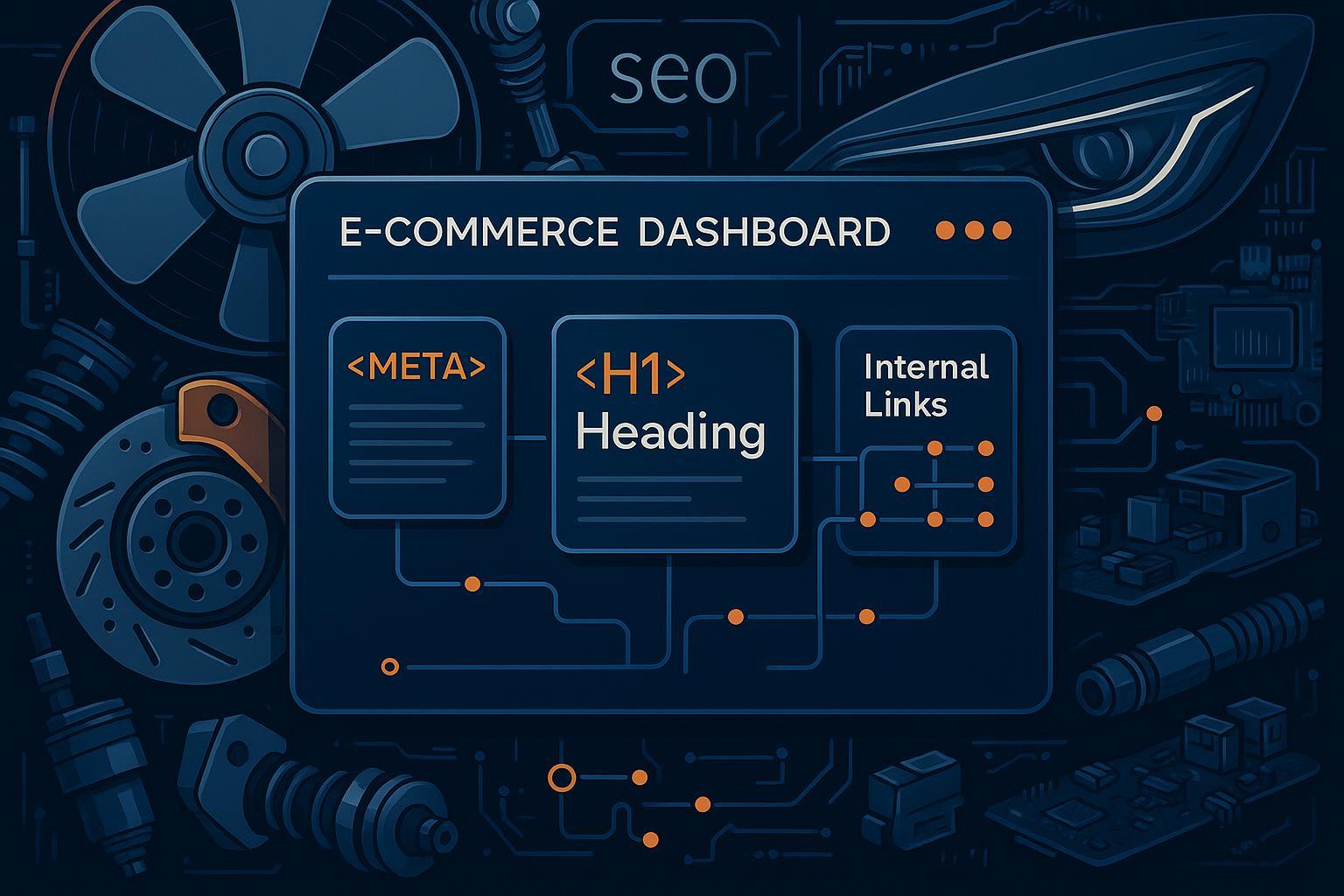
Why 2025 On-Page SEO for Automotive Parts & Electronics Is an Entirely Different Ballgame
Having spent the past five years optimizing large-scale automotive and electronics catalogs, I can say—no vertical exposes cracks in your SEO processes like this one. In 2025, Google’s ranking systems have evolved at breakneck speed: AI-powered relevance, stricter schema interpretation, heightened penalties for duplicate/manufacturer copy, and a greater CTR/ranking premium for pages showing contextual depth. Meanwhile, buyer journeys are increasingly cross-channel and intent-driven, with SERPs crowded by marketplaces, resellers, and informational aggregators.
What truly sets automotive parts and electronics apart:
- SKU Explosion & Compatibility: "Is this brake caliper compatible with a 2025 Honda Accord Sport?" SEO must answer such questions in both metadata and contextual content—at scale.
- Constant Inventory Churn: Discontinued, updated, or superseded SKUs are daily realities.
- Schema & Rich Results Arms Race: Winning requires pushing the envelope on Product schema, vehicle fitment data, warranty, and regulatory markups.
- Google’s 2025 AI Updates: Heavily reward semantically rich, intent-matched content and punish thin/duplicative pages, especially in product-heavy verticals (March 2025 Core Update).
If you’re still using 2022-era e-commerce "best practices," you’re dead in the water. Instead, it’s all about scalable automation, precision meta data, and relentless internal link logic—all tailored for auto/electronics specificity.
Practitioner’s Checklist: Titles, H1s, and Internal Linking That Move the Needle (2025 Edition)
1. Titles: Buyer Intent, Compatibility, and Dynamic Templates
- Front-load Main Keyword & Fitment Details:
- Example:
Brake Pads for Toyota Camry 2025 | Free Shipping – BrandName
- Example:
- Length & Conciseness:
- Aim for 50–60 characters for desktop & mobile display.
- Intent Focus:
- Use purchase or research modifiers, e.g. “buy,” “OEM,” "compatible,” “fits [year/model].”
- Automation:
- For large catalogs, use feed-driven or CMS template rules:
{{PrimaryKeyword}} for {{VehicleMake}} {{Model}} {{Year}} | {{USP}} – {{Brand}} - Human review is vital—auto-generated titles must be checked for nonsense or duplication.
- For large catalogs, use feed-driven or CMS template rules:
- Unique for Each SKU & Category:
- Auto parts: Inject part numbers (eg. “BOSCH 13579 Spark Plug for BMW 3-Series 2025”).
- Electronics: Include variant, warranty, or certification details where relevant.
2. H1s: Crystal Clear, Human-Readable, Unique
- One H1 per Page: Strictly one, always matching user intent but not simply copying the title.
- Example:
H1: Premium All-Weather Floor Mats for Honda Civic (2025)
- Example:
- Descriptive, Not Generic:
- "Brake Rotors" won’t cut it. Try “Zinc-Coated Brake Rotors for Ford F-150 2025 – Enhanced Durability.”
- Templates & Automation:
- For scale:
{{Category/Part}} for {{Make}} {{Model}} ({{Year}})— then manually adjust key categories for uniqueness.
- For scale:
- FAQ-Style H1s Where Functional:
- For informational pages: “Which Car Batteries Fit a 2025 Subaru Outback?”
3. Internal Linking: Context-Rich, Automation Friendly, Topically Clustered
- Strategic Interlinking:
- Product → Category (e.g., spark plug → ignition system parts)
- Product → Product (cross-sell, “compatible with…”)
- Product → Guides ("How to Install…", “Choosing the Right Battery”)
- Category → Related Category ("See all Brake Components")
- Anchor Text Nuance:
- Use keyword-rich, contextually logical anchors (“compatible tire pressure sensors for Ford Focus 2025” instead of just “related products”).
- Automation at Scale:
- CMS plugins or custom scripts can inject internal links based on attribute matching (year/make/model, spec/warranty, etc.).
- E.g., “If part compatible with X series, auto-link to all related how-to install guides.”
- Audit links regularly—avoid broken or circular links.
- CMS plugins or custom scripts can inject internal links based on attribute matching (year/make/model, spec/warranty, etc.).
- Results:
- E-commerce platforms implementing this saw up to +11% organic traffic and up to 37% CTR improvement (Analyzify).
Reality Check: Manual QA Can’t Be Skipped
Even the best scripts and templates need a human touch for sanity and uniqueness—especially for highest value SKUs/categories.
Advanced Technical/Automation Workflow: Making High-SKU SEO Scalable
Dynamic SEO Tag Generation
- Template Everything: From titles to H1s to meta descriptions, use rules that pull in relevant dynamic data for automobile make/model/year or electronics variant/certification.
- Programmatic Schema Injection:
- For auto: Use auto-specific schema for “compatible with,” “vehicle fitment,” “part number,” "certification" (remove invalid external Google schema link).
- For electronics: Enhanced Product, Offer, and Warranty schema, plus Service schema where appropriate.
- Automated Internal Linking Scripts:
- Example workflow: When SKU shares the same compatibility attribute, interlink all relevant products and link to buying/installation guides. Use attribute-driven logic—not just random cross-linking.
- International SEO:
- Use hreflang and localized templates for regions/languages (crucial as global auto/electronics e-commerce expands in 2025).
- Localize currency, compliance details, and support for country-specific regulations in schema markup.
Practical Tooling
- Content Automation: SurferSEO, Ahrefs Content AI, Clearscope—automate content gap, entity, and keyword analysis for metadata at scale.
- Schema: Use SEOPress or Data Feed Watch for scalable schema deployment.
- Linking: Enterprise CMS (Salesforce Commerce Cloud, Magento, Shopify Plus) are increasingly API-driven—programmatically inject links/templates via backend scripts or plugins.
2025 Pitfalls (That Bite Hardest) & Remediation
Duplicate/Thin Product Content
- Don’t copy-paste manufacturer blurbs. Google’s 2025 AI update punishes duplication.
- Solution: Brief, unique summaries plus USPs, customer reviews, or usage context.
Out-of-Stock/Discontinued SKUs
- Do not delete pages; 301-redirect to replacements/parent categories or clearly signal “discontinued” + link alternatives.
- This preserves link equity and reduces crawl waste.
FAQ Schema Shrinkage
- As of 2025, FAQ rich snippets eligibility has dramatically narrowed. Use FAQ schema only where highly relevant, concise, and genuinely helpful.
- Excess/inane FAQ can now cause ranking suppression (March 2025 Core Update).
Poor Internal Link Hygiene
- Orphan pages and irrelevant links bleed ranking power.
- Monthly crawl audits + automated orphan detection are now must-dos.
Entity & Semantic Search Gaps
- Google’s AI engine prefers clusters of related context over keyword repetition. Build topical clusters (e.g., all products compatible with a specific vehicle series cross-linked to a detailed compatibility guide).
High-Impact Case Study: Schema, Titles, and Internal Linking—Data-Driven Results
Case: Large Auto Parts Retailer, Q2–Q3 2025
- Implemented VIN-based, dynamic title/H1/schema generation and automated internal link logic via CMS update.
- Result:
- +23% increase in conversion rate post-implementation (vs. same period previous year)
- 100–150% lift in organic clicks to product/category pages in 4–9 months post-optimization (OuterBoxDesign; Hedges Company)
- Substantial reduction in duplicate meta/structural conflicts
- What made the difference: The rigorous enforcement of compatibility in schema, dynamic meta, and highly contextual internal links tied to real buyer journey checkpoints. Manual spot-review was critical to catch corner-case errors in automation.
Key Lessons and 2025 Action Plan
- Automate, Then Curate: Automation and templates scale SEO for thousands of SKUs, but manual review is still essential for quality and edge cases.
- Prioritize Compatibility and Intent: Every meta tag, H1, and link must address compatibility questions and buyer intent—not just keywords.
- Push the Schema Envelope: Advanced, granular schema is your ticket to winning in crowded SERPs—keep up with Google’s evolving guidance.
- Audit Relentlessly: Monthly audits (internal linking, duplicate content, crawl health) are non-negotiable in 2025’s volatile SEO landscape.
- Stay Current: Google’s algorithm is shifting fast—subscribe to Search Engine Journal, Quantifimedia, and sector-specific sources for updates.
Final Checklist: 2025 On-Page SEO for Automotive & Electronics E-commerce
- [ ] Buyer-intent, template-driven, unique titles & meta for all key pages
- [ ] Unambiguous, human-readable, variant-unique H1s
- [ ] Contextual, cross-SKU internal linking at scale
- [ ] Advanced, compliant schema markup (fitment, certifications, warranty)
- [ ] Automation workflows with human-in-the-loop QA
- [ ] Ongoing checks for duplication, orphaning, and crawlability
- [ ] Constant monitoring of Google algorithm changes/New Rich Result formats
For field practitioners, these are not just best practices—these are must-haves to stay competitive, indexed, and highly converting in 2025’s cutthroat automotive and electronics SEO landscape.
Recommended Deep Dives & 2025 Sources:
