Why Engagement Signals Are Tipping the Scales Over Backlinks in Google Search (2025)

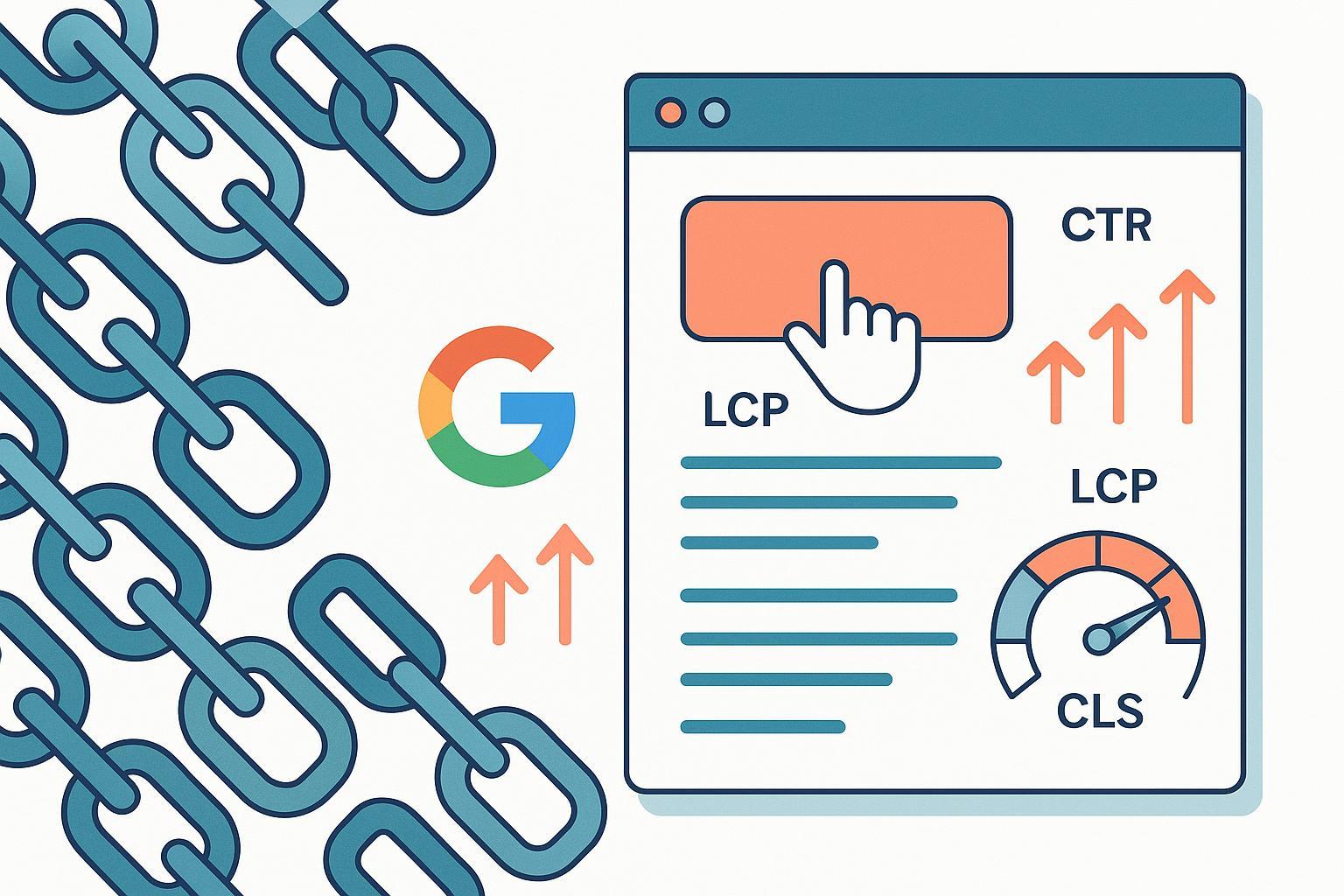
In 2025, the SEO conversation has shifted from “build more links” to “engineer user satisfaction.” That’s not hype. It’s the logical outcome of two developments: the Department of Justice trial disclosures about Google’s click-informed systems and Google’s continued emphasis on page experience and helpful content. The net effect is clear: when competitors have similar authority, the pages that win are the ones that attract intent-aligned clicks and sustain successful sessions.
This article takes a measured approach. We’ll separate myths from what’s actually confirmed, then lay out practical steps to optimize for engagement signals—without overclaiming what Google uses directly.
What’s Actually Confirmed in 2024–2025
-
Click-driven systems like NavBoost learn from user behavior on the SERP. In coverage of the DOJ trial testimony, Google VP of Search Pandu Nayak described NavBoost as using historical click data to refine results. Search Engine Land’s Dec. 2023 analysis cites that NavBoost “memorizes all the clicks on queries from the past 13 months,” helping promote results with positive click history (Search Engine Land — Nayak on NavBoost, 2023). A DOJ filing from 2024 also references the 13‑month window (U.S. DOJ filing — 2024 PDF).
-
Google’s public documentation does not list “time on page” or “dwell time” as direct ranking signals. Page experience is evaluated holistically—Core Web Vitals, mobile friendliness, HTTPS, and non-intrusive UX are part of the picture, not a single metric to chase. See Google’s guidance in the 2024–2025 documentation (Google Search Central — Understanding page experience).
-
Experience keeps evolving. Interaction to Next Paint (INP) officially replaced First Input Delay (FID) as a Core Web Vital in March 2024, emphasizing responsiveness (Google web.dev — INP becomes a Core Web Vital, 2024). Current thresholds to aim for in field data remain LCP ≤ 2.5s, INP < 200ms, and CLS < 0.1 (Google Search Central — Core Web Vitals).
-
Links still matter—but volume isn’t king. Google representatives have signaled de‑emphasis compared to earlier eras. For example, Gary Illyes stated in 2023 remarks that links are “not a top 3” ranking factor, a point reiterated through 2024 reporting (Search Engine Land — Links not top 3 factor, 2023 coverage). Quality, relevance, and editorial context beat raw quantity.
Myth vs. Reality (Read This Before You Rebalance Your Budget)
-
Myth: “Time on page” and “dwell time” are direct ranking factors.
- Reality: Google does not list these as ranking signals, and has long maintained that Google Analytics metrics aren’t used for ranking. Treat them as operational proxies for satisfaction—not as inputs to Google’s scoring.
-
Myth: “Backlinks don’t matter anymore.”
- Reality: Links remain part of how Google discovers and assesses content. They just rarely rescue pages that fail user intent. Prioritize earning relevant, editorial links through unique value.
-
Myth: “Core Web Vitals alone will boost rankings.”
- Reality: Meeting thresholds improves user satisfaction and can tip close contests; it doesn’t override relevance or quality. Google’s page experience guidance is holistic.
If you need a refresher on fundamentals so you don’t over-index on one metric, see this primer: SEO explained.
Why Engagement Signals Are Gaining Weight
Google’s systems aim to reward results that satisfy user intent. The DOJ era disclosures and subsequent expert coverage suggest those systems learn from click patterns over time—favoring content that earns “long” or successful clicks and reducing prominence of results that trigger rapid returns to the SERP.
That doesn’t mean you should chase a single metric. It means your strategy should optimize the entire journey:
- Earn the click with expectation-setting titles and meta descriptions.
- Deliver a fast, stable, mobile-first experience.
- Cover the job-to-be-done completely, with clear scannability and next-step guidance.
- Instrument useful on-page events that reflect task completion.
The Practical Playbook: From SERP Click to Successful Session
- Optimize SERP behavior (CTR without clickbait)
- Cluster queries by intent in Search Console. Identify high-impression, low-CTR opportunities.
- Rewrite titles and descriptions to match the user’s mental model. Promise exactly the answer you give—no bait-and-switch.
- Implement appropriate structured data so you’re eligible for rich results where relevant.
- Engineer satisfaction (reduce pogo-sticking)
- Fill intent gaps: add missing sub-answers, comparison blocks, and decision aids.
- Clarify information architecture: scannable H2/H3s, verdicts/recaps, sticky table of contents where helpful, and contextual internal paths.
- Define and track helpful on-page events: expand FAQ, copy code snippet, download resource, play explainer video, or click “next step.” These are operational proxies for successful sessions.
- Make experience the tiebreaker (Core Web Vitals & mobile UX)
- Set speed budgets, compress images, lazy-load non-critical media, and minimize render-blocking resources.
- Eliminate layout shifts (CLS), tame third‑party scripts, and ensure responsive interactions (INP).
- Use field data to validate improvements via CrUX-compatible tooling. For actionable features and a checklist that ties CMS choices to CWVs and SEO, see the CMS SEO features & Core Web Vitals checklist.
- Ensure your site is mobile-first and responsive; if your layout isn’t responsive across breakpoints, start there: what responsive web pages mean for SEO.
A Neutral, Process-Focused Workflow Example (Mid-Article)
Here’s a practical way a modern AI editor can support engagement-focused optimization:
- Pull Search Console query groups with high impressions but low CTR.
- Draft multiple title/meta variants aligned to the dominant intent (informational, comparison, transactional) and set up a publishing cadence to test over time.
- Expand pages to be intent-complete—adding missing subsections and decision aids—and instrument helpful events (expanders, internal pathway clicks).
- Validate performance hygiene against CWV thresholds; iterate media and script budgets.
Using QuickCreator to assemble and iterate these blocks can streamline the testing and publishing. Disclosure: QuickCreator is our product.
How to Measure What Matters (Without Overclaiming)
- Organic CTR by query cluster: Use Search Console Performance data to find “high-impression, low-CTR” opportunities and monitor changes after content and snippet updates.
- Long‑click proxies: Track reductions in rapid short sessions after organic clicks, observe improved scroll depth for informational content, and watch for fewer immediate returns to the SERP. Remember, these are operational proxies—not confirmed ranking inputs.
- Task completion events: Define success actions (download, sign-up, copy snippet, expand detail, internal next-step click). Instrument via your analytics/GTM setup to evaluate whether content guides users to outcomes.
- Core Web Vitals (field data): Aim for LCP ≤ 2.5s, INP < 200ms, CLS < 0.1, per Google’s current guidance. See the official docs for thresholds and context (Google Search Central — Core Web Vitals) and the 2024 shift to INP (Google web.dev — INP becomes a Core Web Vital).
Rethinking Link Strategy for 2025
Links aren’t dead; they’re different. In an environment where click-informed systems learn what satisfies users, links act more like qualifiers than finishers:
- Prioritize relevance and editorial context over volume.
- Create unique assets that earn natural links: original benchmarks, calculators, deep explainers, or interactive tools.
- Avoid manipulative link schemes—Google’s policies haven’t changed on that front.
- Treat outreach as value delivery: pitch assets that truly help the publisher’s audience.
As reflected in reporting on Gary Illyes’s 2023 comments, links are “not a top 3” factor today; focus on quality and satisfaction to earn durable rankings (Search Engine Land — Links not top 3 factor, 2023 coverage).
Forecast: Where This Trend Is Headed
Expect continued refinement of systems that learn from user behavior. As Google updates documentation and ranking systems over the next year, pages that consistently earn intent-aligned clicks and demonstrate successful sessions should hold steadier positions—especially when authority is comparable.
Practically, that means:
- Double down on intent completeness and clarity.
- Keep experience fast, stable, and responsive; treat CWVs as hygiene.
- Maintain a lean, ethical link program anchored in unique value.
Change Log
- Updated on 2025-10-02: Added confirmation of INP replacing FID (March 2024) and refreshed thresholds; clarified NavBoost’s 13-month click window with DOJ reference; reiterated link de-emphasis through 2023–2024 coverage.
Closing Next Steps
If you’re ready to operationalize engagement-first SEO, adopt a weekly workflow that tests titles/meta for CTR, fills intent gaps, instruments helpful events, and validates CWVs in field data. A modern AI-first editor like QuickCreator can help you systematize this process across teams without adding engineering overhead.