AI SEO Hacks for Faster Organic Growth (2025)

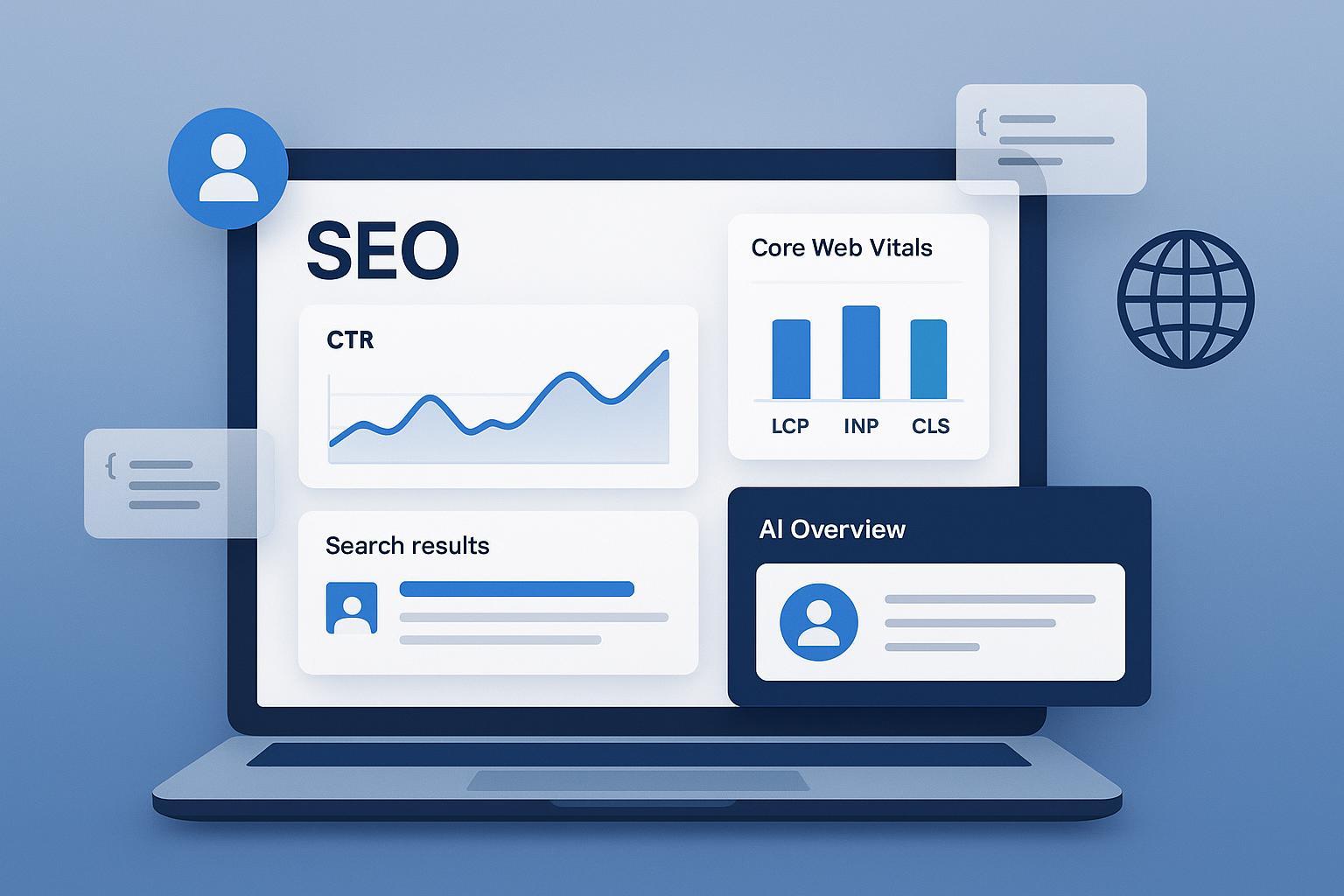
If AI can summarize answers above the fold and users click less, how do you still win organic growth? In 2025, the game is eligibility, entities, and execution. You need content that earns citations inside AI answers, pages that pass technical checks the first time, and workflows that scale without tripping Google’s spam policies.
Google’s May 2025 guidance on AI features says sites must get the fundamentals right—crawlability, indexability, and people‑first content—before they’re even considered for AI answer surfaces. See the overview in Succeeding in AI Search (2025) and the AI features documentation for eligibility signals (Google Search Central; AI features documentation). Meanwhile, independent analyses suggest AI Overviews can siphon clicks: Ahrefs estimates the #1 organic listing’s clicks fall by about 34.5% when an AI Overview appears (2025), and SparkToro’s 2024 zero‑click study shows only 374 of every 1,000 US searches lead to a click to the open web (Ahrefs, 2025; SparkToro, 2024). Here’s how to adapt—fast.
Hack 1: Make your pages eligible for AI answers and rich results
Eligibility comes first. Think of it like airport security: if your ticket (technical setup) isn’t valid, you won’t board the flight (AI answers). Prioritize clean HTTP 200 responses for indexable pages, correct canonicals, sitemap coverage, aligned robots.txt rules, and mobile‑friendly rendering. Structure the page with semantic headings, concise intros that answer the question, and scannable sections. Pair this with JSON‑LD for Article, Organization, Person (author), Breadcrumb, and FAQ when appropriate—and keep markup aligned with visible content. Monitor impressions and appearance types in Search Console, log when your content is cited in AI answers, and run a weekly audit of pages with high impressions and low clicks to prioritize fixes (Google Search Central, 2025).
Quick measurement: sample 50 target queries with informational intent, check which pages are eligible for rich/AI appearances, and track changes after on‑page fixes.
Hack 2: Build entity-first topical clusters that AI can trust
AI answer engines favor sources with clear authority on entities and their relationships. Map your topical graph before you write a single paragraph.
Workflow you can replicate this week:
- Inventory entities: List the core entities your brand should own (products, problems, industries, methods). Assign a canonical page for each.
- Design the pillar: Create a comprehensive pillar page covering the entity with clear definitions, FAQs, and outbound citations to authoritative sources.
- Add 6–12 supporting pieces: Each support article targets a sub‑entity or attribute. Interlink them to the pillar with descriptive anchors, and cross‑link siblings where relevant.
- Reinforce E‑E‑A‑T: Name real authors, add credentials, and cite primary sources. Maintain consistent terminology across the cluster.
For deeper architecture guidance, see this primer on building a silo for topical authority: Mastering SEO Silo Structure (QuickCreator) (https://quickcreator.io/seo/mastering-seo-silo-structure-effective-website-architecture/).
Hack 3: Prompt-to-publish content ops—with human QA at every step
AI accelerates briefs and drafts, but quality and compliance hinge on your editorial guardrails. Start with a one‑page brief that captures user intent, target entities, outline, and authoritative sources to cite. Generate a first draft, then edit for clarity, originality, and experience signals. Tighten headings, write descriptive alt text, confirm schema alignment, compress images, and enable lazy loading. Finally, fact‑check every claim, verify links, run an originality scan, and add byline, author bio, and last reviewed date.
Disclosure and micro‑example: We build QuickCreator. In our internal workflow, we combine a structured brief, AI‑assisted drafting, automatic on‑page checks (headings, internal links, image alt), and schema suggestions, then route to an editor for fact‑checking and voice. The payoff is speed without sacrificing accuracy or compliance. For a broader overview of AI‑assisted blogging workflows, see AI Blog Writer overview (QuickCreator) (https://quickcreator.io/ai-blog-writer).
Hack 4: Modernize your schema strategy for 2025
Schema types and reporting evolve. Some rich result types have been deprecated from Search Console reporting, while core types remain essential. Keep your JSON‑LD accurate, minimal, and in sync with visible content. Focus on Article, Organization, Person, Breadcrumb, Product (if applicable), and FAQ where the page genuinely answers discrete questions. Always check Google’s latest documentation updates to confirm current eligibility and changes to reporting surfaces (Google updates). Validate with the Rich Results Test and monitor enhancements in Search Console. Don’t over‑mark up—misaligned schema can harm trust and confuse AI parsers.
Hack 5: Fix responsiveness with INP—and don’t forget LCP/CLS
Interaction to Next Paint (INP) replaced First Input Delay (FID) in March 2024, giving a fuller view of responsiveness. Your task: keep INP, Largest Contentful Paint (LCP), and Cumulative Layout Shift (CLS) in the “good” range. Targets: INP ≤ 200 ms, LCP ≤ 2.5 s, CLS ≤ 0.1. Improve by optimizing critical CSS, serving appropriately sized images, preconnecting critical origins, delaying non‑essential JS, and reducing main‑thread work. Validate with field data (CrUX) and lab tools, then monitor Core Web Vitals in Search Console (Google Core Web Vitals docs). Think of INP like the “responsiveness handshake” between your page and a user’s first action—if it’s sluggish, they bounce before you can show value.
Hack 6: Track AI answer visibility, not just blue-link CTR
Traditional rankings don’t tell the whole story anymore. Layer new metrics into your dashboard: AI answer presence (are you cited, and which page?), CTR shift by query type (informational queries with AI Overviews often see lower CTRs), and indexation/appearance health. Industry analyses in 2025 and 2024 provide ranges and context for CTR changes when AI Overviews appear; the takeaway is to earn citations in the overview while reinforcing mid‑funnel terms (Ahrefs, 2025; SparkToro, 2024). Annotate your dashboard when you publish a new cluster or deploy schema changes so you can attribute shifts accurately.
Hack 7: Programmatic templates—with strict guardrails
Programmatic SEO can multiply coverage for patterns like locations, SKUs, or use cases—but only if you control quality and duplication.
Guardrails to adopt:
- Template intent clarity: Each template must satisfy a distinct query pattern and add unique value.
- De‑duplication: Use canonical tags, unique intros, and entity‑specific content to avoid near‑duplicates.
- Log‑file analysis: Confirm Googlebot is crawling the right sections; prune or noindex thin variants to preserve crawl budget.
- Anti‑spam compliance: Avoid scaled, low‑value output. Google’s March 2024 policies target scaled content abuse and site reputation abuse; keep human QA in the loop (Google spam policies, 2024).
Hack 8: Scale internationally with hreflang done right
Multilingual growth is tempting; incorrect hreflang can quietly sink it. Use language/region‑specific URLs (not parameters), reciprocal hreflang tags, and consistent canonical logic. Localize examples, units, currencies, and imagery; don’t ship machine translations without editorial review. Keep entity naming consistent while adapting phrasing to local search habits. Google’s fundamentals cover implementation details and common pitfalls (Google fundamentals). For content authors, a practical writing reference helps maintain consistency across locales. See this hands‑on guide to crafting scannable, effective articles: Blog style guide for marketers (QuickCreator) (https://quickcreator.io/writing/how-to-write-compelling-blog-style-essay/).
| Hack | Primary KPI | Quick verification method |
|---|---|---|
| AI eligibility & rich results | % of target pages with rich/AI appearances | Sample 50 queries; track appearance flags in Search Console and manual SERP checks |
| Entity-first clusters | Cluster traffic and assisted conversions | Compare 6–12 week pre/post after publishing the cluster; check internal link paths |
| Prompt-to-publish ops | Time-to-publish and editorial rejection rate | Measure hours per post and % requiring major rewrites |
| Schema modernization | Valid markup rate and FAQ visibility | Validate JSON-LD; spot-check FAQ and Breadcrumb appearances |
| Core Web Vitals (INP/LCP/CLS) | Field “good” rate | Monitor CrUX/Search Console; correlate fixes to improvements |
| AI answer visibility | AI citation rate for target queries | Track brand/page citations in AI Overviews monthly |
| Programmatic templates | Indexed template pages and non-duplicate content | Crawl, dedupe, and log-file checks; monitor canonicalization |
| Multilingual hreflang | Correct hreflang coverage and localized engagement | Validate tags; compare bounce rate/time on page by locale |
Governance and risk mitigation: keep compounding without penalties
Quality controls let you scale safely. Require human fact‑checks, source citations, and originality scans for every piece. Run quarterly schema and entity audits to catch drift between on‑page copy and JSON‑LD; ensure authorship and Organization data are consistent sitewide. Plan “freshness sprints” for clusters—replace dated stats, add new FAQs, and expand sections that gain impressions but lag CTR. Improve accessibility and images with descriptive alt text, captions where useful, and next‑gen formats; for practical tips on image handling in AI‑assisted blogs, this guide breaks down a clean workflow: Image optimization for AI‑written posts (QuickCreator) (https://quickcreator.io/writing/ai-blog-writers-enhance-content-images/). Finally, maintain a living dashboard with AI citation rate, rich result coverage, Core Web Vitals, and indexation—and annotate major changes.
Here’s the deal: the sites that win in 2025 don’t just “use AI.” They design for AI visibility, ship faster with guardrails, and measure what actually moves the needle. Ready to rework your next quarter’s SEO plan with these hacks in mind?