What Are AI Agents and How Do They Work


AI agents are smart systems that work on their own. They use artificial intelligence to complete tasks for people or systems. These agents can learn, think, and decide without needing help all the time. For example, companies using AI agents see a 61% boost in work speed by automating boring tasks. AI agents also solve up to 70% of customer questions by themselves, lowering service costs by 30%. They are great at doing hard tasks accurately, which helps improve work quality. By automating jobs, they save time, reduce costs, and help make better choices in many industries.
Key Takeaways
AI agents do tasks faster, saving time and money. They can speed up work by 61% and cut costs by 30%.
Clear goals are important for AI agents. Goals help them understand tasks and get good results.
AI agents learn and change over time. They get better by using feedback and past experiences to adjust.
There are different kinds of AI agents, like reactive and self-aware ones. Each type is good for certain jobs.
AI agents are changing fields like healthcare and finance. They help with decisions, customer service, and doing more work.
How AI Agents Work
Goal Setting and Task Identification
AI agents start by figuring out clear goals. You need to decide what you want, like better decisions or happier customers. Without clear goals, they might not work well. For example, goal-based agents use a world model to plan actions and reach their goals. This makes them smarter than basic agents.
Here’s how this works:
Component | Description |
|---|---|
Determine goals | AI agents get instructions from users and break them into smaller tasks to achieve results. |
Acquire information | They collect data to do tasks, often using outside sources or working with other agents. |
Implement tasks | AI agents carry out tasks, check progress, and adjust based on feedback to meet their goals. |
Clear goals help AI agents work better and give good results.
Reasoning and Decision-Making
AI agents are great at thinking and deciding. They study situations quickly and pick the best answers. For example, they understand what users mean and respond correctly. This lets them work mostly on their own.
When you use AI agents, they make hard tasks easier with set steps. They also handle new problems and tools, staying useful over time. Different agents, like utility-based or goal-based, make decisions in unique ways. These systems ensure tasks are done well and on time.
Learning and Adaptation
AI agents get better by learning and changing. They improve decisions by looking at feedback from their actions. For example, reinforcement learning helps them change based on past results. This learning makes them perform better over time.
A real example is Caspernicus, an AI agent made for Jamf. It keeps learning, and over 70% of Jamf workers use it for quick software help. AI agents store knowledge and experiences, helping them make smart choices. This keeps them useful in changing situations.
By learning and adapting, AI agents can handle harder tasks, making them very helpful in many fields.
Task Execution and Feedback Loop
AI agents are great at doing tasks and getting better. They follow a goal, choose the best way, and start working. While working, they watch how they’re doing and gather feedback to improve.
Think of it like a cycle. The agent does a task, checks the result, and changes how it works based on what it learns. For example, if an AI agent answers customer questions, it learns from each chat to do better next time. This cycle helps the agent become smarter and more helpful over time.
You can check how well an AI agent works using certain measures. These measures show how good the agent is and where it can improve. Here’s a simple table:
Metric | Description |
|---|---|
Response Time | How fast the agent answers questions, affecting user happiness. |
Resolution Rate | How well the agent solves problems without needing human help. |
Customer Satisfaction Score | How happy users are after talking to the agent. |
Engagement Rate | How many people use the agent, showing how useful it is. |
Escalation Rate | How often problems are sent to humans, showing areas to fix. |
Retention Rate | How often users come back to the agent, showing its long-term value. |
Intent Recognition Accuracy | How well the agent understands questions, which is key for good answers. |
These measures help you see how the agent works and adapts. For example, a low escalation rate means the agent solves most problems alone. A high satisfaction score shows it meets user needs well.
By using feedback and these measures, AI agents not only finish tasks but also get better. This ability to improve makes them very useful in places where change happens often.
Types of AI Agents

AI agents come in different types for specific tasks. They vary in how they sense, think, and act. Knowing their types helps you pick the best one.
Reactive AI Agents
Reactive AI agents work only with current inputs. They don’t remember past events or guess future outcomes. These agents follow simple rules to react to situations. For example, a thermostat changes the temperature based on the room’s condition. Similarly, automatic doors open when they sense movement.
These agents are quick and good for simple jobs. But they can’t learn or change. This makes them useful in steady environments. Examples include traffic lights and basic chatbots.
Characteristics | Examples | |
|---|---|---|
Simple Reflex Agents | React to current inputs; no memory of past events | Thermostats, automatic doors |
Limited Memory AI Agents
Limited memory AI agents learn from past actions. They use this to make better decisions and do tasks well. For example, self-driving cars use past data to drive safely. These agents spot patterns and adjust to changes.
Using these agents boosts efficiency. They handle hard tasks without much human help. Businesses save time and money with their accuracy. For example:
They manage tricky tasks on their own.
They complete jobs faster and cheaper.
These agents work well for tools like recommendation systems and weather forecasts.
Classification Type | Characteristics | Examples |
|---|---|---|
Model-Based Reflex Agents | Keep internal data; adapt to changes in the world | Self-driving cars, recommendation systems |
Theory of Mind AI Agents
Theory of Mind AI agents are more advanced. They understand feelings, goals, and thoughts. They predict others’ actions based on this knowledge. For example, in group settings, they guess other agents’ plans and aims.
A project called "Hypothetical Minds" at Stanford tested these agents. Researchers used the Melting Pot benchmark to check their skills. These agents did better than others in most tests, showing they handle complex teamwork well.
Aspect | Description |
|---|---|
Project Name | Hypothetical Minds |
Institution | Stanford University |
Focus | Using Theory of Mind in group settings |
Core Innovation | Guessing other agents’ plans and goals |
Validation Method | Tested in group settings using the Melting Pot benchmark |
Performance | Beat LLM-based and reinforcement learning systems in most tests |
Theory of Mind AI agents are great for jobs needing social skills, like virtual helpers and team robots.
Self-Aware AI Agents
Self-aware AI agents are the smartest kind of artificial intelligence. They know what they can and cannot do. These agents think about themselves and change their actions as needed. This self-knowledge helps them decide without needing people. For instance, a self-driving car knows when to turn or stop by checking its surroundings and its own condition.
These agents are great at working alone. They can:
Solve big problems by breaking them into smaller steps.
Fix mistakes on their own and work better over time.
Keep working while checking how well they are doing.
In real-time, self-aware AI agents look at many choices and pick the best one. They handle different needs and adjust when new information comes in. This skill to think, change, and act alone makes them very useful in busy situations.
Being self-aware is more than just doing tasks. It means knowing limits and making choices that match goals. This ability keeps these agents helpful even when things change suddenly.
Real-World Examples of AI Agents
AI agents are changing how industries work today. Here are some examples:
Industry | Case Study Description |
|---|---|
Human Resources | AI tools help sort resumes and schedule interviews, saving time and improving worker satisfaction. |
Finance | AI agents study live market data to predict trends, making risk checks and decisions better. |
Manufacturing | AI systems find equipment problems early and improve production, cutting costs and delays. |
Retail and E-Commerce | AI agents customize shopping and manage stock well, increasing sales and customer happiness. |
These examples show how AI agents make work faster and smarter in many fields. By taking over boring tasks and giving useful advice, they help businesses do more with less effort.
Benefits of AI Agents
Better Productivity and Efficiency
AI agents help industries work faster and smarter. They take over boring tasks, so people can focus on important work. For example, virtual agents in customer service cut costs by 30%, according to IBM in 2024. In healthcare, 93% of workers say AI improves patient care and makes work smoother.
You can track how well AI agents improve work using tools. These tools check response times, problem-solving rates, and customer opinions. By studying this data, AI agents find ways to get better and fix problems. This keeps workflows running smoothly and saves time.
Smarter Decision-Making
AI agents are great at solving tough problems. They study situations and predict what might happen next. This helps businesses make better choices quickly. For example, companies use AI to plan ahead and handle challenges with smart strategies.
AI agents use advanced math and data to help industries decide wisely. They show the best options for tricky situations and reduce risks. This makes decisions more accurate and builds trust in the process.
Automating Simple and Hard Tasks
AI agents change how tasks are done by working on their own. They use smart tools like language processing and machine learning to finish jobs faster. For example, they fix messy data and solve issues without needing help.
AI agents are a big step forward for smart systems. These tools, powered by advanced models, change how businesses use automation.
In HR, AI agents speed up resume sorting by 75%, saving time. They also offer custom training, with 96% of HR leaders seeing their value. By automating tasks, AI agents help businesses grow and innovate while saving resources.
Scalability Across Various Industries
AI agents can grow and adapt in many industries. This makes them a powerful tool for businesses everywhere. They work in areas like healthcare and retail to deliver amazing results.
How AI Agents Work in Different Fields
AI agents are useful in many sectors. They handle tasks like analyzing data, making decisions, and automating processes. For instance, in healthcare, they help doctors by studying medical data and improving diagnoses. In retail, they make shopping better by giving personal suggestions and managing stock well.
Here’s how different industries use AI agents:
Industry | Adoption Rate by 2025 | Economic Impact |
|---|---|---|
Healthcare | 90% | Better patient care |
Retail | 69% | Big increase in sales |
Manufacturing | N/A | 40% less downtime |
Finance | N/A | 38% more profits |
Human Resources | N/A | Cuts resume sorting time by 75% |
The Growing Demand for AI Agents
The AI agent market is growing fast. By 2030, it will rise from $5.1 billion in 2024 to $47.1 billion. This shows how popular and flexible they are becoming. AI agents could add $15.7 trillion to the global economy by 2030, boosting it by 26%. Just their role in spotting problems could reach $1.8 trillion in value.
Tip: Thinking about using AI agents? Their ability to grow with your business makes them a smart, long-term choice.
AI agents are changing industries by automating work, saving time, and boosting growth. Their ability to adapt across fields makes them essential for businesses wanting to stay ahead in a fast-changing world.
Challenges and Limitations of AI Agents
Ethical and Moral Concerns
AI agents bring up big ethical questions. People ask if their decisions match human values. One big worry is transparency. A 2024 study showed 70% of people want to know how AI makes choices. Without clear answers, trusting AI becomes hard. Another problem is bias. If AI learns from unfair data, it may create unfair results.
Data safety is also an ethical issue. The OECD says 76% of companies fear how AI handles private data. These worries show the need for rules and regular checks to keep AI fair and responsible.
Technical and Resource Limitations
AI agents need good data to work well. Bad or old data can cause mistakes. For example, wrong data might lead to bad decisions. Another problem is connecting AI to old systems. A 2024 Salesforce report said 85% of IT leaders find this hard.
Bias in AI models is also a problem. Regular checks are needed to make sure AI learns from fair data. Workers may also feel uneasy about AI judging them, so trust is important.
Limitation | Description |
|---|---|
Data Quality and Consistency | Bad data hurts AI performance, especially in big companies. |
System Integration | Old systems often don’t work well with new AI tools. |
Bias in AI Models | AI can repeat biases in training data, needing regular fairness checks. |
Data Privacy and Security Challenges
AI agents use lots of private data, which can be risky. Storing all this data in one place makes it easier for hackers to attack. Even MFA systems, used with AI, can be tricked by phishing scams. Many users don’t know how their data is used, which lowers trust.
Experts suggest using secure coding, encryption, and testing to fix these issues. Giving users more control over AI can also help. New tools like decentralized identity systems may improve privacy and safety.
Evidence Point | Description |
|---|---|
Complexity of Privacy | |
Need for Transparency | Users don’t understand how AI collects and uses their data. |
Innovations in Security | Decentralized identity systems may boost privacy and safety. |
Dependence on High-Quality Data
AI agents need good data to work well. The data they use helps them decide, learn, and improve. When the data is correct and useful, they give better results. But bad data can cause mistakes, slow work, or unfair outcomes.
Why is good data so important? AI agents find patterns, guess results, and do tasks using data. If the data has errors or is missing parts, the agent won’t work as well. For instance, an AI agent studying customer reviews might misunderstand trends if the data is old or incomplete. This could lead to bad choices for a business.
Note: Good data is the base for AI agents. Without it, they can’t work properly.
Here are some reasons why high-quality data helps AI agents:
Improved Efficiency: They finish tasks faster, saving time on boring jobs.
Fair Results: Clean data avoids unfair outcomes, making users trust them more.
Helpful Feedback: Good data lets agents give tips to make things better.
Lower Costs: Accurate data reduces mistakes, saving money and resources.
Smart Decisions: Reliable data helps agents give better advice and results.
To keep your AI agents working well, focus on clean data. Update and fix your data often. Use tools to find and remove mistakes. By keeping data accurate, you help AI agents stay reliable and useful. This not only improves their work but also builds trust in what they can do.
Practical Applications of AI Agents
Customer Service and Chatbots
AI agents have changed how customer service works. They give clear and correct answers to questions. Chatbots handle simple tasks, letting people focus on harder problems. For example, AI agents can solve 70% of customer issues without help. This makes work faster and lowers costs. They also make customers happier by giving quick and helpful answers.
AI agents also help sales and marketing teams. They study customer actions to suggest products people might like. This helps businesses connect better with their customers. By doing boring tasks, AI agents let teams spend more time building strong relationships.
Healthcare and Medical Diagnostics
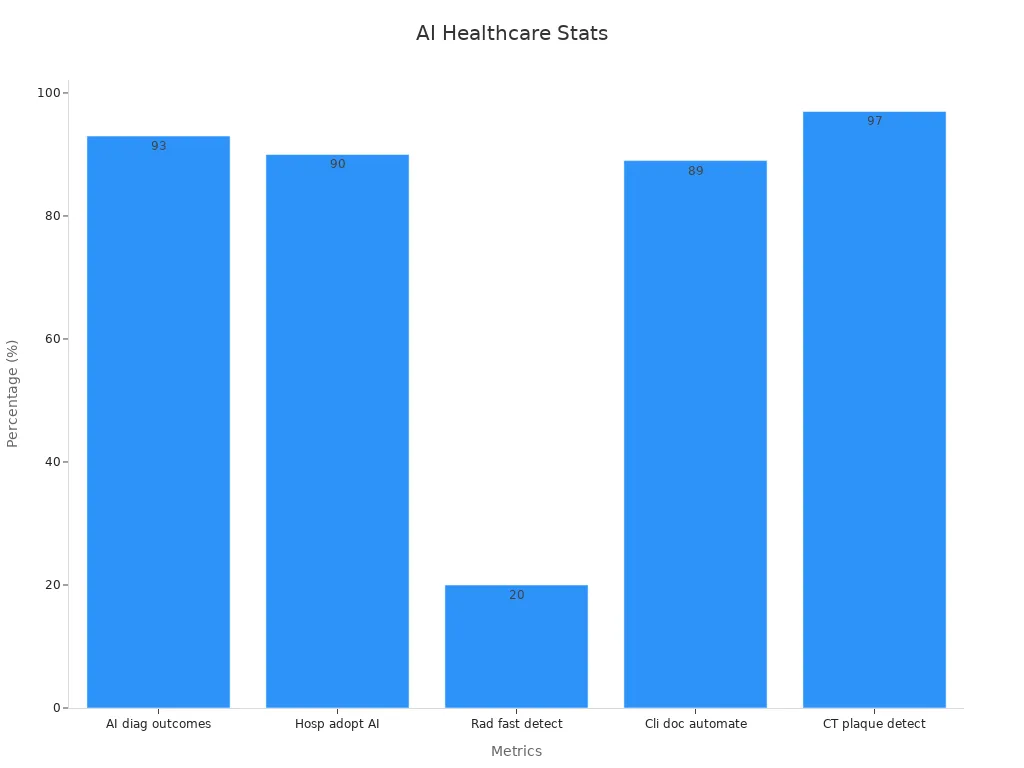
AI agents are very useful in healthcare. They help doctors find diseases early and suggest treatments. For example, AI tools in radiology make finding problems 20% faster and more accurate. Hospitals using AI agents see better results and smoother work.
Statistic | Description |
|---|---|
Healthcare workers say AI improves diagnostics. | |
90% | Hospitals expected to use AI by 2025. |
20% | Faster and more accurate radiology results with AI. |
89% | AI automates clinical notes, saving time for doctors. |
97% | High accuracy in heart scans using AI tools. |
AI agents also handle tasks like writing medical notes. This gives doctors more time to care for patients. It improves how hospitals work and helps patients get better care.
Financial Services and Fraud Detection
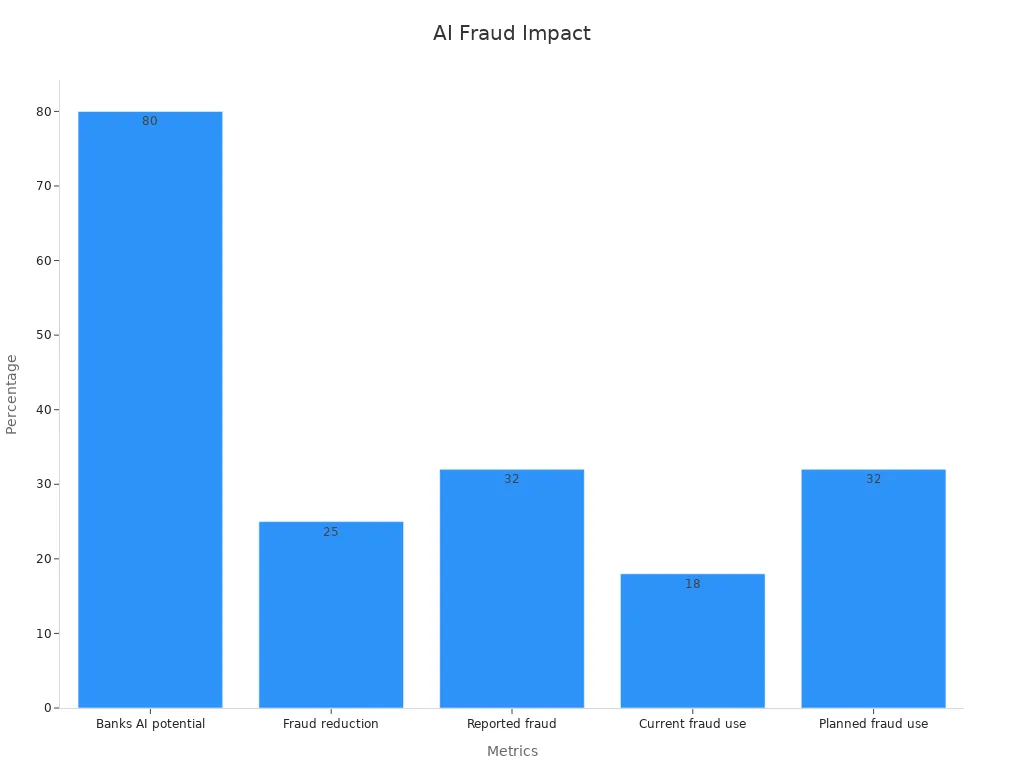
AI agents are changing how banks stop fraud. They check transactions instantly, spotting problems and cutting fraud by 25%. Banks see AI as a way to improve safety and service. Right now, 18% of companies use AI for fraud, and 32% plan to start soon.
Statistic/Insight | Description |
|---|---|
Banks see AI as helpful for stopping fraud and serving customers. | |
25% | Fraud reduced by using AI tools. |
32% | Companies reporting fraud in the last two years. |
18% | Companies currently using AI for fraud detection. |
32% | Companies planning to use AI for fraud in two years. |
AI agents reduce extra alerts by automating simple tasks. They also follow rules by checking data in real-time. By using AI agents, banks can keep customers safe and build trust.
Autonomous Vehicles and Transportation
AI agents are changing how we travel with self-driving cars. These cars use AI to drive safely, make choices, and follow rules. They check real-time data from sensors and cameras to avoid crashes and handle traffic. This reduces mistakes caused by people, which often lead to accidents.
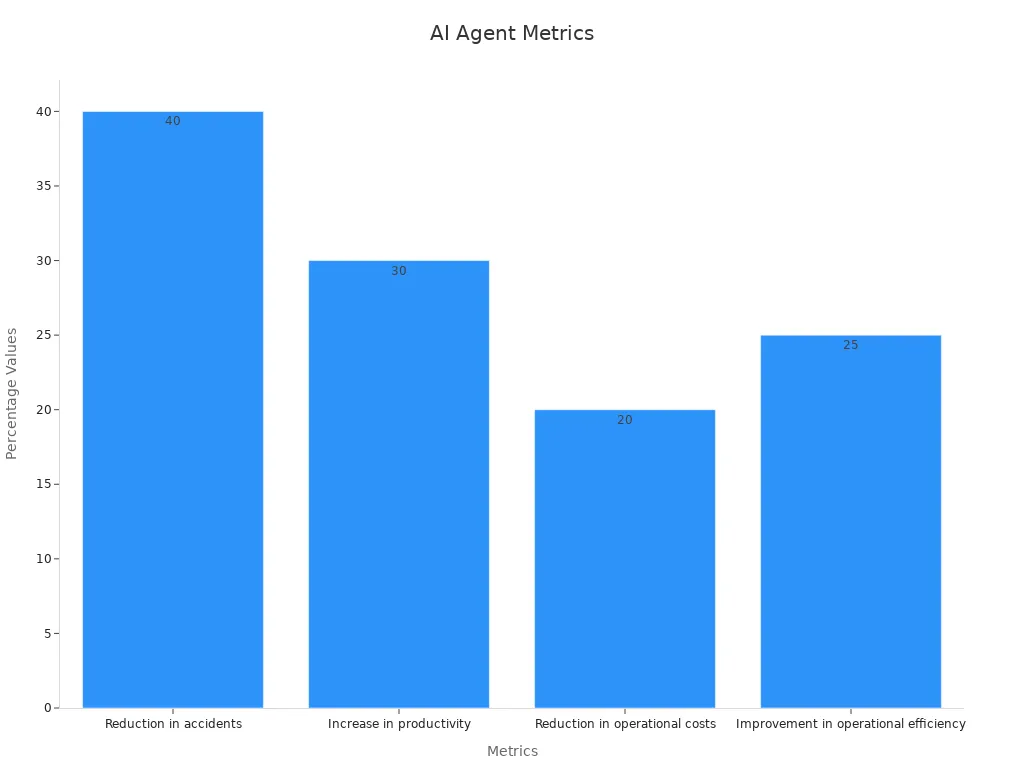
Self-driving cars also save time and fuel by picking better routes. This makes travel cheaper and better for the environment. For example, AI systems have cut accidents by 40% and boosted work speed by 30%. Costs drop by 20%, and efficiency improves by 25%. These changes make self-driving cars useful for everyone.
Metric Description | Value |
|---|---|
Fewer accidents | Up to 40% |
Higher productivity | 30% increase |
Lower operational costs | 20% reduction |
Better operational efficiency | 25% improvement |
Self-driving cars also help people who can’t drive, like seniors or disabled individuals. By improving safety, saving resources, and helping more people, AI agents are shaping the future of transportation.
Personalized Recommendations and E-Commerce
AI agents are key in online shopping by giving custom suggestions. They study what you look at, buy, and like to recommend items you may enjoy. This makes shopping easier and helps you find what you need faster.
Custom recommendations are important for online stores. They bring in 31% of sales and raise purchase rates by 288%. Fewer carts are left behind, dropping by 4.35%, and 45% of buyers return to shop again. Also, 56% of shoppers revisit sites with tailored suggestions. Stores using AI grow 40% faster than those that don’t.
Statistic | Value |
|---|---|
Sales from personalized suggestions | 31% |
Higher purchase rates | 288% |
Fewer abandoned carts | 4.35% |
Shoppers returning to buy again | 45% |
Shoppers revisiting sites | 56% |
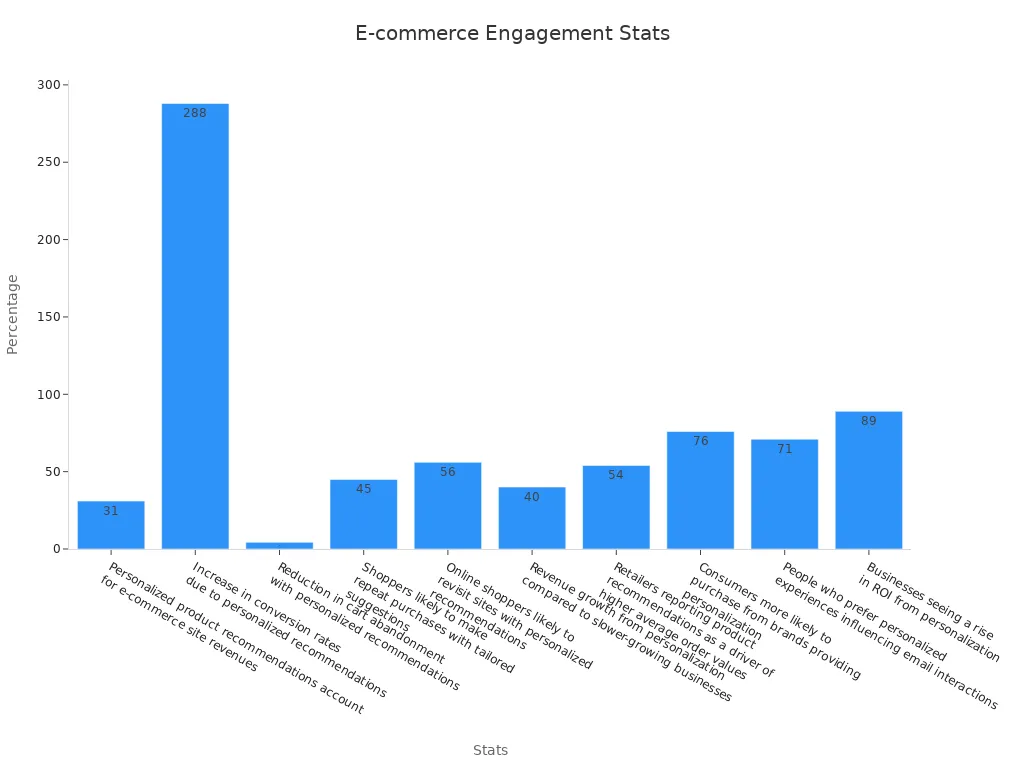
Custom suggestions also make customers feel special. When stores match their needs, shoppers are more likely to come back. Using AI agents, businesses create better, faster, and more personal shopping experiences.
AI agents are smart systems that work on their own. They use AI to learn, change, and make choices. These agents help by automating tasks, boosting work speed, and improving decisions in many fields. For example, 54% of people like quick fixes from automated tools, and 81% prefer self-service AI over talking to humans.
But there are still problems. Data safety, clear processes, and system connections are big concerns. A study found 76% of companies worry about data privacy, and 85% of tech leaders struggle with system links. These issues show why careful use of AI is important.
The chart below shows how AI is growing worldwide:
As AI improves, learning about it will help you use it wisely. AI agents are changing the world, giving new ways to create and make life better for everyone.
FAQ
What is the main purpose of AI agents?
AI agents help by doing tasks automatically and making decisions better. They study data, learn from mistakes, and handle new problems. Their main job is to save time, cut costs, and give correct results.
How do AI agents learn and improve over time?
AI agents use methods like machine learning to get smarter. They look at past actions, take feedback, and change how they work. This helps them adjust to new situations and do tasks better each time.
Are AI agents safe to use?
AI agents are safe if built and checked carefully. It’s important to protect data and keep it secure. Regular checks and updates reduce risks like mistakes, unfair results, or hacking.
Can AI agents replace human workers?
AI agents do boring or hard jobs but don’t replace people. They help workers by taking over simple tasks, so humans can focus on creative or social work.
What industries benefit the most from AI agents?
Many industries like healthcare, finance, and retail use AI agents. For example, they help doctors find diseases, stop fraud in banks, and suggest products in stores. Their flexibility makes them useful in many areas.
Tip: Think about how AI agents can help your work to save time and improve results.
