Best Yoast SEO Alternatives (2025)

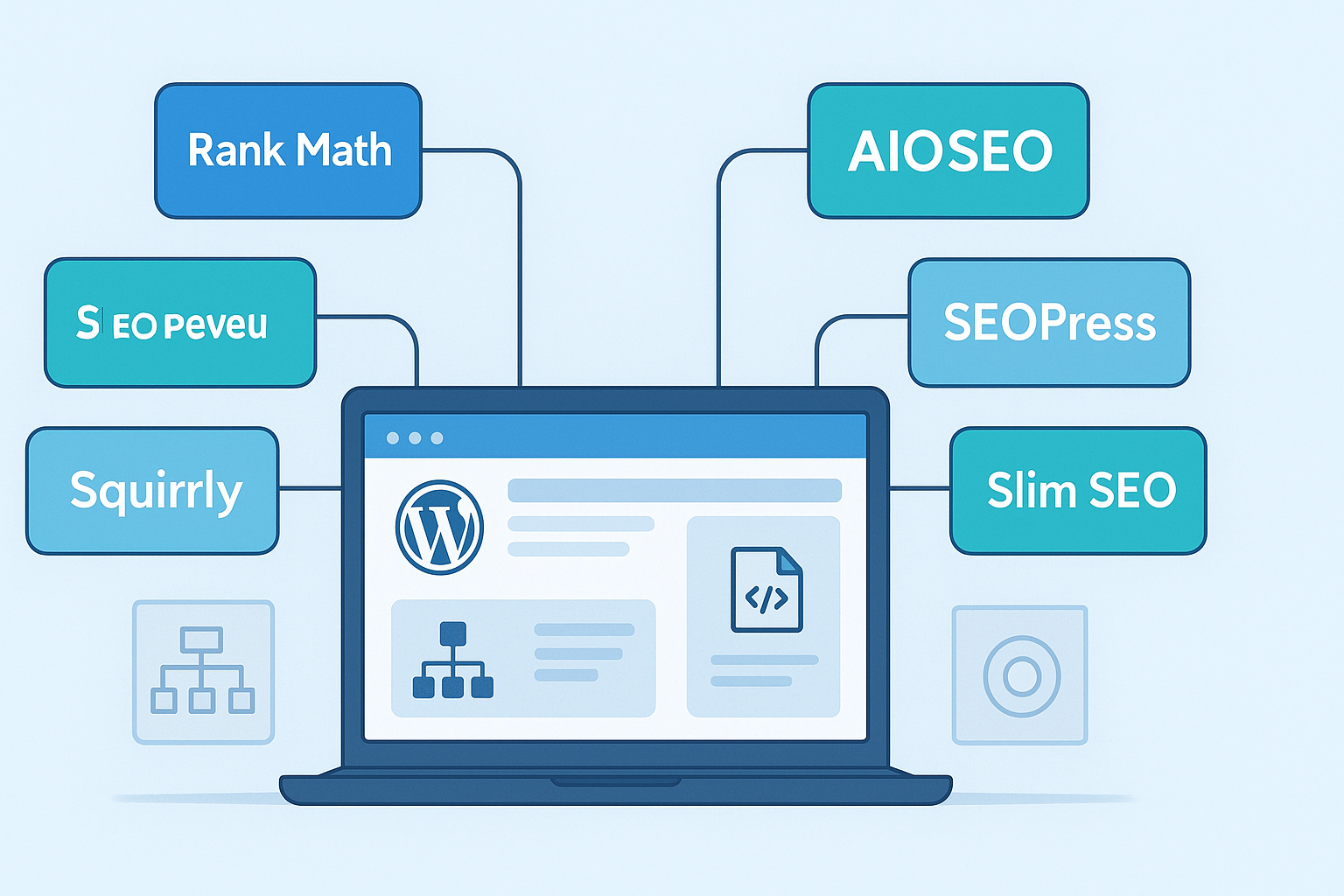
If you’re considering a switch from Yoast SEO, you’re not alone. In 2025, teams are weighing footprint, pricing, and automation more carefully—especially on WooCommerce and multi‑location sites. To keep this practical, here’s the evaluation model we used: features (30%), performance/overhead (20%), migration ease from Yoast (20%), pricing/licensing (15%), WooCommerce/Local SEO depth (10%), and support/roadmap confidence (5%). Where we cite time‑sensitive details (like pricing), we name the source and the 2025 date.
According to Yoast’s own Premium page, pricing and what’s bundled have shifted in late 2025 (Premium currently lists Local, Video, and News add‑ons as included; WooCommerce SEO remains separate). Re‑check before you buy, as vendor pages supersede blog summaries. See Yoast’s latest description in Google’s cache or the live page referenced in this paragraph for the most current wording: the publisher’s page titled Yoast SEO Premium features was updated in late 2025 and outlines those inclusions clearly. For broader context on alternatives and speed trade‑offs, we compared trusted roundups and tests, including WPBeginner’s 2025 list of Yoast alternatives, Zapier’s 2025 plugin guide, and a WP Rocket lab test that compared Rank Math and Yoast on like‑for‑like setups.
- Yoast details: see the publisher’s page, Yoast’s Premium features (Aug–Dec 2025) on yoast.com.
- Market perspective: see WPBeginner’s 2025 alternatives roundup (Jan 2025) and Zapier’s 2025 WordPress SEO plugin guide (Jul 2025).
- Performance comparison: see WP Rocket’s Rank Math vs. Yoast head‑to‑head (Nov 13, 2025).
When it makes sense to stay with Yoast—and when to switch
If your team lives in Yoast’s readability workflow, everything is stable, and you aren’t blocked by pricing or feature gates, staying put can be the lowest‑risk decision. Familiarity and a massive knowledge base mean less retraining and fewer surprises during updates.
Switching often pays off when you need deeper schema controls, stronger WooCommerce/Local SEO at a given price point, AI‑assisted optimization, or a lighter plugin for Core Web Vitals. If you’re consolidating add‑ons or you’ve outgrown a free tier, alternatives can reduce stack sprawl.
The shortlist at a glance
| Plugin | Focus and strengths | Performance feel | Migration from Yoast | Woo/Local depth | 2025 pricing snapshot | Best for |
|---|---|---|---|---|---|---|
| Rank Math | Rich free tier, mature importer, Content AI | Balanced | Built‑in 1‑click importer (titles/metas/schema/redirects) | Strong in both | Pro pricing frequently listed ~mid‑range; verify on vendor page | Most sites wanting breadth + automation |
| AIOSEO | Comprehensive toolkit, strong Woo/Local | Heavier but full‑featured | Guided import wizard | Woo from Basic; Local from Plus (by tier) | Frequent discounts; check live pricing | Stores and local businesses that want integrated tools |
| SEOPress | Clean UI, value pricing, agency‑friendly | Balanced/lean | Built‑in Yoast importer | Solid product + Local schema | New 2025 tiers start low for 1–5 sites | Agencies or owners needing value + performance |
| The SEO Framework | Automation‑first, very lightweight | Lightest class | Manual/third‑party likely (verify) | Via extensions | Premium extensions priced by site count | Speed‑sensitive sites and minimal setups |
| Squirrly SEO | AI‑guided optimization, audits, planning | Heavier | No explicit Yoast importer; plan manual steps | Local tools present | Subscription‑style plans | Content teams wanting coaching/AI guidance |
| Slim SEO | Minimalist core with add‑ons | Very light | Import scope varies; verify docs | Woo + Local basics; Pro adds schema builder | Low‑cost add‑ons; confirm at checkout | Lightweight builds that add only what’s needed |
Citations for this table’s claims appear in the sections below.
Rank Math
Rank Math stands out for breadth at the free tier and a mature import experience. In many environments it offers robust WooCommerce schema (including attributes like brand/GTIN) and Local SEO modules, plus Content AI to speed up on‑page work. A 2025 head‑to‑head by WP Rocket reported speed advantages for Rank Math vs. Yoast on matched setups, a reminder to test plugins on your own stack before finalizing a switch; see the publisher’s write‑up, the WP Rocket comparison dated Nov 13, 2025.
Migration notes: Rank Math includes a one‑click Yoast importer that can pull titles, metas, schema, and (where applicable) redirects during setup or via Import & Export. Pricing varies by tier and promotions; confirm on the vendor’s 2025 pricing page before purchase.
When not to choose: If you want the simplest possible UI with minimal knobs, or you run a sensitive theme/builder combination where you’ve seen conflicts, test in staging first and consider a lighter plugin.
Sources: Rank Math pricing and importer notes are documented on rankmath.com in 2025; performance context from WP Rocket (Nov 2025); additional market context from Zapier’s 2025 guide.
All in One SEO (AIOSEO)
AIOSEO is a full‑suite option with notable WooCommerce and Local SEO coverage by tier. Its migration wizard makes first‑time setup predictable, and higher plans bundle redirects, link assistance, and media/news/video tools many content teams appreciate. Independent reviews in 2025 describe it as feature‑rich and straightforward, though heavier than minimalist plugins. BlogVault’s 2025 review highlights WooCommerce and Local depth at accessible tiers, aligning with AIOSEO’s own tier descriptions.
Migration notes: Expect Yoast titles and metas to import cleanly. Validate redirects and schema on a staging copy before DNS cut‑over. Pricing is discount‑driven in 2025; rely on the live vendor page rather than screenshots.
When not to choose: If your priority is the smallest footprint, or you don’t need integrated link and redirect tooling, a lighter alternative may fit better.
Sources: AIOSEO’s WordPress.org listing (active updates, migration wizard) and BlogVault’s review (Aug 22, 2025) provide the strongest public references.
SEOPress
SEOPress balances a clean, fast UI with practical features and an agency‑friendly license model. Its newsroom announced refreshed tiers in 2025 (including low‑cost 1‑ and 5‑site options), and the plugin ships with a Yoast importer and product/local schema controls. In practice, it’s a comfortable middle ground between “max features” suites and spartan builds.
Migration notes: Use the built‑in importer to pull Yoast metadata, then spot‑check product schema, Local Business markup, and social previews. Re‑verify current pricing on SEOPress’s newsroom or pricing page; the July–August 2025 posts outline the new tiers.
When not to choose: If your editorial process depends on Yoast’s readability scoring style or you need a very large community for support, SEOPress may feel quieter—though official docs are strong.
Sources: SEOPress newsroom update on new plans (Jul 17, 2025) and the SEOPress features pages in 2025.
The SEO Framework
The SEO Framework (TSF) is renowned for speed and automation. Many teams use it as a “set and forget” base layer, then add premium extensions only where needed. It’s among the lightest full‑suite options discussed in 2025 roundups from Zapier and BlogVault.
Migration notes: Plan for manual or third‑party migration from Yoast, as an official Yoast importer page isn’t clearly documented by the vendor. If you rely on complex redirects or custom schema, allocate extra QA time.
When not to choose: If you expect a guided migration wizard and broad AI/content assistants, TSF’s minimalist approach may not match your workflow.
Sources: Zapier’s 2025 plugin guide (Jul 2025) and BlogVault’s TSF review (Aug 29, 2025) describe TSF’s lightweight profile; active updates are visible on its WordPress.org page.
Squirrly SEO
Squirrly emphasizes AI‑guided planning, focus pages, audits, and rank tracking—more of a coaching layer on top of technical SEO. That can be powerful for content teams that want prompts and checklists baked into WordPress. The trade‑off, as noted in 2025 directory listings and reviews, is that it can feel heavier and the subscription structure may exceed the needs of simple sites.
Migration notes: WordPress.org notes import paths from some plugins; we did not find an official vendor page documenting a direct Yoast importer, so budget for manual steps.
When not to choose: If you’re aiming for maximum speed on modest hosting, or you don’t need AI guidance, consider SEOPress, TSF, or Slim SEO.
Sources: Squirrly’s WordPress.org listing (Aug 2025 snapshot) and third‑party comparisons in 2025 provide the public record; confirm current plans on the vendor site.
Slim SEO
Slim SEO delivers a minimalist core that auto‑configures essentials. Pro and add‑ons cover schema and link management with a visual builder approach. Reviews in 2025 consistently place it among the lightest options, suitable for small sites or performance‑sensitive builds.
Migration notes: The plugin and third‑party posts indicate importer coverage from major plugins, but scope varies—verify the Slim SEO docs before you plan the switch. Expect to add the Pro schema builder if you need advanced structured data beyond the basics.
When not to choose: If you want an all‑in‑one with AI writing, content decay tools, or a deep link assistant, Slim will feel too lean without stacking add‑ons.
Sources: WordPress.org plugin page (2025 changelog activity) and BlogVault’s Slim SEO review (Aug 19, 2025). Zapier’s 2025 roundup also lists Slim among lightweight picks.
How to switch from Yoast safely (fast checklist)
- Back up everything and create a staging site; note active theme/builder, Woo/Local plugins, and any custom schema.
- Audit your current Yoast setup: export titles/metas, copy Redirects, and note schema settings and social previews.
- Install the alternative on staging and run its Yoast importer (if available); otherwise, migrate titles/metas and redirects manually.
- Validate critical templates: product schema, organization/local business markup, breadcrumbs, and noindex rules for cart/checkout.
- Test Core Web Vitals and admin overhead with Lighthouse and Query Monitor; compare to your Yoast baseline for real impact.
- Crawl the staging site (XML sitemaps, canonical tags, robots directives) and fix any duplicate or missing elements.
- Switch DNS or push to production during a low‑traffic window; monitor logs, Search Console, and SERP deltas for 2–4 weeks.
- Deactivate Yoast only after you’ve confirmed that metadata, schema, and redirects are functioning as expected in production.
Which one should you pick?
If you want maximum features, a smooth importer, and strong Woo/Local without juggling add‑ons, Rank Math or AIOSEO will feel the most complete. If you need a balanced, performance‑friendly setup at a friendly price—especially for multiple sites—SEOPress is a safe bet. If speed and simplicity outrank everything else, The SEO Framework or Slim SEO will keep things lean. And if your editorial team wants coaching, focus pages, and AI prompts inside WordPress, Squirrly is built for that workflow. Think of it this way: start with your non‑negotiables (speed budget, Woo/Local depth, import scope), test two candidates in staging, and pick the one that meets your constraints with the least configuration.
Sources and further reading (2025)
- Yoast’s own description of what Premium includes and late‑2025 pricing updates: see the publisher’s page titled the Yoast SEO Premium features overview (Aug–Dec 2025) at yoast.com. For historical changes, see the Yoast Premium changelog.
- For a balanced market view of alternatives, see WPBeginner’s piece, 7 Best Yoast SEO Alternatives For WordPress (Jan 2025): WPBeginner’s 2025 Yoast alternatives.
- Practical plugin recommendations by use case: Zapier’s 2025 guide to the best WordPress SEO plugins (Jul 2025).
- Speed testing context for Rank Math vs. Yoast: WP Rocket’s comparison and test notes (Nov 13, 2025).
- AIOSEO’s Woo/Local depth and reviewer impressions: BlogVault’s AIOSEO review (Aug 22, 2025).
- SEOPress pricing and tier changes in 2025: SEOPress newsroom announcement of new plans (Jul 17, 2025).
A final note: plugin vendors change bundles and prices frequently. Always re‑check the publisher’s current pricing page before you commit, and measure performance on your own stack—lab tests are helpful, but your theme, hosting, and cache strategy determine the real‑world outcome.