Web3 Loyalty (NFT Pass)

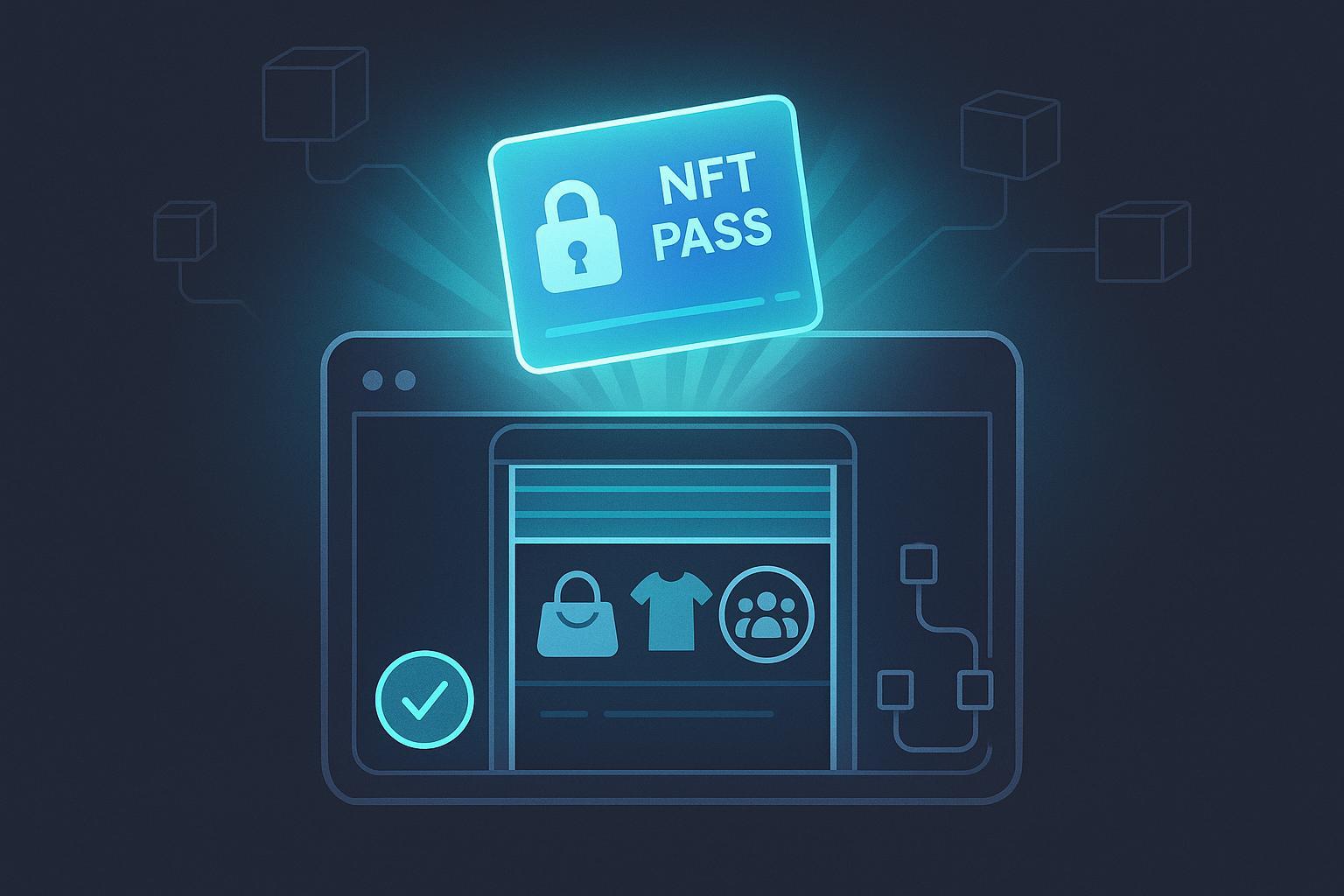
A Web3 loyalty program uses blockchain-issued NFTs as programmable, verifiable membership passes. These “NFT passes” act like digital access cards: your wallet proves you hold the pass, and a site or app unlocks perks, content, or status accordingly. Because the pass follows you (not a single vendor account), it can be recognized across apps that check on-chain ownership.
Key takeaways
- An NFT pass is a user-owned credential that gates benefits; verification can be automated via smart contracts and standard wallet sign-ins.
- Common standards are ERC-721 (unique tokens) and ERC-1155 (multi-token, efficient for editions/tiers), each with different scaling and metadata trade-offs per the canonical Ethereum standards.
- Benefits over traditional loyalty include portability and programmability, but there are real constraints: wallet onboarding friction, security hygiene, fees, and compliance.
- Real-world programs already exist (e.g., token-gated commerce and airline NFTs), offering practical patterns for design and measurement.
What it is—and what it isn’t
- What it is: A loyalty or membership mechanism where holding a specific token determines eligibility. Your wallet proves ownership, and apps check the chain to grant access or rewards. This is consistent with how non-fungible and multi-token standards define portable ownership, such as the specifications in EIPs for ERC-721 and ERC-1155.
- What it isn’t: It’s not just “points on a blockchain” with no user-owned asset, not a crypto payment scheme, and not a guaranteed investment. It also doesn’t replace sound loyalty economics—value still has to be earned through relevant perks and experiences.
How an NFT pass works (business-first)
- Token-gated access
- Customers connect a crypto wallet; the site verifies they hold the required token; gated products, discounts, or content then unlock. This is the essence of retailer implementations described in Shopify’s own explanation of token-gated commerce, which outlines wallet connect, token verification, and gated storefront logic.
- Passwordless, cryptographic sign-in
- Many experiences implement a standardized “Sign-In with Ethereum” flow so users can prove account ownership without passwords by signing a structured message. The specification for this approach, including security fields (domain, nonce, expiry), is defined in EIP-4361 and helps mitigate replay and phishing when properly implemented.
- On-chain state and dynamic benefits
- Programs can record achievements or tiers on-chain (e.g., an upgraded pass after completing tasks). Because state is public and verifiable, partner apps can also recognize status if they adopt the same standards and check the relevant contracts.
- Interoperability potential
- Unlike siloed databases, on-chain ownership can be recognized across apps that read the same contract and token ID patterns. The degree of interoperability still depends on partner coordination and technical integration, but the foundation comes from open token standards.
- Ownership and transferability
- Users hold passes in wallets. Programs decide whether passes can be transferred or whether resale is restricted by policy or technical controls. If transfers are allowed, terms should clarify eligibility rules (e.g., who can redeem perks after a secondary sale).
To ground this in standards: the core mechanics for non-fungible tokens are specified in the Ethereum community’s canonical proposal for ERC-721, and scaled multi-token issuance is covered by the ERC-1155 standard.
NFT standards for loyalty design: ERC-721 vs ERC-1155
- ERC-721 (one-of-one uniqueness): Each pass has a unique ID, suitable for individualized memberships or personalized entitlements. The standard defines transfer, approval, and metadata interfaces, making it viable for representing distinct access passes as described in the original ERC-721 specification.
- ERC-1155 (multi-token efficiency): A single contract can issue many token types, including semi-fungible “editions” (e.g., Bronze/Silver/Gold passes). Batch operations reduce gas for large-scale distribution and enable efficient balance queries—useful when issuing thousands of similar passes—per the ERC-1155 standard.
- Metadata and updates: Both standards support metadata URIs. Programs often place benefit descriptions or tier data in token metadata; you can update benefits by referencing dynamic metadata or using upgrade mechanisms in your smart-contract architecture.
Authoritative references
- The ERC-721 definition of non-fungible token behavior is set out in the Ethereum Improvement Proposal for ERC-721.
- The ERC-1155 multi-token model and its batch-transfer mechanics are specified in the canonical ERC-1155 proposal.
Wallet UX and onboarding choices
- Custodial vs self-custody: Custodial flows let users sign up with email/social and receive a wallet managed by the program or a provider—lower friction but higher custodial responsibility. Self-custody gives users full control of keys at the cost of onboarding steps and recovery complexity.
- Sign-In with Ethereum (SIWE): Standardized, passwordless account creation and login via cryptographic signatures can streamline journeys when implemented according to EIP-4361.
- Safety hygiene: Educate users about approvals and signing. Mainstream resources advise avoiding blind signing when possible and being cautious with “approve all” permissions; see practical overviews of Ethereum security and blind signing considerations from Ledger’s educational materials.
How Web3 loyalty compares to traditional programs
Advantages
- User-owned assets and verifiable status: The token standard itself encodes portable ownership and uniqueness or editions (as formalized in ERC-721 and ERC-1155).
- Programmability: Passes can upgrade, unlock, and interact with partner apps via standard checks and token-gating flows similar to those retailers outline for token-gated storefronts.
- Potential interoperability: Partners can recognize the same pass by reading the same contract and token IDs, subject to coordination.
Constraints
- Onboarding friction: Wallet setup and signing introduce steps unfamiliar to many users. SIWE helps, but UX still requires education and support.
- Fees and chain selection: Gas and network choices affect cost and speed; batch operations (e.g., ERC-1155) can help at scale.
- Security and support: Users need guidance on approvals, phishing, and recovery.
- Compliance and privacy: On-chain data is transparent and persistent, so programs must keep PII off-chain and be explicit about data flows and roles.
Real programs to learn from (illustrative, not endorsements)
- Lufthansa Uptrip (airline collectibles and rewards): Uptrip issues NFT cards from flown segments. Completing a collection requires a minimum of “Original” cards earned from your own flights; “Non-Original” cards acquired elsewhere can supplement but not replace that minimum. This mechanic—and the visual labeling that distinguishes Original vs Non-Original—is documented in Uptrip’s help center. Collections can unlock travel perks and vouchers, and the help center explains collection rules and reward redemption.
- Starbucks Odyssey (collectible “stamps” on Polygon, marketplace via partner): The marketplace enabling trading and custody for Starbucks’ digital stamps was publicly outlined by Nifty Gateway, noting custodial wallets, credit-card purchases, and “journeys” as engagement mechanics. As of 2025, rely on this partner announcement for concrete marketplace details unless Starbucks publishes new direct guidance.
- Token-gated commerce in retail: Shopify’s own explanations describe wallet connection, token verification by partner apps, and gating of products or content—useful patterns for ecommerce loyalty.
Implementation checklist (from pilot to scale)
- Define value and scope
- Identify benefits users actually want (exclusive access, early drops, member support, status). Ensure perk economics are sustainable.
- Choose a token model
- ERC-721 for unique memberships or personalized tiers; ERC-1155 for scalable editions/batches. Document transfer rules and any resale limits.
- Build access verification
- Implement token-gating checks in your app/storefront. Typical flow: connect wallet, verify token ownership, unlock the gated experience as described in retailer token-gating guides.
- Plan wallet UX
- Decide on custodial vs self-custody, recovery flows, and customer support. Use standardized sign-in like EIP-4361 to reduce friction where appropriate.
- Data, privacy, and consent
- Keep PII off-chain. Make on-chain data pseudonymous. Provide clear notices distinguishing on-chain vs off-chain data and how user rights (access, deletion, rectification) are handled off-chain.
- Abuse prevention
- Implement anti-bot and anti-farming controls, rate limits, sybil resistance, and explicit terms for eligibility and redemption. Educate users about safe approvals and signing.
- Measurement and iteration
- Track gated vs non-gated conversion, redemption rates, repeat engagement, cohort retention lift, referral velocity, and secondary-market indicators (active holders vs total mints). In commerce, compare AOV and repeat purchase between token-holders and matched non-holders.
KPIs and analytics that matter
- Access and conversion: Percentage of connected wallets that pass token checks and complete the gated action.
- Engagement depth: Average number of gated sessions per holder; progression through on-chain achievements or “journeys.”
- Redemption and breakage: Share of holders redeeming perks; breakage rates and reasons.
- Retention and frequency: Cohort retention lift vs a matched control; repeat purchase or engagement cycles.
- Network and community effects: Holder-to-holder referrals, partner recognition events, and cross-program unlocks.
- Cost-to-serve: Gas fees per issuance/redemption, support tickets per 1,000 wallets, fraud/abuse incidence.
Compliance and privacy (as of 2025)
European regulators highlight the tension between blockchain immutability and data protection rights. Practical guidance emphasizes data minimization, pseudonymization on-chain, and enabling user rights through mutable off-chain systems with clear role definitions (controller/processor) and transparent notices. For current principles, see the European Data Protection Board’s guidance on processing personal data in blockchain contexts.
Risks and mitigations
- UX friction: Offer guided onboarding, clear copy, and fallback support. Consider custodial wallets for first-time users if appropriate.
- Security pitfalls: Educate about wallet hygiene, approvals, and phish-resistant signing. Direct users to reputable guidance on Ethereum security and blind signing risks.
- Volatility and fees: Choose networks and batch operations that fit your cost model; abstract fees for users where possible (e.g., sponsor gas for key actions).
- Program abuse: Rate-limit token checks, detect automated farming, and define revocation/eligibility policies in terms.
- Interoperability expectations: Start with bilateral integrations and published allowlists; expand as partner demand materializes.
A pragmatic “getting started” path
- Design a small, high-value gated experience (e.g., early access to a limited release).
- Pilot with a single token model and a small cohort; measure core KPIs.
- Add SIWE-based login, refine wallet UX, and build abuse controls.
- Expand tiers or editions (ERC-1155) and add partner recognition where there’s clear demand.
- Formalize privacy documentation, role assignments, and off-chain user rights processes; audit before scaling.
Sources and further reading
- The ERC-721 non-fungible token behavior is defined in the Ethereum community’s canonical proposal for ERC-721.
- The ERC-1155 multi-token model, including batch operations, is specified in the canonical ERC-1155 standard.
- A retailer-focused overview of connecting wallets, verifying tokens, and gating products is covered in Shopify’s token gating explainer.
- The standardized “Sign-In with Ethereum” flow (structured, signed messages for login) is defined in EIP-4361.
- Lufthansa Uptrip’s Original vs Non-Original card rules and collection/reward mechanics are documented in the Uptrip help center.
- Marketplace details for Starbucks Odyssey (custodial wallets, credit card purchases, “journeys”) are described in Nifty Gateway’s 2022 announcement.
- Practical user safety guidance around Ethereum security and blind signing is available in Ledger’s educational materials.
- For privacy and compliance principles around blockchain, see the European Data Protection Board’s guidance index (2025).
Links (canonical anchors)
- “ERC-721: Non-Fungible Token Standard” (EIPs)
- “ERC-1155: Multi Token Standard” (EIPs)
- “ethereum.org: ERC-721 overview” (developer docs)
- “ethereum.org: ERC-1155 overview” (developer docs)
- “Shopify: What is token gating?” (retail explainer)
- “Shopify: Token-gated commerce overview” (retail explainer)
- “EIP-4361: Sign-In with Ethereum” (spec)
- “Uptrip help: Original vs Non-Original cards” (program rule)
- “Uptrip help: Collections and rewards” (index)
- “Nifty Gateway on Starbucks Odyssey” (announcement)
- “Ledger Academy: Ethereum security best practices” (education)
- “Ledger Academy: Blind signing guidance” (education)
- “EDPB: Blockchain guidance index (2025)” (policy)