Threads Strategy 2025: A Practitioner’s Playbook for Serialized Content That Drives Engagement and SEO

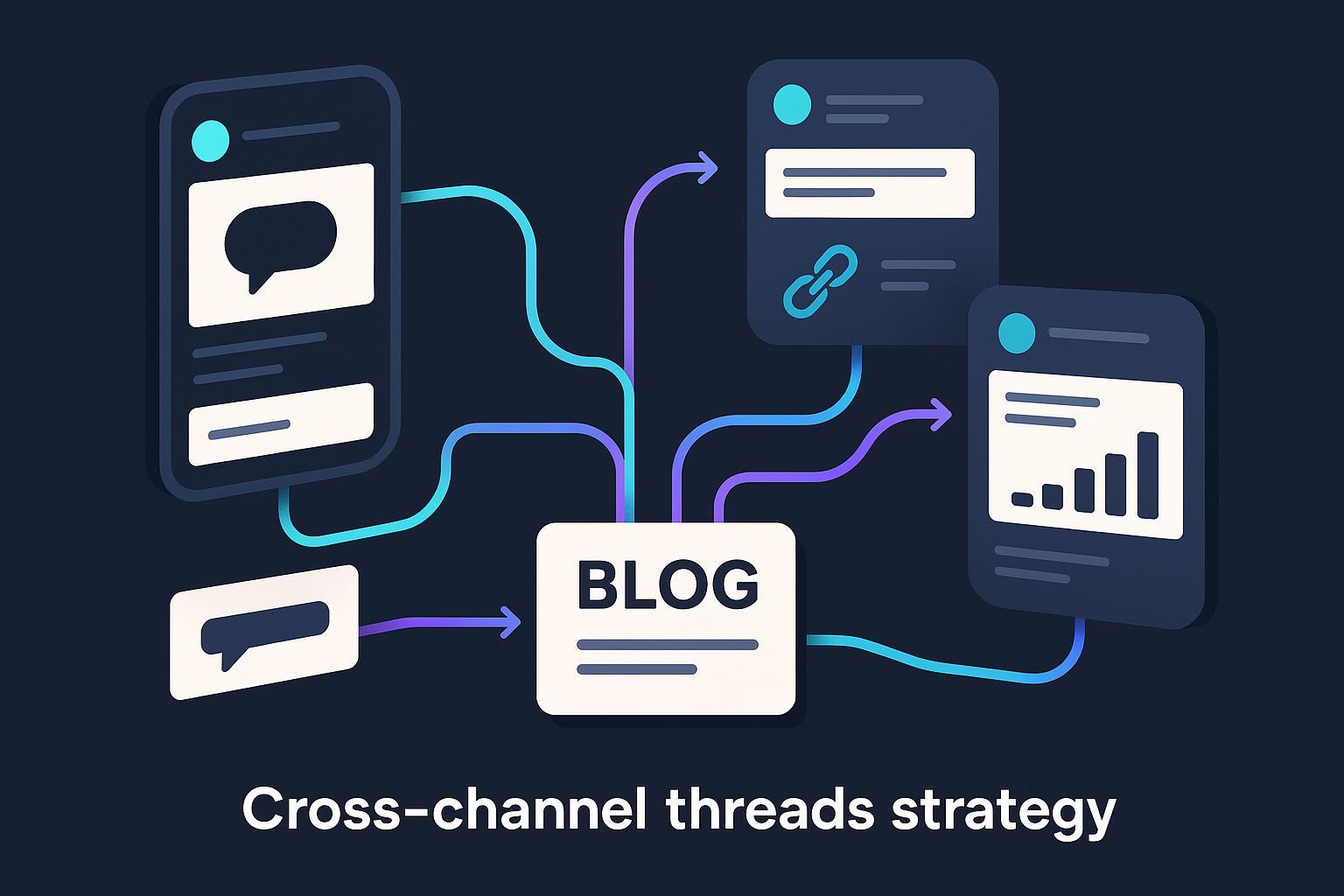
If you manage content for a SaaS, agency, or growth-focused brand, you’ve likely felt two realities in 2025: audiences prefer story arcs over one-off posts, and platforms reward native, high-dwell formats. A “Threads Strategy” ties those realities together—serializing ideas across Meta Threads, X (Twitter) threads, LinkedIn carousels/series, and a blog hub—so each installment builds engagement, authority, and ultimately traffic.
This playbook distills what’s working now, grounded in platform documentation and recent benchmarks. You’ll get a framework, step-by-step workflows, measurement recipes, tool trade-offs, and failure modes to avoid.
The Threads Strategy Stack (4 Layers)
- Narrative design (what to say)
- Define a single, teachable theme per series (e.g., “AI onboarding pitfalls”).
- Break it into 4–8 bite-size lessons (one idea per installment). Lead with a hook in every piece.
- Pre-plan the closing CTA (subscribe, demo, or deep-dive post) to give the sequence a destination.
- Channel adapters (how to package it)
- Threads (Meta): short paragraphs, image/video support, conversational tone.
- X threads: 7–10 posts with a clear hook; number the posts (1/9 … 9/9); visuals to anchor attention.
- LinkedIn: carousel or serialized posts optimized for swipes and dwell; mobile-first typography.
- Blog: hub-and-spoke series with descriptive internal links.
- Publishing ops (how to ship it reliably)
- Document cadence (e.g., 2 threads/week platform-wide) and time windows.
- Build a content calendar mapping each lesson to its native format.
- Use a single source of truth for copy/media so updates cascade across platforms.
- Measurement & iteration (how to improve it)
- Track impressions, engagement rate, saves, follows gained, and CTR from links in comments/replies.
- Compare threads vs. single-post baselines; roll forward what lifts outcomes.
Platform Playbooks: What Works and Why
Meta Threads: Viable scheduling and native storytelling
- API and limits: Meta now provides an official Threads API for publishing and replies. A key constraint to plan around is the per-profile publishing limit of about 250 API posts per 24 hours, with a separate limit for replies. You can inspect quotas via the publishing limit endpoint; see the official guidance in the Threads API documentation by Meta Developers (2024–2025) for details: Threads API overview and Posts endpoints and quotas.
- Media: Images should be sufficiently large; videos are supported across common aspect ratios. Carousels can include multiple items. Refer to the current media constraints under the same Meta Developers pages.
- Scheduling: Third-party tools gained stable support via the official API in late 2024–2025; for example, Publer documents direct scheduling to Threads using the API in their help resources (Publer guidance on posting to Threads).
- Cadence: Start with 2–3 Threads per week, each telling one lesson from your series. Use conversational openings and simple media. Keep links minimal in the body; where you need an external link (e.g., to your hub post), place it at the end or in a follow-up reply to protect reach while remaining user-first.
X (Twitter) threads: Hook-first, 7–10 posts, links in replies
- Structure: Practitioners consistently find 7–10 posts balances depth with retention; lead with a strong hook, follow with numbered posts, and end with a recap and CTA. While detailed thread-vs-single post lift studies are scarce, these conventions align with contemporary algorithm guidance.
- Algorithm considerations: Multiple credible guides recommend limiting external links in the lead post to avoid suppressing reach; place deep links in replies when possible. Hootsuite’s 2024 explainer on the X algorithm reinforces this link-light approach and the importance of early engagement (Hootsuite: How the X algorithm works, 2024).
- Media: Use images, GIFs, or video to reset attention mid-thread. If a thread runs long, include micro-summaries every 3–4 posts.
LinkedIn serialized posts and carousels: Dwell time wins
- Why carousels: Swipes increase dwell time, a signal LinkedIn’s feed values. Hootsuite’s 2025 algorithm explainer highlights the role of early engagement and native formats in reach (Hootsuite: LinkedIn algorithm, 2025).
- Tactics: Design a bold first slide with the value promise; make slides mobile-first with large fonts; one idea per slide; end with a CTA to the hub post or newsletter. Place external links in the comments to safeguard reach, consistent with current best practice discussed in 2025 roundups and platform guides.
- Evidence snapshot: Buffer’s 2024 experiment found that a one-week carousel sprint yielded 14,001 impressions and 381 engagements, with higher-quality comments/shares than other formats, illustrating the format’s engagement potential (Buffer LinkedIn carousels experiment, 2024).
Turn Your Series into SEO Equity: The Blog Hub-and-Spoke
Serialized social content is powerful, but the compounding asset lives on your site. Convert the series into a blog hub (pillar) and interlinked spokes:
- Internal linking matters: Google’s own documentation emphasizes descriptive, crawlable internal links as a foundational SEO practice, helping search engines (and users) understand site structure and topic relationships. See the 2024–2025 updates in Google’s SEO Starter Guide and the page on Crawlable links.
- Topic clusters in practice: While Google doesn’t endorse the “topic cluster” term, creating a hub page with spokes and clear, descriptive anchors aligns with their guidance. Industry explainers like Clearscope’s 2024 overview summarize how internal links reinforce topical relevance (Clearscope on internal linking, 2024). Meanwhile, aggregated case studies from SearchPilot show internal linking can improve navigation and, in some contexts, SEO outcomes, though results vary by site and implementation (SearchPilot internal linking case studies).
- Practical build: Publish the hub first with a short abstract and a table of contents linking to each part. Every spoke links back to the hub and to the preceding/next part. Add a “series recap” at the end of the hub once the series completes.
Execution Checklist (Copy/Paste and Run)
Planning (Day 0)
- Choose one theme that sustains 4–8 lessons.
- Draft the blog hub outline and spoke titles (H1/H2s), plus 1–2 sentence abstracts for each.
- Write platform-specific hooks for Threads, X, and LinkedIn.
- Prepare 3–5 visuals: one hero graphic for the hub, 2 carousels for LinkedIn, and 2 images/GIFs for X/Threads.
Weekly cadence
- Monday: Publish/update the hub; post a LinkedIn carousel (Lesson 1). Link in comments.
- Wednesday: Publish an X thread version of Lesson 1. Place the deep link in a reply.
- Friday: Publish the Meta Threads version. Keep body link-light; add a follow-up with the hub link.
- End of week: Add cross-links between spokes; update hub TOC with published parts.
QA before publish
- Hooks are clear and specific (no buzzwords without proof).
- Numbered steps in X threads; CTA present in last post.
- LinkedIn slides are legible on mobile.
- UTM parameters are correct for every external link placed in comments/replies.
Engagement operations
- First 60 minutes: Reply to comments, ask follow-up questions, and seed one or two meaningful replies to keep the thread going.
- Encourage saves and shares in-platform; only then point to the hub.
Measurement That Actually Teaches You Something
Use platform medians as a context check—not a goalpost—because they aren’t thread-specific. Buffer’s early 2025 dataset reports median engagement rates around 6.25% on Threads and 3.6% on X, with LinkedIn near 8.01% in January 2025 (Buffer: average engagement rates 2025 and Threads vs. Twitter comparison, 2025). Rival IQ’s 2025 benchmark report also notes that X engagement declined roughly 48% year over year for studied brands, underscoring the need for higher-value formats (Rival IQ 2025 Social Media Industry Benchmark Report).
Track these series-level KPIs weekly:
- Reach and engagement
- Impressions per thread/post, engagement rate per installment, saves.
- LinkedIn carousel completion proxy: average slides viewed (if available) and comments quality.
- Growth
- Follows gained per series installment (Threads, X, LinkedIn); newsletter signups attributed to the hub.
- Traffic and conversion
- CTR from comment/reply links (UTM-tagged), session depth on hub and spokes, micro-conversions (scroll depth, TOC clicks), and macro-conversions (demo requests, signups) tied to campaign tags.
Compare thread series vs. single-post baselines over four weeks. If threads outperform on saves, follows-per-post, and CTR to the hub, scale the cadence; if not, iterate the hooks and restructure the sequence.
Advanced Tactics When You’re Ready
- Mid-thread recaps: In longer sequences (especially on X), insert a mini-summary with a visual around the mid-point to reset attention.
- Series “trailer”: Publish a short teaser post (or carousel slide) previewing the 4–8 lessons and invite follows to catch every part.
- Creator collaborations: Co-author a lesson with a domain expert and pin that installment; experts can spark quality discussion and broader reach.
- Repurpose wisely: Combine the best-performing posts across platforms into an email digest linking to the hub; add context, not just links.
Troubleshooting: What To Fix When It’s Not Working
- Thread fatigue (drop-off after post 6): Cut to 7–9 posts; tighten each message to one idea; add a visual CTA around post 5 to re-engage.
- Poor LinkedIn reach after adding links: Move external links to comments; ask a question in-slide to encourage early comments. This aligns with how LinkedIn rewards dwell and early engagement, as discussed in Hootsuite’s 2025 algorithm notes (Hootsuite: LinkedIn algorithm, 2025).
- SEO dilution from scattered blog posts: Build a proper hub with descriptive anchors and link every spoke to the hub and adjacent parts. See Google’s SEO Starter Guide and Crawlable links for the fundamentals.
- Threads scheduling spikes failing: Confirm you’re under the API publishing limits and check quotas programmatically as Meta advises in the Threads API docs (Meta Threads API overview).
Your Tools/Stack for Serialized Campaigns (kept practical and brief)
- QuickCreator — AI-assisted blog drafting, block-based editor, SEO optimization, and multilingual publishing; useful for turning a hub-and-spoke plan into shippable blog assets quickly. Disclosure: QuickCreator is our product.
- Buffer — Unified scheduling and analytics across major networks; solid for cross-channel calendars and reporting; supports Threads scheduling within its suite (confirm current capabilities on plan tiers).
- Publer — Direct Threads scheduling via the official API plus practical analytics; good for small teams running test-and-learn sprints on Threads specifically (Publer on Threads scheduling).
- Hootsuite — Robust team workflows and listening; as of early 2025, Threads scheduling support is not widely documented in official product pages; evaluate based on your broader social needs and integrations.
A 4-Week Workflow Example (from planning to compounding results)
Week 0 (setup)
- Draft a pillar “hub” article with a clear TOC. Generate 4–6 spoke outlines and platform-specific hooks. Prepare initial visuals.
Week 1–4 (shipping and learning)
- Monday: Publish a LinkedIn carousel (Lesson 1), link to the hub in comments; respond to early comments in the first hour.
- Wednesday: Post the X thread version of Lesson 1; place the hub link in a reply; add a visual mid-thread.
- Friday: Share the Meta Threads installment; keep the body link-light; follow up with the hub link.
- End of each week: Update the hub TOC, add cross-links between spokes, and compile a digest email.
Where QuickCreator fits
- Use QuickCreator to draft and refine the hub and spoke blog posts, then adapt copy for LinkedIn carousels and Threads/X variants so your narrative stays consistent while respecting native formats. Keep a single source of truth (headlines, hooks, media) so updates cascade across all channels.
Guardrails and Trade-offs to Keep You Honest
- No silver bullets: Platform medians and anecdotes are context, not guarantees. Treat them as hypotheses to test in your niche. For example, Buffer’s 2025 medians give you directional expectations for Threads, X, and LinkedIn, but they are not thread-format-specific (Buffer: average engagement rates 2025).
- Links vs. reach: On X and LinkedIn, native, link-light posts typically travel farther; offset this by placing links in comments/replies and using strong native CTAs first, then the off-platform click.
- SEO takes architecture: Without a hub-and-spoke structure and descriptive internal links, serial posts can scatter relevance. Google’s documentation is clear that internal links are foundational; apply their advice precisely (Google SEO Starter Guide).
- Tool reality: Threads API support is evolving. Verify current capabilities—especially quotas and scheduling—via Meta’s documentation and your chosen scheduler’s release notes (Meta Threads API posts).
Summary: What Practitioners Should Do Next
- Pick one theme and outline 4–8 lessons you can teach in sequence.
- Ship the hub first, then the LinkedIn carousel, X thread, and Meta Threads post for Lesson 1 in the same week.
- Keep links out of the initial post when possible; position deep links in comments/replies with UTMs.
- Measure saves, follows-per-post, and CTR to the hub; compare threads to single-post baselines over four weeks.
- Iterate hooks and visuals; scale the cadence for sequences that outperform.
References and further reading
- Meta Developers: Threads API overview and Posts endpoints and quotas
- Hootsuite (2025): LinkedIn algorithm guide
- Hootsuite (2024): How the X algorithm works
- Buffer (2025): Average engagement rates and Threads vs. Twitter comparison
- Buffer (2024): LinkedIn carousels experiment
- Rival IQ (2025): Social Media Industry Benchmark Report
- Google Search Central (2024–2025): SEO Starter Guide and Crawlable links
- Clearscope (2024): Internal linking explainer
- SearchPilot: Internal linking case studies index