Surfer SEO’s Latest AI Writing Features (2025) vs. ChatGPT for Content Creation: Which Fits Your Workflow?

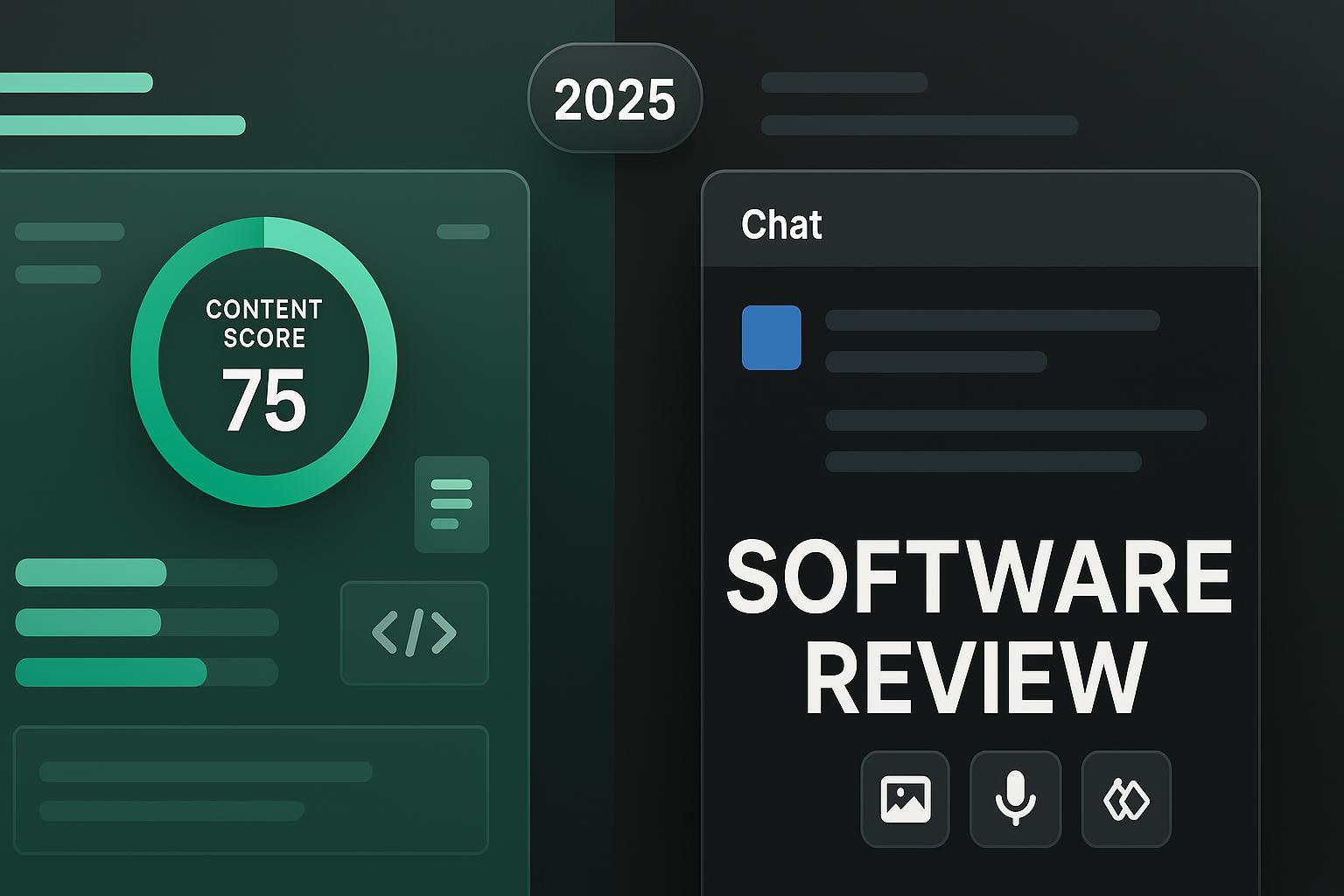
If you’re choosing between a specialized SEO content platform and a general‑purpose AI for drafting and optimization, 2025 brings substantial updates on both sides. Surfer SEO doubled down on integrated, ranking‑oriented workflows (AI Tracker, optimization alerts, Coverage Booster, Outline Templates, Zapier to CMS), while ChatGPT expanded flexible, multimodal creation (GPT‑4.1, 4o image generation, DALL·E 3, Apps in ChatGPT). This comparison focuses on real‑world use: speed to SEO‑ready drafts, editorial control, scalability, and cost signals—so you can pick the tool that best fits your team and goals.
Quick orientation: what each tool is (and isn’t)
- Surfer SEO (2025): An AI‑assisted SEO platform with a Content Editor, Content Score, NLP entities, SERP Analyzer, Outline Builder, Auto‑Optimize, and Surfer AI for fast SEO‑grounded drafting. July and October 2025 updates added Coverage Booster, Insert Outline Templates, a revamped AI Tracker, and optimization alerts. It’s built to move content toward search performance inside one workflow.
- ChatGPT (2025): A general‑purpose, multimodal AI that can draft text, analyze data, browse, and generate images (e.g., DALL·E 3, 4o image generation). With GPT‑4.1 and Apps in ChatGPT (plus an Apps SDK), it’s highly flexible for custom prompts, structured outputs (Markdown/HTML), and unique workflows—but it lacks native SEO scoring or SERP analysis.
Snapshot comparison (2025)
| Dimension | Surfer SEO (2025) | ChatGPT (2025) |
|---|---|---|
| Core orientation | SEO optimization + drafting in one stack | General-purpose AI (text, code, images, voice, apps) |
| Drafting speed | “3-minute” Surfer AI claims for SEO drafts | Fast flexible drafting; speed varies with prompts and tasks |
| SEO guidance | Content Score, NLP entities, SERP outlines, Auto‑Optimize | No native SEO scoring; rely on external tools or manual checks |
| Workflow governance | AI Tracker, optimization alerts, Sites rank insights | Custom GPTs/Apps; governance requires custom rules/processes |
| Integrations | Zapier→CMS/WordPress, API add‑ons | OpenAI API/Assistants, Apps SDK; broad developer ecosystem |
| Best fit | Teams focused on ranking content efficiently | Teams needing flexible, multimodal creation and custom logic |
Surfer SEO (2025): what’s new and how it works
Surfer’s 2025 releases strengthened the end‑to‑end SEO workflow:
- Faster Surfer AI with brand voice and templates — Surfer cites going “from topic to publish‑ready content in 3 minutes” and adds brand settings and custom templates so outputs match style guidelines; outlines can be built from the SERP or inserted from saved templates. See the July 2025 updates in Surfer’s own roundup for these claims (2025) via the What’s New at Surfer — July 2025 page.
- Coverage Booster — Helps fill topical gaps and enrich coverage naturally within the editor; introduced in 2025 with product documentation on Surfer’s updates hub. Details are outlined in the October 2025 release notes on What’s New at Surfer — October 2025.
- Insert Outline Templates & Outline Builder — Save and reuse formats (blogs, landing pages, scripts), or generate SERP‑driven structures. Surfer explains these on the Outline Templates update and Content Editor workflow tab update.
- AI Tracker & Optimization Alerts — A redesigned tracking dashboard with competitor comparisons and alerts when new optimization recommendations appear, documented on the Surfer updates hub and October roundup.
- Sites: Rank Drop Insights — Detect sustained rank drops on key pages and deep link into the Content Editor for fixes (July 2025 roundup).
- Auto‑Optimize — Automatically weaves relevant terms and context into headings/body/internal links to raise Content Score; covered in Surfer product guides and the workflow tab update.
- Zapier→CMS and WordPress publishing — Connect Content Editor to any CMS, automate drafting, guideline fetching, exporting, and publishing; see Connect Content Editor with any CMS through Zapier.
Pros
- Strong on‑page optimization guidance in‑editor (Content Score, entities, SERP‑grounded outlines).
- Speed to SEO draft via Surfer AI and templates; consistent structure across teams.
- Workflow governance with AI Tracker, optimization alerts, and Sites insights.
- Automation via Zapier and API add‑ons; connects to WordPress/CMS.
Cons
- Pricing/limits can be steep for freelancers/smaller teams; verify current plan details.
- Risk of over‑optimization if editors push scores without human judgment.
- Not a full technical SEO suite (e.g., site audits/backlinks); best paired with other tools.
Who it’s for
- SEO managers and content teams aiming for repeatable, ranking‑oriented production.
- Agencies needing scalable workflows and clear optimization guidance.
- SMBs that want an integrated path from brief → draft → optimization → publish.
Pricing & tiers (indicative, verify on Surfer’s site)
- Reviewers commonly cite “Essential” and “Scale” tiers with monthly limits (Content Editor article counts, AI credits, pages tracked). For a detailed 2025 review of features and plan sentiments, see the SearchAtlas article: Surfer SEO review (2025). Always check Surfer’s official pricing page at purchase time.
Neutral site link
- Visit Surfer SEO: https://surferseo.com/
ChatGPT (2025): capabilities and where it shines
OpenAI’s updates in 2025 expanded multimodal creation and developer‑friendly workflows:
- GPT‑4.1 — OpenAI’s model overview outlines enhanced reasoning and understanding in 2025 on GPT‑4.1.
- 4o image generation & DALL·E 3 — ChatGPT supports rich image generation/editing; OpenAI’s official pages describe accurate text rendering and prompt adherence for 4o images, and DALL·E 3’s creative capabilities: Introducing 4o image generation and DALL·E 3.
- Apps in ChatGPT & Apps SDK — OpenAI’s announcement shows interactive apps within ChatGPT, plus design guidelines for building custom experiences: Introducing apps in ChatGPT.
- Release notes & feature changes — OpenAI’s Help Center keeps a running log of ChatGPT feature changes (voice, browsing, data tools): ChatGPT release notes.
Pros
- Flexibility: prompts, structured Markdown/HTML output, custom GPTs, and multimodal assistance.
- Strong for research‑heavy or creative, cross‑format content (text + images + code).
- Developer ecosystem: API/Assistants and Apps SDK for tailored workflows.
Cons
- No native SEO scoring or SERP analysis; requires pairing with SEO tools.
- Governance and consistency depend on your prompt/process discipline and custom tooling.
- Tier features and availability can vary; confirm within product.
Who it’s for
- Teams that need versatile content creation beyond SEO: thought leadership, product docs, data narratives, and creative campaigns.
- Organizations with dev capacity to build custom apps or governance layers atop the API/Apps SDK.
- Solo creators who want a general‑purpose assistant and learn SEO validation workflows.
Pricing & tiers (context)
- ChatGPT subscriptions (Free, Plus, Team/Enterprise) are widely referenced, but OpenAI does not maintain a single public page consolidating exact consumer tier pricing/limits in one place. Feature availability is tracked via the Help Center release notes above. For developers, API usage is priced separately on OpenAI’s docs.
Neutral site link
- Visit ChatGPT: https://chat.openai.com/
How the tools fit different workflows
-
Write and optimize SEO blog posts fast
- If your primary goal is speed to an SEO‑ready draft, Surfer AI’s branded voice + SERP‑based outline + Auto‑Optimize can reduce manual steps. The July/October 2025 updates emphasize tighter tracking and optimization alerts, making ongoing improvements easier inside Surfer.
- ChatGPT can produce fast drafts with structured headings and tables, but you’ll need external validation (e.g., Content Score equivalents) and SERP analysis. A hybrid approach is common: draft in ChatGPT, then optimize in Surfer.
-
Bulk refresh and auto‑optimize existing pages
- Surfer’s AI Tracker and optimization alerts help identify pages needing updates and route fixes back into the Content Editor. Features like Coverage Booster and Auto‑Optimize make iterative improvements more systematic.
- ChatGPT can assist with rewriting and expanding sections at scale, but prioritization and measurement typically require an SEO layer (manual or tool‑based).
-
Long‑form, research‑heavy content
- ChatGPT’s browsing/data tools and multimodal capabilities (images/code) suit deep explorations and cross‑format deliverables. Structured Markdown/HTML outputs and tables can standardize long‑form drafts.
- Surfer excels when the piece targets specific intents/keywords, leveraging SERP Analyzer and entities to align structure and coverage.
-
Team workflows and governance
- Surfer’s Content Score gives an auditable metric; Zapier workflows and Sites insights help operationalize publishing and monitoring across CMSs.
- ChatGPT offers Apps, custom GPTs, and the API for governance, but you’ll need to define your quality gates (e.g., pair with an SEO optimizer, plagiarism checks, editorial standards).
For readers evaluating broader alternatives or complementary tools, you can explore a pragmatic overview via our internal resources on Surfer alternatives for modern marketers and a practical explainer on site SEO analysis tools. If your stack centers on WordPress, you might also find AI SEO tools for WordPress blogs helpful.
Editorial control, reliability, and measurement
-
Surfer SEO: You get in‑editor guidance—entity suggestions, keyword placement, headings/body/internal link cues—and a numerical Content Score. 2025’s optimization alerts and AI Tracker add continuity for maintenance. This makes Surfer strong for teams who want repeatable, measurable SEO processes.
-
ChatGPT: You can enforce structure with prompts, custom GPTs, and Apps, but measurement lives outside—via third‑party tools or manual checks. It’s excellent for creativity and speed but requires a defined QA layer for SEO goals.
As a broader strategy primer, we cover practical AI blog creation steps (images, structure, prompts) in AI blog writer with images, which can help operationalize consistent outputs.
Pricing and scalability: value signals to consider
-
Surfer SEO: Many 2025 reviews note that plan limits (article editors/month, AI credits, pages tracked, teammates) are the main levers. Agencies often gravitate to Scale or Enterprise for throughput and collaboration. Because pricing can change, confirm directly on Surfer’s site before committing.
-
ChatGPT: Plus is often referenced publicly as a baseline; Team/Enterprise feature availability varies, and developers should budget for API usage separately. The absence of native SEO scoring means you may also budget for an optimizer tool or build one.
Recommendations by scenario (no single “winner”)
-
Choose Surfer SEO if:
- Your priority is moving content toward search performance inside one workflow.
- You want measurable optimization via Content Score, entities, and alerts.
- You manage teams and need repeatability and governance without custom dev.
-
Choose ChatGPT if:
- You need flexible, multimodal creation and structured outputs beyond SEO.
- You or your dev team can add governance and integrate external SEO checks.
- Your content frequently spans formats (images, tables, code snippets, voice).
-
Consider a hybrid if:
- You like ChatGPT’s versatility for drafting/research but want Surfer’s optimization rigor. Draft in ChatGPT, refine and measure in Surfer, then publish via Zapier→CMS.
Also consider: QuickCreator (neutral mention)
If you’re looking for an end‑to‑end blogging platform with integrated AI writing, automatic SEO optimization, simple editing, multilingual support, and one‑click WordPress publishing, QuickCreator is a pragmatic alternative for SMBs and content teams. Disclosure: QuickCreator is our product.
Sources and official documentation (selected)
- Surfer product updates and releases (2025): Surfer updates hub; July 2025 roundup; October 2025 roundup; Outline Templates; Zapier integration.
- ChatGPT features and capabilities (2025): GPT‑4.1 model overview; Apps in ChatGPT & Apps SDK; 4o image generation; DALL·E 3; ChatGPT release notes.
The best fit depends on whether you value integrated, measurable SEO workflows (Surfer) or flexible, multimodal creation with custom governance (ChatGPT). In 2025, both can play together—choose the anchor tool that aligns with your team’s capacity and goals.