AI Video Generators for Marketers: Ethical Concerns and Real Opportunities (2025)

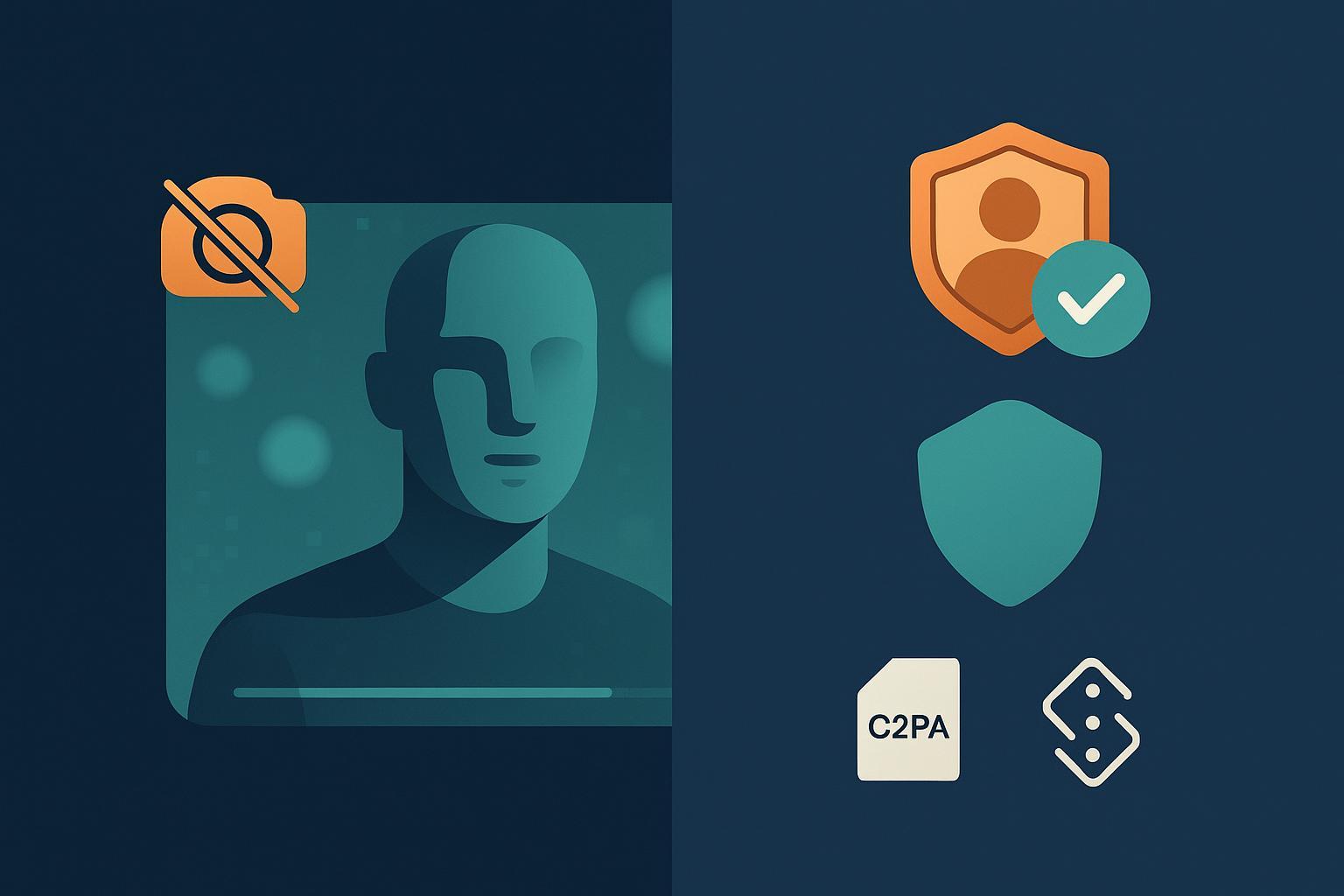
AI video generators are moving fast—from cinematic text‑to‑video to enterprise governance tools. For marketers, the opportunity is huge: rapid prototyping, localization at scale, and fresh creative formats. The flip side is equally real: likeness consent, deepfake risk, misinformation, copyright, and emerging disclosure laws. This comparison unpacks how leading tools—OpenAI Sora 2, Google Veo, Runway Gen‑3, and Pika Labs—handle ethics and compliance today, and where they shine for marketing workflows.
We’ll compare with scenario‑based neutrality (no single “winner”) and cite only official sources. Ordering below is alphabetical.
OpenAI Sora 2
What matters for marketers
- Provenance & watermarking: OpenAI states that “every video generated with Sora includes both visible and invisible provenance signals,” and that outputs “embed C2PA metadata” to make origin traceable (announced Sep 30, 2025). See OpenAI’s details in “Launching Sora responsibly” (2025).
- Consent & likeness: OpenAI introduced cameo‑based controls intended to put users “in control of your likeness end‑to‑end,” with revocable permissions and blocking of public‑figure depictions outside consent. These controls are referenced in the same OpenAI responsible launch post (2025).
- Safety & policies: Layered defenses aim to block unsafe content before generation, plus parental controls in app contexts (Sep 29–30, 2025). See OpenAI’s parental controls announcement (2025).
- Availability & pricing: Sora 2 announced Sep 30, 2025 with limited/invite access; OpenAI’s platform lists pricing for sora‑2‑pro with per‑generation costs. Check the OpenAI pricing page (2025) for up‑to‑date rates.
Strengths for ethical marketing
- Visible watermark plus invisible signals (including C2PA) reduce ambiguity about origin.
- Cameo permissions and revocation provide a practical path for campaigns involving sensitive likeness.
Constraints to note
- Rollout remains limited; policies may evolve quickly.
- Some platforms can strip metadata; marketers should preserve visible watermarks and add explicit disclosures in captions when needed.
Google Veo (Veo 3) on Vertex AI
What matters for marketers
- Provenance & watermarking: By default, Veo uses SynthID, an invisible watermark embedded in each frame. Google and DeepMind describe this in the Google Cloud Veo announcement (May 2025) and the DeepMind SynthID overview (2025).
- Safety & policies: Vertex AI outlines usage restrictions and built‑in safeguards (e.g., child content, prominent person photorealism). See Vertex AI responsible AI and usage guidelines (Oct 2025).
- Licensing & indemnity: Certain Google Cloud generative services carry enterprise indemnity under defined terms; confirm coverage for your deployment in Google’s Generative AI Indemnified Services (2025).
- Availability & setup: Veo models are accessible via Vertex AI (and Gemini API references). See the Veo video generation model docs (Oct 2025).
Strengths for ethical marketing
- Enterprise‑grade governance with SynthID by default supports provenance at scale.
- Clear responsible AI guardrails and potential indemnity are attractive for risk‑sensitive brands.
Constraints to note
- SynthID is invisible; if a platform or workflow strips frames or re‑encodes content, detection reliability can vary.
- Enterprise configuration adds setup complexity; marketers must align with IT and legal.
Runway Gen‑3 (Alpha & Turbo)
What matters for marketers
- Safety & moderation: Runway documents automatic content moderation that scans inputs and outputs for policy violations; it cannot be disabled. See the Runway Help Center moderation article (2025).
- Iteration & speed: Gen‑3 Alpha/Turbo emphasize fast prototyping and creative controls for social‑friendly edits. See Creating with Gen‑3 Alpha/Turbo (2025).
- Provenance: We did not find official public documentation confirming watermarking or C2PA/Content Credentials. Marketers should plan manual provenance steps (see workflow section below).
Strengths for ethical marketing
- Quick iteration cycles make A/B testing and rapid creative exploration practical.
- Clear moderation presence reduces accidental policy violations.
Constraints to note
- Lack of documented watermarking/provenance means extra disclosure and tracking steps.
- Terms and policies can change; review the Runway Terms of Use (2025) before campaigns.
Pika Labs (Pika 2.x)
What matters for marketers
- Usage rights & commercial tiers: Pika’s FAQ and pricing indicate commercial use is permitted at Pro or higher tiers; Basic/Standard do not allow commercial use. See the Pika FAQ (2025) and Pricing (2025).
- Acceptable Use & terms: Policy language covers lawful use and prohibited content. See the Acceptable Use Policy (May 2025) and the Terms of Service (Nov 2024).
- Provenance: No explicit official statements on watermarking/provenance were found; plan disclosures and manual provenance.
Strengths for ethical marketing
- Accessible, social‑friendly workflows and clear commercial‑use rules by plan.
Constraints to note
- Without documented watermarking, provenance depends on your workflow discipline.
- Licensing depends on plan level; ensure the right subscription before commercial campaigns.
Provenance and Disclosure Workflows Marketers Can Use Today
Even the best built‑in systems can be stripped by downstream platforms or edits. Treat provenance and disclosure as a layered workflow.
-
Generate with built‑in signals where available.
- Sora: retain the visible watermark; verify C2PA metadata persists.
- Veo: rely on SynthID by default; validate detection when possible.
-
Attach Content Credentials in post‑production.
- Use Adobe’s tamper‑evident credentials (C2PA standard) when your editing tool supports it. See the Adobe Content Credentials overview (Sep 2025).
-
Preserve signals through export and publishing.
- Avoid transcoding paths that strip metadata. If a platform removes metadata or detection fails, add visible on‑screen marks and explicit disclosure in the caption/credits.
-
Store a compliance trail.
- Archive prompts, source assets, consent forms/model releases, and versioned exports.
-
Add platform‑appropriate labels.
- Align with the EU’s requirement that deepfakes be clearly labeled; the EU Parliament notes labeling obligations in the Artificial Intelligence Act press release (Mar 2024).
For detection and workflow education, you can also deepen team knowledge with internal reading like ethical challenges in AI content creation and a practical step‑by‑step AI content creation workflow.
Scenario‑Based Recommendations (Neutral)
- Best for provenance & enterprise governance: Google Veo on Vertex AI — default SynthID watermarking plus potential enterprise indemnity work well for brands that need centralized controls and auditability.
- Best for consent‑sensitive campaigns: OpenAI Sora 2 — visible watermarking and C2PA metadata, combined with cameo‑based likeness controls, suit campaigns involving employees, creators, or customers.
- Best for speed/iteration and social prototypes: Runway Gen‑3 (Alpha/Turbo) or Pika 2.x — fast generation for A/B testing and variants. Pair with manual provenance (Content Credentials) and explicit disclosure in captions.
- Regulated sectors or political windows: Prefer Veo on Vertex AI with strict labeling, plus Content Credentials in post. Conduct legal review for jurisdiction‑specific rules and platform policies.
When discussing ownership and licensing, refer teams to a primer on AI content ownership and implications. If your campaign hinges on detection cues (e.g., platform‑level flags), this comparative guide to AI content detection tools can help shape risk reviews.
Environmental Impact and Sustainability
AI video generation is compute‑intensive. Per‑model emissions data are scarce, but Google outlines broader sustainability commitments (renewable energy matching and regional carbon data) across Google Cloud’s infrastructure. See the Google Cloud Sustainability hub (2025) for programs and metrics relevant to Vertex AI deployments.
Practical steps for marketers:
- Prefer shorter durations and lower resolutions where acceptable.
- Batch renders during low‑carbon periods when using cloud regions with carbon‑intensity data.
- Audit vendor sustainability disclosures annually.
Also Consider: QuickCreator (Related Alternative)
If you need to operationalize AI video inside a broader content strategy—planning briefs, scripts, landing pages, and SEO—explore QuickCreator, an AI blogging and content marketing platform that complements video workflows with multilingual writing, SEO optimization, and one‑click publishing.
Disclosure: QuickCreator is our product.
Practical Ethics Checklist for Video Campaigns
- Likeness consent: model releases signed, cameo permissions verified (if using Sora).
- Disclosure: clear labels on‑screen or in captions; keep them visible across edits.
- Provenance: maintain visible marks; attach Content Credentials; verify SynthID/C2PA persistence.
- Copyright & licensing: confirm subscription tier permits commercial use (e.g., Pika Pro+); review enterprise indemnity terms (Google Cloud where applicable).
- Safety & moderation: test prompts within tool policies; archive moderation decisions.
- Platform policy alignment: map differences across TikTok, YouTube, Instagram, and ad platforms.
- Sustainability: choose region/settings to reduce carbon impact; monitor vendor updates.
- Legal review: validate compliance in jurisdictions covered by your campaign (EU AI Act labeling, U.S. state deepfake laws tracked by NCSL).
Official Resources Cited
- OpenAI — Sora 2 responsible launch and parental controls (Sep 2025): Launching Sora responsibly, Introducing parental controls, Sora 2.
- Google/DeepMind — Veo 3 and SynthID (2024–2025): Veo announcement on Vertex AI, SynthID overview, Vertex AI responsible AI, Veo model reference, Generative AI Indemnified Services.
- Runway — Moderation and Gen‑3 docs (2025): Moderation help, Gen‑3 Alpha/Turbo, Terms of Use.
- Pika Labs — Pricing, FAQ, AUP, Terms (2024–2025): Pricing, FAQ, Acceptable Use Policy, Terms of Service.
- Adobe/C2PA — Content Credentials (Sep 2025): Adobe Content Credentials overview.
- Regulation — EU AI Act labeling (Mar 2024): EU Parliament press release.
Transparent note: Where official documentation did not confirm a feature (e.g., watermarking on Runway or Pika), we refrained from asserting it and recommended manual provenance and disclosure. As policies evolve, revisit vendor docs before each campaign.