How to Combine SEO + GEO for Maximum Visibility

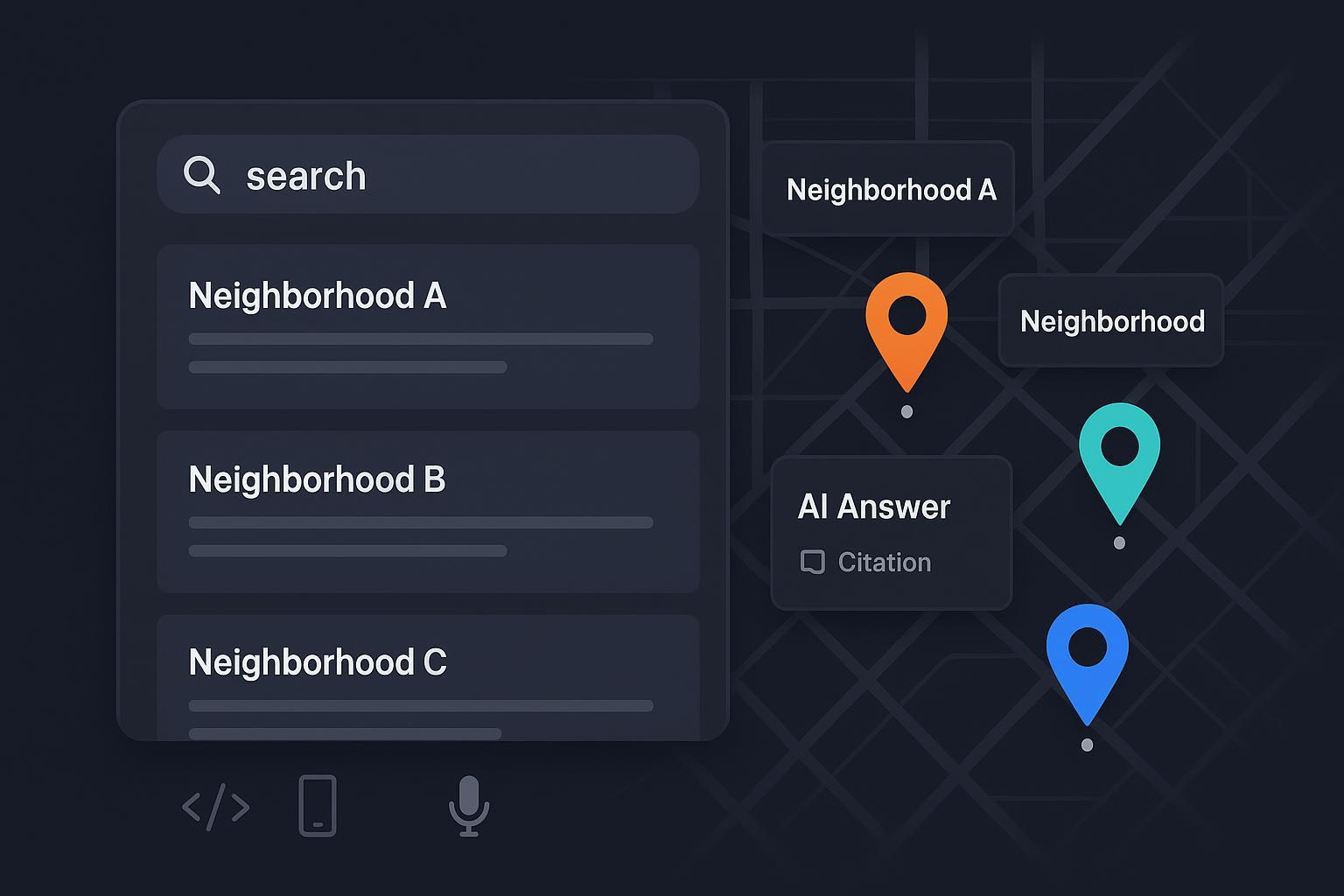
Traditional rankings still matter—but they’re no longer the whole game. As AI-generated answers occupy more real estate in search, visibility depends on winning two battles at once: classic SEO (rankings and clicks) and GEO, or generative engine optimization (getting cited and included inside AI answers). Here’s the deal: if your brand doesn’t rank and also doesn’t get cited, you’ll watch demand slip to whoever shows up in those AI summaries.
According to Google’s own documentation in 2025, sites that make content easier for systems to understand are more likely to show up in new AI experiences in Search, as outlined in Google’s guidance on AI features and your website (2025). And as Google expanded AI Mode in 2025, the surface area of AI answers grew again—see Google’s AI Mode update announcement (2025-05-20). Independent analyses, like Seer Interactive’s September 2025 study, report notable CTR drops on queries with AI Overviews, making inclusion in those answers a priority alongside rankings; see Seer’s AIO impact on CTR (2025). If you’re thinking, “So what exactly changes in my playbook?”—let’s map it out.
SEO vs GEO—how they differ and why they amplify each other
SEO optimizes for rank, impressions, CTR, and conversions from search results pages. GEO optimizes for inclusion, citation quality, and traffic that flows from AI-generated answers across AI Mode/Overviews, Copilot, Perplexity, and ChatGPT. The two disciplines feed each other: top-ranking, clear, fact-dense content is most likely to be pulled into AI answers; AI citations then reinforce authority and can nudge more organic demand back to your site.
| Dimension | SEO (Search Engine Optimization) | GEO (Generative Engine Optimization) |
|---|---|---|
| Primary goal | Rank on SERPs and earn clicks | Earn inclusion and citations inside AI answers |
| Optimization focus | Content depth, technical health, links, UX | Entity clarity, concise answer blocks, verifiable facts, structured data |
| Key surfaces | Classic SERPs, local packs, vertical results | Google AI Mode/Overviews, Bing Copilot, Perplexity, ChatGPT |
| Core KPIs | Rankings, impressions, CTR, sessions, conversions | Inclusion rate, citation share, referred sessions/conversions from AI surfaces |
| Success enablers | Topical authority, Core Web Vitals, internal links | Schema, FAQs/HowTo/TL;DRs, consistent NAP/GBP, clear attribution |
Local-first: the fastest way to turn SEO signals into GEO wins
If you operate in physical locations or service areas, start here. Local signals are heavily reused in AI summaries and maps-driven experiences.
-
Google Business Profile. Complete every field, choose precise categories, publish weekly Posts, and respond to reviews. This tightens entity trust and improves local pack performance that upstream AI features can reflect. For foundational guidance, see the evolving Google Search Central SEO Starter Guide.
-
NAP and citations. Keep your Name, Address, Phone, hours, and URLs consistent everywhere. Even small mismatches can weaken confidence and reduce inclusion odds in local AI summaries.
-
Location pages with local proof. Build unique pages for each city/neighborhood with embedded maps, local FAQs, service scope, and LocalBusiness schema. Add tangible evidence—photos, testimonials, project highlights—so you’re not publishing thin “city clones.”
-
Reviews and UGC. Encourage reviews via post-purchase flows and reply to every one. AI local summaries tend to privilege businesses with strong ratings and a steady cadence of feedback.
-
Mobile and voice readiness. Most local queries start on phones and often via voice. Write conversationally for “near me”/who/when/how intent, and keep page speed crisp to prevent bounce.
A simple single-city rollout might look like this: fix NAP inconsistencies; fully optimize GBP; ship one robust city page with LocalBusiness schema and a 5–7 question local FAQ; add weekly GBP Posts for a month; solicit reviews from recent customers; then measure map/grid rankings and AI inclusion on your top 10 local queries.
Structure your data so AI can trust and quote you
Structured data isn’t a magic lever, but it’s a clarity amplifier. Google states that eligible structured data can help content appear in AI features when appropriate, as described in AI features and your website (Google, 2025). Treat schema as a way to make your entities, answers, and attributes unambiguous.
High-impact patterns by scenario:
- Article/BlogPosting + Organization/Person: reinforce authorship, dates, and E‑E‑A‑T signals.
- FAQPage and HowTo: expose concise question/answer pairs and steps AI can summarize.
- LocalBusiness/Organization (+ openingHours, serviceArea, sameAs): anchor who you are and where you operate.
- Product/Offer/AggregateRating or Service: tie factual attributes (price, availability, rating) to what users see.
Implementation tips: use JSON‑LD; ensure markup matches visible content; validate in Google’s Rich Results Test; keep business attributes and offers current; link Organization to authoritative profiles with sameAs. When AI systems scan for quotable, verifiable snippets, this structure helps them find and trust your best material.
Content patterns AI actually cites
Think in “answer blocks.” Generative systems favor clear, fact-dense passages that resolve the query quickly and point to sources. That doesn’t mean writing robotic text; it means guiding the model.
- Lead with the answer, then support it. Start sections with a one‑to‑two sentence conclusion, followed by proof, context, and links.
- Create TL;DRs and FAQs on cornerstone pages. Short summaries and well-formed Q&As are frequently repurposed inside AI outputs.
- Name entities precisely. Use consistent product, organization, place, and concept names; add glossaries where ambiguity exists.
- Keep data current and attributable. Cite primary sources with dates so models can verify your claims.
Why does this work? Because systems like AI Mode, Copilot, and Perplexity are tuned to synthesize trusted, compact information. If your pages read like meandering opinion pieces, they’ll be ignored in favor of sources that say the quiet part out loud: the answer.
International targeting without breaking GEO
Expanding to multiple languages or regions? Technical clarity keeps both SEO and GEO intact.
-
Hreflang and canonicals. Implement self-referencing and reciprocal hreflang across variants (e.g., en-US, fr-CA) and ensure each page has a self-canonical that aligns with your language/region intent. Misaligned tags cause index confusion that cascades into AI features. For a practitioner overview, see SEMrush’s international SEO guide (2025).
-
URL structures. ccTLDs send strong geo signals but fragment authority; subdirectories consolidate strength and are easier to manage; subdomains are a middle path. Pick one per market and keep it consistent.
-
True localization. Don’t just translate; adapt formats, currency, payment methods, examples, and internal links. Conduct local keyword research and build local backlinks. AI models reward regionally authoritative pages when resolving location-sensitive questions.
Privacy and compliance guardrails for geo-targeting
Precise geolocation is regulated across major jurisdictions. In the EU, it’s personal data under GDPR; in California, it’s “sensitive personal information” under CPRA/CCPA. The safest path is consent-first design and transparent profiling.
-
Consent flows by region. Use a geo-aware consent management platform so EU visitors see opt‑in banners, California visitors see “Do Not Sell or Share,” and other states receive the right variant. The IAPP’s US state privacy tracker (ongoing) is a reliable way to monitor changes.
-
Sensitive location handling. Obtain explicit consent before processing precise location. Disclose any automated decision-making tied to geo-behavior, keep retention tight, and avoid dark patterns (provide equal prominence to “Reject all”).
-
Vendor governance. Update contracts with processors running geo-fencing, analytics, or ads to include data protection terms and data minimization.
These steps don’t just reduce legal risk; they protect trust. Few things sour a brand faster than jarring, overreaching prompts for location without a clear reason.
Measurement that proves the mix works
You can’t manage what you don’t measure—especially when some traffic now enters from AI surfaces rather than blue links.
- Build a query set by market and funnel stage. Include local (“near me”), informational, and commercial intents.
- Track AI inclusion and citations monthly across AI Mode/Overviews, Copilot, Perplexity, and ChatGPT. Compute your inclusion rate (percent of queries where you appear) and citation share (your share of citations vs named competitors).
- Pair with classic SEO metrics: ranks, impressions, CTR, sessions, conversions. For local, monitor map/grid rankings and Google Business Profile actions (calls, direction requests).
- Attribute thoughtfully. Use UTM conventions for GBP links and campaign landers, annotate site changes (schema updates, new FAQs, GBP Posts), and watch for lagged effects.
One more piece to keep in mind: Search behavior is shifting. Search Engine Land’s primer on GEO explains what “getting included” means and why it’s distinct from ranking—see What is Generative Engine Optimization (2024). When inclusion is a KPI, you’ll prioritize answer quality and entity clarity alongside content depth.
Model-specific nudges (Perplexity, Copilot, ChatGPT)
- Perplexity. It heavily favors fresh, well-cited pages. Keep facts updated, cite primary sources, and create tidy answer boxes and FAQs that can be quoted verbatim.
- Bing Copilot. Use clear headings and unambiguous claims; Copilot shows sentence-level citations, so structure paragraphs to align facts and sources tightly.
- ChatGPT (with browsing). Long-form, balanced resources with visible references tend to surface. Include TL;DRs, FAQs, and sameAs links in Organization schema to align with knowledge graphs.
Common failure modes (and how to avoid them)
- Chasing schema without substance: Markup won’t save thin content. Publish fact-dense, expert answers first, then add schema that mirrors on-page text.
- Keyword-stuffed GBP names: Violates guidelines and risks suspension. Use your legal business name and add detail in descriptions and Posts.
- Thin city pages: “Replace {City}” templates erode trust. Add local projects, photos, testimonials, and a 5–7 question FAQ per location.
- Hreflang mistakes: Mixing methods or mislabeling language-region codes confuses indexing. Pick one implementation method and test thoroughly.
- Privacy gaps: Using precise location without consent or burying opt-outs. Deploy geo-targeted consent and avoid dark patterns.
A 7-step action plan to start this month
- Define target queries by funnel stage and geography; add inclusion and citation-share KPIs alongside rankings.
- Fix NAP inconsistencies and fully optimize Google Business Profile; schedule weekly Posts and a review-reply cadence.
- Publish or upgrade one flagship location page with LocalBusiness schema, a TL;DR, and a local FAQ.
- Add or refresh schema across your top 10 pages: Article/Organization + FAQ/HowTo where relevant; validate in Rich Results Test.
- Refactor two cornerstone pieces to lead with the answer, add citations to primary sources, and include TL;DRs/FAQs.
- Implement hreflang/canonicals for one language-region pair (if applicable) and verify indexing behavior.
- Stand up a monthly GEO+SEO dashboard tracking AI inclusion, citation share, local/map visibility, and organic conversions; annotate major site and GBP changes.
If you combine rigorous SEO fundamentals with GEO’s answer-first discipline, you’ll show up twice: once in rankings and again inside the summaries people increasingly read. Ready to claim that extra surface area? Start the seven steps, watch the data, and adjust—then do it again next month.