How to Rank Higher in ChatGPT Answers (2025): A Practitioner’s Framework
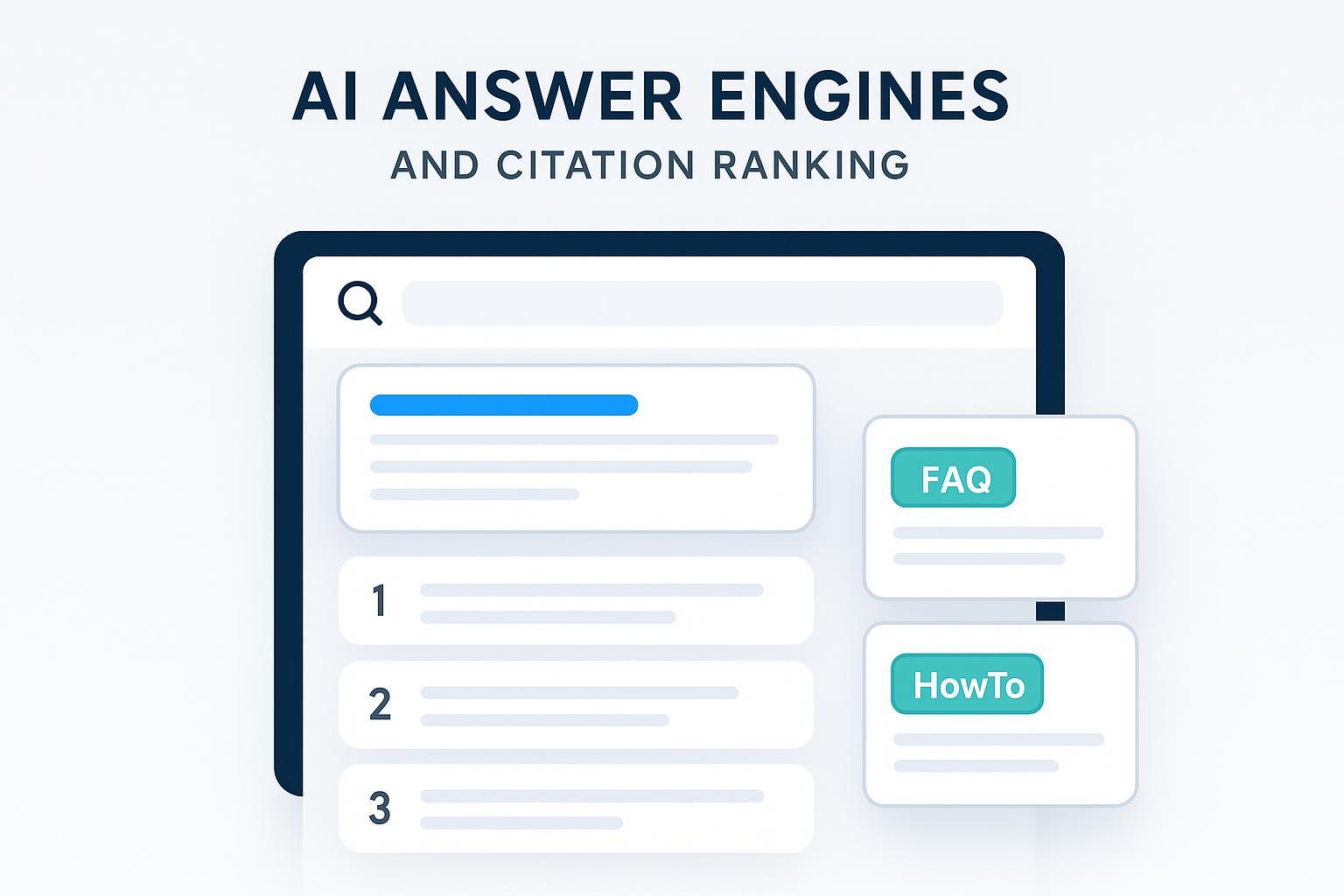
If you want your pages to show up as citations in ChatGPT, start with the uncomfortable truth: ChatGPT often builds answers from Bing’s index, then cites concise, authoritative passages it can trust and paraphrase. That makes Bing crawlability, passage-level structure, and freshness non‑negotiable. This guide gives you a practical framework—with code, a workflow, and a comparison table—to raise your odds of being cited.
What ChatGPT actually cites (and why)
ChatGPT’s browsing-grounded answers display numbered citations when the model pulls from the web. OpenAI documents continuous improvements to browsing and factual grounding in the official ChatGPT release notes (Nov 2025) and describes intended behavior in the Model Spec (Oct 27, 2025). While OpenAI does not disclose a precise ranking algorithm, observable behavior and industry consensus suggest the following: the system favors relevance to the prompt, recency, clear authority signals, and passages that are easy to quote and summarize.
Here’s the deal: if your content isn’t reliably discoverable in Bing and organized into extractable sections, your chance of appearing in citations drops sharply.
Foundations: be findable, parsable, and authoritative in Bing
Microsoft has stated that assistants like Copilot “break content down into smaller, structured pieces” and assemble answers from multiple sources. Their guidance on optimizing for AI search emphasizes modular content, schema, and measurement via Bing Webmaster Tools. See Microsoft’s late‑2025 guidance on optimizing content for inclusion in AI search answers and evolving measurement in Bing Webmaster Blog (Nov 20, 2025).
Fast freshness matters. IndexNow lets you notify Bing (and other adopters) of new or updated URLs immediately, reducing the lag between publishing and being eligible for AI answers.
# IndexNow ping example
https://www.bing.com/indexnow?url=https://example.com/blog/new-post&key=YOUR_KEY
Operational tips:
- Submit XML sitemaps and automate IndexNow pings on publish/update/delete events.
- Use Bing Webmaster Tools for crawl diagnostics, sitemap status, and (as available) AI experience visibility.
- Keep core content server-rendered and cleanly parsable; avoid hiding key facts behind interactive elements.
Passage-first content structure
AI engines often retrieve at the passage level, then compose a summary. Google’s patent on generative summaries for search results (US11769017B1) and RAG literature imply that compact, self‑contained sections increase extractability.
Make each section a mini‑answer:
- Lead with a 1–2 sentence summary answer.
- Follow with 1–3 concise paragraphs that include canonical facts or definitions.
- Use descriptive H2/H3 headings tied to specific questions.
Schema supports understanding. Even as SERP rich‑result policies evolve, implementing visible, honest structured data improves AI comprehension. See Google’s FAQPage docs, QAPage, and HowTo. Validate everything with Google’s Rich Results Test and Schema.org’s validator.
Technical controls matter. Many AI crawlers honor robots.txt, and Bing supports the data-nosnippet attribute to exclude content from snippets while keeping pages indexed.
# robots.txt patterns (verify latest user-agent names)
User-agent: GPTBot
Disallow:

User-agent: CCBot
Disallow: /private/

User-agent: Google-Extended
Disallow: /ai-training-restricted/
Use data-nosnippet sparingly to protect sensitive fragments without over‑blocking helpful sections you want cited.
The 9-step workflow to increase ChatGPT citations
- Inventory questions: Map your topics to real prompts and intents. Group by entities and query families.
- Craft passage-first sections: For each key question, create a self‑contained block with a summary sentence and 1–3 supporting paragraphs.
- Add fact boxes: Include canonical stats, definitions, or short checklists that are easy to paraphrase.
- Implement schema: Add FAQPage/QAPage/HowTo/Product/Organization markup that mirrors visible content.
- Accelerate indexing: Automate IndexNow; maintain XML sitemaps; confirm Bing indexation.
- Validate in Bing: Use Webmaster Tools for crawl issues; ensure clean HTML, fast load, and mobile usability.
- Strengthen authority: Consistent Organization schema, corroborating third‑party citations, reviews, and clear author credentials.
- Monitor citations: Run periodic prompts in ChatGPT; log observed citations and competitor sources. Track Bing AI experiences via Webmaster Tools as features roll out.
- Iterate: Revise sections that aren’t being cited; tighten summaries; refresh data; expand FAQs based on observed queries.
Cross-engine nuances (2025)
Different engines cite and compose answers differently. Optimize for each while keeping your passage‑first core.
| Engine | How citations typically show | What it prefers | Practical tip |
|---|---|---|---|
| ChatGPT | Numbered links when browsing is used | Concise, authoritative passages; recent sources | Provide 1–2 sentence canonical answers at the top of sections; keep facts dated and attributed |
| Perplexity | Prominent citations and quoted snippets | Clear definitions; unique stats; high authority | Add “fact boxes” and unambiguous definitions; avoid hedging language |
| Bing Copilot | Composed answers from modular pieces | Well‑structured pages, schema, authority signals | Use comprehensive schema and IndexNow; monitor via Bing Webmaster Tools |
| Google AI Overviews | Passage-focused synthesis | Self‑contained sections; strong E‑E‑A‑T | Maintain expert bylines, references, and compact sections suitable for extraction |
Measurement and iteration
You need a feedback loop. Microsoft has announced expanding visibility for AI experiences and citations in Bing Webmaster Tools—see the Nov 20, 2025 update. Pair this with Clarity session data to understand behavior after AI referrals.
Because comprehensive “when am I cited?” logs are not publicly available across engines, combine:
- Platform checks: Regular tests in ChatGPT (Plus/Enterprise), Perplexity, Gemini, and Copilot with consistent prompts.
- Bing Webmaster Tools: Impressions, AI placements, and crawl/index diagnostics.
- Third‑party trackers: Use a small stack to monitor share of voice and citations, but avoid tool sprawl. Maintain a single log of prompts, screenshots, and outcomes.
Refresh cadence matters. IndexNow reduces lag, but you still need a schedule to update facts, dates, and references. Treat high‑intent pages as living documents.
Advanced tips and common pitfalls
Checklist you can apply during audits:
- Keep critical facts visible in HTML; avoid burying key answers in tabs or images.
- Reduce boilerplate intros; lead with the answer.
- Validate structured data; every FAQ/QA must reflect on‑page text.
- Don’t over‑block: use robots.txt and
data-nosnippetcarefully; blocking helpful sections lowers citation likelihood. - Strengthen entity signals: Organization schema, consistent NAP, verified social profiles, and reputable directory listings.
- Maintain author credentials and citations to primary sources; include clear dates near stats.
- Automate IndexNow; watch for submission failures.
- Monitor and prune outdated pages or consolidate thin content to build topical authority.
Why passage-first works (and how to test it)
Think of each section as a quotable “tile.” AI engines lift the tile that best answers the query, then assemble the mosaic. If your tiles are labeled, concise, and authoritative, they get picked.
Run a simple experiment: publish a page with three question‑titled sections, each starting with a 1–2 sentence answer and a dated fact. Validate schema, push IndexNow, and, after indexing, test prompts in ChatGPT. Log whether your page appears among citations. Tighten wording, add a fact box, and re‑test. You’ll usually see extractability improve as sections become clearer and more canonical.
Sources and standards you should know
- OpenAI artifacts: ChatGPT release notes (Nov 2025) and Model Spec (Oct 27, 2025).
- Microsoft guidance: Optimizing content for inclusion in AI search answers (Oct 8, 2025).
- Passage extraction rationale: Google’s generative summaries patent (US11769017B1).
- Structured data references: FAQPage, QAPage, HowTo.
- Freshness and indexing: IndexNow adoption recap (Dec 2024).
Your action plan for this week
Ship one optimized page end‑to‑end:
- Choose a topic and draft three passage‑first sections with canonical answers.
- Add FAQPage or HowTo schema that mirrors visible content; validate.
- Push IndexNow; submit sitemaps; confirm Bing indexation.
- Test prompts in ChatGPT and log citations; iterate wording and facts based on what you see.
One question to consider: which of your pages already have authoritative facts that you could restructure into clear, quotable tiles today?