What Are Pause Ads? The Marketer’s Guide to CTV and YouTube’s Game-Changing Ad Format

Introduction: Meet Advertising’s “Billboard Moment”
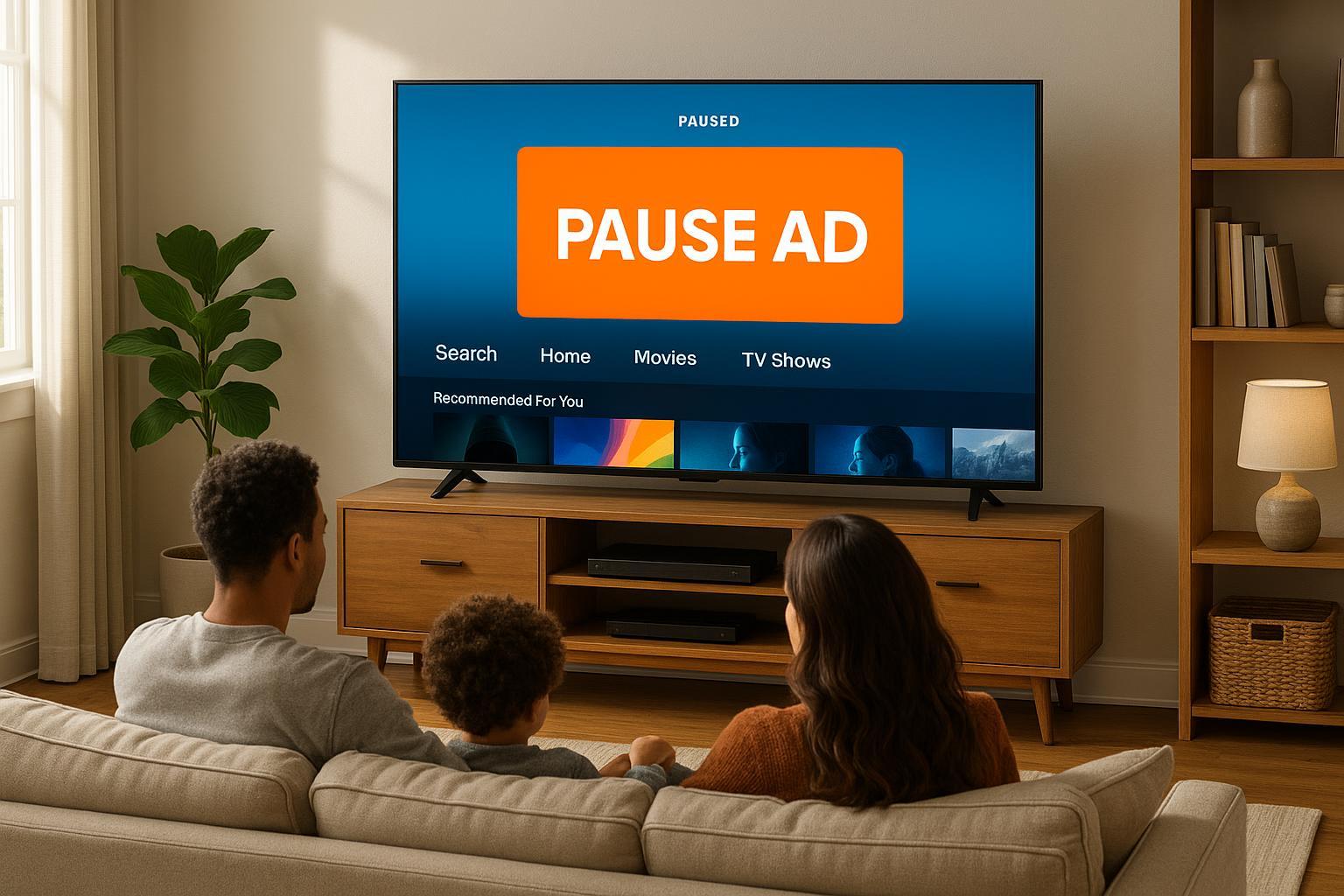
Have you ever paused a movie or show on your smart TV, only to notice a perfectly timed brand message filling the screen? That’s the power of a Pause Ad—a digital billboard that appears when viewers choose to stop their content, offering brands a non-intrusive, high-visibility opportunity to connect.
Unlike traditional ad formats that interrupt viewing (pre-roll, mid-roll, or overlays), Pause Ads harness the natural break in attention, turning idle moments into prime branding real estate. For marketers and agencies, especially those working in video, CTV/OTT, and YouTube advertising, understanding Pause Ads unlocks new tactics for engagement and attribution.
Defining Pause Ads: Core Concept
Pause Ads are static (or sometimes interactive) advertising units that appear when the viewer pauses video content on a streaming platform. They’re primarily found on Connected TV (CTV) environments (think streaming apps, smart TVs, media sticks), but starting in 2024, YouTube has rolled out Pause Ads for its CTV users as well (Strike Social).
Analogy: If traditional ads are the “roadside billboards” as you drive, Pause Ads are the “billboard you notice when you pull over”—maximizing attention precisely when the viewer chooses to stop.
Key Attributes:
- Triggered by user action (pausing content)
- Do not extend overall viewing time
- Typically static images, sometimes interactive (QR, shoppable)
- Ultra-high viewability on large screens
- Designed for minimal disruption and high recall
Mechanics: How Pause Ads Work on CTV and YouTube
Platform Differences Table
| Aspect | YouTube Pause Ads (CTV) | Other CTV Providers (Netflix, NBCU, Peacock) |
|---|---|---|
| Trigger | Pausing video, 10s delay required | Direct pause triggers, timing varies |
| Format | Static hi-res branded image | Static, sometimes interactive, QR, shoppable |
| Interaction | No click-through, passive | May include QR scan, send-to-phone, shop features |
| Device Target | CTV devices only | CTV, sometimes live TV apps |
| Ad Strategy | Awareness, brand recall | Awareness, direct response, commerce |
- YouTube’s Pause Ads: Only served when a user pauses a video on YouTube via a smart TV (CTV), with a brief delay (~10 seconds unused for interaction, then 5 seconds wait) to avoid triggered ads from accidental or short pauses. The ad displays until playback resumes.
- Other Platforms: Netflix, NBCUniversal, and Amazon use similar logic, but some go further—using QR codes, interactive elements, or shoppable overlays. For example, retail brands like Ulta Beauty have run shoppable Pause Ad campaigns via CTV (Digiday).
Specs for Creatives (YouTube):
- PNG/JPG, 1080x1080–1350x1080 px, max 2-3MB
- 4:5 or 5:4 aspect ratio
- Vibrant but uncluttered images for clarity on big screens
Why Marketers Love Pause Ads: Proven Value & Effectiveness
Pause Ads aren’t just visually compelling—they deliver:
| Metric | Pause Ads Advantage |
|---|---|
| Engagement | Up to 26% higher than interruptive ads (eMarketer) |
| Brand Recall | Up to 41% higher recall rates |
| Viewability | Exceptionally high (large CTV screens) |
| CPM Efficiency | Competitive/stabilizing, sometimes decreasing |
| Conversion | Strong on shoppable, actionable variants |
Pause Ads succeed because they meet viewers in a receptive state—no content disrupted, attention naturally focused. Industry trials, such as CPG (Charmin), retail (Ulta Beauty), and public service campaigns, confirm impressive recall and engagement metrics (Programmatic Is Finally Coming To Pause Ads – TVREV).
Real-World Example: DirecTV’s Breakthrough
DirecTV’s Pause Ad technology made headlines by winning a 2023 Emmy Award for advancing viewer-friendly advertising on streaming platforms, cementing its role as an industry pioneer (Digiday).
How Pause Ads Compare: Boundary Setting With Other Video Ads
| Format | Placement | Intrusiveness | Engagement | Interaction |
|---|---|---|---|---|
| Pre-roll/mid-roll | Before/during content | High | Moderate | Video, CTA |
| Overlay | Banner over playing video | Low-Moderate | Variable | Sometimes clickable |
| Pause Ad | On user-initiated pause | Low | High | Mostly passive, some interactive |
| QR/Shoppable | Overlaid/interactive | Moderate | Highest | Scan, shop |
Pause Ads stand out for minimal disruption and their memorable timing. They’re not just passive: some CTV platforms enable next-level engagement with QR codes (“send-to-phone”), fostering direct consumer interaction and e-commerce.
Best Practices: Creative & Campaign Strategy
A successful Pause Ad strategy leverages both technical specs and smart creative:
For Creatives:
- Clear, bold imagery—avoid clutter for easy brand ID at distance
- Message contextualization—align creative to natural breaks (e.g. restrooms for Charmin)
- Incorporate interactivity—QR codes, shoppable elements if platform supports
For Campaign Setup:
- Target by CTV device and content category for contextual relevance
- On YouTube, use the Premier Reach buying route; upload creative as per spec (Getting Started With YouTube Pause Ads – Strike Social)
- Set clear goals: brand lift, engagement, conversions
- Measure: brand recall, QR scans, post-view actions
Pro Tip: Pause moments are “lean-in” opportunities for media planners—test messaging that is quick to absorb and actionable without demanding user attention.
Challenges & Limitations: The Road to Scale
Pause Ads aren’t a cure-all, and smart marketers must weigh:
- Creative boundaries: Most platforms only support static images (YouTube CTV) or limited interactivity; dynamic video/animation is rare for Pause Ads
- Programmatic buying hurdles: Standardization across CTV platforms is in early growth; measurement and creative versions differ
- Ad fatigue risk: Overuse can erode effectiveness if not thoughtfully sequenced
- Privacy/regulatory factors: Pause event data—while useful for targeting—raises compliance considerations (GDPR, CCPA)
- Device/UX complexity: Interaction and measurement capabilities vary between big-screen CTV, desktop, mobile
As the IAB Tech Lab and major ad platforms continue aligning creative standards and programmatic infrastructure, Pause Ads are likely to play a larger role in future campaign planning (IAB Tech Lab on Pause Ad standards).
Future Trends: AI, Interactivity, and the Path Forward
What’s next for Pause Ads?
- AI-powered targeting: Leveraging “pause moment” signals and context (show, device, user profile) to serve hyper-relevant ads
- Interactive evolution: Shoppable overlays, “send to mobile” features, and real-time commerce opportunities
- Measurement advances: More granular, privacy-safe attribution across devices and viewing contexts
- Standardization: IAB and leading platforms driving creative guidelines and OpenRTB protocol adoption
For marketers, now is the time to test Pause Ads—especially as cross-platform buying and campaign measurement mature.
Conclusion: Should Pause Ads Be On Your Radar?
If you’re planning CTV or YouTube campaigns in 2025, Pause Ads are no longer “experimental”—they’re a proven tactic. They offer distinct advantages in attention, brand recall, and user experience, while presenting new creative challenges and strategic opportunities.
For further reading or campaign inspiration, explore:
- Programmatic Is Finally Coming To Pause Ads (TVREV)
- Getting Started With YouTube Pause Ads (Strike Social)
- Pause ad reach is unmatched by other CTV formats (eMarketer)
- Digiday — DirecTV Pause Ad Case Study
- AdExchanger — IAB Standards and Future
By understanding and implementing Pause Ads thoughtfully, brands and agencies can make their message a welcomed guest rather than an unwanted interruption.
Author: A digital marketing strategist with hands-on CTV and cross-platform video campaign experience, speaking directly to brand marketers, agencies, and OTT media planners ready for next-gen video advertising.