Oracle’s AI Marketing Agents: Automating Persona-Based Targeting and Audience Qualification (2025)

What just happened—and why marketers should care
On October 6, 2025, Oracle introduced embedded, role-based AI agents inside Oracle Fusion Cloud Applications that target marketing, sales, and service workflows. For marketers, the headline capabilities include automating persona-based targeting and audience qualification directly within Fusion CX. Oracle positions these agents as native features that work across unified enterprise data, shifting work from manual segmentation to proactive, data-informed orchestration. See the official framing in the Oracle Newsroom announcement (Oct 6, 2025) and the Oracle AI Agents product overview.
Independent coverage corroborates key marketing agent functions—title-mapping for buying roles, predictive audience recommendations, and account fit scoring—inside Fusion workflows, as reported by SiliconANGLE (Oct 6, 2025) and Techzine (Oct 6, 2025). MarTech’s roundup emphasizes the cross-functional data foundation spanning marketing, sales, service, and finance (MarTech, Oct 6, 2025).
Updated on 2025-10-07: Initial analysis published; sources verified.
The marketing agents: what they do in plain English
Based on Oracle’s release and reputable coverage, the marketing-focused agents are:
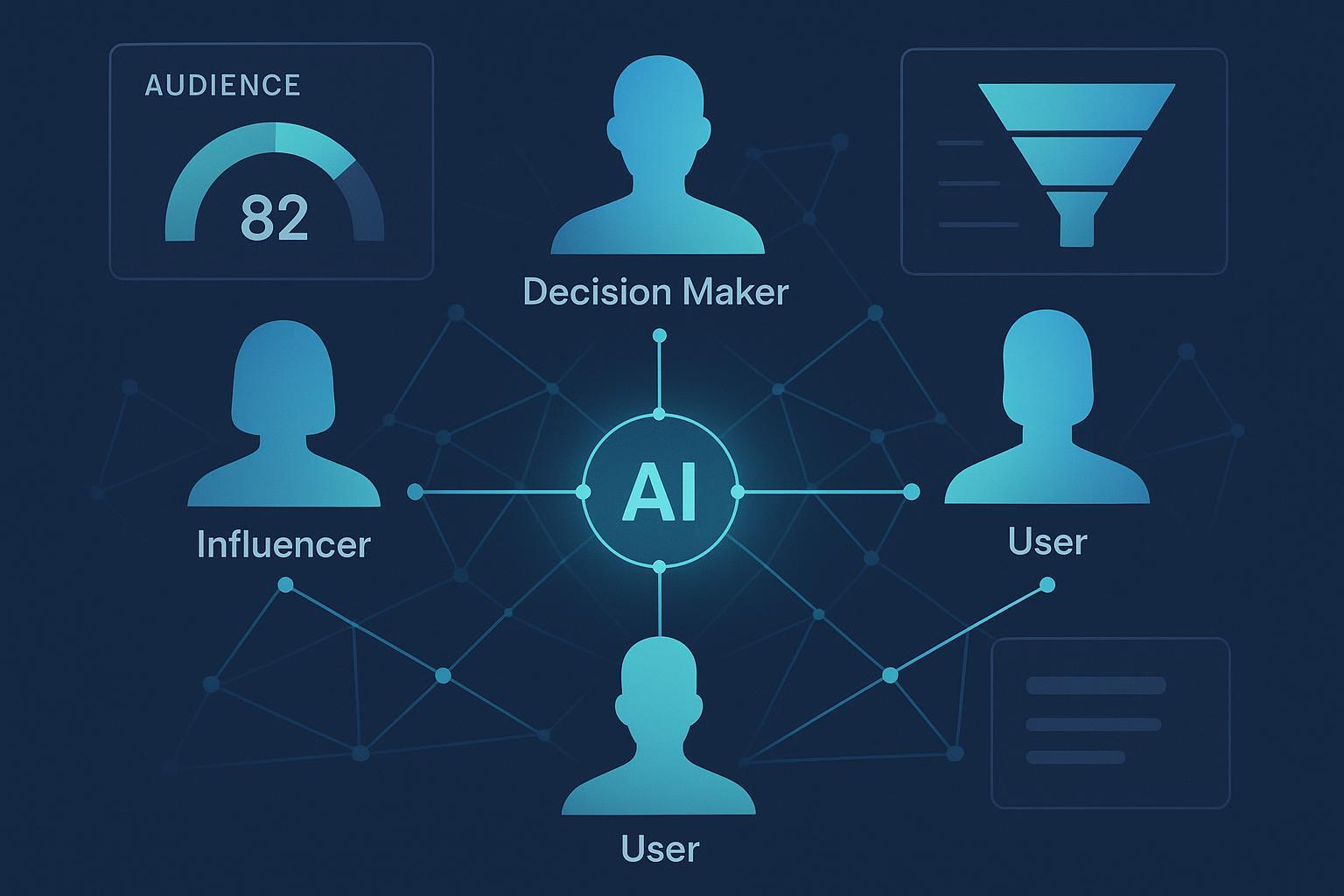
- Buying Group Definition Agent: Uses title-mapping to identify role-specific buying groups (e.g., decision makers, influencers, users) for a given product and industry. This is designed to automate persona cohorts that traditionally require manual list-building and curation. Coverage outlining this capability appears in SiliconANGLE and Techzine.
- Model Qualification Agent: Applies predictive models to recommend best-fit audiences and evaluate data quality for targeting. This helps marketers identify segments likely to engage or convert while flagging weak inputs.
- Account Product Fit Agent: Scores and prioritizes accounts most likely to purchase a specific product based on historical signals and account attributes, aiding budget allocation and sales alignment.
Oracle frames these agents as embedded inside Fusion, running on Oracle Cloud Infrastructure (OCI) and tapping unified enterprise data. That embedded design matters for speed-to-value and governance, per the Oracle Newsroom announcement (2025).
Why this is a shift: From static personas to dynamic buying groups
Most B2B teams maintain static persona sheets and title lists that quickly stale, especially in complex buying committees. Embedded agents change the operating model:
- From manual lists to algorithmic role-mapping: Agents propose who belongs to a buying group for a product/industry combination, reducing hand-built spreadsheets.
- From one-time segmentation to continuous qualification: Predictive models can re-rank audiences as new data arrives, supporting ongoing relevance.
- From siloed tools to native orchestration: Because the agents sit inside Fusion CX, identity resolution and cross-functional data reduce the stitching overhead common with bolt-on AI tools.
Data readiness: prerequisites before you flip the switch
Automation amplifies both strengths and flaws in your data. Prepare the following:
- Title taxonomy hygiene: Normalize job titles and seniority levels; map them to role categories (decision maker, influencer, user). Spot-check ambiguous titles that vary by industry.
- Account and contact integrity: De-duplicate records, unify identities, and complete key attributes (industry, revenue band, product ownership) to avoid distorted model outputs.
- Product and industry mapping: Align SKUs/solutions to industry buying role patterns to help the agents create sensible buying groups.
- Governance and QA: Establish a review cadence where marketing ops and data partners audit agent outputs weekly in early rollout, documenting exclusions and change logs.
To formalize QA beyond personas, use a content-centric lens for consistency scoring in downstream assets with tools like the Content Quality Score documentation to ensure messaging quality as segments evolve.
How to operationalize the agents: a day-in-the-life workflow
Here’s a practical sequence for B2B demand gen teams rolling out inside Fusion CX:
-
Define buying groups with the Buying Group Definition Agent
- Input: normalized title taxonomy, product/industry context.
- Action: generate role-specific cohorts; sample and validate 5–10% of mapped roles before full deployment; document exclusions.
-
Qualify audiences with the Model Qualification Agent
- Input: audience pools pulling from marketing engagement, account attributes, and historical outcomes.
- Action: compare agent-recommended segments with analyst-curated controls in A/B tests; monitor lift in qualification rate and early-stage conversion.
-
Prioritize accounts with the Account Product Fit Agent
- Input: account-level signals (firmographics, product usage, engagement history).
- Action: route high-propensity accounts to campaigns/sales motions; align SDR cadences; allocate budget where propensity and capacity intersect.
-
Build campaigns and content
- Action: adapt messaging to the roles surfaced by the agents; ensure landing pages and offers reflect role-specific pain points. For content creation workflows that complement these segments, review the QuickCreator AI: Comprehensive Review for Content Creators (2025).
Disclosure: QuickCreator is our product. You can use QuickCreator to systematize content production once buying groups are defined—neutral, role-aware copy and assets help maintain consistency across campaigns.
Measurement: what to track in the first 30–90 days
Focus on validation and incremental lift rather than vanity metrics:
- Persona-level conversion rate: Compare agent-defined roles vs. baseline segments.
- Audience qualification score: Track changes in qualification thresholds and false positives.
- Cost per qualified account (CPQA): Measure spend efficiency for agent-influenced cohorts.
- Pipeline velocity: Days from MQA/MQL to opportunity; monitor by persona.
- Title-mapping accuracy: Spot-check 5–10% of role assignments weekly in early rollout; track variance by industry and seniority.
Risks and guardrails: keep the automation honest
- Role drift and misclassification: Ambiguous titles (e.g., “Program Lead”) can skew cohorts. Maintain an exclusions list and revalidate quarterly.
- Bias across industries and seniority: Ensure mappings don’t over-index certain industries or levels; calibrate with diverse samples.
- Data governance: Document changes, establish QA gates, and ensure compliance for audience handling. MarTech’s coverage underscores the cross-functional data context inside Fusion (Oct 6, 2025), which helps governance but does not replace internal controls.
Embedded vs. bolt-on AI: why native agents can accelerate outcomes
- Speed and maintenance: Embedded agents leverage the existing data model and workflows, reducing integration debt.
- Security and privacy: Fewer data transfers across tools limit exposure and governance complexity.
- Consistency of identity: Native agents benefit from unified IDs across marketing, sales, and service, minimizing duplication issues.
Media and Oracle emphasize embedded design as a differentiator; see Oracle’s overview (Oct 6, 2025) and SiliconANGLE’s breakdown for context.
Future outlook: toward full-funnel, agentic orchestration
Expect convergence across CX as marketing, sales, and service agents coordinate more tightly. Teams will need multidisciplinary oversight—marketing ops, data, and sales enablement—to supervise model outputs and campaign QA. Oracle’s recent recognition in AI agents (ISG Buyers Guides, Sep 18, 2025) signals momentum in embedded, agentic approaches; see the Oracle Newsroom note on ISG recognition (Sep 18, 2025).
For a broader lens on how AI summaries and agentic systems change visibility and content strategy, see our forward-looking take in Future of SEO in 2025: Winning Visibility in AI Summaries.
Practical checklist for rollout
- Normalize titles and define role categories.
- De-duplicate and enrich account/contact data; unify identities.
- Map products to industries and buying role patterns.
- Establish QA gates and change logs; sample-review agent outputs weekly.
- A/B test agent-recommended segments vs. analyst controls; track lift in qualification.
- Align SDR/AE cadences to account propensity; adjust campaign budgets accordingly.
- Review bias and seniority balance quarterly; recalibrate mappings.
What we’re watching next
- Oracle AI World demos that detail title-mapping and qualification models.
- First customer pilots with quantified lift or cycle-time reductions.
- Any updates on agent availability, rollout phases, or pricing from Oracle’s product pages.
Mini change-log
- Updated on 2025-10-07: Initial analysis published; sources verified.
- Updated on YYYY-MM-DD: Add first customer example; clarify title-mapping QA procedure.
Sources and references
- Official framing: Oracle AI Agents announcement (Oracle Newsroom, Oct 6, 2025)
- Product overview: Oracle AI Agents in Fusion Applications
- Independent corroboration: SiliconANGLE breakdown (Oct 6, 2025)
- Independent corroboration: Techzine breakdown (Oct 6, 2025)
- Cross-functional data context: MarTech article (Oct 6, 2025)
- Market momentum: Oracle named a market leader in AI agents (ISG Buyers Guides, Sep 18, 2025)