How to Optimize Your Content for Zero‑Click AI Search Results (2025)

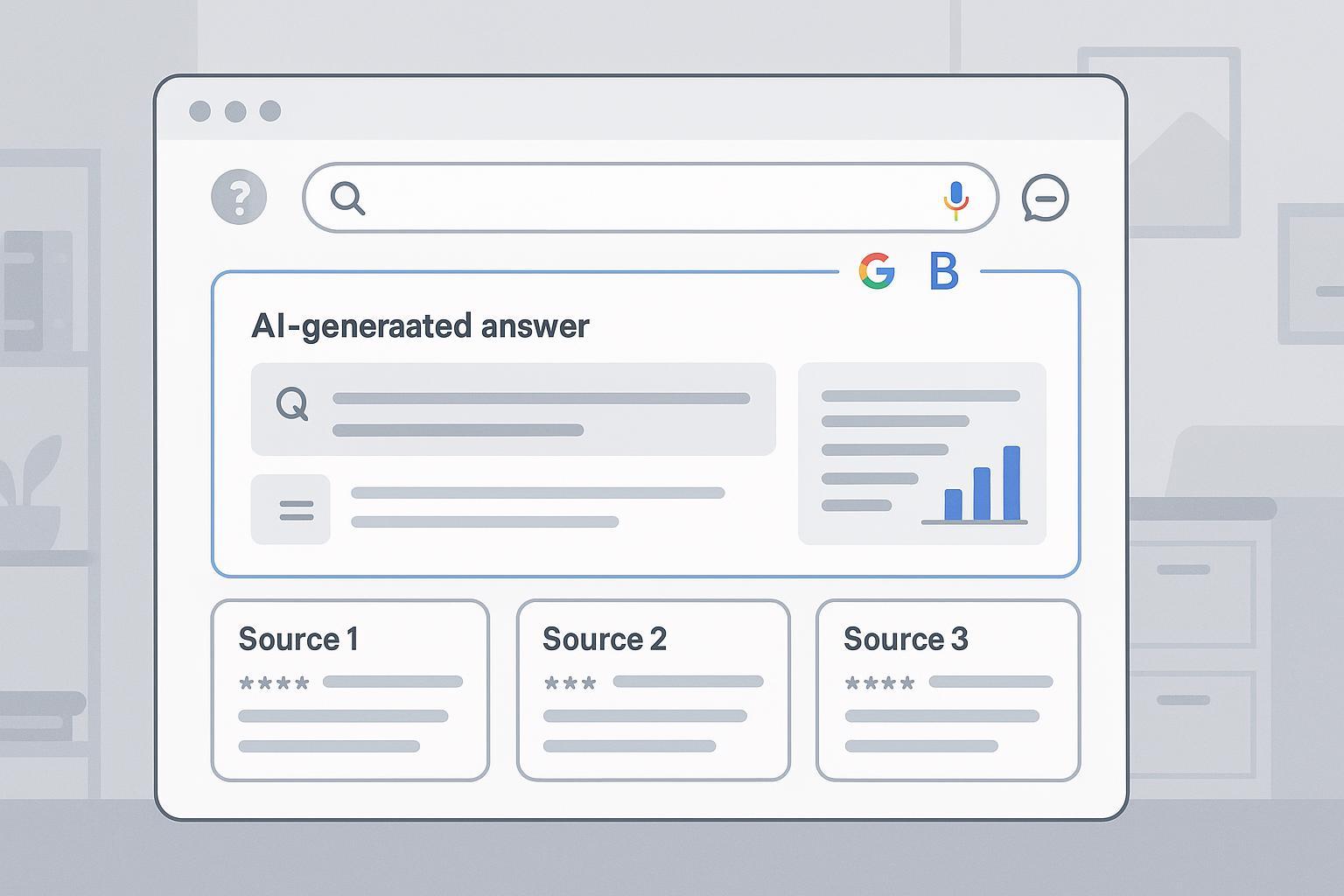
Zero‑click is now a default outcome on AI‑powered search. Your job isn’t just to win clicks—it’s to earn presence and trustworthy citations inside AI answers. In 2024–2025, multiple studies show the shift clearly: Google sends fewer clicks when AI summaries appear. For context, the 2024 clickstream analysis by SparkToro/Datos reports that only about “360–374 clicks” per 1,000 searches reach the open web (US/EU), indicating that a majority of queries result in no site visit according to the SparkToro 2024 zero‑click study. In 2025, publisher cohorts observed average click declines when AI Overviews were shown, as documented in the Digital Content Next 2025 analysis of AIO effects. Pew Research (2025) also found users are less likely to click when a summary is present, per the Pew short read on AI summaries and clicking behavior.
This article distills field‑tested practices to help you get cited, remembered, and trusted—even when the answer engine doesn’t send traffic.
Core Principles for AI Answer Visibility
- Optimize for extractability. AI engines prefer self‑contained, concise, well‑structured snippets they can quote or summarize. Use question‑led sections, lists, tables, and short answers.
- Earn credibility and grounding. Clear authorship, updated facts with dates, and corroboration across authoritative profiles lend trust to your content.
- Refresh content deliberately. AI systems favor current information and may de‑prioritize outdated statistics or guidance.
- Model the platform. Google’s AI features and Bing Copilot cite sources differently. Learn their mechanisms and align your formatting and structured data accordingly.
For platform mechanics, Google explains how content becomes eligible for AI features and rich results in the Google Search Central AI features documentation.
Direct‑Answer Formatting That Gets Quoted
Most AI engines extract “answer‑sized” chunks. Design your page so the best passages are easy to lift, attribute, and trust.
What consistently works in practice:
-
Use question‑based H2/H3 headings
- Begin with the exact user question (How, What, Why, When) and immediately follow with a one‑paragraph answer (40–80 words).
- Add a bulleted list or a compact table with key points.
-
Provide short, definitive answers up top
- Target 1–3 sentences (25–60 words) that directly resolve the query.
- Maintain a neutral, evidence‑based tone; inject a date when citing data.
-
Structure supporting detail right after the summary
- Include: numbered steps, do/don’t lists, brief examples, and links to corroboration.
- Use tables for comparisons; AI models often surface table rows as concise facts.
-
Include a lightweight FAQ block
- 3–6 common follow‑ups that mirror real user phrasing.
- Keep each answer under 80 words; reference sources sparingly but clearly.
Copy template you can adapt:
- H2: What is [concept]?
- Short answer: 1–2 sentences with a date if relevant.
- Key points (list): 3–5 bullets.
- H2: How do I implement [concept] step‑by‑step?
- Numbered steps: 5–8 clear actions.
- H2: FAQ
- Q1: … / A1: …
- Q2: … / A2: …
If you’re newer to AI answer optimization, this primer on conversational tone and chunking provides practical starters: GEO “Nano Banana” beginner guide.
Schema Essentials: Make Answers Machine‑Readable
Google and Bing rely heavily on structured data to understand and display content. Focus your initial deployment on a few high‑impact types, then validate.
-
FAQPage
- Mark each visible Q&A using schema.org FAQPage with Question and Answer.
- Keep the on‑page copy aligned with the JSON‑LD to avoid mismatches.
- Reference: Google FAQPage structured data.
-
HowTo
- Use HowTo with ordered steps (HowToStep) and optional images.
- Great for “procedural” tasks AI engines often summarize.
- Reference: Google HowTo structured data.
-
VideoObject
- Add JSON‑LD to pages hosting videos; include transcript and key properties (name, thumbnailUrl, uploadDate, embedUrl).
- AI engines increasingly cite short instructional videos alongside text.
- Reference: Google Video structured data guidelines.
-
Speakable (selective)
- For news/publisher sections, identify concise passages suitable for voice assistants.
- Validate conservatively and test audience impact.
Validation workflow:
- Use Google’s Rich Results Test and the Schema Markup Validator.
- Check Google Search Console Enhancements for issues.
- Ensure server‑side rendering or hydration allows crawlers to see the structured data.
Common pitfalls seen in audits:
- Missing required properties (e.g., no acceptedAnswer for FAQ).
- Markup not matching visible content (risking ineligibility).
- JS‑only rendering hides JSON‑LD from crawlers.
- Over‑marking promotional copy as FAQ or HowTo.
For broader context on eligibility and constraints, see the Google documentation on AI and structured data.
Entity SEO: Ground Your Brand for Reliable Citations
AI engines lean on entities—people, organizations, products—and the relationships among them. Strengthen your entity signals so summarizers have fewer reasons to skip or misattribute you.
Practical steps:
-
Create authoritative entity pages
- Organization: name, logo, description, official site, contact, founders.
- Person (author): bio, credentials, headshot, affiliations, publications.
-
- Link to verified profiles (LinkedIn, Crunchbase, Wikipedia, industry directories).
- Keep names, descriptions, and logos consistent across platforms.
-
Corroborate externally
- Secure listings and third‑party references that echo your key facts.
- Encourage reviews and citations from reputable sources in your niche.
-
Build internal topical clusters
- Interlink concept pages with descriptive anchors that reflect entity relationships.
- Ensure pillar pages summarize subtopics with concise, quotable blocks.
Entity work is a medium‑term compounding investment; don’t expect overnight changes, but it’s foundational for answer engines.
Multimodal Assets: Images, Video, Audio That AI Can Trust
A growing share of AI answers reference video clips, charts, and images. Treat non‑text assets as first‑class citizens.
-
Images
- Write meaningful alt text (avoid keyword stuffing); add long descriptions for charts.
- Use semantic HTML and compression; name files descriptively.
-
Video
- Publish transcripts or captions; host on a canonical page with VideoObject JSON‑LD.
- Short (60–180s) explainers pair well with direct‑answer sections.
-
Audio/Podcast
- Include episode metadata (title, duration, date) and transcript.
- Use AudioObject/PodcastEpisode where relevant.
-
Provenance and authenticity
- Consider C2PA content credentials for high‑stakes media to signal trust.
This multimodal foundation helps your pages become attractive citation targets across engines.
Cross‑Engine Reality: Google AIO, Bing Copilot, Perplexity, ChatGPT
You’ll see differences in how each platform grounds and cites answers:
-
- Generative summaries at the top; show linked citations; structured data helps eligibility.
- Keep answers short, dated, and supported by markup.
-
Bing Copilot
- Chat‑style responses with “learn more” links; ensure crawlability and clean schema.
-
Perplexity
- Direct answers with visible sources; publishers can explore licensing programs; be mindful of evolving crawler behaviors—some reports allege stealth crawling practices documented by Cloudflare in 2025 (see the Cloudflare blog on Perplexity crawling behavior).
-
ChatGPT Search
- Sources are displayed inline and in sidebars; no formal opt‑out via robots.txt or llms.txt is publicly affirmed; focus on being an authoritative reference.
Governance posture:
- robots.txt remains your primary crawler control, but compliance varies.
- llms.txt is emerging; use it to express guidance but don’t rely on enforcement. For background, see the AnswerDotAI llms.txt proposal (2024–2025).
Measurement and Reporting: Win Without Clicks
Measure the presence and quality of your brand inside AI answers. Suggested KPIs:
- Coverage: percent of tested queries where your brand/site is cited.
- Citation density: number and share of answers citing your URLs.
- Sentiment: positive/neutral/negative tone of AI summaries that mention you.
- Brand recall proxies: direct traffic, branded search volume changes.
- Assisted conversions: newsletter signups, resource downloads attributable to non‑click exposures.
Monthly reporting template:
- Platform coverage table (Google AIO, Bing Copilot, Perplexity, ChatGPT)
- Citations by URL/entity; notable quotes
- Sentiment roll‑up
- Changes shipped (schema, FAQs, entity updates)
- Next sprint experiments
In GA4, create channel groupings and annotations for AI referrals and testing cycles. The official guide explains grouping and customization options in the GA4 channel grouping documentation.
Example Workflow: Monitoring Citations and Sentiment
When we monitor AI answer visibility at scale, we track cross‑platform citations, sentiment shifts, and refresh impact.
- Configure tracked queries by topic clusters and intents.
- Aggregate monthly: coverage, citation count by URL, and sentiment.
- Ship small changes weekly (FAQ additions, schema fixes), and log before/after.
- Compare platform differences and double down on formats that earn citations.
Here’s a neutral tool example: Geneo can centralize AI search visibility monitoring across engines, including citation and sentiment tracking. Disclosure: Geneo is our product, referenced here for workflow clarity.
Troubleshooting Common Failures
-
Schema is invalid or mismatched
- Fix required properties; ensure visible copy matches JSON‑LD; validate again.
-
Extractable answers are missing
- Add question‑led headings; include 40–80 word definitive answers and a list.
-
Outdated facts and undated claims
- Refresh statistics; include years near figures; prune stale sections.
-
Weak entity signals
- Strengthen Organization/Person schema; add sameAs links; ensure external corroboration.
-
- Provide server‑rendered markup; avoid relying solely on client‑side JS for key sections.
-
Governance misconfigurations
- Review robots.txt rules; decide how you’ll signal preferences via llms.txt; monitor CDN logs.
Advanced Experiments for 2025
-
A/B schema variants
- Test FAQPage vs. HowTo emphasis on procedural pages; measure citation impact.
-
Video pairings
- Launch short explainers alongside top guides; monitor if engines cite the video more often.
-
Comparative tables
- Add compact comparison tables to overview pages; track extraction of rows in AI summaries.
-
Platform‑specific answer forms
- Publish conversational summaries for Bing Copilot and concise lists for Google AIO; watch platform‑specific effects.
-
Refresh cadence
- Establish a 6–8 week update cycle for high‑visibility pages; log changes and outcomes.
For deeper, cross‑engine tactics and formats, review this practitioner guide to best practices for generative search optimization.
Implementation Checklist (copy/paste)
-
Direct‑answer formatting
- [ ] Each H2/H3 begins with a user question
- [ ] 1–3 sentence answer immediately follows (dated where needed)
- [ ] List or table summarizes key points
- [ ] 3–6 question FAQ block added
-
- [ ] FAQPage, HowTo, VideoObject as applicable
- [ ] Validate in Rich Results Test and GSC
- [ ] JSON‑LD matches visible copy
-
Entity grounding
- [ ] Organization/Person schema with sameAs
- [ ] External corroboration secured
- [ ] Internal topical clusters interlinked
-
- [ ] Transcripts for videos/podcasts
- [ ] Alt text for images/charts
- [ ] Provenance for sensitive media
-
Measurement
- [ ] Monthly coverage/citation/sentiment report
- [ ] GA4 annotations for experiments
- [ ] Refresh log maintained
-
Governance
- [ ] robots.txt reviewed
- [ ] llms.txt posted (if chosen)
- [ ] CDN logs monitored for bot behavior
Final Notes for Practitioners
Zero‑click AI results are not a threat if you plan for presence, credibility, and memory. Ship extractable answers, validate schema, shore up entity signals, and measure relentlessly. Iterate every sprint; expect compounding gains, not overnight wins.
If you want structured, cross‑engine monitoring without heavy lift, consider Geneo for visibility and sentiment tracking. Soft CTA: Try the workflow that fits your stack.