Meta’s Vibes AI video tool launches in 2025: what creators and brands should do next

Updated on: September 30, 2025 — This is a fast-evolving launch. We’ll refresh as Meta expands availability and clarifies specs.
What Vibes is (and what’s still unclear)
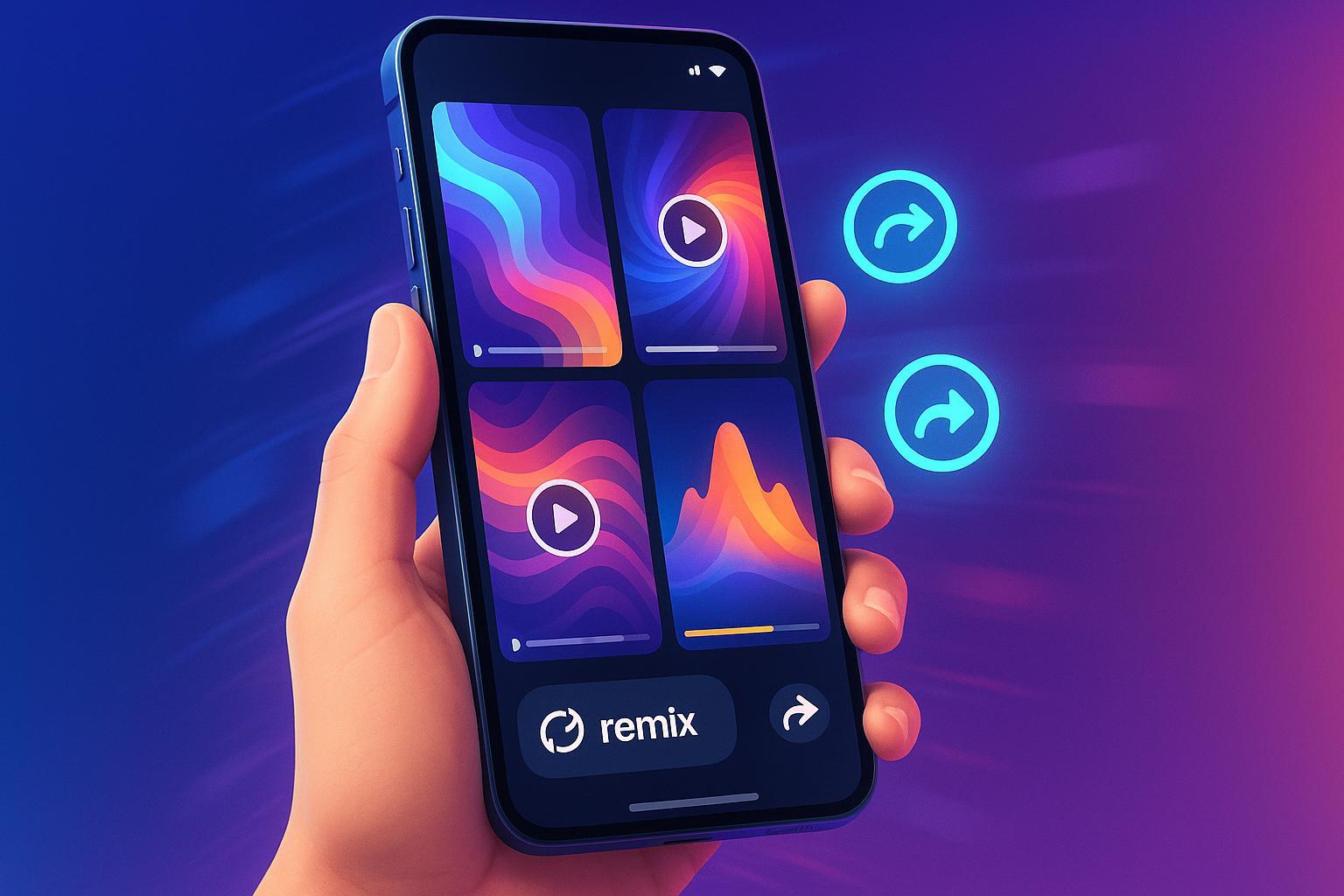
Meta introduced Vibes on September 25–26, 2025 as “a new feed of AI videos at the center of the Meta AI app,” where users can discover, create, remix, and share short-form AI videos. Meta describes three creation paths—start from scratch, transform existing uploads, or remix feed items—plus the ability to add visuals, layer music, and adjust styles, according to the official announcement in the Meta Newsroom (Sep 2025).
Distribution hooks matter: multiple outlets confirm in-feed posting, sharing via DMs, and cross-posting into Instagram and Facebook formats (Reels/Stories), as detailed in TechCrunch’s launch coverage (Sep 25, 2025) and corroborated by Android Central’s preview (Sep 29, 2025) and TechRadar’s overview (late Sep 2025).
What’s evolving or unspecified as of today:
- Official country list and rollout cadence: Meta positions Vibes as an “early preview” without a definitive region list yet.
- Technical caps: maximum video length, resolution/fps, export/download options, audio catalog specifics, and watermarking rules remain undocumented publicly. We’ll update once Meta publishes help docs.
Why this matters for creators and brands
Vibes collapses creation and distribution into one loop. Instead of generating clips in third-party tools and then uploading to social, Vibes lets you produce inside the Meta AI app and cross-post with fewer steps. That friction reduction can accelerate testing and trend participation.
Remixability is a growth engine. Built-in tools invite derivative riffs—extending trend lifecycles but introducing brand risk (IP, message drift). Expect the recommendation system to tune toward remix behaviors (watch-through, saves, replays), potentially shifting what “works” compared to human-shot Reels.
Labeling and trust are in play. Meta expanded AI-content labeling across images, video, and audio in 2024. The company outlined “Made with AI” and related tags, with self-disclosure and detectable signals guiding application, per Meta’s labeling policy updates (Feb and Apr 2024). Cross-posted AI clips are likely to carry labels; run A/Bs to see if labeling affects engagement.
Vibes vs. OpenAI Sora vs. Google Veo: practical differences
- Vibes: Social-native creation and distribution with a dedicated AI video feed, remix-first workflow, and cross-posting into Instagram/Facebook. Specs (length, resolution) are not yet public.
- OpenAI Sora: A powerful text-to-video model supporting text-only, image+text, and video prompts. Generation is job-based and asynchronous; creators typically export and then upload to social. See modality/process notes in Azure OpenAI video generation concepts (2025) and quickstart.
- Google Veo: Clear short-duration parameters are documented. Veo 3 supports creating 4, 6, or 8-second clips, with vertical 9:16 and 1080p via API configurations, and a “Veo 3 Fast” track integrated into YouTube workflows, per Google Developers Blog (Sep 8, 2025) and Vertex AI release notes (Sep 8, 2025).
Bottom line: Sora and Veo emphasize generation fidelity and control; Vibes emphasizes the social loop—creation, remix, and immediate distribution. Choose based on your goal: cinematic authenticity vs. fast participation in trends.
A 14–30 day pilot playbook
Design a controlled, measurable pilot before scaling.
Scope
- Produce 10–20 Vibes-originated clips across 2–3 themes aligned to your brand.
- Keep guardrails tight: tone, visual identity, typography, and safe prompt rules.
Core metrics to track
- Early attention: 3-second views, average view duration, 50% watch rate.
- Engagement: replays, shares, saves, comments.
- Downstream: profile visits, link-in-bio CTR, and site session lift.
Experiment grid
- Text-to-video prompts vs. upload transforms vs. remixes of high-signal Vibes clips.
- Caption variants: curiosity hook, benefit hook, social proof.
- Aspect ratio and pacing tests: Favor 9:16; test overlay rules and beat cadence.
Operational help
- If you need a structured prompt workflow for captions and scripts, see Step-by-step guide to using QuickCreator for AI content.
Governance and safety: do this before scaling
- Prompt policy: Pre-approve language; avoid celebrity likenesses, sensitive events, and suggestive content.
- Attribution and labeling: Use self-disclosure where required; expect “Made with AI” tags on cross-posts per Meta’s 2024 updates (see policy link above). Add your own brand watermark overlays when appropriate.
- IP hygiene: Stick to owned visuals, fonts, and logos; document licenses for any third-party audio packs; confirm remix rights in Vibes allow downstream use on Instagram/Facebook.
- Remix ethics: Only remix clips that pass quality signals (e.g., ≥20% saves-to-views or >1.2x average shares). Add clear value—new POV, data point, or product demo.
Measurement and reporting: how to avoid novelty bias
- Holdouts: Maintain a control group of human-shot Reels/Stories to benchmark lift.
- Rolling baselines: Novelty can spike engagement; use 2–3 week rolling averages.
- Success thresholds: Consider expanding only if watch-through lifts +15–25% and saves rise +10% vs. baseline.
- Connect short-form to SEO and site outcomes: For tying social gains back to content strategy, see Crafting an effective SEO content strategy.
What to watch next (we’ll update)
- Availability: Official region list and rollout dates.
- Specs: Max length, resolution/fps, audio/music catalogs, export/download.
- Watermarking and labeling: Whether Vibes applies persistent watermarks; cross-post label behaviors.
- Monetization: Ad eligibility, branded content rules specific to Vibes, or creator programs.
Closing: pragmatic next steps
- Start with a 2–3 week pilot focusing on remix-native content and quick iteration.
- Keep AI-labeled posts under ~40% of weekly brand volume until you have engagement data.
- Build a 50-prompt library by theme and codify overlays, pacing, and aspect ratio rules.
If you need a lightweight way to manage prompt libraries, briefs, captions, editorial approvals, and publish analyses alongside your social pilots, consider QuickCreator. Disclosure: QuickCreator is our product.
For broader AI video context tied to discovery surfaces beyond Meta, you may also explore AI-generated content on YouTube: everything you need to know.
Change-log
- Sep 30, 2025: Initial publication. Availability and specs marked as evolving; labeling policy linked (2024).