Meta’s AI Chat-to-Ads Pivot, 2025: What Marketers Should Do Now (Without Breaking Trust)

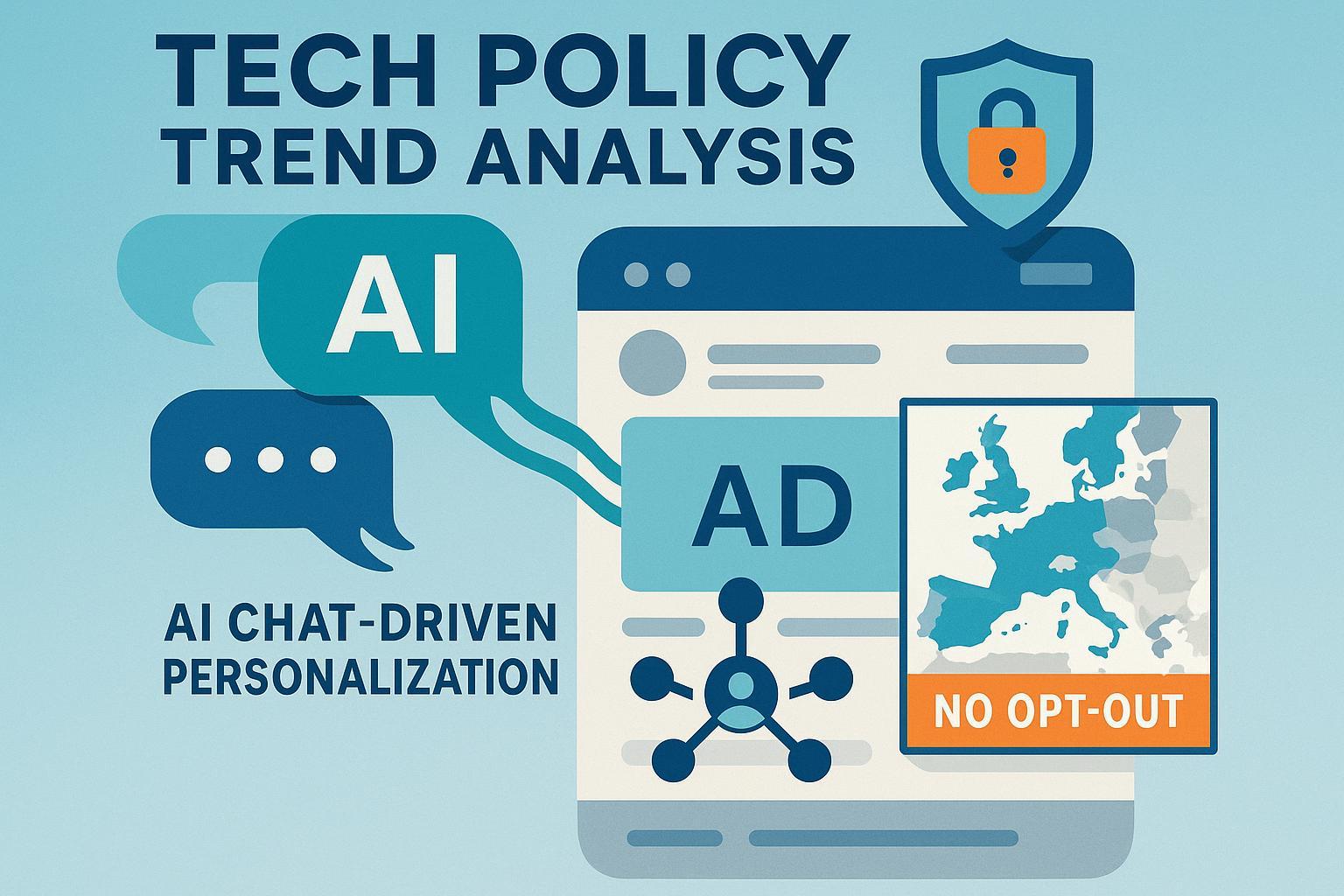
Meta announced in early October 2025 that it will begin using interactions with its generative AI features (including AI chats) to personalize content and ad delivery on Facebook and Instagram. Notifications start rolling out October 7, with effective changes slated for December 16, 2025. The move excludes certain jurisdictions (EU, UK, South Korea) due to stricter privacy regimes, and outside those regions there’s currently no user opt-out beyond avoiding the AI features.
According to Meta’s newsroom post, the platform will “personalize recommendations” using generative AI interactions, beginning December 16, 2025, with updates and notices ahead of the rollout, as detailed in Meta’s 2025 announcement. Reputable coverage clarifies the region carve-outs and the practical “no opt-out” reality: see TechCrunch’s October 1, 2025 report and Fortune’s October 2, 2025 analysis.
Why this matters now
- Relevance boost with conversational intent: AI chats surface timely interests (e.g., “planning a winter hike”), which can sharpen interest-based delivery and creative matching in allowed regions.
- Compliance and trust pressure: The absence of a platform opt-out in most regions raises consumer-perception risk. Brands that proactively disclose their practices and offer meaningful choices on owned channels will be better insulated.
- Operational complexity: Cross-region campaigns must avoid importing logic influenced by AI chat signals into protected jurisdictions, or commingling audiences in ways that could breach local rules.
What’s confirmed vs. evolving (keep your playbook flexible)
- Confirmed by Meta: Use of generative AI interactions to personalize recommendations and ads starting December 16, 2025. See Meta newsroom (2025).
- Reported by reputable outlets: Global rollout excludes EU, UK, and South Korea; no explicit user opt-out beyond not using AI features; sensitive categories will be excluded. See TechCrunch (Oct 1, 2025) and Fortune (Oct 2, 2025). Meta’s general constraints live in Advertising Standards and Ads Policies.
- Evolving details to monitor: Final policy text, sensitive-category enumerations tied specifically to AI interactions, UI disclosures, and any newly added user controls.
If you need a grounding primer on how AI-generated systems underpin modern content, this overview on AI-generated content fundamentals can help with terminology and expectations.
Regional mechanics: why EU/UK/South Korea are different
Jurisdictions that require consent or impose strict limits on profiling/behavioral advertising pressure platforms to avoid broad, default personalization from chat interactions.
- EU (GDPR + ePrivacy): Behavioral advertising typically hinges on valid consent; users also have a right to object to direct marketing and certain automated decision-making. See the legal text in the EU GDPR (2016) and the ePrivacy Directive.
- UK (UK GDPR + PECR): Consent is required for electronic marketing and non-essential tracking; regulators emphasize transparency and choice. Guidance from the UK ICO on direct marketing (2025) provides practical expectations.
- South Korea (PIPA): Explicit, informed opt-in is standard for profiling and targeted advertising; disclosures must be clear. See the English text of PIPA.
The actionable playbook (marketer edition)
- Targeting hygiene
- Segment audiences: Create distinct segments for “AI chat-influenced” vs. “baseline” delivery to isolate lift and prevent over-attribution.
- Avoid sensitive inference: Keep creative generic around interests (e.g., “outdoor gear” rather than implying medical conditions or political leanings). Align to Meta’s Ads Policies.
- Consent and disclosures
- Update notices: State that, in applicable regions, platform-side signals (including generative AI interactions) may influence ad delivery. Keep phrasing factual and non-invasive.
- Offer choices: Even if the platform lacks opt-out, provide a “show me generic ads” preference on owned channels. Document how you honor these choices.
- Jurisdictional routing
- Maintain variants: Non-EU/UK/KR (AI chat signals ON) vs. EU/UK/KR (OFF). Ensure audience syncing and lookalikes don’t carry AI-derived attributes across borders.
- Geo exclusions: Use location rules and avoid cross-region creative implying knowledge of private chats.
- Creative and testing
- A/B testing: Test neutral creative referencing general interests likely inferred from chat intent without implying you “saw” private conversations.
- Holdouts: Maintain control groups to measure incremental lift from AI-signal availability.
- Data governance
- Tag experiments: Label campaigns where AI-derived personalization is likely; record dates and jurisdictions.
- DPIA updates: If you operate in GDPR-like contexts, refresh impact assessments and include profiling notes.
Experiment design: isolate the AI chat signal impact
- Baseline cohorts: Duplicate campaigns in allowed regions with identical budgets and creatives; toggle any features likely influenced by AI chats.
- Metrics to track: CTR, CPC/CPM, conversion rate, CPA, dwell time, frequency, and negative sentiment signals (comments, hides).
- Statistical discipline: Use sufficient sample sizes and minimum run times to avoid spurious conclusions. Document your methodology and share it with compliance leads.
Governance toolkit and workflow (with structured content support)
To keep disclosures, jurisdiction variants, and change-logs coherent and visible, standardize your content operations.
- Maintain a governance page: Publish a plain-language FAQ explaining how social platforms personalize ads and the choices your brand offers. Add structured data and keep it versioned.
- Build region-specific variants: Use a block-based editor to maintain separate disclosures for EU/UK/KR vs. other regions and keep a public change-log.
You can manage these materials in QuickCreator for consistent, multilingual publishing and collaboration. Disclosure: QuickCreator is our product. For workflows and capability overviews, see our comprehensive feature review for content creators and this CMS SEO best-practices checklist to ensure your governance pages are crawlable, structured, and easy to maintain.
Future outlook (next 3–6 months)
- Controls pressure: Expect consumer and media pressure for clearer UI messaging or limited controls. Platforms may iterate disclosures or introduce narrow opt-outs.
- Regulator interest: Authorities in jurisdictions without opt-out may request clarifications or initiate inquiries—keep counsel looped for sensitive campaigns.
- Competitive emulation: Other social platforms may test similar AI-signal enrichment with varied consent schemes and safeguards.
Mini change-log
- 2025-10-04: Initial analysis published; sources added; product mention limited to governance toolkit; neutral tone emphasized.
- Mid-November 2025: Scheduled reassessment of Meta’s policy text and sensitive-category specifics; experiment guidance update.
- 2025-12-16: Effective-date refresh; add measured outcomes (where available) and jurisdiction notes.
If you need a structured way to publish multilingual disclosures, maintain a public change-log, and collaborate across teams, consider QuickCreator for your governance content operations.