How to Create Content Clusters

If you’ve ever felt like your blog is a pile of great posts that don’t add up to rankings, a content cluster turns that pile into a system. Done right, clusters help search engines and people understand what you’re truly about—and route them to the best page for the job. Ready to turn scattered content into a topic moat?
What a content cluster is (and when not to use one)
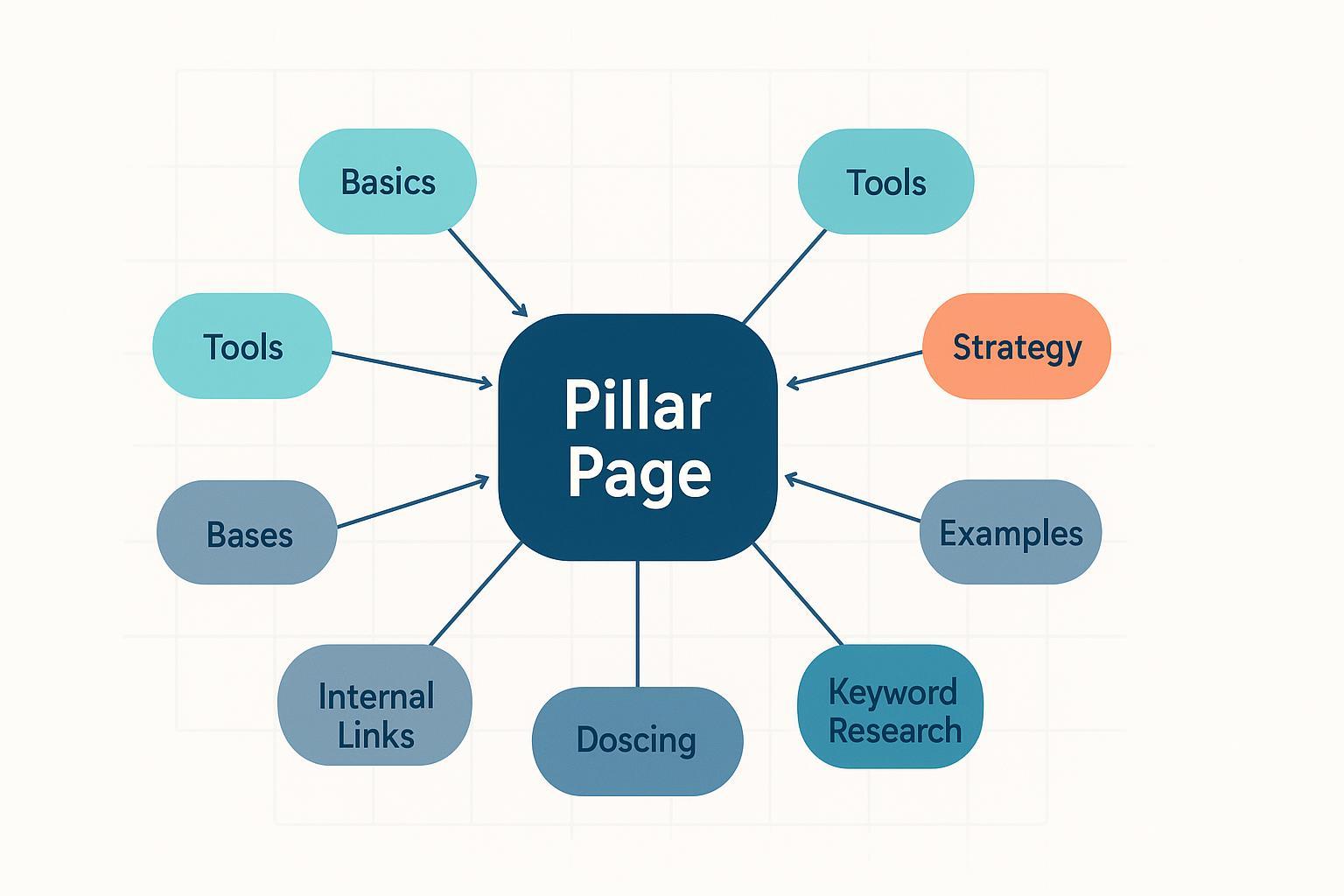
A content cluster is a set of pages organized around one central, comprehensive hub (the pillar page). The pillar covers the broad topic at a high level and links out to focused subpages (the spokes) that go deep on specific angles. Each spoke links back to the pillar and, when relevant, to sibling spokes. Think of the pillar as your airport hub and the spokes as the direct routes.
You can expect clearer topical relationships for users and crawlers, better discoverability via intentional internal links, and more chances to rank across head terms (pillar) and long‑tail/intent variants (spokes) over time.
When clusters aren’t the right tool: super‑niche sites with one tight topic may be better served by a single exhaustive guide or a micro‑cluster first. And if a topic can’t be split naturally without creating thin, near‑duplicate pages, don’t force it—that risks “cookie‑cutter” spokes and doorway‑style pages, which contravene Google’s spam policies (policy updated in 2024).
Your quick prep checklist
- Define the business case: how the topic ties to products, services, or core audience problems.
- Inventory what you already have: URLs, coverage depth, performance, and obvious gaps.
- Line up data sources: Google Search Console, a rank tracker, analytics, and a crawler.
- Assign roles: strategist, writer, editor, subject‑matter reviewer.
- Set success metrics: topic‑level impressions/clicks, rankings spread, and assisted conversions.
Step-by-step: Build your first cluster
1) Choose a topic with business and SERP fit
Pick a topic broad enough to support 6–15 subpages but specific enough to be clearly defined. Look for intent variety on the SERP—definitions, how‑tos, comparisons, tools—so you can map different spokes. Size up winnability: current authority, competitor depth, and the kinds of evidence top results use (original examples, data, visuals, expert quotes).
Practical example: “Email deliverability” as a pillar with spokes like “SPF vs. DKIM,” “Warm‑up calendars,” “B2B cold email compliance,” and “Troubleshooting soft bounces.”
2) Research keywords by entity and intent—and preempt cannibalization
Group queries by sub‑entities and search intent. Label each group as informational, commercial, or transactional and decide whether it belongs on the pillar or a spoke. Assign a single canonical owner page per subtopic to avoid overlap before you publish.
As you group queries, glance at the SERP: are top results long guides, checklists, or tool pages? The format cues your scope and on‑page structure. If two subtopics produce nearly identical SERPs, consider merging into one spoke to prevent future cannibalization.
3) Design the information architecture and URLs
Default to a hub‑and‑spoke model with a light mesh between related spokes. You can use nested paths (example.com/pillar/subtopic/) or a flat structure (example.com/subtopic/). Either way, keep URLs human‑readable and consistent. Navigation and breadcrumbs should reflect the hierarchy so the hub and key spokes are easy to reach. Google’s guidance encourages clear site structure and discoverable links; the SEO Starter Guide is a helpful north star.
Sitemaps are great for discovery but don’t replace a good IA. Per Google’s docs, a sitemap helps Google find URLs, but pages should be reachable via links from other pages; see the sitemaps overview for context.
4) Plan the internal linking system
Your links must be standard HTML elements in the source and use descriptive anchors. That’s straight from Google’s link best practices (referenced in 2025). Avoid JavaScript‑only links that aren’t crawlable, keep anchors concise and meaningful, and vary phrasing naturally.
Define link pathways now, before you write. Plan for the pillar to link to all spokes, each spoke to link back to the pillar (usually early and again near the end), and related spokes to reference one another where it helps readers. Also, add links from high‑visibility pages like navigation or resource hubs to the pillar and a few priority spokes.
A note on numbers: practitioners often aim for a handful of relevant internal links per page section, but Google doesn’t publish quotas. Focus on clarity and usefulness rather than hitting a fixed count.
5) Draft strong briefs with E‑E‑A‑T cues
For every page, create a brief that sets the scope, audience, search intent, outline, must‑answer questions, required examples/data, and which internal links to include. Identify the bylined author and any SME reviewer. Cite authoritative references where claims matter and include original analysis, screenshots, or examples to avoid thin, generic content.
6) Choose a launch sequence and interlink on publish
Two viable paths:
- Pillar‑first, then publish spokes in waves. This is easier for small teams; just make sure the pillar sets expectations and includes “coming soon” sections you’ll quickly fill in.
- Minimum viable cluster: publish the pillar with several high‑priority spokes together so users (and crawlers) see depth from day one.
Whichever you choose, set every contextual link on day one. Validate that links are direct (no redirect chains) and crawlable in the HTML. If you use a sitemap, submit it or resubmit after publishing for faster discovery.
7) QA before and after indexing
Run a quick crawl to confirm links are HTML, followable, and not blocked. Check that important pages are accessible in a few clicks from your homepage or resource hub—there’s no fixed “3‑click rule,” but shallow access tends to help discovery. If you moved or merged content during setup, use 301s and ensure all internal links point to the final URLs. For broader consolidation/duplication guidance, see Google’s canonicalization troubleshooting.
After indexing, sanity‑check in GSC: impressions for the pillar and spokes should start appearing; if not, recheck crawling/indexation issues.
Measure what matters at the topic level
Create a URL pattern or regex filter in Google Search Console for your cluster, then monitor impressions, clicks, and average position for the group. In analytics, build a content group for the pillar and spokes so you can track engagement (scroll depth, time on page) and conversions.
Leading indicators: indexed pages per cluster, internal link distribution, click depth, and early impressions for long‑tail queries. Outcome metrics: organic sessions to the pillar and spokes, coverage across head and long‑tail terms, assisted conversions, and backlinks earned by the hub. For practical internal linking examples and pitfalls, Search Engine Land’s recent write‑up is a solid complement to Google’s docs—see Search Engine Land’s internal links best practices.
Maintain and improve (and keep cannibalization at bay)
Plan quarterly reviews for clusters tied to revenue or high traffic, and biannual reviews for stable topics. Refresh outdated stats, expand sections where search demand has grown, and retire parts that no longer serve the intent.
If two pages start competing for the same queries, diagnose cannibalization early. Use GSC to find queries with multiple ranking URLs, then decide: merge, re‑position intent, or change the canonical. When merging, consolidate content into the stronger page and 301 redirect the secondary page(s) to it; update internal links to point to the surviving URL. For a tactical walkthrough of detection and fixes, the Ahrefs keyword cannibalization guide (2024) is a useful practitioner resource.
If you must keep two similar pages live (for example, regional nuances), use rel="canonical" to indicate the preferred URL and make sure the canonical target returns 200 and is indexable. For broader canonicalization do/don’t cases (including syndication), review Google’s canonicalization guidance.
Whenever you refresh a page, re‑audit links: add new contextual links where scope has expanded, remove obsolete ones, and ensure you aren’t linking through redirects. If you added or removed pages, update your sitemap as a secondary discovery aid—see the sitemaps overview—but remember that internal links are the primary discovery path.
Practical interlinking rules you can copy
- Use standard, crawlable HTML links and keep CSS/JS needed for rendering unblocked. Anchor text should be descriptive, concise, and varied—principles emphasized in Google’s link best practices.
- Pillar → all spokes; each spoke → pillar. Place at least one contextual link high on the page where it helps readers navigate.
- Add lateral links among related spokes when it genuinely helps the journey; don’t try to create a full mesh.
- Avoid orphan pages. On publish day, ensure every spoke has at least two inbound internal links from relevant, findable pages.
- Keep access to key cluster pages shallow via navigation and contextual links. There’s no mandatory click‑depth number; prioritize usefulness.
Troubleshooting FAQ
-
My spokes are thin or feel repetitive. What now?
- Merge look‑alike topics, expand with original examples/data, or fold minor variants into a single “definitive” guide. Remove any doorway‑like pages that only swap a city or trivial variable—these risk violating Google’s spam policies.
-
The pillar plateaued while spokes win long‑tail. Is that okay?
- Yes. Pillars often mature slower. Strengthen them with clearer scope, better navigation to spokes, fresh examples, and links from high‑visibility pages. Ensure the pillar answers “what is it” and “how it works” without duplicating entire spokes.
-
I’m worried about over‑optimized anchors.
- Vary phrasing naturally while keeping anchors descriptive. Use partial matches and plain‑English descriptors that set expectations.
-
Some spokes aren’t getting crawled or indexed.
- Confirm crawlable links in HTML, add links from relevant, high‑traffic pages, and make sure the pages aren’t blocked. If needed, resubmit the sitemap. Remember, sitemaps help discovery but don’t replace internal links, per Google’s sitemaps overview.
-
Should I publish the pillar or the spokes first?
- Either approach works. If resources are tight, go pillar‑first and ship spokes in waves quickly. If you’re entering a competitive space, launch a minimum viable cluster to show depth immediately.
Close it out
Choose one business‑critical topic, sketch a pillar and 6–10 spokes, and ship your first wave. Set the links on day one, watch the topic‑level metrics, and keep improving. That’s how scattered posts become a durable advantage.