How to Build White-Label Blogging Services for Agencies

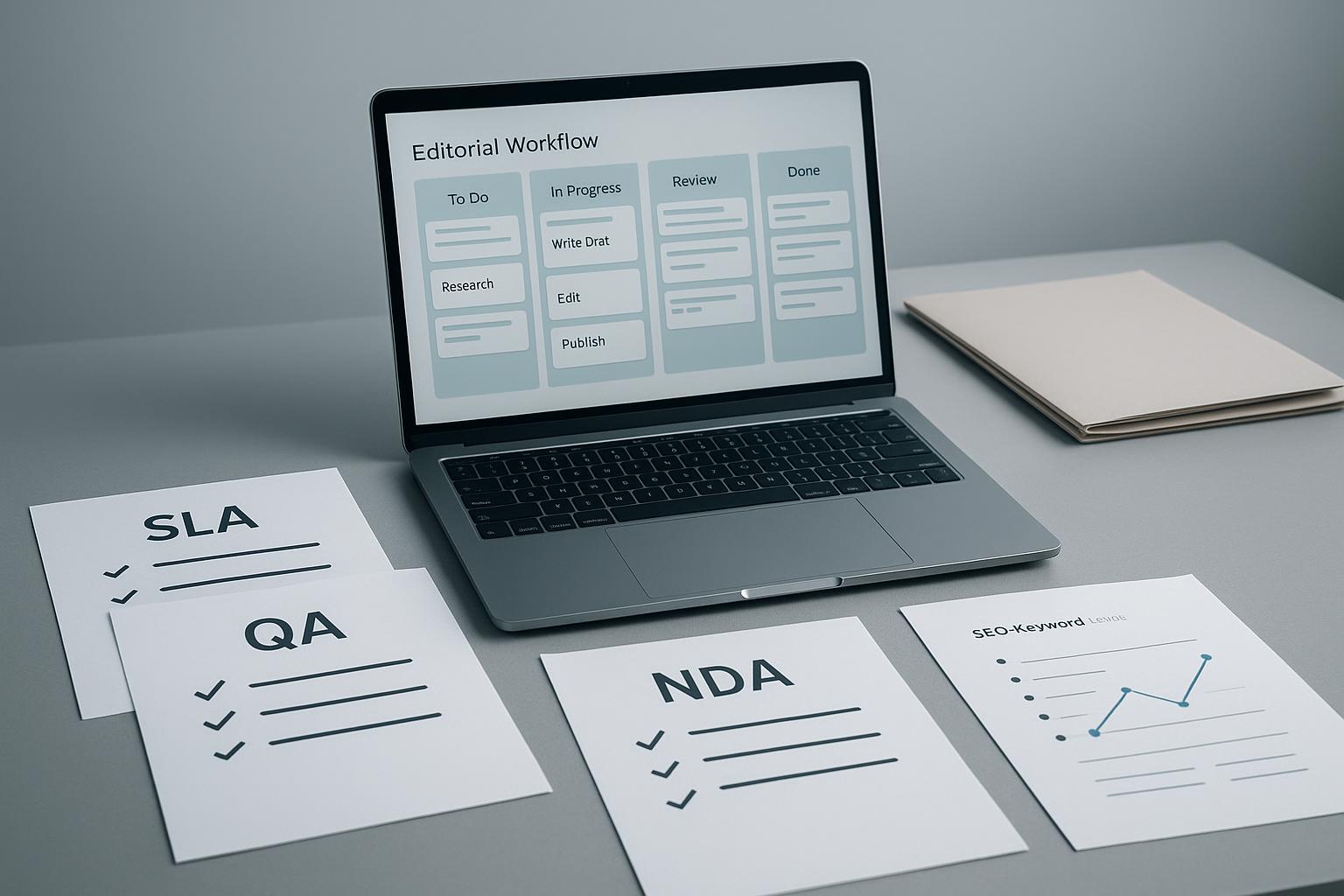
If you’re an agency operator, white-label blogging isn’t just a capacity hack—it’s a way to productize content delivery, protect margins, and scale without bloated headcount. The catch? Quality drift, scope creep, and legal blind spots can torch trust and profitability fast. Here’s the operator’s playbook to design your offer, price it right, and run it with predictable outcomes.
What White-Label Blogging Is (and When It Fits)
White-label blogging means a third-party provider produces content your agency rebrands and delivers as its own. It’s common across blogs, web copy, and social content and is especially useful when you need reliable volume without hiring. For a grounded definition and ecosystem context, see the overview from AgencyAnalytics in their guide on what white-label content is. For a partner-model perspective (writers, editors, strategists under a reseller arrangement), The White Label Agency’s guide frames how agencies interface with delivery partners.
It’s a strong fit when your pipeline is lumpy and staffing a full-time bench would be risky; when you sell strategy and client interface but need flexible writing capacity; and when you serve multiple niches that benefit from on-demand subject-matter experience. Typical inclusions cover ideation/topic research, briefs, drafting, editing/proofreading, on-page SEO (headings, metadata, links), and 1–2 royalty-free images. Add-ons often include CMS upload/formatting, custom graphics, social promos, and rush turnaround. Spell these out in your SOW so “revision” and “scope change” aren’t confused later.
Design Your Offer: Packages, Inclusions, and Boundaries
Productize by tiers that reflect effort and risk. Keep naming simple (Starter, Standard, Premium) and anchor each to word count, complexity, and SEO depth. Use clear word-count bands such as Short (600–800), Standard (800–1,200), and Long-form (1,500–2,500+). Reserve SME-heavy or YMYL content—health, finance, legal—for higher tiers where you’ve priced in research depth and expert review. Decide whether your package includes keyword discovery (for example, one primary and two to three secondary terms) or requires the client to supply keywords and internal links. Bake in two revision rounds as standard and define the difference between a revision (clarifications within the original brief) and a change request (new direction, added sections, or new keywords). Treat CMS uploads and advanced image sourcing as add-ons. Promise reasonable turnaround windows by tier; complex long-form earns its own timeline.
Clear boundaries protect trust and margin. If you allow outline approval on long-form pieces, make it a quality gate: once an outline is signed off, large structural changes become change orders.
Price for Profit: Models, Ranges, and Margin Math
Public pricing varies widely by niche and quality controls. Industry pages and platform roundups commonly show per-word spans roughly $0.10–$1.00+ and per-post ranges of about $50–$500+ with volume discounts. See the range framing on okwrite’s service page and subscription/volume context in SPP.co’s writing services roundup.
Two principles matter most: price the outcome—clarity, accuracy, voice fit, on-page SEO—not just the word count; and model capacity and gross margin before publishing a rate card.
Pricing models at a glance:
| Model | How it works | When to use | Watchouts |
|---|---|---|---|
| Per-word | Flat rate per word; adjust for niche/complexity | High-volume, predictable briefs | Incentivizes bloat; hard to price research time |
| Per-post | Fixed price by length/tier | Easy to sell; bundle research and QA | Hidden complexity can erode margin |
| Retainer/subscription | Monthly package of posts/hours | Forecastable revenue and capacity | Requires strong scope and rollover rules |
| Hybrid | Base retainer + per-piece add-ons | Mixed complexity across clients | Needs crisp change-order triggers |
Margin formula you can reuse:
Price per post = Floor cost ÷ (1 – Target gross margin)
Where Floor cost = Vendor fee + Editor time cost + PM time cost + Tooling proration + SME review (if any)
Example: Floor cost $160, target margin 50% → $160 ÷ 0.5 = $320 price
Protect margin with minimum order quantities (for example, four to eight posts per month), rush surcharges of 20–50%, and clear revision limits. For YMYL or regulated pieces, add SME review hours to your floor cost—these assignments shouldn’t be priced like standard SEO posts.
Build the Workflow: Your SOP from Intake to Delivery
Here’s the deal: consistent outcomes come from consistent process.
- Intake and brief
- Capture goal, audience, brand voice, acceptance criteria, keywords, internal links, distribution plan, and references. Require examples of “approved” brand voice.
- Outline gate (for long-form/technical)
- Secure outline approval before writing. This reduces rework and defines scope early.
- Drafting and internal edit
- Assign the best-fit writer; editors check voice alignment, structure, and on-page SEO before anything reaches the client.
- Originality and fact checks
- Run plagiarism screening and verify citations for claims and stats. For sensitive niches, maintain a sources log with URLs and publication dates.
- Client review and revisions
- Bundle feedback into consolidated rounds. Response-time expectations belong in your SLA.
- Finalization and publishing (optional)
- Deliver in agreed format; if you handle CMS upload, confirm formatting, metadata, and internal links.
Suggested SLA ranges (informational, adopt with counsel): Standard turnaround 5–10 business days per article under ~1,200 words; rush 2–3 business days; complex long-form 10–15 business days. Include 2–3 revision rounds; beyond that is a change order. Response time: acknowledge requests within 1 business day; require consolidated client feedback within 3 business days to maintain timelines. Acceptance criteria: matches the brief and style guide, passes originality and on-page SEO checks, and includes citations where needed. These norms mirror common agency practice and align with industry framing that white-label content follows agency-defined workflows (see AgencyAnalytics).
Quality and SEO Standards You Can Enforce
Quality isn’t a feeling—it’s a checklist. Maintain a living style guide with tone, dos and don’ts, approved phrasing, and sample posts. Enforce on-page SEO conventions such as H1/H2 structure, concise title tags and meta descriptions, internal links to priority pages, and alt text for any images you include. Require originality scans and editor sign-off and keep an auditable log. For claims and statistics, use descriptive anchors in-text and record the source date and publisher. For sensitive/YMYL topics, require SME review and avoid advice that could be construed as professional guidance. Google’s policy guidance on quality and scaled content abuse is a helpful north star; see Google Search Central’s 2024 update and spam policies.
Tip: Think of QA gates like airport security—multiple checks reduce the chance that one miss slips through.
Legal and Compliance Foundations (Informational Only)
This is not legal advice—work with your attorney to localize these terms. That said, consistent clause categories show up in reputable clause libraries and agency contracts. See CoBrief’s white-label clause library for reference categories.
- Confidentiality/NDA and non-disclosure of the white-label arrangement.
- IP ownership/work-for-hire with moral rights waivers where applicable; assignment effective upon payment.
- Originality and non-infringement warranties; remedies for plagiarism/IP claims; indemnity.
- Non-solicitation/non-circumvention to protect your bench.
- AI usage disclosure/limits; bind outcomes to the same originality and quality standards and require auditable research notes for sensitive claims.
- Data protection/DPA where personal data is processed; minimum security measures.
- Termination/dispute resolution with cure periods, jurisdiction, and venue.
What’s the practical takeaway? Make the provider’s responsibilities explicit, measurable, and auditable.
Teaming and Sourcing Writers
Choose your supply model based on volume, niche, and control. A vetted freelancer pool gives you the tightest voice control but demands heavier coordination. Managed white-label providers or boutiques deliver capacity quickly and usually include an editorial layer, though you’ll have less direct control over individual writers. Platforms and marketplaces offer flexible access and subscriptions; vet them for QA depth, revision policy, and writer consistency.
Onboard with a test piece aligned to the client’s brief and style guide, then run an editor feedback round to gauge coachability. Maintain a bench matrix covering niche, reading level, tone, and availability, and assign an editorial lead per account to protect continuity.
Tooling That Keeps You Honest (and Efficient)
Use ClickUp/Asana/Trello for tasking and Google Docs for drafting and comments. Pair Semrush/Ahrefs for keyword research with Surfer/Clearscope for on-page optimization. For QA, deploy Grammarly Business for mechanics, Copyscape or Originality.ai for originality logs, and host your style guide and acceptance criteria in Notion or Confluence. If content supports SEO retainers, white-label reporting helps visualize progress. Pick tools that let you show your work—auditable briefs, sources, and QA logs are part of your risk posture.
Risk Controls and Troubleshooting
Scope creep is contained by locking inclusions in the SOW, defining revision rounds, and requiring change orders—with fees—for new keywords, added sections, or new personas midstream. Voice mismatch improves when you require brand voice samples and a do/don’t list, and when you run a one-post pilot before scaling; if drift persists, swap writers but keep the same editor for continuity. Missed deadlines call for an escalation ladder (writer → editor → account lead → provider ops) and service credits only if you truly control the dependency chain; tie credits to clearly defined turnaround SLAs. For factual errors, maintain a claims-and-sources register; for medical, financial, or legal topics, require SME review and block publication until sign-off.
Scenario—Onboarding a healthcare client: Add a HIPAA-adjacent sensitivity checklist to intake, restrict case studies and patient data, require peer‑reviewed citations, perform SME review, and document all sources with dates. This content belongs in the higher-tier package with longer turnaround—and SME cost accounted for in the price.
Launch Checklist
- Define tiers, inclusions/exclusions, revision rules, and turnaround windows.
- Build the brief template, acceptance criteria, and style guide; require outline approval for long-form.
- Model your floor costs and publish prices using your target margin formula; set MOQs and rush fees.
- Select your talent model (freelance pool, provider, platform) and run test pieces.
- Stand up your QA stack: plagiarism scans, editor sign-off, source logs, and SME review for YMYL.
- Draft your contract exhibits: SOW with SLA, confidentiality/NDA, IP assignment, originality/indemnity, AI policy, and DPA where needed.
- Configure PM tooling and dashboards; create escalation and change-order processes.
Closing
White-label blogging scales cleanly when you productize the work, price from a real cost model, and enforce visible quality gates. Start with one client and one tier, measure error rates and revision cycles, then tune your SLA and margins before you scale. Let’s dig in—methodically—and ship consistent work your clients will be proud to put their name on.