GEO Ranking Factors Explained

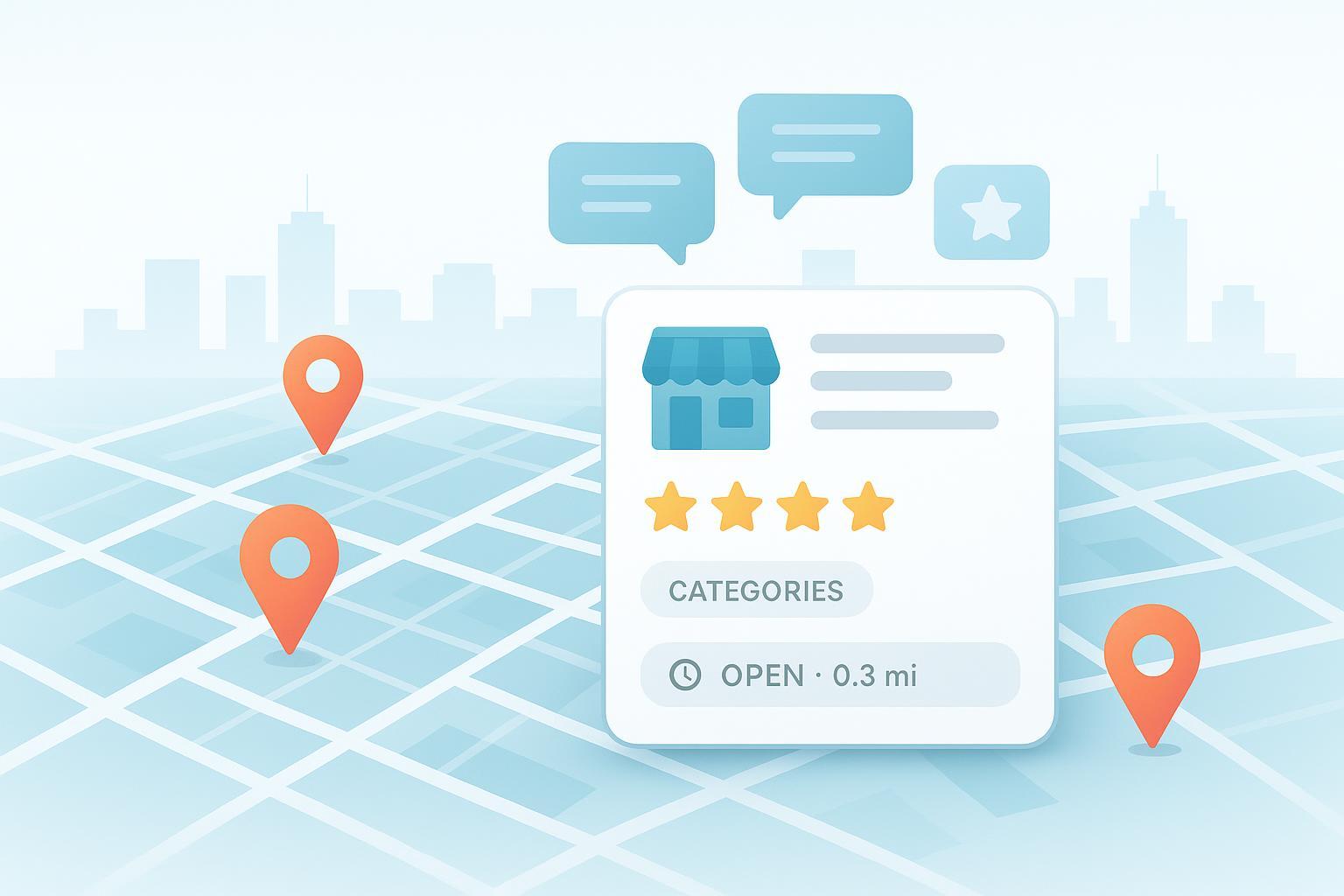
“GEO ranking factors” is shorthand for the signals that determine how a local business shows up in Google’s Local Pack/Maps and in localized organic results. Think of it this way: relevance matches your business to a query, distance accounts for how close the searcher is, and prominence reflects how well-known and well-reviewed you are. Some of this you can control; some of it you can’t. Here’s the deal: focus on what’s controllable and stay within Google’s rules.
Google’s official trio: relevance, distance, prominence
Google states that local results are primarily based on relevance, distance, and prominence, and advises businesses to keep their profiles complete, choose appropriate categories, and cultivate reviews. See Google’s official guidance in “Tips to improve your local ranking on Google” (Support, ongoing).
- Relevance: How well your Business Profile and website match the words and intent in a search. Example: a “dentist” category will align with “teeth cleaning near me.”
- Distance: How far each potential result is from the searcher or the area specified. You can’t force this; proximity is naturally weighted.
- Prominence: How established a business appears across the web—reviews, links, mentions, and offline reputation. High-quality, recent reviews and recognized local coverage contribute.
A quick analogy: local ranking is like choosing a lunch spot. You’ll pick a place that serves what you want (relevance), is close enough (distance), and is well-rated or known (prominence).
Disambiguation: what “GEO” is not
“GEO ranking factors” here does not mean international geotargeting (hreflang, ccTLDs) or ad auction rank (Local Services Ads). We’re focused on organic Local Pack/Maps and localized organic results.
Local Pack/Maps vs localized organic: how the weighting differs
There are two main “surfaces” where local businesses appear:
- Local Pack/Maps: The map + three-pack unit and Google Maps listings.
- Localized organic: Standard search results tailored to a location (e.g., “best pizza in Austin”).
Industry research consistently shows different emphases. BrightLocal’s synthesis in 2025 indicates that Pack/Maps rankings lean heavily on Google Business Profile (GBP) signals and reviews, while localized organic relies more on on-page content quality and links. AdviceLocal’s 2025 report echoes this and adds that citations consistency and structured data help verification—especially as AI summaries grow.
- BrightLocal (2025): See “Google’s Local Algorithm & Ranking Factors” for survey-based weighting examples by factor group.
- AdviceLocal (2025): See “2026 Local Search Ranking Factors: Maps, Organic & AI” for corroborating emphasis and AI/answer-engine notes.
These are industry studies, not official disclosures, but they’re useful for prioritization.
| Surface | Primary emphasis | Secondary emphasis | Example priorities |
|---|---|---|---|
| Local Pack/Maps | GBP signals, Reviews, Proximity | On-page, Citations, Behavioral | Category accuracy; complete GBP; review cadence and owner responses; high-quality photos; NAP consistency |
| Localized Organic | On-page quality, Links | GBP (minor), Behavioral, Citations | Unique location/service pages; LocalBusiness schema; internal linking; local authority backlinks; page experience |
What you can control (and what you can’t)
- Controllable: GBP completeness and accuracy; ethical review generation and professional responses; on-page local content and schema; local links and citation consistency; technical site health.
- Not controllable: The searcher’s location (proximity), personalization, and some query-level dynamics. You can position yourself, but you can’t change where a user is standing.
Google Business Profile (GBP) essentials that move the needle
Your Business Profile is the foundation for Local Pack/Maps. Start by selecting a precise primary category and relevant secondary categories that reflect your actual services; more specific categories improve relevance. Add attributes where appropriate—accessibility details, women-led, veteran-led—to inform users and match intent. Upload high-quality media: a recognizable logo and cover, plus interior, exterior, team, and product/service photos. Populate services, products, or menu items so your profile aligns with a wider set of queries, and publish posts for offers, events, or updates to keep activity fresh. Keep hours accurate, including special holiday hours; “open now” can influence visibility for time-sensitive searches. Finally, ensure NAP (name, address, phone) is consistent across your site and major directories to reinforce your entity.
Follow Google’s rules. The “Guidelines for representing your business on Google” (Support) require using your real-world business name, a precise address, and honest representation. Keyword-stuffed names, virtual offices without staffing, and duplicate listings risk suspension.
Reviews: signals and safe practices
Reviews influence both prominence and conversion. Signals include quality and quantity (authentic, detailed reviews help), recency and cadence (steady beats sporadic bursts), natural keyword relevance (mentions of services or locations), and owner responses (professional replies improve trust).
Do’s:
- Ask ethically after genuine experiences.
- Make it easy (QR codes, direct links), and respond to all reviews.
Don’ts:
- Don’t buy, gate, or incentivize reviews—Google’s “Fake Engagement” policy (Support, 2024–2025) outlines enforcement that can block new reviews, unpublish existing ones, or warn users.
- Don’t argue or reveal private info in responses.
On-page local content and schema
Localized organic visibility depends on strong on-page signals. Create unique, crawlable location and service pages with clear NAP and genuine local context—neighborhoods, city names, landmarks that matter to customers. Implement appropriate structured data, such as LocalBusiness and relevant subtypes, to help systems understand your entity; Google’s broader context is documented in the Ranking Systems guide (Search Central, ongoing). Strengthen internal linking between service, location, and supportive content so crawlers (and users) can navigate easily. And don’t neglect page experience: mobile-friendly design, fast load times, stable layouts, and secure HTTPS make it easier for users to complete tasks.
Links and citations: authority and verification
Earn locally relevant backlinks from chambers of commerce, neighborhood associations, local news, and community partners to build authority and geographic relevance. Maintain exact NAP consistency across major directories to verify your entity. Citations alone, however, rarely move rankings without quality content and links. AdviceLocal’s 2025 analysis highlights consistency as a prerequisite in AI/answer contexts; use citations as a baseline, then invest in content and local relationships that attract links.
Behavioral/user experience: supportive signals
Engagement with your GBP—clicks, calls, directions—and good site UX support overall performance but are not singular ranking levers. Focus on helpful content first; UX polish helps users complete tasks.
Common myths and compliance pitfalls to avoid
- Keyword stuffing the business name: Violates representation guidelines; benefits have diminished as proximity-weighted updates devalue name spam.
- Virtual offices and hidden addresses: Not allowed unless staffed; can trigger removals.
- “Citations-only” strategies: Without strong content and links, they won’t carry you.
Sector and multi-location notes
Service-area businesses (home services) should define service areas transparently and build city-specific content; proximity limits wide-area reach, so plan realistic coverage and consider multiple legitimate locations if appropriate. Regulated industries (medical and legal) benefit from clear expertise, experience, authority, and trust signals—provide compliant content, handle reviews ethically, and avoid sharing sensitive details. Restaurants and retail thrive on rich visuals, menus/products, relevant attributes, and consistent posting—review velocity and owner responses are highly visible and persuasive. Multi-location brands must standardize NAP, categories, attributes, and schema across locations, manage citations at scale, avoid overlapping or duplicate listings, and use geo-grid rank tracking to understand how proximity shapes visibility.
Action plan: prioritize by surface
- If Pack/Maps is your priority: Audit and complete GBP fields; confirm precise categories; add high-quality photos; start a steady review program with professional responses; ensure NAP consistency.
- If localized organic is your priority: Build unique location/service pages with LocalBusiness schema; strengthen internal linking; earn local authority backlinks; improve page experience.
- Measurement basics: Use GBP Insights for engagement trends, GA4 for organic traffic to location/service pages, and rank tracking grids to visualize proximity effects.
A final thought: you can’t move a user closer to your door, but you can make it obvious you’re the right choice when they are. Start with GBP completeness and reviews, then build the local content and links that sustain visibility across both Pack and organic surfaces.