How GEO Increased Brand Visibility: Real 2024–2025 Cases, What Worked, and a Playbook You Can Steal

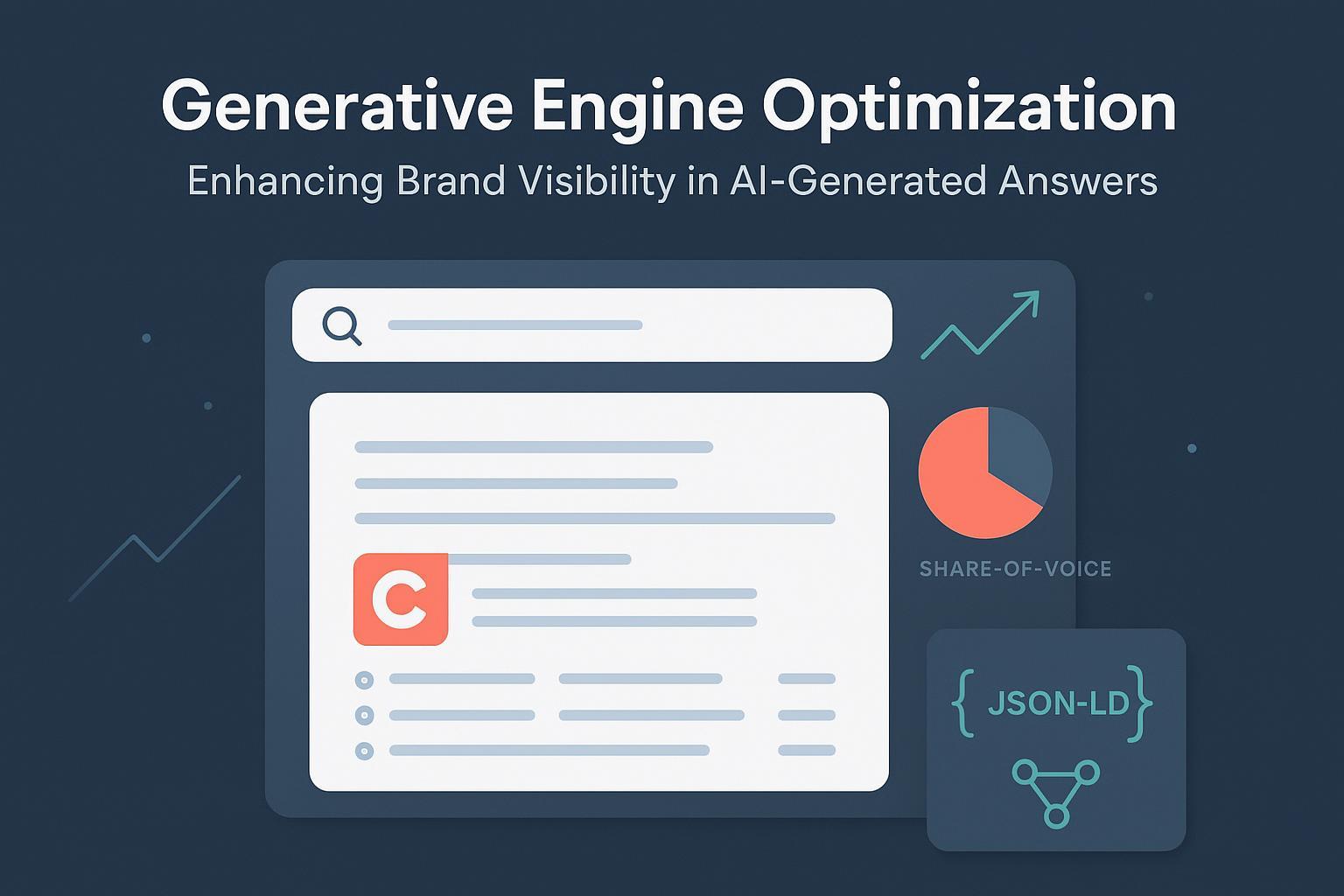
If your buyers spend more time with AI answers than with traditional results, your visibility problem isn’t rankings—it’s whether your brand appears and gets cited in those answers. So, how do you make that happen consistently?
GEO in one page: what it is and how it differs from SEO
Generative Engine Optimization (GEO) is the practice of shaping your content and entities so AI-driven answer engines include and cite you in their responses. Rather than chasing position #1, GEO emphasizes entity clarity, corroborated facts, answer-first content, and measurable presence in AI summaries.
Google’s guidance on AI features for site owners reiterates familiar principles: helpful content, structured data, and E-E-A-T-style signals matter, even as AI Overviews remix sources in new ways. See Google’s “AI features and your website” documentation for official orientation.
For brands managing internal and public knowledge with traceable citations, Microsoft Learn’s Copilot Studio knowledge sources overview explains how enterprise Copilot experiences ground generative answers via configured sources.
Case Study 1: B2B SaaS (prop-tech) — agency-published results
A prop-tech SaaS engaged in GEO reported, via agency publications, rapid AI visibility gains within six weeks: 32% of SQLs attributed to AI tools (ChatGPT, Perplexity), +67% organic traffic, +400% traffic value, and AI Overview mentions up ~540%. Tactics included restructuring documentation and help content around natural questions, strengthening entity relationships, and deploying JSON-LD schema across Organization, FAQ, and Integration pages.
- Source: Single Grain’s real GEO optimization case studies (agency-published data).
Why it matters: The team didn’t chase keywords alone—they curated answer-ready content clusters mapped to how AI composes responses, then reinforced those clusters with schema and citations from authoritative third parties.
Case Study 2: B2C ecommerce (furniture retail) — agency-published results
A retail brand reported AI-referred conversion rate lift from ~1.8% to ~6.3%, average order value up ~41%, AI product recommendation mentions up ~30–80% in 1–3 months, and cumulative AI mentions up ~400–700% over 7–12 months. The play focused on product detail completeness, Q&A content embedded near PDPs, fast checkout, and confidence signals (“recommended by AI” where permissible and accurate).
- Source: Stakque’s comparison of B2B vs. B2C GEO strategies (agency-published data).
Why it matters: Consumer brands can win visibility when product data is rich, consistent, and cross-validated, and when onsite UX converts the attention that AI answers create—even in a partial zero-click world.
A failed attempt: schema without substance
Expert analyses note teams that “checked the schema box” but saw negligible AI citations and no pipeline lift over ~3 months. The common pattern: thin or fragmented content, lack of authoritative corroboration, and no original data for AI to trust.
- Analysis: First Page Sage’s GEO best practices.
Takeaway: Schema is enabling, not decisive. Without answer-first content and entity authority, structured data alone rarely moves the needle.
What actually moved the needle
- Entity clarity across the web: consistent Organization/Person details, sameAs links, and clean authorship.
- Answer-first pages: lead with plain-language answers to real customer questions; support with citations and evidence.
- Structured data as scaffolding: JSON-LD for Organization, FAQ, HowTo, Review, Product where relevant; keep it accurate and current. See Google’s structured data guidelines.
- Original data and third-party corroboration: publish research, benchmarks, and transparent methodology; pursue reputable mentions.
- Question mapping to clusters: cover primary queries and related follow-ups to mirror how AI Overviews assemble diverse perspectives.
- Operational cadence: monitor AI citations weekly; iterate content and schema monthly; align PR and thought leadership quarterly.
Your measurement dashboard
You can’t manage what you don’t measure. Track presence and impact across engines, then tie it to downstream outcomes. Think of it as a visibility funnel—from citations to conversions.
| Metric | Definition | How to Measure | Cadence |
|---|---|---|---|
| AI citations | Count of references to your brand/content in AI answers for a target query set | Manual sampling across engines; log source pages | Weekly |
| Answer presence | Whether your content appears in AI-generated summaries for target queries | Binary yes/no per query; trend over time | Weekly |
| Share of voice | Your citation proportion vs. competitors within answers | Count competitor citations for same query set | Monthly |
| AI-referred traffic | Sessions referred from AI answer engines (where clickthrough exists) | Web analytics with tagged referrers; annotate limitations | Monthly |
| Conversions & pipeline | Conversion rate and SQL/MQL influenced by AI citations | CRM/BI integration; attribution notes | Monthly/Quarterly |
Implementation playbook: start this quarter
-
Audit entities and authorship.
- Confirm Organization and Person details; add sameAs links to authoritative profiles (Wikidata/Wikipedia/LinkedIn where appropriate). Ensure bios, bylines, and credentials are visible.
-
Restructure content around answers.
- Identify top customer questions; build answer-first sections with concise summaries, sources, and rich context. Map related queries in each cluster.
-
Deploy and validate schema.
- Use JSON-LD for Organization, FAQ, Product/Review/HowTo as applicable. Test with validation tools. Keep it accurate; avoid stuffing.
-
Publish original data.
- Release benchmarks, studies, or aggregated customer insights. Document methodology. Pitch reputable publications to seed corroboration and knowledge-graph signals.
-
Monitor AI visibility.
- Create a weekly sampling routine across Google AI Overviews, Bing Copilot, and others; log citations and answer presence. Build a simple BI dashboard for trends.
-
Align PR and thought leadership.
- Coordinate announcements, guides, and expert pieces so third parties echo and cite your data—fueling AI engines with corroboration.
Risk and governance: keep claims disciplined
- Platform opacity exists. Don’t assume fixed rules for inclusion in every engine; rely on observed behavior and official documentation where available. For enterprise contexts with traceable citations, Microsoft Learn’s Copilot grounding overview is a useful starting point.
- Avoid brittle tactics. Beware magical token sizes or “perfect answer length” claims without evidence.
- Respect accuracy and disclosures. If you reference “recommended by AI,” ensure it’s truthful and permitted; misrepresentation damages trust.
Final word: pilot, measure, iterate
Pick one product line or service area, run the six-step playbook for 90 days, and instrument your dashboard from day one. If you don’t see rising citations and answer presence by week six, revisit entity clarity and corroboration. Ready to see your brand show up where buyers actually read? Let’s dig in.