Ethical Best Practices for Implementing Offer Walls in Digital Products (2025)

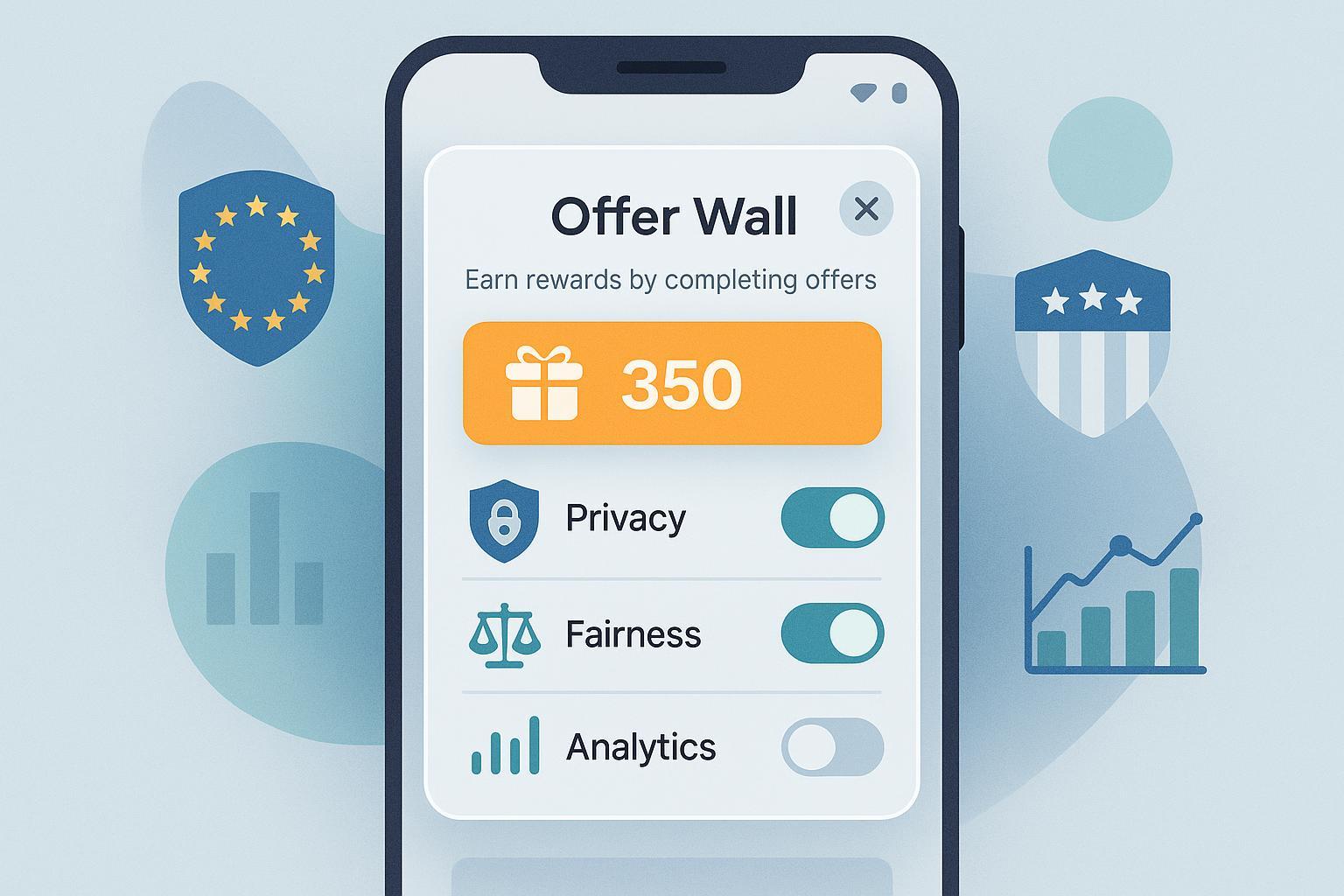
If you ship offer walls, you’re trading short‑term revenue for long‑term trust—unless you do it right. After implementing and auditing offer walls across apps and web products, I’ve found the highest performing deployments treat ethics as a design constraint, not a marketing slogan. This field guide distills what consistently works in 2025 and where teams still stumble.
Key idea: An offer wall is a user‑initiated space listing incentivized actions (installs, registrations, surveys, purchases) in exchange for rewards (virtual currency, premium access, gift cards). Done well, it sits outside core flows and never coerces progression, aligning with what overviews like the Business of Apps offerwall explainer (2025) describe.
1) First, decide whether an offer wall is appropriate
Before you integrate SDKs, answer three questions:
- Does your value proposition tolerate incentivized actions without harming core experience or brand? (E.g., in gaming, it’s additive; in banking/health, it can conflict with trust.)
- Can you sustain transparent reward governance (tracking, audits, dispute handling) with SLAs?
- Do you have the privacy posture to lawfully process data or a plan to run non‑personalized offers when consent is absent?
If any answer is “not yet,” delay implementation and fix prerequisites. Under EU rules, consent must be freely given, specific, informed, and revocable—pre‑ticked boxes or bundling are invalid, per the EDPB Guidelines 05/2020 on consent (EU, 2020).
2) Design consent, disclosures, and data minimization up front
Practical steps:
- Map data flows (collection, use, sharing with offer providers). Assign a lawful basis for each purpose. If you personalize or track across apps/sites in the EEA, capture an IAB TCF‑aligned consent string and honor it. Consent withdrawal must be as easy as giving it, also per the EDPB consent guidance (EU, 2020).
- For California and other US states, implement opt‑out of “sale”/“sharing,” data minimization, and purpose limitation as expanded by CPRA; risk assessments and cybersecurity audits may be required for certain processing, according to the California Privacy Protection Agency CPRA rulemaking materials (2024–2025).
- When users decline tracking, serve non‑personalized or contextually targeted offers and clearly mark that choice. Google’s publisher stack reflects this direction with the Google Ad Manager Offerwall GA announcement (June 30, 2025), which supports custom choice experiences and monetization on unconsented traffic.
- Provide a concise “What is this?” explainer at the offer wall entry describing rewards, data use, and how to opt out, aligning with FTC principles on clear and conspicuous disclosures emphasized since the FTC’s dark patterns report (2022).
Deliverable: a one‑screen privacy notice at entry, a link to full policy, and a persistent “privacy controls” link inside the offer wall.
3) Ship ethical UX: transparency without manipulation
Make it obvious what users get and what they must do, and avoid coercion.
- Reward transparency: Display reward amount, required steps, eligibility, and expected time‑to‑credit before click. This aligns with platform rules such as Apple’s App Store Review Guidelines §2.3 and §5.1 (Apple, current) and Google Play’s Ads and Monetization policy (Google, current).
- No dark patterns: Do not hide close controls, gate core features behind the offer wall, or use confirm‑shaming. The FTC warned against these tactics in the “Bringing Dark Patterns to Light” staff report (2022), and has continued enforcement through 2024–2025.
- Frequency capping: Cap prompts (e.g., ≤2 per session, user‑configurable weekly snooze). Respect user preferences to mute offer prompts—consistent with Google guidance that ads must be distinguishable and not disruptive per the Google Play policy center (current).
- Accessibility: Meet WCAG 2.2 basics—focus visibility, keyboard navigation, sufficient contrast, target size, and clear error feedback—per the W3C WCAG 2.2 standard (2023).
- Protect minors: If your service is likely accessed by children, default to high privacy, avoid nudge techniques that push data sharing or spending, and implement age‑appropriate design consistent with the UK ICO Children’s Code (2021 guidance; ongoing). For U.S. child‑directed apps, obtain verifiable parental consent under COPPA (FTC rule, current).
Checklist snippet (UX):
- Clear entry label (“Earn rewards”) and a one‑line explainer
- Visible Close/Back, never blocks core progression
- Reward details and time‑to‑credit upfront
- “Offer Status” page with pending/completed/failed + reason codes
- WCAG 2.2 checks passed in QA
4) Vet offers and partners like you vet payments
Set a high bar for offers—poor quality erodes trust fast.
- Advertiser verification: Require verified business identity and canonical domain. Ban or jurisdiction‑restrict high‑risk categories (e.g., gambling, financial promotions, crypto/token rewards) unless fully compliant with local financial promotion rules.
- Terms clarity: Each offer must state qualifying actions, eligibility, geo/device limits, and realistic time‑to‑credit. Auto‑disable offers with abnormal complaint, reject, or chargeback rates.
- Fraud controls: Use server‑to‑server callbacks with signed tokens and nonces to prevent spoofed completions. Minimize device fingerprinting and only within legal bounds; prefer consented identifiers. Align definitions of invalid traffic with IAB/MRC guidance where applicable (add your chosen standard to your runbook).
- KYC/AML considerations: If you enable cash‑out or gift cards that may trigger KYC, document flows and vendor obligations; avoid unlicensed token/crypto incentives.
Accountability deliverables:
- Offer approval workflow with checklist and sign‑off
- Automated kill‑switch for offers exceeding dispute/chargeback thresholds
- Weekly review of top 20 offers by completion and dispute rate
5) Engineer data flows, security, and auditability
- Data minimization: Only collect what’s necessary to operate the offer wall and reward users. Avoid combining data for unrelated purposes without consent, aligning with CPRA data minimization and purpose limits per the CPPA rulemaking materials (2024–2025).
- Security: Encrypt data in transit, restrict access, rotate keys, and segregate offerwall event logs. Log every event (impression, click, completion, credit decision) with user‑visible IDs to support audits and dispute resolution.
- Server‑to‑server callbacks: Prefer backend verification over client‑only signals; include signature, timestamp, and idempotency key.
- Consent plumbing: Store and forward consent signals to partners; block personalized processing when missing; enable non‑personalized fallback offers as reflected in Google Ad Manager’s Offerwall GA capabilities (2025).
6) Reward governance and dispute resolution that users trust
I’ve seen trust hinge on how you handle missing rewards.
- Publish reward rules and expected credit timelines. Expose an in‑app “Offer Status” with real‑time states (pending/completed/failed) and reason codes.
- Provide a lightweight “missing credit” form. Commit to an SLA like “first response within 3 business days; resolution within 10.”
- Track KPIs: time‑to‑credit median/P95, dispute rate, resolution time, and post‑resolution CSAT. Offers with persistent issues get paused.
- Keep evidence: Store callback payloads and link them to user‑visible claim IDs so support can verify without guesswork.
This approach aligns with broader truth‑in‑advertising and consumer protection expectations emphasized by the FTC’s advertising guidance and enforcement updates (ongoing).
7) Measurement, iteration, and guardrails
Avoid optimizing purely for short‑term eCPM. Monitor a balanced scorecard:
- Monetization: ARPDAU, eCPM by offer type, fill rate, LTV impact
- Experience: D1/D7/D30 retention deltas, session length, prompt dismissal rates, snooze engagement
- Trust: dispute rate, time‑to‑credit P95, CSAT after support cases
- Safety: share of traffic without consent, proportion served non‑personalized offers, complaint categories
Establish guardrails (examples):
- If D7 retention dips >2% week‑over‑week from offer changes, auto‑revert
- If dispute rate >2% on an offer for 48 hours, pause and review
- Cap promotions (e.g., “+50% currency” boosts) to ≤6 days/month to avoid pressure dynamics
8) Regional and platform compliance you can’t ignore in 2025
- EU Digital Services Act (DSA): Large platforms must provide ad transparency and user redress; if your product falls under those scopes, ensure users can see why they saw an offer and how to complain, per the DSA in the EU Official Journal (2022).
- EU AI Act: If you use AI to personalize or rank offers with meaningful effects, document risk management, transparency, and user information duties in line with the AI Act text in the EU Official Journal (2024). Offer an explanation and opt‑out from personalization where feasible.
- Apple: Comply with ATT for cross‑app tracking consent and App Review sections on data collection and manipulative behavior per the App Store Review Guidelines (current).
- Google Play: Honor Families policy if child‑directed; ensure ads are distinguishable and disclosures in the Data safety section are accurate per the Google Play Developer Policy Center (current).
- COPPA and Children’s Codes: For child‑directed services, obtain verifiable parental consent and default to high privacy, per COPPA (FTC) and the UK ICO Children’s Code (2021).
9) Launch checklist (copy-paste into your runbook)
Consent & Privacy
- Data flow map completed; purposes and lawful bases documented
- CMP integrated; consent withdrawal UX shipped; non‑personalized fallback configured
- Entry notice explains rewards, data use, opt‑out; link to full privacy policy
UX & Fairness
- Offer wall is user‑initiated; never blocks core flows; visible Close/Back
- Reward amount, steps, eligibility, and time‑to‑credit displayed pre‑click
- Frequency caps and user snooze/mute preferences implemented
- WCAG 2.2 accessibility checks passed
Offer Quality & Safety
- Advertiser identity verified; risky categories gated by jurisdictional compliance
- Server‑to‑server callbacks with signatures/nonce; anomalous pattern monitoring
- Auto pause on high dispute/chargeback ratio; weekly reviews in place
Security & Auditability
- Event logs with user‑visible IDs; encryption; access controls; key rotation
- Consent signals stored/forwarded; personalized processing blocked without consent
Rewards & Support
- Offer Status screen live; SLA published
- Missing credit form; evidence retention; CSAT tracking post‑resolution
Compliance & Platform
- Apple ATT and App Review; Google Play Ads/Families/Data safety
- Regional mapping (EEA, UK, US states, others); DSA/AI Act obligations evaluated
10) Common failure modes (and how to fix them)
- Hidden costs or vague terms: Tighten pre‑click disclosures; reject offers without clear steps or realistic timelines. Align with Apple/Google accuracy rules.
- High dispute rates (>2%): Pause offenders, audit callbacks, and add reason codes. Improve “Offer Status” visibility to cut support load.
- Consent violations: Treat consent like a feature—instrument TCF signals, block personalization without consent, and ship a clear withdrawal flow.
- Dark‑pattern prompts: Add a Close/Back button, reduce prompt frequency, and remove confirm‑shaming. Cross‑check against the FTC dark patterns report (2022).
- Accessibility gaps: Run WCAG 2.2 tests; fix focus order, contrast, and target size; test with a screen reader.
11) Emerging considerations for 2025 planning
- Unconsented monetization: Publisher tools now support ethical monetization without tracking via limited or non‑personalized offers—see Google Ad Manager Offerwall GA (2025). This gives you a clean fallback path.
- AI personalization: If ranking offers with ML, maintain a model card and user‑facing explanation; provide a “Show me non‑personalized offers” toggle to stay aligned with the EU AI Act obligations (2024).
- Crypto rewards: Treat as financial promotions where applicable; build jurisdictional checks and consider KYC/AML requirements. When in doubt, don’t ship it.
Bottom line: Ethical offer walls are not a tax on revenue—they’re an accelerant for durable monetization. Teams that operationalize consent, transparency, accessibility, and redress see steadier ARPDAU and fewer fires. Start with the checklists above, wire in measurement and guardrails, and you’ll ship an offer wall that your users (and regulators) can live with.